

Cleaning your home doesn’t have to involve harsh chemicals or expensive products. How to make non-toxic cleaning sprays with household ingredients is a solution that’s healthier for your family, kinder to the planet, and easy on your wallet.
These simple DIY solutions are also highly customizable, letting you tailor them to your cleaning needs and personal preferences.
Why Non-Toxic Cleaning Sprays Matter
Conventional cleaning products often contain chemicals that can irritate your skin, harm your respiratory system, and pollute the environment. For instance, research indicates that regular exposure to cleaning agents can exacerbate asthma symptoms and contribute to indoor air pollution.
Switching to non-toxic alternatives reduces exposure to these risks, improves indoor air quality, and minimizes waste from single-use plastics, promoting a cleaner and healthier living environment.
According to a 2023 study published in the Environmental Health Journal, households using natural cleaning alternatives reported a 40% decrease in respiratory issues over a one-year period. This highlights the tangible health benefits of transitioning to non-toxic cleaning solutions.
What You’ll Learn in This Guide
This comprehensive guide on how to make non-toxic cleaning sprays with household ingredients will teach you:
- The importance of non-toxic cleaning solutions.
- The essential ingredients for effective homemade sprays.
- Simple, step-by-step recipes to tackle various cleaning tasks.
- Practical tips for maximizing cleaning effectiveness and customizing solutions.
- Proven strategies to store and use sprays safely and effectively.
Understanding Non-Toxic Cleaning
“Non-toxic” refers to products made without harmful chemicals that can cause health or environmental damage. These solutions rely on natural ingredients to clean effectively without compromising safety. Non-toxic cleaning sprays are free from synthetic fragrances, dyes, and harmful preservatives, making them safer for sensitive individuals and pets.
Products labeled as “non-toxic” should ideally meet regulatory safety standards and have minimal adverse effects on both humans and the environment. Be sure to read ingredient labels carefully, even for DIY ingredients, to avoid hidden additives.
Benefits of DIY Non-Toxic Cleaning Sprays
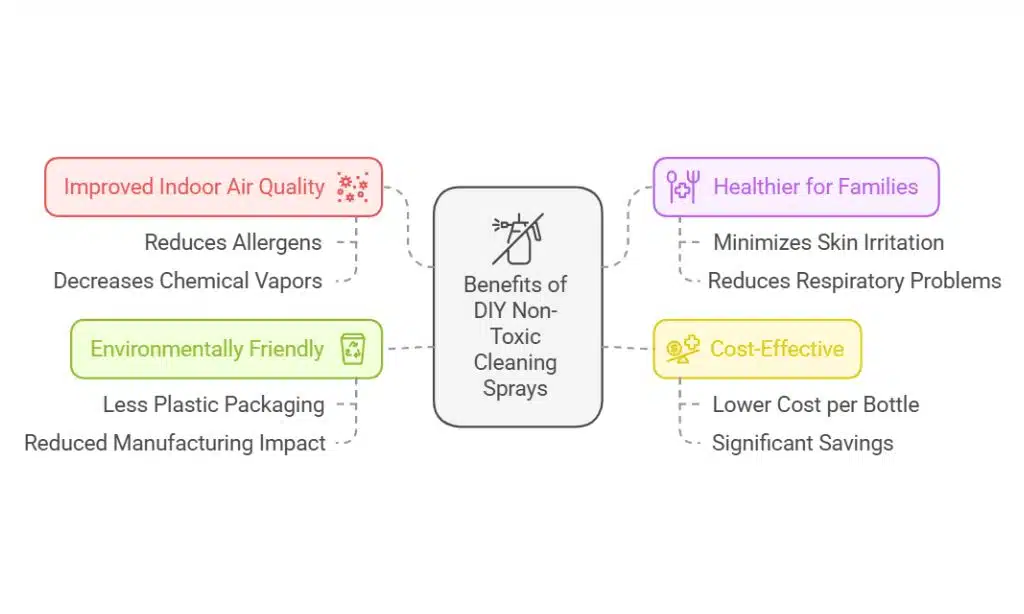
- Improved Indoor Air Quality: Reduces allergens, chemical vapors, and toxins.
- Example: Replacing aerosol sprays with homemade solutions significantly reduces indoor particulate pollution.
- Healthier for Families: Minimizes risks of skin irritation, respiratory problems, and accidental poisoning.
- Real-life insight: Parents with toddlers often report fewer allergy symptoms after switching to non-toxic cleaners.
- Cost-Effective: Homemade sprays are significantly cheaper than branded products.
- Example: A typical store-bought cleaner costs $5-$10, while DIY sprays cost less than $1 per bottle.
- Environmentally Friendly: Decreases reliance on plastic packaging and harmful manufacturing processes. A study from 2022 showed that households using non-toxic cleaners reduced waste by up to 30% annually.
Essential Ingredients for Non-Toxic Cleaning Sprays
Common Household Ingredients
The secret to how to make non-toxic cleaning sprays with household ingredients lies in simple, versatile staples:
- White Vinegar: Acts as a natural disinfectant and grease cutter. Contains acetic acid, which effectively kills bacteria and viruses.
- Baking Soda: Provides gentle scrubbing power and neutralizes odors. Its alkaline nature helps tackle stubborn grease and stains.
- Lemon Juice: A natural bleaching agent and antibacterial booster, lemon juice also leaves a refreshing scent.
- Essential Oils: Adds fragrance and antimicrobial properties; popular choices include tea tree (antifungal), lavender (calming scent), and eucalyptus (antibacterial).
- Castile Soap: A plant-based soap ideal for breaking down grease and grime while being gentle on skin.
- Distilled Water: Ensures solutions are free from impurities that could cause streaks or residue.
Advanced Tips for Ingredient Use
- Combining Ingredients: Pair baking soda with vinegar for tough stains but use immediately to maximize their chemical reaction.
- Ingredient Sources: Choose organic essential oils to ensure purity and avoid synthetic additives.
- Multipurpose Ingredients: Lemon peels can also be infused in vinegar to create a scented cleaning base.
Safety and Storage Tips
- Storage: Use dark-colored glass bottles to preserve ingredients like hydrogen peroxide and essential oils.
- Labeling: Clearly label bottles with ingredients and usage instructions.
- Testing: Always test sprays on a small, inconspicuous area before full application.
| Ingredient | Primary Use | Additional Benefits |
| White Vinegar | Disinfectant | Removes grease and limescale |
| Baking Soda | Odor neutralizer | Gentle abrasive cleaner |
| Lemon Juice | Bleaching agent | Antibacterial and aromatic |
| Essential Oils | Fragrance enhancer | Antimicrobial properties |
| Castile Soap | Cleaning base | Safe for sensitive skin |
| Distilled Water | Solvent | Reduces streaking |
How to make non-toxic cleaning sprays: Step-by-Step Guide
Here is a quick guide on how you can make non-toxic cleaning sprays without hassle.
1. General-Purpose Cleaning Spray
Ingredients:
- 1 cup distilled water
- 1 cup white vinegar
- 20 drops of essential oil (e.g., lavender or tea tree)
Instructions:
- Combine all ingredients in a spray bottle.
- Shake well before use.
- Apply to surfaces like countertops and sinks, then wipe clean.
Practical Tip:
Use this spray for kitchen counters, but avoid applying it on granite or marble as vinegar can damage stone surfaces. Substitute vinegar with rubbing alcohol for these materials.
| Key Information | Details |
| Ingredients | Water, vinegar, essential oil |
| Best Surfaces | Sinks, counters, tiles |
| Avoid On | Marble, granite |
| Approximate Cost | $0.50 per bottle |
2. Glass and Mirror Cleaner
Ingredients:
- ½ cup distilled water
- ½ cup white vinegar
- 1 tablespoon cornstarch
- 10 drops lemon essential oil
Instructions:
- Mix ingredients in a spray bottle.
- Shake thoroughly before each use.
- Spray onto glass and wipe with a microfiber cloth for a streak-free shine.
Additional Tip:
The cornstarch helps bind dirt particles, making this an effective streak-free cleaner. Ensure thorough shaking to avoid clumps.
| Key Information | Details |
| Ingredients | Water, vinegar, cornstarch, oil |
| Best Surfaces | Windows, mirrors |
| Avoid On | Tinted glass |
| Approximate Cost | $0.40 per bottle |
3. Bathroom Disinfectant Spray
Ingredients:
- 1 cup distilled water
- ½ cup hydrogen peroxide
- 20 drops eucalyptus essential oil
Instructions:
- Pour ingredients into a dark spray bottle to protect the peroxide.
- Shake gently before use.
- Apply to bathroom surfaces, allowing the spray to sit for 5 minutes before wiping.
Key Insight:
Hydrogen peroxide is highly effective at killing mold and mildew, making this spray perfect for shower tiles and grout lines.
| Key Information | Details |
| Ingredients | Water, hydrogen peroxide, oil |
| Best Surfaces | Tiles, tubs, grout |
| Avoid On | Painted surfaces |
| Approximate Cost | $0.70 per bottle |
Tips for Maximizing Cleaning Effectiveness
Application Techniques
- Cloths: Use microfiber cloths to reduce streaks and trap dirt effectively.
- Waiting Time: Allow sprays to sit for 5-10 minutes on tough stains before scrubbing.
- Spray Bottles: Opt for reusable glass bottles to minimize plastic waste.
Customizing Scents and Strengths
- Adjust essential oil combinations to suit seasonal preferences (e.g., citrus blends in summer, pine in winter).
- For extra cleaning power, add a teaspoon of baking soda to general-purpose sprays.
Interactive Elements
Ingredient Substitution Table
| Purpose | Primary Ingredient | Substitute Options |
| Disinfectant | White Vinegar | Hydrogen Peroxide, Alcohol |
| Deodorizer | Baking Soda | Activated Charcoal |
| Scent Enhancer | Essential Oils | Citrus Peels, Fresh Herbs |
Takeaways
Learning how to make non-toxic cleaning sprays with household ingredients empowers you to clean smarter, save money, and live sustainably. By embracing these simple recipes and tips, you can create a safer, healthier home environment.
Start today and discover the joys of eco-friendly cleaning—your family and the planet will thank you!





















