The journey toward a healthier lifestyle often begins at home. One of the simplest yet most impactful ways to safeguard your family’s health and contribute to environmental sustainability is by transitioning to non-toxic cleaning.
Traditional cleaning products often contain harsh chemicals that can compromise indoor air quality, irritate skin, and even pose long-term health risks. By embracing non-toxic cleaning alternatives, you can create a safer, cleaner, and more eco-friendly living space.
In this guide, we’ll walk you through the process of a non-toxic cleaning transition home with seven simple and actionable steps. From identifying harmful ingredients in your current products to creating a sustainable cleaning routine, you’ll find everything you need to make this transformation smooth and effective.
Each section includes practical insights, examples, and visual aids to enhance your understanding and make your non-toxic cleaning transition home seamless.
Step 1: Assess Your Current Cleaning Products
The first step in transitioning your home to non-toxic cleaning is taking a closer look at the products you currently use. Many commercial cleaners contain harmful chemicals that can negatively affect your health and the environment. This assessment is crucial to understanding the scope of the changes you need to make and lays the groundwork for a safer home environment.
Identifying Toxic Ingredients
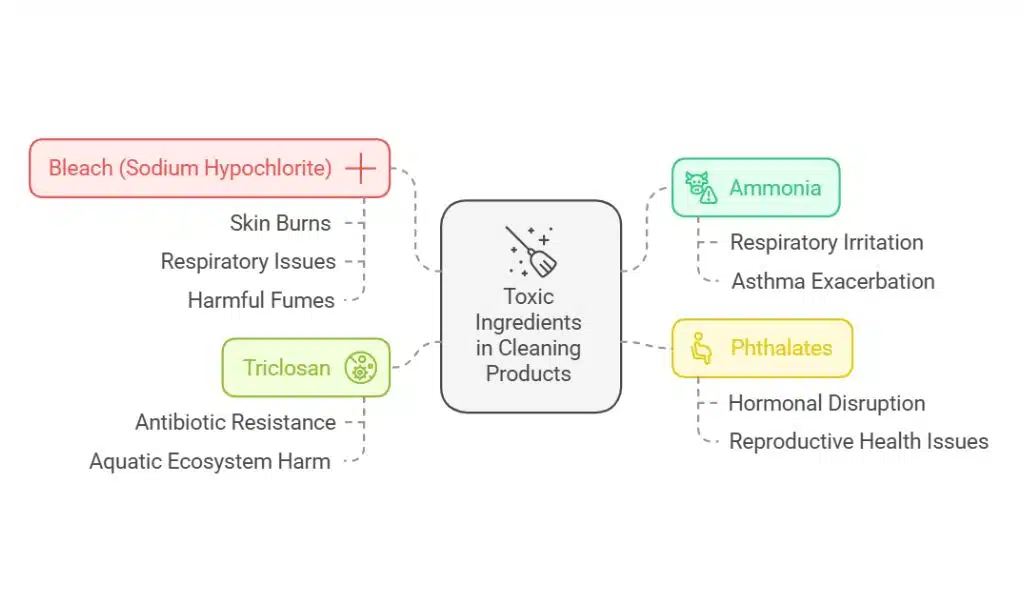
Start by reading the labels on your cleaning products. Look out for these common toxic ingredients:
- Ammonia: Can cause respiratory irritation and exacerbate asthma symptoms.
- Bleach (Sodium Hypochlorite): May trigger skin burns, respiratory issues, and produce harmful fumes when mixed with other chemicals.
- Phthalates: Often hidden in fragrances and linked to hormonal disruption and reproductive health issues.
- Triclosan: An antibacterial agent that contributes to antibiotic resistance and harms aquatic ecosystems.
Tools to Evaluate Safety
Use resources like the Environmental Working Group’s (EWG) Guide to Healthy Cleaning or the Think Dirty app to evaluate the safety of your cleaning products. These tools provide detailed ingredient analysis and safety ratings, helping you make informed decisions during your non-toxic cleaning transition home.
Declutter Your Cleaning Cabinet
Dispose of toxic products responsibly. Contact local waste disposal facilities to learn how to discard hazardous materials without harming the environment. For example, many cities host hazardous waste collection events where you can safely dispose of old chemicals.
Common Toxic Ingredients and Their Effects
| Ingredient | Effect on Health | Environmental Impact |
| Ammonia | Respiratory irritation, headaches | Harmful to aquatic life |
| Bleach | Skin burns, toxic fumes | Produces harmful chlorinated compounds |
| Phthalates | Hormonal disruption | Long-lasting water pollution |
| Triclosan | Antibacterial resistance | Toxic to aquatic organisms |
Step 2: Understand Labels and Certifications
Not all cleaning products labeled as “natural” or “eco-friendly” are truly non-toxic. Understanding certifications and labels can help you make informed choices during your non-toxic cleaning transition home. This step ensures that you’re not misled by greenwashing tactics commonly used in marketing.
Decoding Product Labels
Terms like “biodegradable” and “green” can be misleading. Look for products that clearly state their ingredients and avoid vague terms like “proprietary blend.” Be cautious of marketing tactics that emphasize “natural” without backing it up with certifications.
Trusted Certifications to Look For
Certifications ensure a product meets strict safety and environmental standards. Some reliable certifications include:
- EPA Safer Choice: Indicates safer ingredients for human health and the environment.
- USDA Organic: Certifies that the product meets organic standards.
- Leaping Bunny: Ensures the product is cruelty-free.
- Green Seal: Indicates products are environmentally responsible.
Certification Overview
| Certification | Focus | What It Ensures |
| EPA Safer Choice | Human and environmental safety | Ingredients are safer for families and ecosystems |
| USDA Organic | Organic standards | No synthetic chemicals or harmful additives |
| Leaping Bunny | Cruelty-free products | No animal testing involved |
| Green Seal | Environmental responsibility | Reduced environmental impact |
Step 3: Stock Up on Non-Toxic Essentials
Building a non-toxic cleaning toolkit is essential for maintaining a clean and healthy home. These essentials are affordable, effective, and versatile. By using these core ingredients, you can eliminate the need for chemical-laden products entirely and ensure a smoother non-toxic cleaning transition home.
Must-Have Non-Toxic Cleaning Ingredients
- White Vinegar: Great for cutting grease, disinfecting surfaces, and removing odors.
- Baking Soda: An excellent abrasive cleaner for scrubbing tough stains and neutralizing odors.
- Castile Soap: A gentle, plant-based cleaner suitable for floors, countertops, and even laundry.
- Essential Oils (e.g., Tea Tree, Lavender): Add fragrance and antimicrobial properties. Popular choices include eucalyptus for freshness and tea tree for its antibacterial qualities.
- Lemons: Natural bleaching agents that deodorize and remove stains effectively.
DIY Cleaning Kits vs. Ready-Made Solutions
- DIY Cleaning Kits: Combine vinegar, baking soda, and essential oils to create effective cleaners at home. For instance, a DIY glass cleaner can be made with 2 cups of water, 1/4 cup of vinegar, and a few drops of lemon essential oil.
- Ready-Made Non-Toxic Brands: Some reliable options include Method, Seventh Generation, and Mrs. Meyer’s Clean Day, which offer pre-made, certified non-toxic solutions.
Essential Ingredients and Uses
| Ingredient | Primary Use | How to Use |
| White Vinegar | Degreaser, deodorizer | Mix with water for cleaning surfaces |
| Baking Soda | Abrasive cleaner, odor neutralizer | Use for scrubbing sinks and bathtubs |
| Castile Soap | All-purpose cleaning | Dilute with water for general cleaning |
| Essential Oils | Fragrance, antimicrobial | Add to DIY cleaners for a pleasant scent |
| Lemons | Bleaching, deodorizing | Rub directly on stains or mix with baking soda |
Step 4: Start with Simple Swaps

Making small changes to your cleaning routine can have a significant impact. Focus on swapping out the most frequently used products first. This gradual approach ensures that the transition is manageable and cost-effective, making your non-toxic cleaning transition home stress-free.
Replace All-Purpose Cleaners
- DIY Recipe: Mix equal parts white vinegar and water, add a few drops of essential oil, and store in a spray bottle. For tougher stains, add a teaspoon of baking soda.
- Non-Toxic Brands: Try brands like Branch Basics or Better Life, which are formulated with safe, plant-based ingredients.
Switch to Safer Laundry Detergents
- Look for detergents free of phosphates, synthetic fragrances, and optical brighteners. Examples include Ecover and Puracy.
- Consider using soap nuts, a natural alternative that cleans effectively without chemicals.
- DIY Detergent: Mix washing soda, borax, and grated castile soap for a homemade option.
Common Swaps for Everyday Products
| Category | Traditional Option | Non-Toxic Alternative |
| All-Purpose Cleaners | Ammonia-based sprays | Vinegar + water + essential oils |
| Laundry Detergents | Synthetic, phosphate-filled brands | Biodegradable detergents, soap nuts |
| Glass Cleaners | Chemical aerosols | Vinegar + water with a microfiber cloth |
Step 5: Focus on High-Traffic Areas
Certain areas in your home require more frequent cleaning. Transitioning these areas to non-toxic methods can provide immediate benefits. Prioritizing high-traffic zones ensures your efforts make the biggest impact and simplifies your non-toxic cleaning transition home.
Kitchen
- Non-Toxic Solutions: Clean countertops with a vinegar-based spray. Use baking soda to scrub stubborn stains on stovetops. For grease, add a few drops of castile soap to your spray solution.
- Dishwashing: Opt for plant-based dish soaps like Ecos or Method, and avoid products containing triclosan.
Bathroom
- Tile and Grout: Create a paste with baking soda and water to scrub grime effectively. Use a toothbrush for hard-to-reach areas.
- Toilets: Use a mixture of vinegar and baking soda for an effective toilet cleaner. Add a few drops of tea tree oil for extra disinfecting power.
Non-Toxic Solutions for High-Traffic Areas
| Area | Challenge | Non-Toxic Solution |
| Kitchen | Greasy stovetops | Baking soda + castile soap paste |
| Bathroom | Mold in tile grout | Baking soda + vinegar scrub |
| Floors | General dirt and dust | Diluted castile soap in warm water |
Step 6: Establish a Sustainable Cleaning Routine
Consistency is key when maintaining a non-toxic cleaning routine. A well-planned schedule can simplify tasks and keep your home spotless. Implementing a routine helps reduce the need for deep cleaning and ensures your non-toxic cleaning transition home remains successful.
Weekly Non-Toxic Cleaning Schedule
- Monday: Dust surfaces and vacuum floors.
- Wednesday: Clean windows and mirrors with a vinegar-based spray.
- Friday: Deep clean bathrooms and kitchen. Use baking soda for scrubbing and vinegar solutions for disinfecting.
Tips to Save Time and Effort
- Use multi-purpose cleaners to reduce the number of products needed.
- Invest in reusable cleaning tools like microfiber cloths to reduce waste.
- Involve family members to share responsibilities. Assign tasks based on age and ability to encourage participation.
Sample Weekly Cleaning Plan
| Day | Task | Recommended Products |
| Monday | Dust surfaces, vacuum floors | Microfiber cloth, vinegar spray |
| Wednesday | Clean windows and mirrors | Vinegar + water solution |
| Friday | Deep clean bathrooms, kitchen | Baking soda, castile soap, essential oils |
Step 7: Educate Your Household
For a successful non-toxic cleaning transition home, it’s essential to involve everyone in your household. Educating and involving your family ensures that everyone benefits from and contributes to maintaining a safer environment.
Involving Family Members
- Teach kids about the importance of non-toxic cleaning by involving them in fun, simple tasks like wiping counters or spraying solutions.
- Assign age-appropriate cleaning tasks using safe products. For example, older children can help scrub floors using castile soap solutions.
Sharing Your Journey
- Share your transition experience on social media to inspire others. Highlight the benefits you’ve observed, such as better air quality and reduced skin irritation.
- Encourage friends and family to try non-toxic cleaning methods. Offer them a sample of your DIY cleaner to get started.
Additional Resources
Comparison Common Cleaning Products
| Category | Toxic Ingredients to Avoid | Non-Toxic Alternatives |
| All-Purpose Cleaners | Ammonia, Triclosan | Vinegar + Water + Essential Oil |
| Laundry Detergents | Phosphates, Synthetic Fragrances | Soap Nuts, Biodegradable Detergents |
| Dishwashing Liquids | Sulfates, Phthalates | Castile Soap, Plant-Based Soaps |
Takeaway
Transitioning your home to non-toxic cleaning is a meaningful step toward a healthier and more sustainable lifestyle. By following these seven steps, you can effectively replace harmful chemicals with safer, eco-friendly alternatives.
The benefits of this change extend beyond your household—contributing to a cleaner environment and promoting long-term health for everyone.
Take the first step today in your non-toxic cleaning transition home and inspire others to join the movement. Share your progress and tips with your community, and enjoy the peace of mind that comes with a truly clean and safe living space.