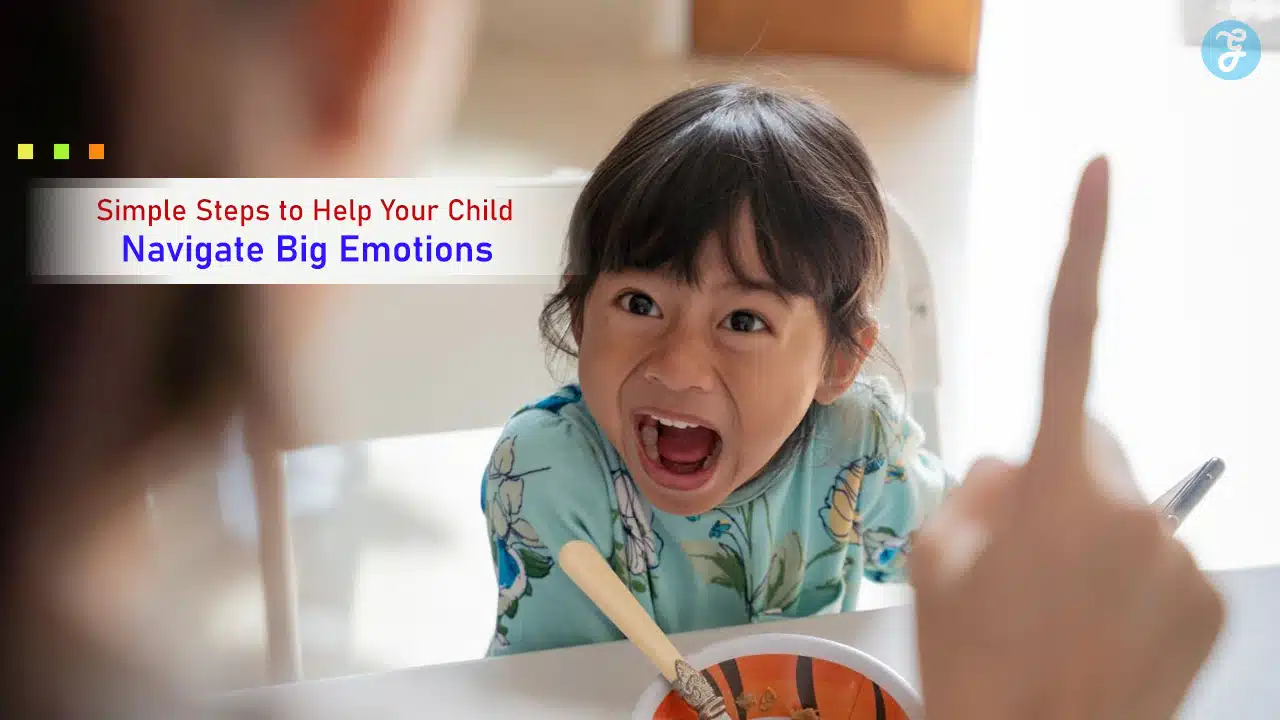
Children experience a wide range of emotions daily, and at times, these emotions can feel overwhelming to them.
Learning to navigate big emotions—whether it’s sadness, anger, excitement, or frustration—is essential for a child’s emotional development and long-term well-being.
Emotional intelligence not only helps children manage their emotions but also enables them to communicate more effectively, build stronger relationships, and adapt to challenges as they grow.
As a parent or caregiver, your role in helping your child develop healthy emotional habits is crucial.
But how do you guide your child through these overwhelming feelings?
The key is offering support, understanding, and the right tools to help them recognize, manage, and express their emotions in a constructive way.
Below are five detailed steps to help your child navigate their big emotions effectively.
Let’s take a look!
1. Acknowledge and Validate Their Feelings?
One of the most important and foundational steps in helping your child manage their emotions is to acknowledge and validate their feelings.
Emotions, whether they seem big or small to you as an adult, are very real to your child, and they need to feel seen and understood.
Validation reassures them that their feelings are legitimate, which helps them process emotions rather than suppress them.
Why Validation is Essential for Emotional Growth?
Validation creates a sense of safety and security for your child. It’s important to remember that children are still learning how to process what they feel.
When a child expresses frustration, anger, or even happiness, and their feelings are dismissed, they might start to believe that emotions are something to hide or feel ashamed of.
This can lead to emotional repression or outbursts later on, as they haven’t developed the tools to understand or manage what they feel.
By validating their emotions, you’re giving your child permission to express themselves freely.
You’re sending the message that all feelings—good or bad—are a normal part of life.
This open communication builds trust and teaches them that they are not alone in navigating the complex world of emotions.
How to Validate and Acknowledge Feelings?
Begin by verbally acknowledging what your child is feeling. You can say things like:
- “I can see you’re really angry because your toy broke, and that’s okay. It’s frustrating when things don’t work the way we want.”
- “It seems like you’re feeling sad because your friend couldn’t come over. That must be disappointing.”
These statements do two important things: they identify the emotion and show that you understand why they are feeling this way.
It might seem simple, but by giving a name to their emotions, you’re helping your child build an emotional vocabulary.
This will enable them to communicate their feelings more effectively in the future, which is a crucial skill for emotional intelligence.
Also, try to be physically present with them during moments of heightened emotion.
A gentle hug, holding their hand, or sitting beside them can offer comfort, signaling that you are there for them emotionally as well as physically.
2. Teach Them How to Identify and Label Their Emotions

The second step in helping your child navigate their emotions is to teach them how to identify and label what they are feeling.
For young children, especially, emotions can be difficult to articulate.
They may know they feel “bad” or “upset,” but without the proper emotional vocabulary, they struggle to explain the root of their feelings.
This lack of clarity can lead to frustration, resulting in tantrums, tears, or withdrawal.
Why Emotional Labeling is Important?
By giving your child the language to describe their feelings, you are helping them gain control over their emotions.
When children can name what they are feeling—whether it’s “jealousy,” “frustration,” or “disappointment”—it creates a sense of mastery.
This emotional awareness is an essential building block for emotional intelligence.
Ways to Teach Emotional Labeling?
One of the simplest ways to teach emotional labeling is to talk about feelings during neutral times.
For instance, while reading books or watching a movie together, you can point out the emotions of the characters:
- Look, the little boy is smiling because he’s happy his dad came home.”
- “She’s crying because she feels sad about losing her favorite toy.”
By connecting emotions to everyday situations, your child will start recognizing different feelings and associating words with them.
Using tools like emotion charts, where different facial expressions are paired with words like “surprised,” “angry,” or “excited,” can also be very helpful.
You can even create an “emotion journal” where they draw or write how they feel at the end of the day.
Help your child reflect on their emotions by asking open-ended questions. Encourage them to explore why they are feeling a certain way:
- “What do you think made you feel angry today?”
- “What was the best part of your day? How did that make you feel?”
This practice encourages emotional self-awareness, allowing your child to gain a deeper understanding of their internal world.
Over time, this will help them articulate their needs and manage their emotions more effectively.
3. Model Healthy Emotional Regulation
Children often mirror the behavior of the adults around them, particularly their parents.
As such, one of the most effective ways to teach your child how to handle big emotions is to model healthy emotional regulation yourself.
How you manage stress, anger, frustration, and sadness will profoundly impact how your child responds to similar situations.
Why Modeling Matters?
Children observe and absorb everything from their environment.
If they see you reacting calmly during stressful moments, they will learn that it’s possible to stay composed even when emotions run high.
On the other hand, if they witness angry outbursts or emotional shutdowns, they might adopt those behaviors themselves.
How to Model Emotional Regulation?
It’s important to demonstrate that all emotions are okay to feel, but it’s how we express those emotions that matters.
When you’re feeling overwhelmed or upset, vocalize it in a way your child can understand:
- “I’m feeling really stressed right now because I have a lot of work to do. I think I need to take a few deep breaths and take a short break.”
This models a constructive coping mechanism—breathing exercises and taking a break—while also validating that feeling stress is normal.
Similarly, if you lose your temper, it’s a great teaching opportunity to apologize and explain what happened:
- “I’m sorry I yelled earlier. I was feeling frustrated, and I should have taken a moment to calm down.
By admitting when you’ve made a mistake and showing how to make amends, you’re teaching your child the importance of emotional accountability.
You can also model emotional regulation through self-care practices.
Children need to understand that it’s okay to take time for yourself to recharge, whether that means taking a quiet moment, exercising, or practicing mindfulness.
Explain to your child why these actions help you feel better emotionally, and encourage them to find self-care strategies that work for them.
4. Encourage Emotional Expression Through Creative Outlets
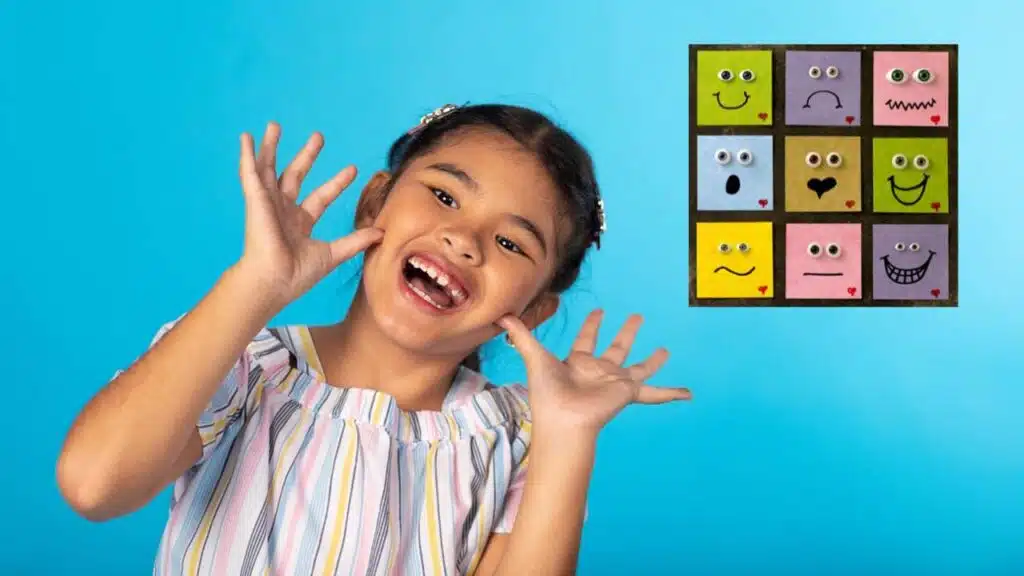
Children may not always be able to express their emotions verbally, especially when they’re feeling overwhelmed.
Providing them with creative outlets like art, music, or physical play can help them process big emotions in a constructive and enjoyable way.
Why Creative Expression is Effective?
Creative activities offer a safe space for children to release their emotions without needing to use words.
For example, a child who is upset might not be able to explain their feelings in detail, but they can show it through drawing, painting, or making music.
These activities give them a healthy outlet to express emotions without bottling them up or acting out.
How to Facilitate Creative Expression?
Art is a fantastic tool for emotional expression. Encourage your child to draw or paint what they are feeling.
You might be surprised at how a simple drawing of a stormy cloud or a bright sun can reveal the depth of their emotional state.
You can also introduce craft projects that allow them to channel their emotions into something tangible.
Music and movement are equally powerful.
Some children might find relief in singing or dancing to release pent-up frustration or sadness.
Encourage them to create a “feelings playlist” with songs that reflect their emotions or use music as a way to calm down after a difficult day.
Physical activity, such as sports, running, or just playing outside, is another excellent way to release emotional energy.
When children engage in physical movement, they not only burn off excess energy but also experience a natural release of endorphins, which helps improve mood and overall emotional well-being.
Remember, the goal is to help your child see these creative outlets as safe spaces to express what they are feeling.
Make these activities fun and routine, so your child knows they have positive ways to release emotions when needed.
5. Set Clear Boundaries and Create a Consistent Routine

While creative expression and emotional validation are important, children also need clear boundaries and consistent routines to feel secure.
Structure provides children with predictability, which can be especially helpful when they are feeling emotionally overwhelmed.
Why Routines Matter?
Children thrive in predictable environments. Knowing what to expect during the day—when it’s time to eat, play, sleep, and do other activities—can reduce feelings of anxiety and stress.
If the day is too unpredictable, a child might feel confused or frustrated, leading to emotional outbursts.
Consistent routines provide an anchor of stability.
How to Set Boundaries and Routines?
Establishing a daily routine helps children understand when it’s time to focus, when it’s time to relax, and when it’s time to express emotions.
For example, having a regular bedtime routine that includes calming activities like reading or talking about their day can help children wind down and feel more emotionally grounded.
Setting boundaries around emotional expression is equally important.
Let your child know that while it’s okay to feel upset, angry, or sad, certain behaviors (like hitting, yelling, or throwing things) are not acceptable.
Teach them alternative ways to express these emotions, such as using their words, practicing deep breathing, or using their creative outlets.
By consistently reinforcing boundaries with love and care, you create an environment where your child feels safe to express their emotions, while also understanding the importance of respect and emotional control.
Conclusion
Helping your child navigate big emotions can feel overwhelming at times, but with patience, understanding, and the right tools, you can guide them toward emotional intelligence and resilience.
By acknowledging and validating their feelings, teaching them to label their emotions, modeling healthy emotional regulation, encouraging creative outlets, and setting boundaries, you provide them with the foundation they need to understand and manage their emotions.
These steps will not only help your child process emotions in the moment but also equip them with lifelong skills for emotional well-being.
Remember, emotional growth is a journey, and every step you take to support your child in navigating their feelings is a step toward helping them become a more emotionally aware and resilient individual.