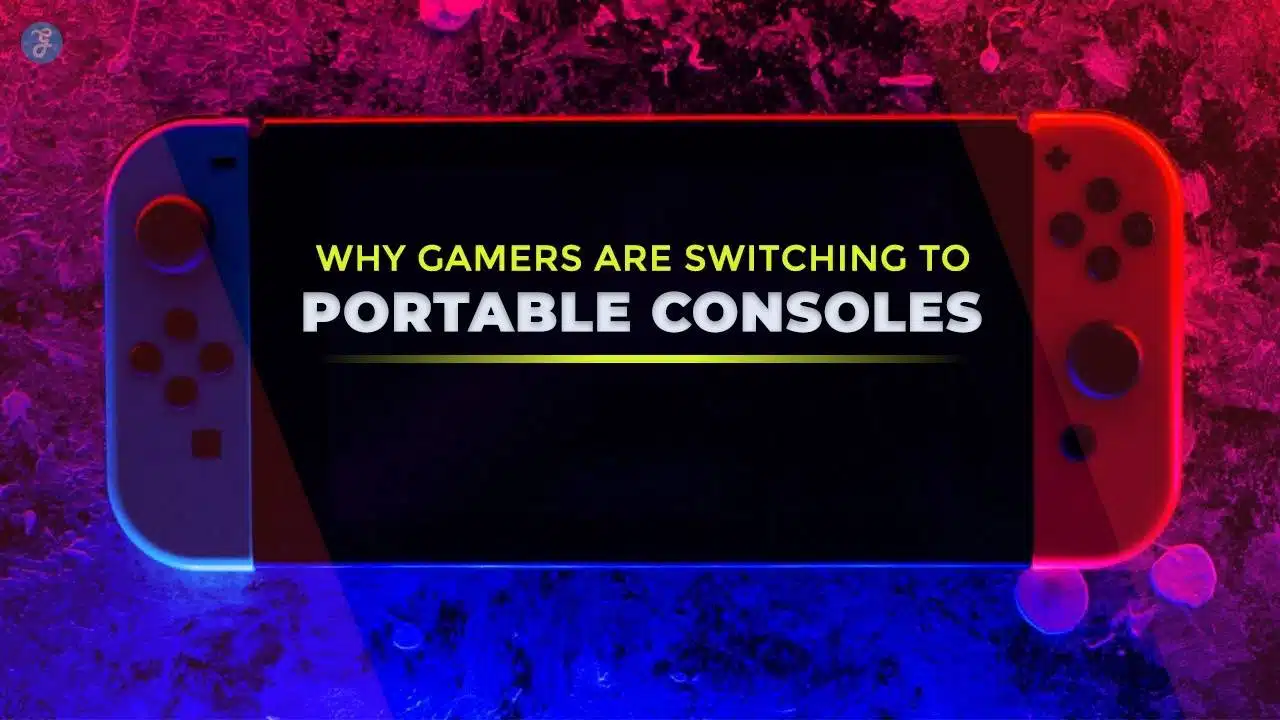
The definition of a “console” used to be simple. It sat under the television, lived in the living room, and demanded your full attention and a free evening. That picture is fading. Today, why gamers are switching to portable consoles has become one of the central questions shaping the games industry.
Portable and hybrid devices now slip into backpacks, rest on bedside tables, and come out on trains, in cafés, and on lunch breaks. They are not a side hobby anymore. For millions of players, they are the primary way to play. Understanding this shift means looking beyond hardware specs and asking how people actually live, work, and play.
From Couch to Commute – How Portable Consoles Redefined “Console Gaming”
For decades, console gaming meant a fixed screen and a fixed place. Families arranged furniture around a television. Friends booked entire evenings for split-screen sessions. The idea of “serious” gaming almost always involved a couch and a large display.
Portable gaming existed alongside that world, but it occupied a different tier. Early handheld devices focused on smaller, simpler games. They worked as companions, not replacements. Players took them on school trips, kept them for long car rides, and then returned to the TV for “real” play.
That hierarchy is now broken. Modern portable gaming consoles run many of the same titles as their living-room counterparts. Hybrids let one device move seamlessly between docked and handheld modes. Handheld PCs add yet another twist by bringing full PC game libraries into a portable form factor. The result is a reimagined console landscape in which the screen in your hands can carry just as much weight as the screen on your wall.
Hybrid and Handheld Systems Go Mainstream
Hybrid consoles played a decisive role in this transition. They showed that one device could serve two masters. Docked, they behave like traditional home consoles. Undocked, they become handhelds with the same software library and the same save files.
That simple change reshaped expectations. Players no longer had to choose between a “serious” machine under the TV and a “lightweight” handheld for travel. They could buy a single system and decide moment by moment where and how to play.
Handheld gaming PCs pushed the idea further. Systems inspired by PC hardware can run modern titles from large digital libraries, often with consoles’ familiar controller layout. Instead of carrying a laptop plus a controller, players can rely on a compact device built for gaming and nothing else. Performance still trails high-end desktops, but the experience is close enough for many people, especially when the alternative is not playing at all.
Portability as a Lifestyle Fit
The rise of portable consoles is also a story about lifestyle. Many gamers now juggle demanding jobs, family responsibilities, and long commutes. They may not have a dedicated entertainment room. They may share limited space with roommates or relatives. Finding uninterrupted time in front of a TV can feel unrealistic.
Portable consoles respect that reality. They fit between classes, during short breaks, or late at night when others are asleep. A handheld device lets you progress through a long role-playing game in twenty-minute bursts without navigating for the main screen.
Younger players in particular grew up with powerful phones in their pockets. For them, gaming has always been something that can happen anywhere. Dedicated handheld gaming consoles tap into that habit. They offer stronger controls, better ergonomics, and deeper games than a phone, while still fitting into the same on-the-go mindset.
Performance in Your Backpack – Why Power Is No Longer Tied to the TV
For portable consoles to become a serious alternative, they had to close the performance gap. That required advances in chip design, power management, and storage.
Recent handhelds use efficient processors tuned for gaming workloads. They pair those chips with solid-state drives, generous memory, and competent cooling. The result is hardware that can run demanding action titles and expansive open-world games while still fitting into a handheld shell.
Players notice the trade-offs, of course. Resolutions may be lower than on a 4K TV. Frame rates can vary. Visual settings often sit somewhere between console and mid-range PC. Yet for many, the gain in flexibility outweighs these compromises. It is easier to accept slightly softer visuals than to give up the freedom to play on the sofa, at a desk, or in a train seat.
Handheld Gaming PCs Change Expectations
Handheld gaming PCs altered expectations in another way: they made the idea of carrying an entire PC library feel normal. With these devices, games bought on major PC platforms become portable almost by default. Players no longer feel locked into a single ecosystem when they leave the TV behind.
This flexibility is a powerful answer to why gamers are switching to portable consoles. The choice is no longer between a closed, curated console and a bulky PC. A handheld PC offers something new: PC-grade libraries and mods with console-like convenience. It may not satisfy hardware enthusiasts chasing maximum frame rates, but it hits a sweet spot for players who value access and comfort.
Hybrid Consoles Deliver Two Experiences in One Purchase
Hybrid consoles contribute a different kind of value: one purchase, two roles. When docked, they work as family machines for party games, fitness titles, and local co-op. Undocked, they become personal devices for commutes and private sessions.
For parents, students, or anyone watching their budget, this dual identity matters. Buying a hybrid can feel more rational than buying both a home console and a separate handheld. It lowers the barrier to entry, especially in households where every major purchase has to justify itself in multiple ways.
Libraries, Ecosystems, and Cloud – Access Matters More Than Hardware
Hardware is only half the story. The momentum behind portable gaming consoles also comes from software and services.
Digital storefronts have matured. They offer huge back catalogs, frequent discounts, and quick downloads. Subscription services give players instant access to rotating libraries for a fixed fee. Cross-save and cross-progress solutions ensure that a save file created on one device often works on another.
All of this makes handheld gaming feel like an extension of existing habits, not a separate hobby. Players buy a game once, then decide where to play it based on their daily routine. That reduces the psychological friction of using a handheld as a primary device.
One Library, Many Screens
Cross-play and remote play push this further. Many platforms now allow players to start a game on a TV, then continue on a handheld using streaming or local network features. The console in the living room acts as the host, while the portable device becomes a screen and controller in one.
From a player’s perspective, the distinction between the “main” console and the portable unit starts to blur. What matters is the continuity of the experience. If you can carry your progress with you, the handheld feels less like a backup option and more like a natural part of the ecosystem.
Cloud Gaming on the Go
Cloud gaming has added another twist. When network conditions are good, streaming services can deliver console-level visuals to relatively modest hardware. Portable consoles with strong wireless connectivity and well-designed streaming apps can tap into that pipeline.
This does not mean that every session runs perfectly. Latency, data caps, and inconsistent signals still pose challenges. Yet for many players, cloud support turns a portable console into a flexible client for multiple services. It can touch different ecosystems without needing to own every device.
Economics, Access, and Value – Why Portable Consoles Feel Like a Smarter Buy
Price and value sit at the heart of many decisions. Players constantly weigh what they pay against what they get.
A high-end gaming PC or flagship home console plus a large TV can represent a significant investment. By contrast, a mid-priced handheld or hybrid often costs less than that combination, while still delivering modern games and a comfortable experience. For some buyers, the math is straightforward: a device that plays new releases both at home and on the go feels like a better value than hardware locked to a single room.
Entry Price vs. Flexibility
When people compare systems, they do not just look at price tags. They think about where they live, who they live with, and how often they can access the TV. A powerful home console in a crowded apartment may spend more time idle than a modest handheld that can be used anywhere.
Portable devices offer flexibility as part of the package. You can play in the kitchen while someone else uses the living room screen. You can take your games to a friend’s home without carrying a full console and cables. That flexibility becomes an invisible part of the value proposition, especially in urban environments where space is tight.
Digital Deals and Subscription Stacking
Digital distribution also favors portable ecosystems. Players can line up wish lists, track sales, and grab indie titles at lower prices. Subscription services on portable or hybrid consoles turn a monthly fee into a ready-made library that travels with the device.
Many handheld users stack these options. They subscribe to a service for evergreen titles, then buy a few key games at full price and fill the rest of their library with discounted releases. Over time, this pattern turns a single device into a deep catalog at a manageable cost.
For buyers who think in terms of long-term value rather than raw power, this is a compelling answer to why gamers are switching to portable consoles. The numbers make sense, and the experience feels rich enough to justify the spend.
Culture, Community, and Nostalgia – The Emotional Pull of Portable Play
Not every reason behind the shift is rational. Some are deeply emotional.
Many adults today grew up with early handhelds. They remember playing in the back seat of a car, under the covers at night, or in a corner of the schoolyard. Modern portable consoles speak directly to those memories, but with far higher production values. Picking up a contemporary handheld can feel like reconnecting with a younger self, only with better visuals and larger, more ambitious games.
Social Gaming Without the TV
Portable consoles also change how people gather. Instead of everyone staring at a single large screen, each player can bring their own device. Local wireless modes, ad-hoc co-op, and shared couch sessions become easier in small spaces.
This is especially evident in university dorms, shared apartments, and travel scenarios. Friends can play together in cramped rooms, on trains, or in hotel lobbies without needing a TV. The console becomes a social object, passed around or held side by side.
Retro and Indie Games Find a Natural Home
Portable screens suit certain types of games. Retro titles, pixel art adventures, and many indie projects look sharp and intentional at handheld sizes. They feel intimate rather than small.
This has led many players to associate portable consoles with creativity and variety. While big-budget blockbusters still dominate marketing, smaller games often shine brighter on handhelds. The commute, the lunch break, or the late-night session becomes the ideal slot for a focused, two-hour narrative or a cleverly designed puzzle game.
As this perception grows, it adds another layer to why gamers are switching to portable consoles. People no longer see them just as ways to play cut-down versions of home titles. They see them as platforms where distinctive experiences thrive.
The Trade-Offs – Why Not Everyone Has Switched
An honest editorial look at portable consoles has to acknowledge the downsides. The trend is strong, but it is not absolute.
Battery life remains a major concern. Demanding games drain power quickly. Long sessions can require chargers, battery packs, or compromises in performance mode. Over time, batteries age, reducing play time and forcing difficult choices between repair, replacement, or upgrade.
Comfort is another issue. Some handhelds are heavy or awkward for small hands. Others run warm during intensive titles. Extended play can lead to wrist strain or fatigue. Accessory makers offer grips, stands, and cases to soften these problems, but not every player wants to invest in extra hardware.
Battery, Comfort, and Longevity
Manufacturers and chip designers are working to push efficiency higher. More efficient processors and displays can stretch play sessions without making devices bulkier. Smart software modes allow players to trade graphical fidelity for endurance when needed.
Still, a portable console will almost always have less stamina than a controller connected to a plugged-in home system. For some gamers, that alone is a deal-breaker. They prefer to sit down, power on, and play for hours without thinking about usage percentages or charge cycles.
Why the Living-Room Console Still Matters
Traditional consoles keep clear advantages. They anchor large screens and sound systems. They offer straightforward setups for families who want one device everyone can share. They handle blockbuster titles at stable resolutions and frame rates, under conditions that portable hardware cannot yet match.
Competitive players and visual purists often stay loyal to these machines. Big screens help with precision aiming and situational awareness. Stable performance supports ranked play and tournaments. For them, portable consoles may appear interesting, but not essential.
This tension explains why the shift toward portable gaming looks more like a rebalancing than a clean break. Many households now mix and match: a home console for spectacle and a portable or hybrid for everyday play.
Why Gamers Are Switching to Portable Consoles – And What Comes Next
Taken together, the reasons why gamers are switching to portable consoles form a clear pattern.
Portability aligns with modern life. Players move between work, school, and home more fluidly than ever. A console that travels with them feels natural. Second, performance has reached a point where handheld and hybrid systems can deliver convincing versions of modern games. They may not win every benchmark, but they cross the threshold of “good enough” for a wide audience.
Ecosystems and services now support play across multiple screens. Digital libraries, subscriptions, cloud gaming, and cross-save options turn portable consoles into gateways rather than isolated islands. Players care less about the box under the TV and more about whether they can pick up their game wherever they are.
Price and value favor devices that do more than one thing. A single portable or hybrid machine can serve as both personal entertainment and a family console. It can host blockbuster releases, indie gems, and retro compilations, all while fitting into a bag.
Culture and emotion play their part. Nostalgia for earlier handhelds, the appeal of intimate solo sessions, and the ease of spontaneous local multiplayer all reinforce the shift. Portable consoles are not just practical. They feel right for the way people live and socialize today.
Portable Consoles as the Default, Not the Exception
Looking ahead, the most likely outcome is not that stationary consoles disappear. Instead, portable and hybrid systems will increasingly become the default entry point into gaming. For many new players, their “first console” will be something they can hold.
As hardware gets lighter, batteries improve, and cloud infrastructure matures, the difference between home and portable experiences will continue to shrink. The living room will still matter, but it will no longer define what a console is.
In that sense, the question of why gamers are switching to portable consoles has a simple answer. They are choosing devices that respect their time, their space, and their habits. The console has left the living room, and it shows no sign of going back.
Final Thought
Portable gaming no longer feels like a compromise. It feels like the natural evolution of how people play today. As lifestyles shift, technology improves, and gaming ecosystems become more flexible, portable consoles deliver something traditional systems never fully could—freedom.
Freedom to play anywhere, at any pace, and in a way that fits real life rather than dictating it. That is ultimately why gamers are switching to portable consoles: not because they reject the living-room experience, but because they finally have an alternative that respects their time, space, and habits.