

What is the most sustainable waste management? This question has become increasingly important as societies grapple with the growing challenges of waste production and environmental conservation.
The most sustainable waste management approaches prioritize waste prevention, reuse, recycling, and recovery over landfilling and incineration.
The Waste Management Hierarchy: A Framework for Sustainability
The waste management hierarchy provides a framework for prioritizing waste management options based on their environmental impact:
- Prevention
- Reuse
- Recycling
- Recovery (including energy recovery)
- Disposal (landfill or incineration)
This hierarchy emphasizes that the most sustainable approach is to prevent waste generation in the first place, followed by reusing materials, recycling, and recovering energy from waste. Disposal through landfilling or incineration should be considered only as a last resort.
Key Components of Sustainable Waste Management
Waste Prevention and Reduction
Preventing waste generation is the most effective way to reduce environmental impact. This can be achieved through:
- Designing products for longer life and easier repair
- Reducing packaging
- Implementing extended producer responsibility (EPR) programs
- Encouraging sustainable consumption patterns
In 2018, the total generation of municipal solid waste (MSW) in the United States was 292.4 million tons, or 4.9 pounds per person per day. By focusing on waste prevention, this number could be significantly reduced.
Reuse and Repair
Extending the life of products through reuse and repair helps conserve resources and reduce waste. Examples include:
- Donating usable items
- Repairing broken items instead of replacing them
- Repurposing materials for new uses
Recycling and Composting
Recycling and composting play crucial roles in sustainable waste management by diverting materials from landfills and conserving resources. In 2018, the recycling and composting rate in the United States was 32.1%. However, there is significant room for improvement, as the EPA estimates that 75% of the American waste stream is recyclable.
Energy Recovery
While not as preferable as prevention, reuse, or recycling, energy recovery can be a more sustainable option than landfilling for non-recyclable waste. Waste-to-energy technologies include:
- Anaerobic digestion for organic waste
- Incineration with energy recovery
- Landfill gas capture
In 2018, about 34.6 million tons of MSW were combusted with energy recovery in the United States.
Innovative Approaches to Sustainable Waste Management
Circular Economy
The circular economy concept aims to eliminate waste by keeping materials in use for as long as possible. This approach involves:
- Designing products for durability and recyclability
- Implementing take-back programs
- Developing new business models based on sharing and leasing
Smart Waste Management Systems
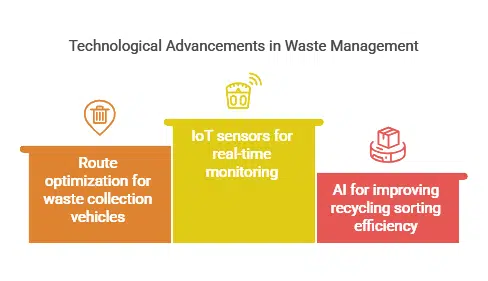
Technology is playing an increasingly important role in optimizing waste management:
- IoT sensors for real-time monitoring of waste levels
- Route optimization for waste collection vehicles
- Artificial intelligence for improving recycling sorting efficiency
Zero Waste Initiatives
Zero waste goals aim to divert all waste from landfills and incinerators. Cities like San Francisco have achieved 80% waste diversion rates through comprehensive programs including:
- Mandatory recycling and composting
- Extended producer responsibility
- Public education campaigns
Global Perspectives on Sustainable Waste Management
Waste management practices vary significantly across the world:
| Region | Recycling Rate | Challenges |
| European Union | 56.3% (2022) | Stagnating recycling rates |
| United States | 32.1% (2018) | Low recycling rates for some materials |
| Japan | 80% (Kamikatsu) | Aging population, limited land for disposal |
| Developing Countries | Often < 10% | Lack of infrastructure, informal waste sector |
Challenges in Implementing Sustainable Waste Management
Several obstacles hinder the widespread adoption of sustainable waste management practices:
- Lack of infrastructure in developing countries
- Economic barriers to recycling certain materials
- Public awareness and behavior change
- Policy and regulatory challenges
- Technological limitations in recycling complex products
Future Outlook and Emerging Trends
The future of sustainable waste management looks promising, with several trends emerging:
- Increased focus on plastic waste reduction and recycling
- Development of new recycling technologies for complex materials
- Greater emphasis on product design for recyclability
- Integration of digital technologies for optimizing waste management
- Growth of the circular economy and sharing economy models
Takeaways
What is the most sustainable waste management? It’s a comprehensive approach that prioritizes waste prevention, reuse, recycling, and recovery while minimizing disposal.
By adopting circular economy principles, leveraging technology, and implementing comprehensive policies, we can move towards a future where waste is seen as a resource rather than a problem. The most sustainable waste management practices are crucial for conserving resources, reducing environmental pollution, and mitigating climate change.





















