

Virtual reality (VR) is exciting, but it’s not perfect. Many virtual spaces feel disconnected or lack real ownership for users. People want more control, better privacy, and true digital assets they can own.
Now enters Web3—a game-changer in how we connect online. By using blockchain technology and decentralized networks, Web3 gives users more power over their data and experiences. This blog will explain how Web3 is reshaping VR into something far bigger than games or gadgets.
Ready to see the future?
Key Takeaways
- Web3 uses blockchain to give users more control and privacy in virtual spaces. It enables secure ownership of digital assets like NFTs and virtual land.
- In 2021, Beeple sold an NFT for $69 million, while Decentraland had a plot sell for $2.4 million. These show how creators can earn directly from their work.
- Play-to-earn games like Axie Infinity let players make money by playing or selling items as NFTs. This creates new jobs, especially in developing countries.
- Tools like Polygon process up to 7,000 transactions per second, solving some speed issues in virtual environments.
- High VR headset costs and internet access gaps limit inclusivity. User-friendly designs help make these technologies available to more people.
The Role of Web3 in Virtual Reality

Web3 changes how we experience virtual environments. It brings trust, freedom, and control to digital spaces with tools like blockchain and smart contracts.
Decentralized ownership and digital assets
Digital ownership gives control back to users. People can own digital assets like virtual land and art without middlemen. Blockchain technology makes this possible with secure, trackable records.
A plot of virtual land in Decentraland sold for $2.4 million in 2021. NFTs let artists sell their work directly and earn royalties on future sales. Beeple earned $69 million for one NFT in the same year.
These tools help creators keep value in their hands while using smart contracts for fair deals.
Enhanced privacy and security in virtual spaces
Web3 gives users more control over their data. Instead of trusting big companies, it uses smart contracts and decentralized networks to protect user information. This makes online spaces safer for people, with fewer risks of hacking or misuse.
Ethereum’s move to proof-of-stake in 2022 showed how blockchain can improve both security and energy use. Web3 also helps create private digital identities that stay secure while keeping personal info hidden from prying eyes.
Immersive Experiences Powered by Web3
Web3 is shaking up virtual spaces, making them more connected than ever. It opens doors for new ways to enjoy and profit from immersive tech experiences.
Interoperability between virtual worlds
Virtual worlds thrive with seamless connections. Platforms like VRChat and Horizon Worlds prove this by letting users create, explore, and interact across virtual spaces. Blockchain technologies enhance this further.
They enable secure sharing of digital assets between platforms through smart contracts and decentralized networks.
Layer-2 solutions such as Polygon handle up to 7,000 transactions per second. This ensures smooth asset transfers without delays or high fees. Whether trading non-fungible tokens or using virtual currencies, interoperability strengthens these immersive environments for all users involved.
Play-to-earn models and economic opportunities
Play-to-earn (P2E) games let players earn real money by playing. In 2021, a player bought virtual land in Decentraland for $2.4 million. Games like Axie Infinity reward users with tokens that hold value outside the game world.
These models offer jobs, especially in developing countries. Some people make a living through P2E platforms by selling digital assets like skins or virtual houses as NFTs. Blockchain technology ensures secure ownership of these items and opens doors to new income streams.
Creative Opportunities in Web3 and VR
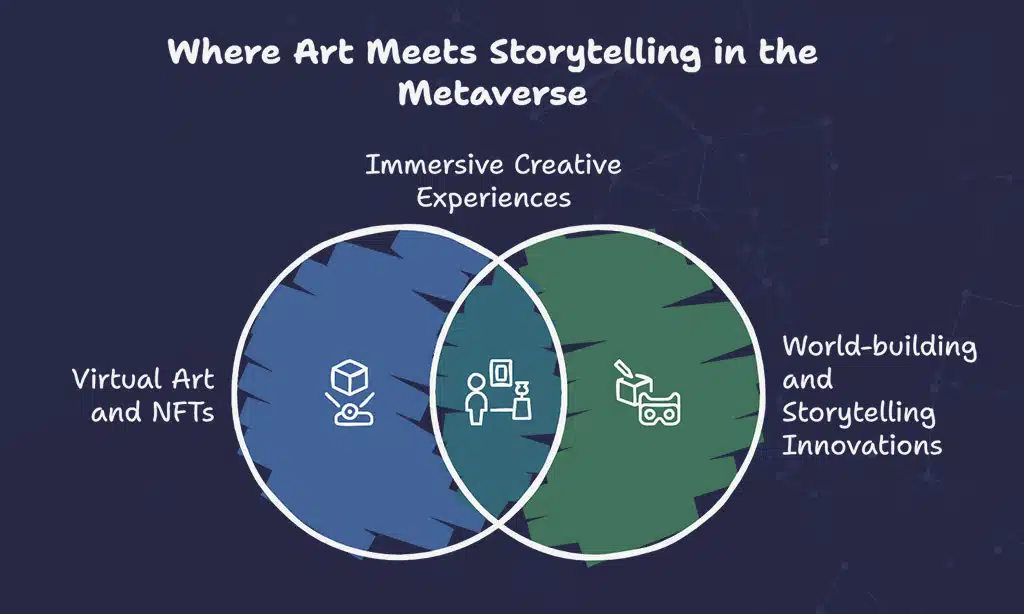
Artists can now sell digital creations as NFTs, making virtual spaces feel alive. Storytellers are crafting interactive worlds where players shape the plot.
Virtual art and NFTs
Digital art is now being sold as NFTs on decentralized networks. Beeple, a famous digital artist, sold one for $69 million in 2021. These non-fungible tokens give creators direct access to buyers without middlemen.
Buyers also get proof of ownership through blockchain technology.
Virtual land is another hot NFT market. A plot in Decentraland sold for $2.4 million in 2021. Smart contracts make these deals secure and transparent. Both artists and collectors benefit from royalties on future sales, creating new ways to earn money in virtual spaces like the metaverse.
World-building and storytelling innovations
Platforms like VRChat and Horizon Worlds let creators shape entire virtual spaces. Users can build unique stories, characters, and settings from scratch. These spaces offer play-to-earn options through non-fungible tokens (NFTs) or digital assets tied to blockchains.
For instance, a person can own virtual real estate or houses in Decentraland as verified NFTs.
Brands use augmented reality (AR) to blend physical and digital elements for richer storytelling. Through haptic feedback or augmented reality headsets, users feel deeply connected to these tales.
This creates emotional ties while allowing interactive experiences unlike those seen in Web 2.0 tools.
Challenges and Future Considerations
Scalability can feel like trying to squeeze a big puzzle into a small box. Making virtual spaces open for everyone is still a tricky road ahead.
Scalability and performance issues
Blockchains like Ethereum handle 15 transactions per second. This creates delays and slows virtual experiences. For better speed, layer-2 networks like Polygon help. They process up to 7,000 transactions per second.
Heavy graphics in immersive digital environments also create performance lags. Optimizing assets can reduce this strain. Tools like NVIDIA CloudXR improve rendering through cloud technology.
These changes keep virtual reality smoother for users worldwide.
Accessibility and inclusivity in immersive experiences
High VR headset prices block many users. Fast internet is another hurdle, limiting access to immersive technologies like virtual reality and augmented reality. Many people can’t afford these tools, creating a gap.
Offering 2D browser access helps include those without headsets. Simplifying interfaces can also ease adoption. Some resist blending physical and digital lives, so user-friendly designs matter greatly.
Takeaways
Web3 and VR are changing how we experience the internet. They give users more control, privacy, and exciting ways to own digital items. Virtual worlds now offer fresh ways to work, play, and create.
This mix of tech opens doors for businesses, artists, and gamers alike. The future feels closer than ever—bright and immersive!
FAQs
1. What is Web3, and how does it connect to virtual reality?
Web3 refers to the next phase of the internet that uses decentralized networks like blockchain technology. It powers virtual worlds by enabling digital ownership, peer-to-peer interactions, and immersive experiences in virtual reality (VR).
2. How do blockchain and smart contracts impact immersive technology?
Blockchain ensures secure transactions for digital assets like non-fungible tokens (NFTs) or virtual real estate. Smart contracts automate these exchanges, making VR marketplaces safer and more reliable for users.
3. Can Web3 improve collaboration in virtual environments?
Yes! Decentralized applications allow remote workers and learners to collaborate in shared simulated environments using tools like augmented reality (AR) or digital twins for better engagement.
4. What role do non-fungible tokens play in VR gaming?
NFTs let players own unique items like skins or weapons within virtual reality games. These collectibles can also be traded across platforms through blockchain interoperability.
5. How does artificial intelligence fit into this new era of immersive experiences?
Artificial intelligence enhances predictive analysis, creating smarter simulations for AR/VR systems while improving user interactions within decentralized applications.
6. Is digital ownership important in Web3’s vision of immersive technology?
Absolutely! Digital ownership empowers users to control their assets—like virtual land or collectibles—instead of relying on centralized entities, fostering true independence online.






















