Politics feels messy, right? People often complain about corrupt leaders and missed promises. Decisions are made behind closed doors. Many voters feel powerless, left out of the process.
But change is growing. Decentralized Autonomous Organizations (DAOs) are shaking up politics. Built on blockchain technology, they promise transparency and fairness. This blog will show how DAOs empower citizens through decentralized governance and collective decision-making.
Curious to see this movement in action? Keep reading!
Key Features of DAOs Driving Political Change
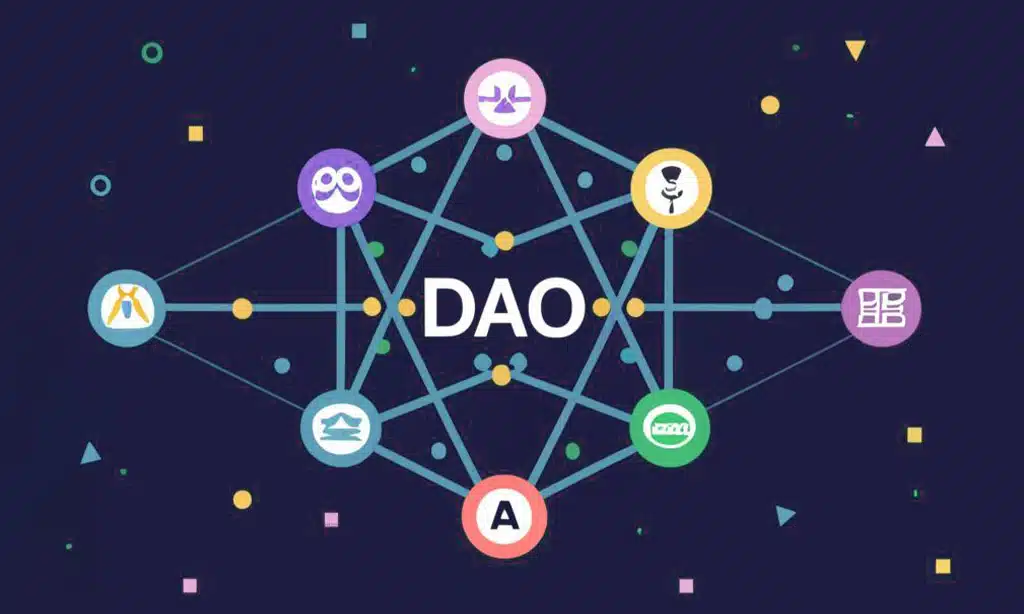
DAOs change how groups make decisions, using fair and open systems. They give everyday people more control in shaping policies.
Transparency and Accountability
Smart contracts keep everything open. Every action is recorded on public blockchains. This means anyone can check the data anytime. No more hidden deals or dark money in decisions.
Governance tokens let people vote directly on issues. Voters can track how funds are used from the DAO treasury. This keeps leaders honest and avoids misuse of campaign funds or donations.
Decentralized Decision-Making
Groups in DAOs make choices without a central leader. Blockchain technology records every vote, making decisions transparent and fair. Smart contracts automate actions once members agree, reducing delays and human errors.
Each member can use their voting power to directly influence outcomes.
For example, governance tokens let people vote on how to spend the DAO treasury or fund public goods. This type of collective decision-making avoids control by big players, promoting equality.
It also empowers global participation by letting anyone join from anywhere using dApps or decentralized financing tools like cryptocurrency donations.
Grassroots Participation
Ordinary people can now join decision-making faster through DAOs. Blockchain technology gives grassroots movements tools to organize better and clearer. Local activists use decentralized applications to create voting mechanisms, spread ideas, and gather cryptocurrency donations.
In 2021, ConstitutionDAO raised $47 million in crypto to bid on a rare U.S. Constitution copy. This showed how decentralized funding boosts causes quickly. By cutting middlemen, DAO governance models allow more direct public involvement than traditional systems ever could.
DAOs in Political Campaigns and Fundraising
DAOs now let people fund campaigns with cryptocurrency donations, shaking up old systems. Their decentralized approach gives every participant voting power in how funds are used.
Case Study: ConstitutionDAO
In November 2021, ConstitutionDAO raised over $47 million in cryptocurrency. Its goal was to buy a rare copy of the U.S. Constitution at auction. Over 17,000 people joined this decentralized autonomous organization (DAO) to pool their funds.
Donors received governance tokens called “PEOPLE,” giving them voting power on decisions about the document’s future use or display.
The group fell short during the Sotheby’s auction, losing to billionaire Ken Griffin. Yet it proved how Web3 tools can unite citizens for grassroots activism and decentralized funding efforts.
The DAO’s transparent structure showed how blockchain technology builds trust among strangers online. Though they did not win, many participants called it a huge success for collective decision-making and global participation in political causes using cryptocurrencies and smart contracts.
The Role of Crypto in Campaign Financing
Crypto is changing how campaigns get funded. It allows for fast, transparent, and borderless donations. Using blockchain technology, every transaction is recorded on a public ledger.
This helps build trust with supporters. Smart contracts can manage fundraising goals automatically.
Cryptocurrency donations remove the need for banks or middlemen. This lowers fees and speeds up transfers. In 2022, some U.S. political action committees started accepting crypto to reach younger voters familiar with decentralized finance (DeFi).
These tools give smaller donors more voting power in campaign decisions through governance tokens tied to their contributions.
Challenges for DAOs in Political Movements
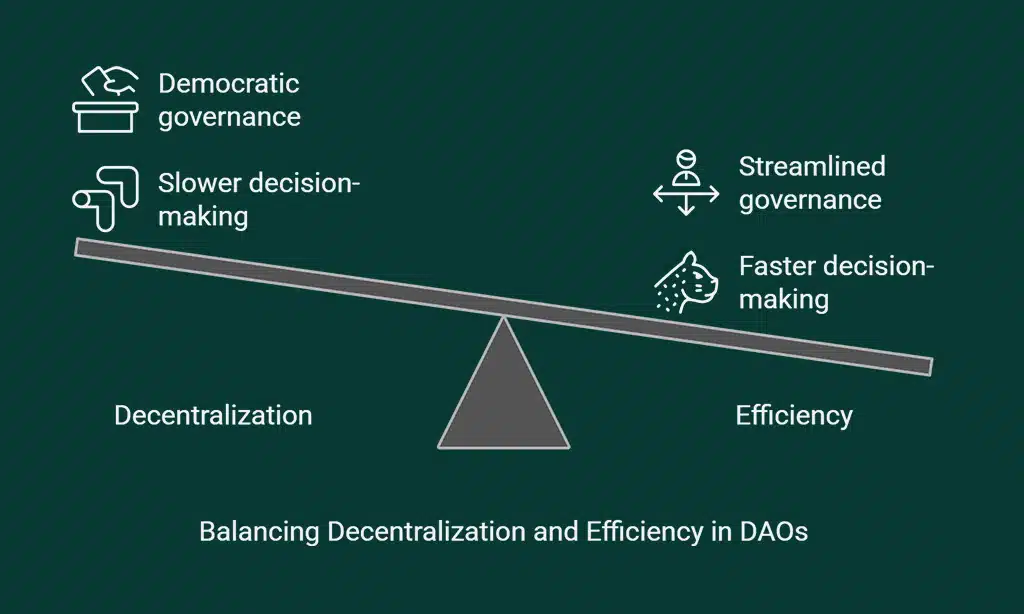
DAOs often struggle to balance fairness with speed. Legal issues and unclear rules make things tricky for political use.
Balancing Decentralization and Efficiency
Too much decentralization can slow things down. Decision-making may take longer if everyone has to vote on every issue. This delay can hurt groups working on fast-moving goals, like political campaigns or environmental policies.
Some DAOs use hybrid approaches to fix this. For example, smaller teams or boards of directors handle urgent tasks while larger votes cover big decisions. Smart contracts help by automating repetitive work, saving time and reducing errors in process management.
Regulatory and Legal Obstacles
Many governments see DAOs as risky. They don’t fit well into current legal frameworks like corporations or nonprofits. Rules for securities, taxes, and fundraising add confusion.
For example, crypto donations may lead to scrutiny from regulators over money laundering concerns.
Laws about decentralized finance (DeFi) are unclear in many places. This makes DAOs vulnerable to lawsuits or penalties. Policymakers argue that decentralized governance lacks enough safeguards against fraud or governance attacks.
Without clear rules, political action can slow down or face big fines.
The Future of Political DAOs
Political DAOs could reshape how people engage in decision-making, giving citizens more direct control. With blockchain technology driving transparency, these groups might spark major changes across borders.
Empowering Citizen-Led Governance
DAOs give citizens a louder voice in decisions. Blockchain technology allows direct voting on policies, cutting out middlemen. Governance tokens let people hold real power over choices made for their communities.
This hands-on approach means leaders must listen and act transparently.
Grassroots movements thrive with decentralized funding tools like cryptocurrency donations. Smart contracts ensure fair money distribution without hidden agendas. Quadratic voting adds balance by valuing individual opinions equally, boosting voter participation across all levels of governance.
Potential for Global Political Reform
Web3 governance systems can give citizens direct voting power. People could help shape policies without needing politicians as middlemen. This decentralized decision-making could make governments more accountable and transparent.
Smart contracts and blockchain technology ensure decisions are fair, open, and cannot be changed secretly.
Global participation is another big shift these tools bring. Grassroots movements now have easy access to organize across borders. Cryptocurrency donations allow funding without traditional financial barriers or restrictions.
Decentralized autonomous organizations (DAOs) may soon replace outdated political structures, offering a fresh way for communities to solve problems together.
Takeaways
DAOs are shaking up how politics works. They push for transparency and shared decision-making. Tools like blockchain and governance tokens let people have a direct say. These groups help activists raise funds fast, often with cryptocurrency donations.
Challenges like laws and keeping things efficient still remain though. With time, DAOs could change the way leaders govern and citizens engage worldwide.
FAQs
1. What are Web3 DAOs, and how do they work in political movements?
Web3 DAOs, or Decentralized Autonomous Organizations, use blockchain technology and smart contracts to enable decentralized governance. They allow global participation in decision-making without relying on traditional leadership like a board of directors.
2. How does decentralized governance impact voter participation?
Decentralized governance gives voting power directly to participants through tools like governance tokens and voting mechanisms. This increases voter participation by making collective decision-making more accessible.
3. Can DAOs support political funding?
Yes, DAOs can provide decentralized funding for causes through cryptocurrency donations and DAO treasuries. These funds can be used for public goods or even act as alternatives to super PACs.
4. What risks do Web3 DAOs face in politics?
Governance attacks, uneven token distribution, and flaws in reputation systems are common risks. Without proper safeguards using cryptography or social science insights, these issues could harm their effectiveness.
5. How can quadratic voting improve DAO-led political action?
Quadratic voting helps balance voting power by preventing large stakeholders from dominating decisions. It incentivizes fairer outcomes while promoting diverse opinions within the organization’s structure.
6. Are there real-world examples of DAOs influencing politics today?
Yes! Startups have launched humanitarian efforts funded by DAO treasuries, while activists use platforms like Uniswap Protocol for economic behavior studies tied to social networks such as Instagram or discussion forums tackling topics like sexual orientation rights or legal contracts reformations driven via artificial intelligence models crafted collectively