Are your water and electric bills climbing each month? You cut shower time and fix leaks, yet the total stays high. Drips, old taps, or faulty valves can waste gallons and drive up costs.
You want simple ways to conserve water and energy at home.
Water heating makes up about 18% of a home’s utility expense. Water-Saving Fixtures To Cut Utility Bills will trim that share. This guide lists 10 top gadgets, from low-flow showerheads to dual-flush toilets, plus faucet aerators and ENERGY STAR washers, to shrink your usage.
You will learn quick swaps and easy tips. Ready to save?
Key Takeaways
- Low-flow showerheads run at 2.5 gallons per minute (gpm) or less instead of 5.5–6 gpm. A 2.5 gpm model saves about 35 gallons in a 10-minute shower, cuts water use 25%–60%, and costs just $10–$20.
- Dual-flush toilets offer a 0.8 gallons-per-flush (gpf) liquid option and a 1.6 gpf solid flush. They lower annual water use by about 20% and save nearly 13,000 gallons per year.
- Faucet aerators that limit flow to 1.0 gpm or less can halve sink water use and trim utility bills by up to 50%, all for just a few dollars per unit.
- ENERGY STAR dishwashers use only 6 gallons of hot water per load versus over 20 gallons by hand. Front-load clothes washers run about 25 gallons per cycle, cutting both water and energy costs.
- Smart irrigation systems with soil moisture sensors and weather data adjust watering in real time. They can slash yard water use by 50% and shut off at the first sign of a leak.
Benefits of Low-Flow Showerheads
Pre-1992 models gush at 5.5 gallons per minute. Low-flow showerheads use 2.5 gpm or less, and ultra-low-flow nozzles sip just 0.5 gpm. Swapping a 6 gpm spray for a 2.5 gpm shower head saves 35 gallons in a ten-minute rinse.
You trim water bills and ease strain on your water heater, cutting energy consumption.
Prices sit at just $10 to $20, yet they slash water use by 25% to 60%. That modest outlay pairs with faucet aerators, tankless water heaters or on-demand units and smart thermostats to boost home energy efficiency.
Users enjoy hot showers, conserve water supplies and reap energy savings.
Advantages of Dual-Flush Toilets
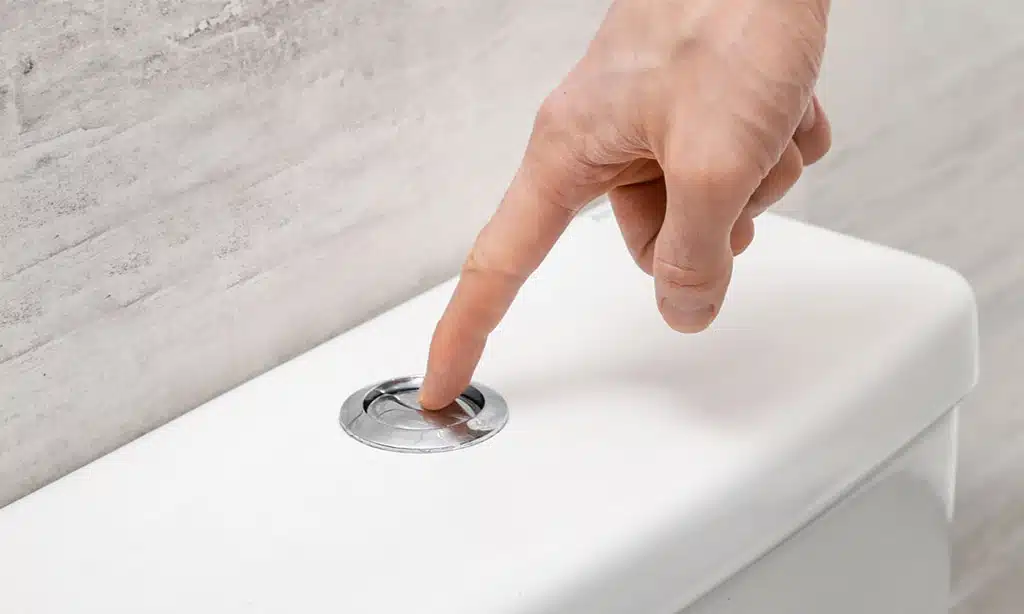
Dual-flush toilets act as a low-flow fixture that uses two flush volumes for solid and liquid waste. Each liquid flush uses as little as 0.8 gallons per flush. Each solid flush still uses less water than older models that need 1.6 gpf.
This setup cuts water consumption by roughly 20% each year.
High-efficiency toilets save nearly 13,000 gallons annually over older units. This upgrade complements other energy-efficient appliances. Families enjoy lower utility bills and a more sustainable lifestyle.
Plumbers cite energy audit data when they install these water-saving fixtures. Homes can earn an Energy Star label for greener plumbing fixtures and boost home energy efficiency.
High-Efficiency Faucets Explained
High-efficiency faucets curb waste at the sink and boost water conservation. Kitchen taps pour 2.2 GPM (gallons per minute) like mini waterfalls. Other faucets flow at 1.5 to 0.5 GPM.
Models that drop to 1.0 GPM or less save a bundle. You slash water waste and cut hot water bills.
Some faucet aerators pack a shut-off valve. You pause the flow while you soap up. That trick stops extra gallons in their tracks and shrinks energy consumption. You boost home energy efficiency with a twist.
The Role of Low-Flow Faucet Aerators
Faucet aerators clip onto taps to cut water flow while keeping strong jets. Devices with a flow rate at or below 1.0 gpm cost little and fit most sinks. They can slash water use by up to half, and trim utility bills nearly 50%.
Even plastic models match brass units in performance. This tweak boosts water conservation and trims energy consumption at home.
Builders sell kits with an adjustable wrench or Teflon tape for a quick swap. Homeowners can join the energy-saving game in minutes. Small steps lower gpm use and feed greener routines.
How Energy-Efficient Dishwashers Save Water
ENERGY STAR certified dish cleaning machines sip just 6 gallons of hot water per load. Most handwashing can use over 20 gallons, so this cuts water conservation costs. A booster heater warms water to 140°F fast, trimming energy consumption.
A flow sensor and a savvy control board match water use to soil levels. Smart cycles skip idle time and target grime like a heat-seeking missile.
Hot water heating drives most energy consumption in dish cleaning units. A flow sensor trims heating time when it spots dirty pans. You load plates, cups, and pots, then pick a saving cycle that trims wash time.
This energy-efficient appliance eases strain on your HVAC system by spilling less steam. Your utility bills shrink with energy savings and lower water use.
Energy-Efficient Clothes Washers for Water Conservation
Front-loading washers use less water and energy than old top loaders. Inefficient machines cost three times more to run than energy-efficient appliances. A clothes washer draws 25 gallons of hot water per cycle.
Cold water rinses cut energy consumption, yet clothes still emerge clean.
Energy Star washers drive down utility bills and boost home energy efficiency. Load Sense technology adjusts water levels to fit each load. A water meter helps spot leaks and track water conservation.
Your wallet will cheer lower bills.
Water-Saving Valves Overview
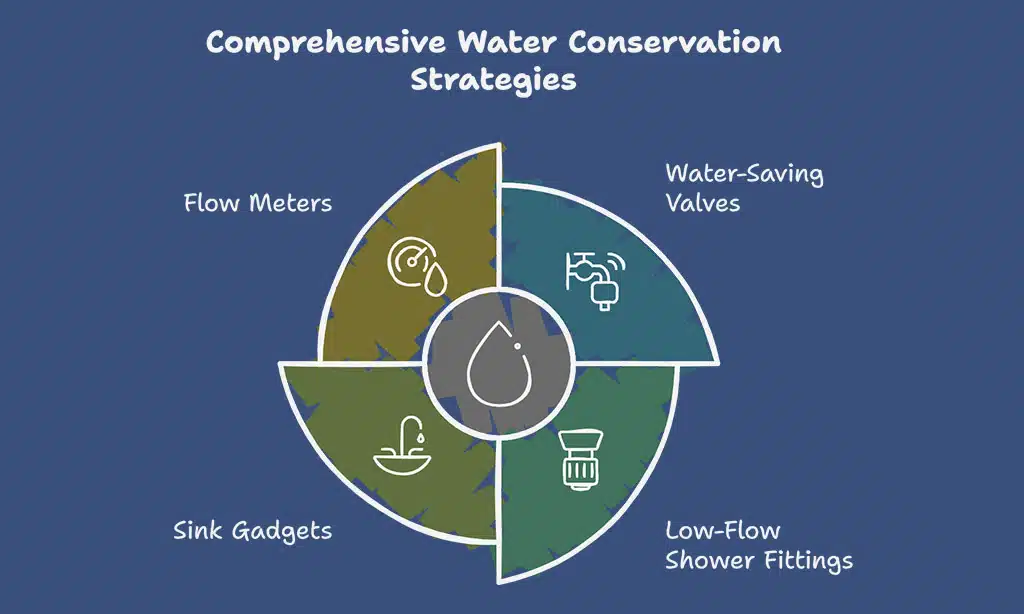
Water-saving valves let you pause the stream while you soap up, and keep the heat locked in. A valve meter cuts flow from 2.5 gpm to 1.5 gpm, so you use less water. You can click off faucet jets mid-task, then click back to the same warmth.
Low-flow shower fittings with shut-off knobs trim shower gallons by half in minutes. Homeowners enjoy big energy savings on both hot water and heating costs.
Many sink gadgets, like aeration devices, add a quick cut-off, and run under 1.0 gpm. Low-flow fixtures add extra cuts, while keeping your soap scald-free. Houses can slash thirty percent off water bills with spigot and shower stops.
Flow meters offer live data so you see each drop. This setup speeds up water conservation, and tames energy consumption.
Smart Irrigation Systems for Efficient Water Use
Smart irrigation systems cut water waste in yards. They link with soil moisture sensors and weather stations. A soil moisture sensor reads ground dampness each day. A weather station tracks rain and temperature.
The system then adjusts drip irrigation or sprinkler run times. You can tweak watering via a mobile app from any spot. A live data stream feels like a coach barking orders to your sprinklers.
This method slashes wasted gallons per minute.
A study shows these units can cut water use by fifty percent. New leak detectors shut off flow at the first drip. They stop overwatering so plants never drown. This saves water and supports sustainable landscaping.
The kit taps into IoT networks for live weather data. A single irrigation controller and valve handle each zone. That duo cuts energy consumption. It adds energy savings and boosts home energy efficiency.
You see big water conservation gains and smaller utility bills.
Rainwater Harvesting Systems Benefits
Gardeners count every drop. Systems capture rainfall and send it to collection tanks. Roofs work like sponges, channeling water through simple filters. A small pump moves that water to hoses and faucets for lawns.
This setup cuts household water consumption and boosts water conservation.
Stormwater management costs drop. City treatment plants see reduced energy consumption. You swap city drips for clean rain on plants and cars. This change raises home energy efficiency and trims utility bills.
Green upgrades curb erosion around foundations.
Takeaways
Smart irrigation and rainwater cisterns work day and night to curb waste. On-demand heaters save energy and money. You can swap shower fixtures and low-flow taps to shave costs. Dual-flush toilets flush smartly to trim water use.
Your home will run lean and green.
FAQs on Water-Saving Fixtures To Cut Utility Bills
1. What fixtures cut utility bills by 30%?
Low-flow showerheads, low-flow toilets, faucet aerators, and energy-efficient appliances do the heavy lifting. I once swapped my old shower head with a low-flow showerhead, and my meter plummeted. You lock in water conservation, slash energy consumption, and enjoy major energy savings.
2. How do low-flow showerheads save water?
Low-flow showerheads cut the flow to 1.8 gallons per minute (gpm) or less. A standard head uses 2.5 gpm or more. You trim water use, lower your bills, and help with water conservation.
3. Can faucet aerators boost energy savings?
Faucet aerators snap onto your taps, mixing air with water. That drops your gallons per minute and tames hot water use. You save on heating and cooling energy consumption, and you lock in real energy savings.
4. Are low-flow toilets reliable?
Modern low-flow toilets flush with just 1.28 gallons per flush. They pack a punch without clogs. You help with conserving water and still get a clean bowl.
5. How do energy-efficient appliances make a difference?
When plugged in, energy efficient appliances sip less power. Dishwashers, washing machines, and even your fridge can cut energy consumption. They boost your home energy efficiency and help with water conservation.