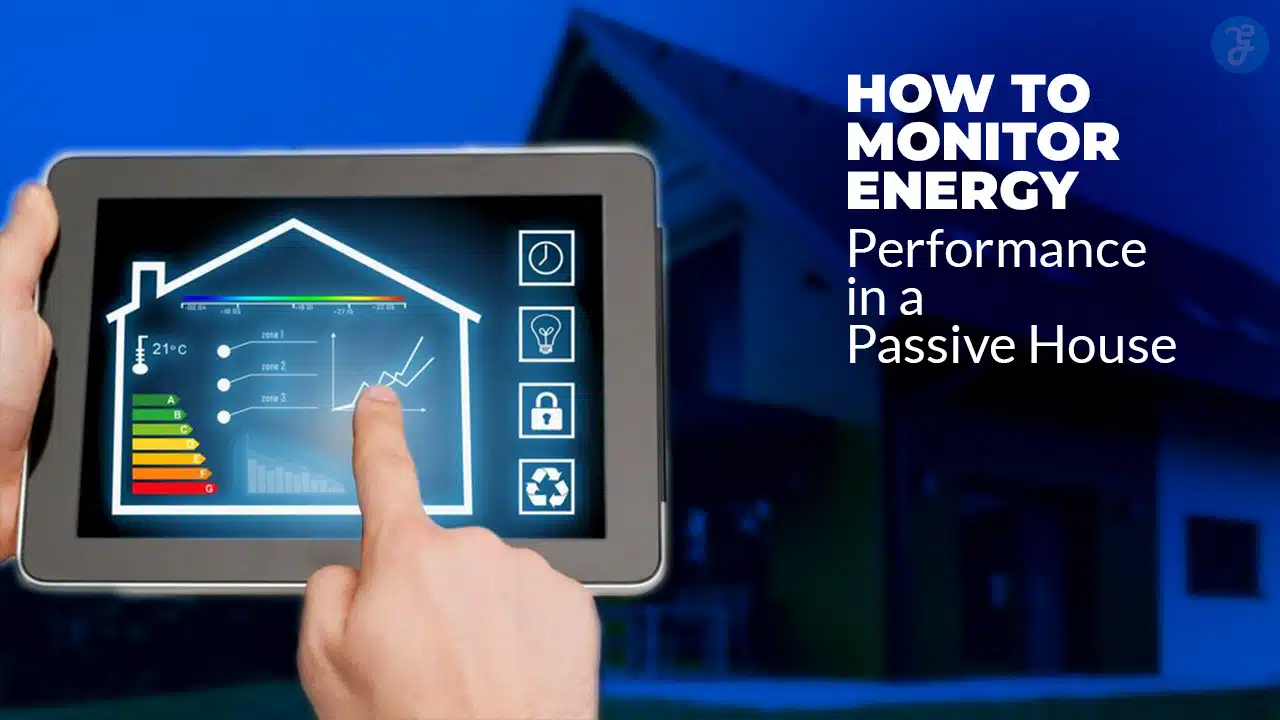
Keeping track of energy use in a Passive House can feel tricky. Are you wasting heat? Is your ventilation system pulling its weight? Without the right tools, spotting these issues is like finding a needle in a haystack.
Did you know Passive Houses can cut energy use by up to 90% compared to regular buildings? But that only works if everything runs smoothly. Monitoring helps catch problems early and keeps your house as efficient as promised.
This guide will show you five must-have tools for tracking energy performance. You’ll learn how they work and why they’re essential for any Passive House owner. Ready to save more energy? Keep reading!
Smart Energy Monitoring Systems
Smart energy monitoring systems track your home’s energy use in real-time. They help spot problems, like unexpected heat loss or high power usage. These devices collect data about heating, cooling, and hot water consumption.
Passive Houses rely on this information to reduce energy consumption by up to 90% compared to regular buildings.
A good system measures air changes per hour and indoor air temperature for better thermal performance. Some even notify you of unusual spikes in usage via apps. For example, a sensor might catch inefficiencies caused by thermal bridging near window frames or poorly insulated walls.
These tools make saving energy easier while keeping your passive house comfortable year-round.
You can’t manage what you don’t measure. – Peter Drucker
Thermal Imaging Cameras
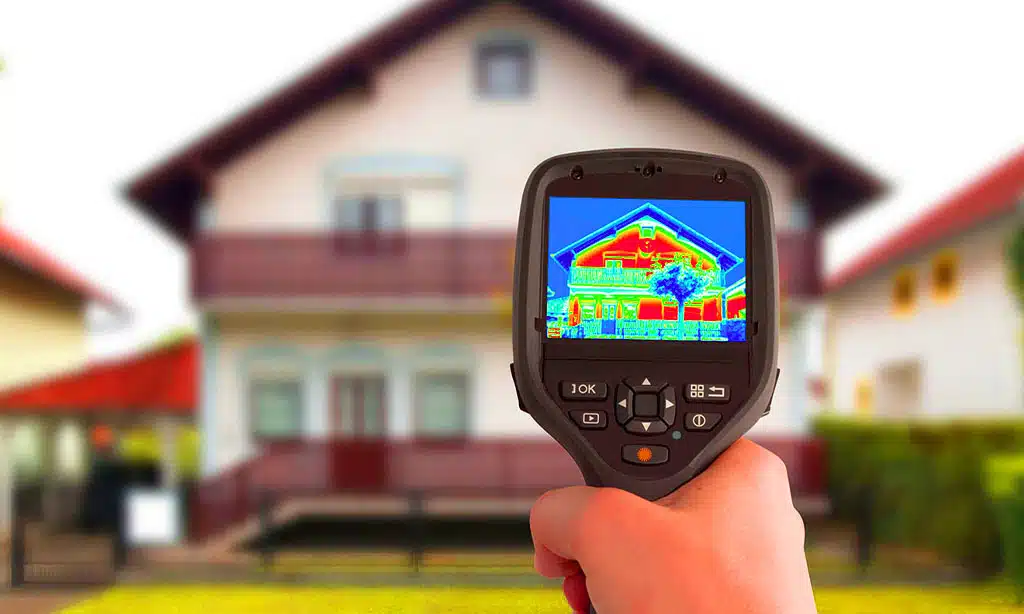
Thermal imaging cameras find heat leaks fast. They spot thermal bridges, weak insulation, and other energy-wasting areas. These tools work by detecting infrared heat patterns on walls, windows, or the building envelope.
They show where warm air escapes or cold spots form in a passive house. This helps locate problems with airtight construction or thermal breaks. By fixing these issues, you improve energy savings and cut heating bills.
Use them during inspections to ensure your home keeps its heat where it belongs!
Airtightness Testing Equipment
Airtightness tests check for leaks in a building envelope. These leaks waste energy and lower efficiency. A blower door is the main tool used for testing. It creates pressure differences to find gaps where air escapes or enters.
Passive Houses must meet strict airtightness rules, which reduces heating and cooling needs.
Good airtight construction can save up to 90% of energy compared to typical homes. This test helps ensure the house stays warm in winter and cool in summer without wasting energy. Fixing small leaks found by these tests boosts both comfort and savings.
Indoor Air Quality Monitors
Indoor air quality monitors check for dust, humidity, and CO2 levels. They track airborne particles like PM2.5 or toxic gases in real time. This keeps the indoor environment safe and healthy.
Passive Houses rely on clean air due to airtight construction and ventilation systems.
“Good air inside means a better life outside.”
These monitors help spot issues early, like high humidity that may cause mold. Use them with heat recovery ventilation (HRV) systems for fresh air exchange. Pairing both boosts energy efficiency while improving comfort in low-energy houses.
Heat Recovery Ventilation (HRV) Performance Trackers
HRV performance trackers measure how well your heat recovery ventilation system works. They track airflow, energy savings, and fresh air exchange. These tools help spot issues that lower efficiency, like blockages or leaks.
A Passive House aims to recover at least 75% of the heat from exhaust air. If the tracker shows less than that, something needs fixing.
Good HRVs keep indoor air healthy and regulate relative humidity. High RH can cause mold; low levels make air too dry. Performance trackers ensure balance across seasons. For summer months, many systems have a bypass damper to reduce overheating risks while saving more energy.
Always check data regularly to prevent small problems from becoming costly ones!
How to Integrate Monitoring Tools Effectively
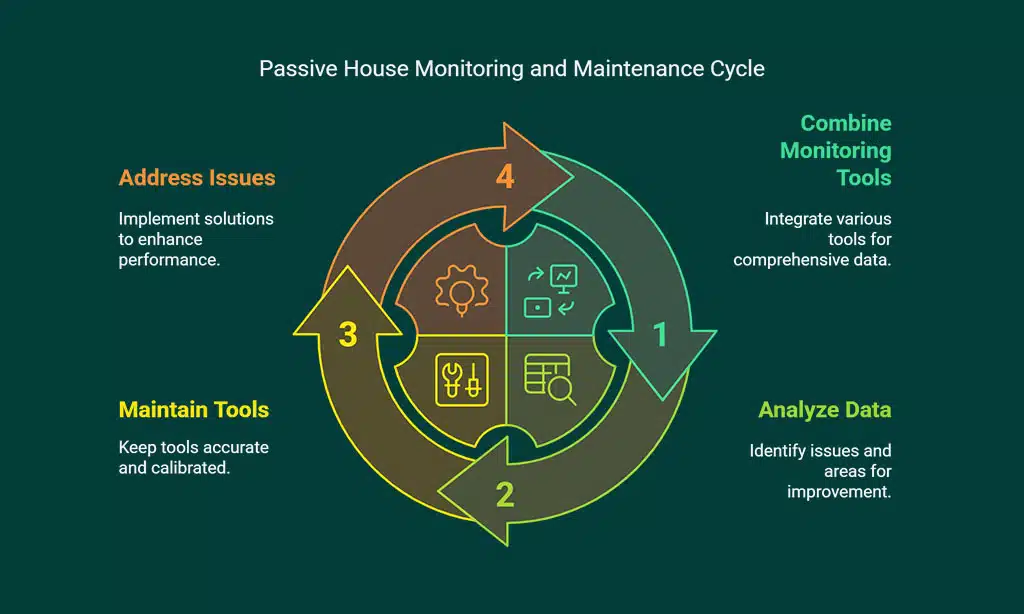
Use these tools together wisely, check them often, and keep them working well—your passive house deserves it!
Combining tools for comprehensive data
Energy monitoring works best with a variety of tools. A smart energy monitor tracks total use, while thermal imaging cameras identify heat leaks. Airtightness tests confirm the building envelope remains stable, minimizing air flow losses.
Heat recovery ventilator (HRV) trackers assess system efficiency, ensuring balanced fresh air exchange.
Thermal bridges and poor insulation become evident when analyzing data from these tools. Using an indoor air quality monitor alongside HVAC systems assesses healthy conditions inside.
Utilizing multiple devices helps lower energy consumption and address performance issues more efficiently in passive house design.
Regular maintenance and calibration
Regular checks keep tools accurate. Calibration ensures data matches real-world conditions. Passive House equipment, like indoor air quality monitors and thermal cameras, performs better with proper care.
Airtightness testing tools may lose accuracy over time. Inspect frequently to avoid false readings. Ventilation systems, such as heat recovery ventilators, also need upkeep for steady energy savings.
Benefits of Monitoring Energy Performance
Tracking energy performance helps spot waste, save money, and keep your passive house running like a well-oiled machine—read on to uncover the details!
Identifying energy inefficiencies
Energy inefficiencies can hide in small details. Air leaks around high-performance windows or doors waste energy. An airtight construction stops this problem, saving heat and money.
Thermal bridges also cause major losses. These weak points in the building envelope let heat escape quickly. Using thermal imaging cameras finds these spots fast, helping fix them before bigger problems arise.
Optimizing system performance
Improve energy efficiency by tracking data from smart systems. Passive Houses consume 40–60% less energy than regular buildings. Use tools like heat recovery ventilation (HRV) trackers to check if they transfer at least 75% of heat back into fresh air.
Control solar gain with better designs or high-performance windows. Reduce overheating by managing sunlight through insulated window choices or shading techniques. Regularly maintain airtight construction and test for leaks to close performance gaps and save more energy.
Takeaways
Using the right tools makes monitoring energy performance simple. Smart systems, thermal cameras, and airtightness tests show where improvements can help. Air quality monitors and HRV trackers keep your home healthy and efficient.
These steps save energy, cut costs, and boost comfort. Small changes lead to big gains in a Passive House’s performance. Start today, and watch your home thrive!
FAQs
1. What tools can help monitor energy performance in a passive house?
You can use an infrared thermometer, particle counter, humidity meter, heat pumps, and energy modeling software like PHPP (Passive House Planning Package) to track energy efficiency.
2. How does thermal insulation improve energy savings in a passive house?
Thermal insulation reduces heat transfer through walls and the building envelope. This helps maintain indoor temperatures and lowers heating or cooling needs.
3. Why is airtight construction important for passive houses?
Airtight construction prevents air leaks that waste energy. It works with ventilation systems like heat recovery ventilation (HRV) to keep fresh air flowing without losing warmth.
4. Can high-performance windows really make a difference?
Yes, double or triple-glazed windows reduce thermal bridges and solar heat gain while improving overall thermal performance of the home.
5. How do you measure indoor air quality in a passive house?
You can use tools like particle counters and humidity meters to check for clean air and proper moisture levels from ventilation systems or natural airflow.
6. What role does solar energy play in reducing energy consumption?
Passive solar design uses sunlight for heating during colder months by optimizing window placement and total solar transmittance while minimizing active cooling needs during summer months.