
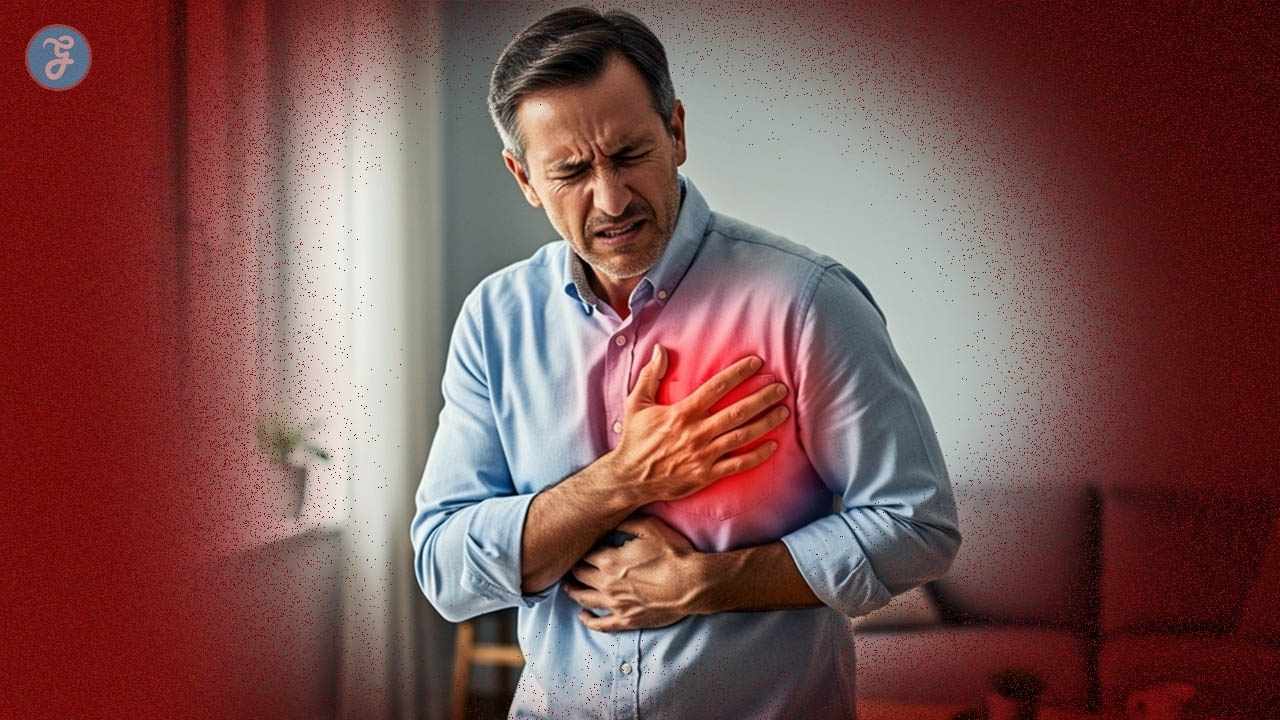
Have you ever felt a strange flutter in your chest and wondered if you should be worried? It happens to the best of us. You might feel a sudden tingle in your arm or break into a quick sweat. Many people miss the early symptoms because they simply do not know what to look for. Some folks think heart events only feel like crushing chest pain, but that is not always true. The reality is that symptoms can sneak up on you in entirely different ways.
Knowing how to spot the warning signs of heart attack could literally save your life. Here is a fact that matters. The American Heart Association reported in 2025 that one person dies every 33 seconds from cardiovascular disease in the United States. That is a frightening number. The good news is that you can learn to catch these danger signs early.
I am going to walk you through the exact signs you need to look out for. Grab a cup of coffee, and let’s go through this together so you can protect yourself and your loved ones.
What is a Heart Attack?
Now that you understand why spotting warning signs matters, we should talk about what actually happens inside your body. A heart attack occurs when blood flow to your heart muscle stops or slows down drastically. This starves the muscle of oxygen.
Your coronary arteries deliver blood to your heart. Sometimes, they get blocked by a blood clot or plaque buildup. This blockage prevents oxygen from reaching the heart tissue.
According to the Centers for Disease Control and Prevention (CDC), about 805,000 Americans have a heart attack every single year. That makes it a very common medical emergency.
Without oxygen, heart cells start dying within minutes. Doctors call this a myocardial infarction. The bottom line is simple. Your heart is not getting the blood it needs to keep working properly. Think of your heart like an engine that needs fuel to run. When the fuel line gets clogged, the engine sputters and fails.
- Complete Blockage: Causes massive damage to the heart muscle.
- Partial Blockage: Damages only a smaller, specific section of the heart.
The faster you get medical attention after symptoms start, the more heart tissue doctors can save. This is exactly why recognizing the symptoms and acting quickly makes a huge difference in your recovery.
Common Warning Signs of a Heart Attack
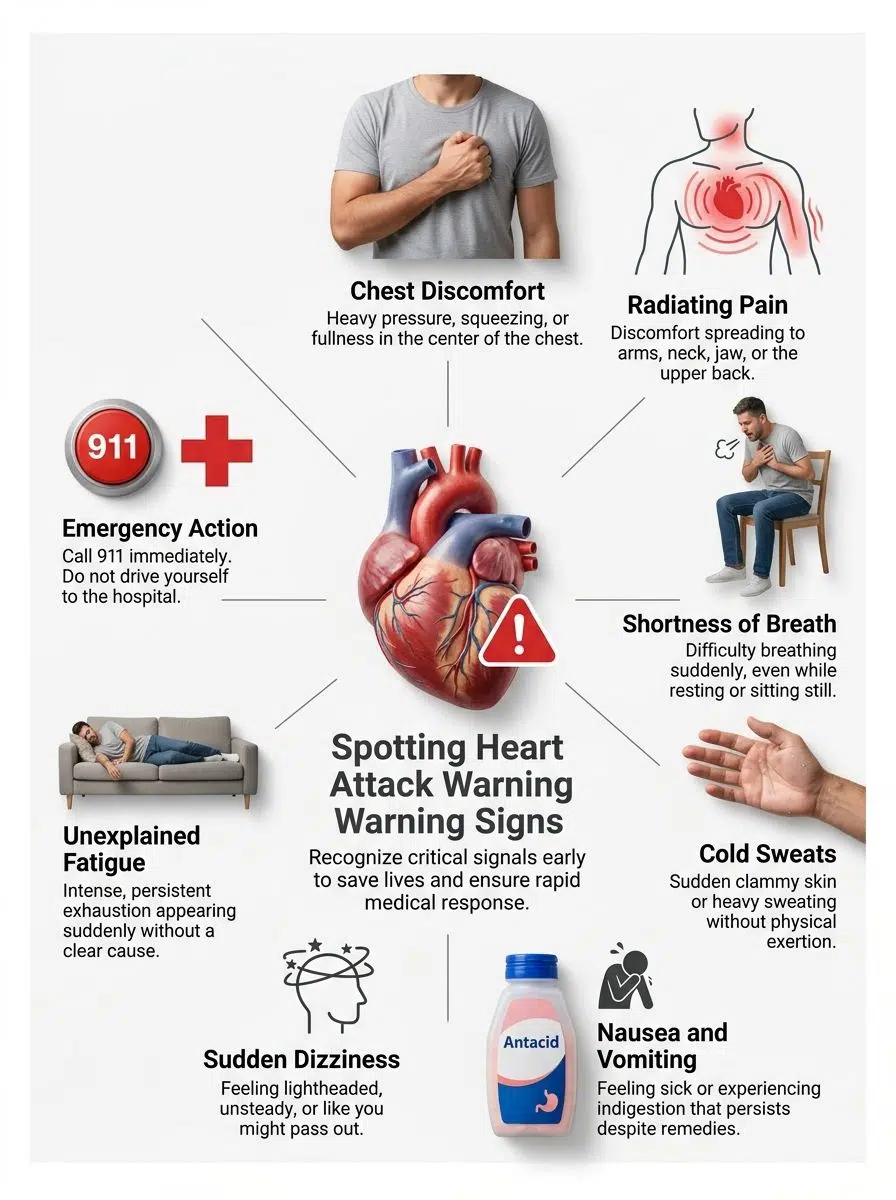
Your heart sends distress signals when trouble strikes. Knowing how to spot the warning signs of a heart attack starts with understanding these primary signals.
Chest pain or discomfort
Chest pain or discomfort stands as the most common warning sign of a heart attack. This discomfort can feel like pressure, squeezing, fullness, or tightness right in the center of your chest. The sensation might last for a few minutes, fade away, and then return later. Some people describe it as an elephant sitting on their chest.
Not all chest discomfort means an infarction is happening, but you should never ignore it. Angina is chest pain from temporarily reduced blood flow, and it can feel very similar.
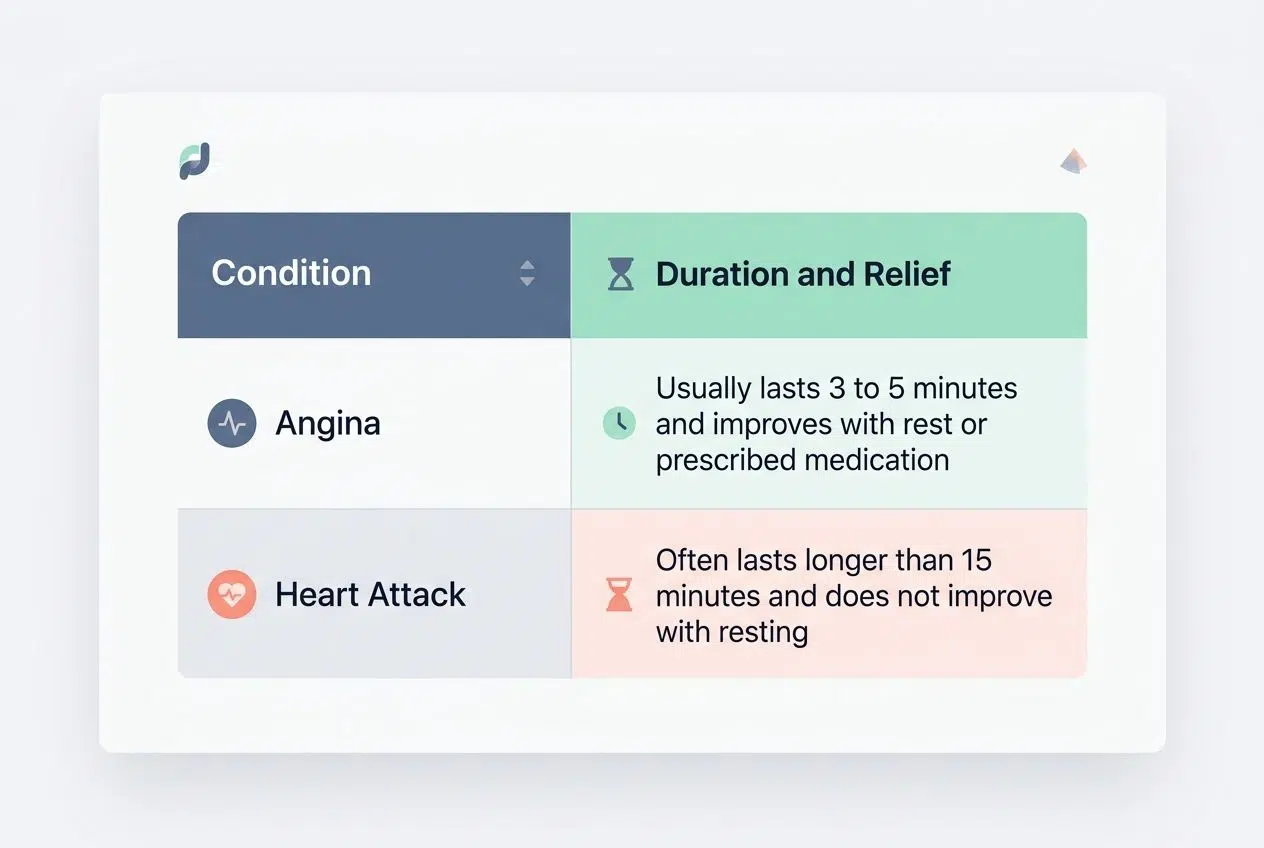
| Condition | Duration and Relief |
|---|---|
| Angina | Usually lasts 3 to 5 minutes and improves with rest or prescribed medication. |
| Heart Attack | Often lasts longer than 15 minutes and does not improve with resting. |
If you experience chest pressure that feels unusual, treat it seriously. Call 911 immediately instead of waiting to see if it passes.
Pain in the arms, neck, jaw, or back
The pain does not stop at your chest. Radiating pain spreads to your arms, neck, jaw, or back during a cardiovascular emergency. Your left arm might feel heavy or numb. This happens because the nerves supplying your heart and your upper limbs send signals to the exact same brain cells.
Here are common places you might feel this upper-body radiating pain:
- Shooting pressure down one or both arms.
- An aching jaw with no clear dental problems.
- A sudden tightening in your neck muscles.
- Sharp upper back pain right between your shoulder blades.
Many people miss these symptoms because they focus only on their chest. If you feel this type of discomfort, call 911 immediately.
Shortness of breath
Shortness of breath often sneaks up on people. It can feel like you cannot catch your breath, no matter how hard you try. Your lungs feel tight, your chest heaves, and oxygen seems scarce even when you are sitting completely still.
A 2024 study published in the Journal of the American Heart Association noted that shortness of breath is the primary or only symptom for up to 20% of cardiovascular patients.
Some folks describe it as feeling like they are drowning on dry land. This discomfort frequently pairs with chest pain or nausea. Shortness of breath during a cardiovascular event demands immediate action. Sit down, stay calm, and focus on breathing slowly while you wait for the ambulance.
Cold sweats or clammy skin
Your body might start sweating heavily, even though the room temperature is comfortable. This happens because your body is pumping extra adrenaline to support your struggling heart.
Your nervous system goes into high alert. This triggers your sweat glands to work much harder than usual. You might notice your skin feels clammy or damp to the touch. This is very different from regular perspiration after a good workout.
Clammy skin paired with chest discomfort should raise red flags instantly. Call 911 right away and do not drive yourself to the hospital.
Nausea or vomiting
Nausea or vomiting can sneak up on you. Many people miss this sign because they assume they just caught a simple stomach bug. Your digestive system gets confused when your heart struggles. You might experience the following:
- A sudden wave of intense queasiness.
- A complete loss of your normal appetite.
- Actual vomiting accompanied by cold sweats.
The Mayo Clinic points out that digestive symptoms like nausea are far more common in women experiencing a heart event. Some folks describe it as indigestion that simply will not quit.
Vomiting during a cardiovascular emergency means your body is sending serious distress signals. Trust your gut instincts and get help fast.
Lightheadedness or sudden dizziness
Lightheadedness or sudden dizziness can strike without any warning. It often signals that your heart is failing to pump enough blood to your brain. This happens due to a sudden, dangerous drop in blood pressure. Your head feels foggy, the room spins, and you might struggle to stay upright.
You may feel faint or like you might pass out at any second. This upper body discomfort combines with dizziness to create a serious warning sign. If you experience this symptom alongside fatigue, nausea, or chest pressure, call 911 right away.
Early Symptoms to Watch For
Some symptoms show up early and quietly. You will want to spot them before they turn into a major emergency.
Unexplained fatigue or weakness
Exhaustion that shows up out of nowhere can signal that your heart is working too hard. Your body feels heavy, and your muscles lack their usual strength. Harvard Medical School notes that severe, unexplained fatigue can actually start days or even weeks before a full myocardial infarction.
Watch out for these specific signs of extreme fatigue:
- Feeling completely drained after simply making the bed.
- Being unable to climb a single flight of stairs.
- Feeling a heavy, lingering weakness that sleep does not fix.
Pay close attention if this weakness pairs with shortness of breath. Let emergency responders handle the situation if these symptoms hit hard.
Indigestion or stomach discomfort
Your stomach acts up, and you think it is just a bad slice of pizza. That is a dangerous trap. Indigestion or stomach discomfort can feel exactly like heartburn. This makes you reach for antacids instead of the phone.
Medical experts warn that heart attacks are frequently misdiagnosed by patients as GERD, or acid reflux, because the pain sits high in the abdomen.
The key difference is that heart-related stomach pain does not go away with typical remedies. It sticks around and gets worse. Pressure in your abdomen combined with fatigue or cold sweats means you need medical attention right now.
Pressure or tightness in the chest
Chest pressure and tightness often feel different from indigestion. This sensation sits in your chest like someone placed a heavy weight right on top of you. The medical term for this restricted blood flow is ischemia. The pressure might feel like a tight band squeezing your ribs.
This discomfort differs from sharp, stabbing pain. It feels much more like a dull, persistent squeeze. This tightness demands immediate medical attention. Do not brush it off as a simple muscle strain or everyday stress.
Symptoms that come and go
Symptoms that pop up and disappear can trick you into thinking everything is perfectly fine. Your chest might feel tight for a few minutes before the pressure vanishes completely.
This fluctuating pattern is often called unstable angina. It happens when your heart intermittently struggles for blood flow.
Do not ignore intermittent discomfort just because it stops. Here is what to watch for:
- Radiating pain in your arm that aches, stops, and aches again.
- Shortness of breath that hits during activity but hides when you rest.
- Nausea that washes over you in brief, intense waves.
Your cardiovascular system works hard to tell you something is wrong. Take these on-and-off warning signs very seriously.
Differences Between Men and Women in Heart Attack Symptoms
Men and women often experience heart attacks quite differently. Knowing these specific differences could save your life.
Symptoms are more common in women
Women frequently experience heart attack symptoms that differ completely from those of men. Chest pain remains common, but many women report vague pressure instead of sharp pain. The American Heart Association’s “Go Red for Women” campaign states that up to 43% of women have no chest pain at all during a heart attack.

Instead, women are much more likely to experience these subtle signs:
- Intense, unexplained fatigue lasting for days.
- Sudden nausea or vomiting that feels like the flu.
- Pain spreading to the jaw, neck, or upper back.
- Shortness of breath without any chest discomfort.
Indigestion or stomach discomfort tricks many women into thinking they simply ate something bad. Call 911 immediately rather than waiting to see if these vague symptoms pass.
How symptoms may present in men
Men often experience chest pain or discomfort as their absolute main warning sign. This sensation typically feels like heavy pressure in the center of the chest. Men are more likely to experience the classic “Hollywood Heart Attack”. This is the sudden, severe chest crushing you see in movies.
This discomfort may spread to the arms, neck, jaw, or back. Men also report shortness of breath, cold sweats, and lightheadedness.
Men sometimes brush off early symptoms like mild fatigue, thinking it is just a long week at work. If a man experiences any sudden weakness or chest pressure, he should call 911 immediately.
What to Do if You Notice the Warning Signs
Time matters immensely when you spot risk factors turning into real symptoms. Your quick action can save a life.
Act quickly and call 911
Your heart is sending out a distress signal, and your body needs help right now. Grab your phone and dial 911 immediately. Emergency responders know exactly what to do. They can start life-saving treatment the moment they arrive at your front door.
The American College of Cardiology recommends a “door-to-balloon” time of under 90 minutes. Getting treated within this golden window drastically improves survival and recovery rates.
Stay on the line with the dispatcher and describe your shortness of breath or upper body discomfort clearly. Getting medical attention fast is the absolute best thing you can do.
Avoid driving yourself to the hospital
Calling 911 right now is the safest choice you can make. Paramedics arrive fully equipped to handle a cardiovascular emergency. Driving yourself means you are sitting alone behind the wheel, which puts you at massive risk.
Here is why you need an ambulance:
- Paramedics can perform an electrocardiogram (EKG) right in your living room to speed up diagnosis.
- They carry defibrillators, oxygen, and emergency medications.
- They communicate directly with the hospital to prepare the emergency room staff.
Sit down, stay calm, and let the medical professionals handle the transportation.
Stay calm and follow first aid instructions
Panic clouds your judgment, so take deep breaths and stay entirely focused. Your calm demeanor helps the person having a heart attack feel much safer. Have the person sit or lie down right away. Loosen any tight clothing around their neck and chest.
If the 911 operator advises it, you can administer aspirin. Chewing a standard 325 mg aspirin or four 81 mg baby aspirins can help break up blood clots quickly. Stay with the person until medical professionals arrive. Keep talking to them in a calm voice and monitor their pulse closely.
Preventing Heart Attacks
You can cut your heart disease risk way down by making smart, daily choices.
Managing risk factors such as diet and exercise
Your diet makes a massive difference in your long-term heart health. The American Heart Association created the “Life’s Essential 8” checklist, and eating better is right at the top. Eating foods high in fiber keeps your cardiovascular system strong. You should cut back on extra salt, sugar, and unhealthy trans fats.
Exercise gets your heart pumping perfectly. You should aim for these simple activity goals:
- At least 150 minutes of moderate activity each week.
- Simple exercises like brisk walking, swimming, or cycling.
- Short, 10-minute walks after meals to aid digestion and blood flow.
Moving your body regularly strengthens your heart muscle and improves healthy blood flow.
Regular health checkups
Your doctor can spot invisible problems before they turn into a crisis. Regular checkups let medical professionals track your vital signs. For example, doctors want to see your blood pressure below 120/80 mm Hg. Keeping it in this range prevents excessive strain on your arteries.
These visits help with the early diagnosis of heart disease that you would completely miss on your own. Doctors can run tests like EKGs or stress tests to check your actual heart performance.
Medical attention during standard checkups means you catch problems early. Getting regular health screenings sets you up to prevent heart attacks long before they happen.
Your heart sends clear signals when something goes wrong. Things like chest pain, shortness of breath, sudden fatigue, and nausea demand immediate medical attention.
Wrapping Up
Act fast and call 911 if you spot these symptoms. Every single minute counts during a cardiovascular emergency. Do not try to drive yourself to the hospital. Let trained professionals handle the transport while you chew an aspirin and stay calm.
Heart disease prevention starts today. Manage your risk factors through a good diet and exercise, and schedule your routine health checkups.
Keep in mind the differences between male and female symptoms. Upper body discomfort, radiating pain, and cold sweats should never be brushed aside. By learning how to spot the warning signs of a heart attack, you are actively protecting your heart for years to come.
Frequently Asked Questions (FAQs) on Warning Signs of Heart Attack
1. What are the main warning signs of a heart attack?
Chest pain or pressure is the most common sign, but it can also spread to your arms, back, neck, or jaw. You might feel short of breath, break out in a cold sweat, or suddenly feel nauseous. According to the CDC, about 805,000 Americans have a heart attack each year, so knowing these signs can be lifesaving.
2. Can women have different symptoms from men during a heart attack?
Yes, women are more likely to experience unusual fatigue, stomach discomfort, or dizziness instead of obvious chest pain. The American Heart Association notes that women often mistake these symptoms for something less serious, which can delay treatment.
3. How fast should I act if I notice any warning signs?
Call 911 right away because getting treatment within 90 minutes of symptom onset dramatically improves survival rates. Every minute matters when your heart isn’t getting enough blood.
4. Are there silent warning signs that people miss before a heart attack?
About 45% of heart attacks are silent, meaning people don’t realize they’re having one. If you feel unexplained fatigue, mild discomfort, or odd aches that don’t go away, get checked by your doctor right away.