

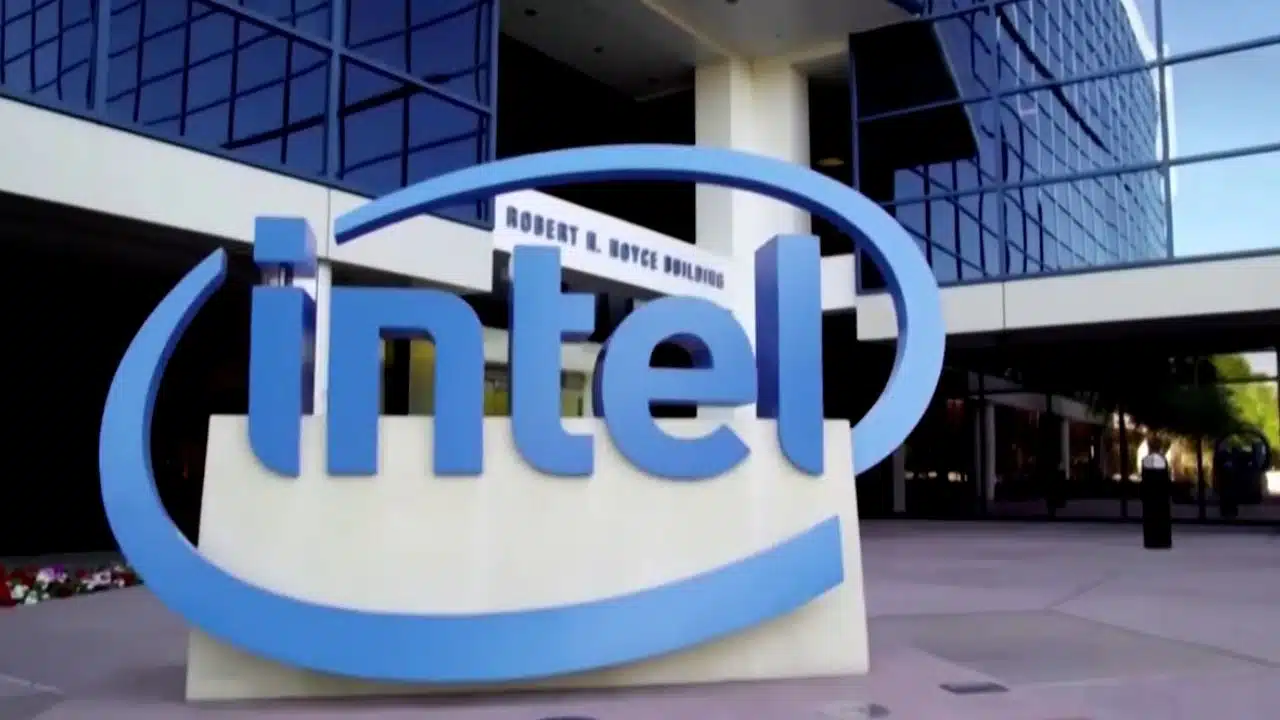
The White House has officially confirmed that the U.S. government is engaged in negotiations to acquire a 10% equity stake in Intel, one of America’s most important technology companies.
This unprecedented move is seen as part of a broader strategy to safeguard national security, economic competitiveness, and taxpayer returns at a time when the global semiconductor industry has become a battleground for technological supremacy.
A Historic Step: Why the US Wants Equity in Intel
White House Press Secretary Karoline Leavitt told reporters on Tuesday that President Trump wants to ensure that America’s needs come first in the face of both economic and security challenges. “The president wants to put America’s needs first, both from a national security and an economic perspective,” she emphasized.
The 10% stake proposal is unique because the U.S. government has rarely, if ever, taken direct equity in private tech giants outside of crises. The idea would see federal grants provided to Intel converted into equity, essentially giving taxpayers a financial return on government support.
Commerce Secretary Howard Lutnick explained the administration’s view bluntly during an interview with CNBC: “We should get an equity stake for our money. Instead of just giving grants away, we’ll get equity in return.”
This shift would transform the Biden-era CHIPS and Science Act subsidies—designed to boost semiconductor manufacturing in the U.S.—into partial ownership for the government. If finalized, Washington could hold a sizeable minority share in Intel, without taking control of its operations.
Intel’s Position in the Global Chip War
Intel, founded in 1968, has long been a cornerstone of American innovation, credited with pioneering the modern microprocessor. But in recent years, the company has struggled to keep pace with global competitors like Nvidia, TSMC (Taiwan Semiconductor Manufacturing Company), and Samsung.
- Nvidia dominates the artificial intelligence (AI) chip market, powering data centers and AI systems worldwide.
- TSMC is the global leader in advanced semiconductor manufacturing, producing chips for Apple, AMD, and Qualcomm.
- Samsung has advanced rapidly in memory and logic chips, benefiting from massive state support in South Korea.
Intel, by contrast, has faced manufacturing delays, declining market share, and financial pressure. Its turnaround strategy hinges on building large-scale fabrication plants (fabs) in the United States, including a flagship hub in Ohio, which could become one of the most advanced semiconductor campuses in the world.
For the U.S. government, Intel’s importance goes beyond corporate survival. The company is one of the few American firms still capable of producing high-end semiconductors at scale—a vital capability for defense, AI, cloud computing, and consumer electronics. Losing this edge to foreign rivals could make the U.S. dependent on overseas suppliers, especially in politically sensitive regions like Taiwan.
Billions Already at Stake
The U.S. has already pledged $10.9 billion in federal support to Intel under the CHIPS Act. This includes:
- $7.9 billion in manufacturing subsidies.
- An additional $3 billion from the Department of Defense for military-grade chip development.
- About $2.2 billion already disbursed, tied to performance milestones.
This level of public funding sparked debate in Washington about whether taxpayers should share in Intel’s future profits rather than simply providing corporate subsidies. Turning subsidies into equity stakes would ensure that the government—and, by extension, American citizens—benefit financially from Intel’s success.
SoftBank Boosts Intel With $2 Billion Bet
The talks come just as Japanese investment giant SoftBank announced it would acquire a $2 billion stake in Intel, amounting to around 2% of the company. The investment, seen as a vote of confidence in Intel’s turnaround efforts, sent its stock price up nearly 7% on Wall Street.
SoftBank’s entry is significant. The group, known for its Vision Fund, has historically backed transformative tech firms like Alibaba, Arm, and Uber. Its involvement in Intel suggests that major global investors believe the company still has a strong role to play in the semiconductor race.
The U.S. government’s potential 10% stake would dwarf SoftBank’s, placing Washington among Intel’s largest single shareholders.
National Security and the Semiconductor Race

Analysts say the deal is not just about economics—it’s about national security.
Vincent Fernando, from the investment consultancy Zero One, explained: “The government taking a stake in Intel makes sense, given the company’s key role in producing semiconductors in the U.S. Washington needs critical industries like chip manufacturing and defense to not rely on foreign suppliers.”
This aligns with a broader push by the Trump administration to ensure that supply chains for essential technologies remain under U.S. control. Just last week, both Nvidia and AMD agreed to pay the U.S. government 15% of their Chinese revenues in exchange for export licenses, a deal designed to limit China’s access to cutting-edge chips.
By taking a stake in Intel, the U.S. would secure not only a stronger position in the global chip supply chain but also ensure its military and AI industries are supported by domestic production.
Risks and Concerns
While many see the move as bold, others warn of potential downsides:
- Blurring politics and business: Dan Sheehan of Telos Wealth Advisors argued that injecting government equity into Intel could “blur the line between commercial discipline and political objectives.” Companies may face political pressure that conflicts with market-driven strategies.
- Uncertainty for other firms: If grants can suddenly be converted into equity stakes, companies considering CHIPS Act support may hesitate, unsure of how government involvement could affect their independence.
- Decision-making delays: Political oversight could complicate Intel’s turnaround at a time when fast decision-making is critical in the fast-moving chip market.
Despite these concerns, the White House insists the stake would be non-voting, meaning the government would not interfere in Intel’s operations or management decisions.
A Model for the Future?
Treasury Secretary Scott Bessent noted that the proposed structure would apply not only to Intel but could serve as a blueprint for other chipmakers receiving federal support. That includes foreign firms like TSMC and Samsung, which are building massive facilities in Arizona and Texas with U.S. subsidies, as well as domestic players like Micron.
If successful, this could mark a fundamental shift in U.S. industrial policy, where taxpayer money is no longer given away as corporate subsidies but tied to financial returns through equity.
The U.S. government’s potential acquisition of a 10% stake in Intel is more than just a financial deal—it represents a strategic pivot in America’s industrial policy. By tying subsidies to equity, Washington aims to protect taxpayer interests, rebuild domestic chipmaking capacity, and strengthen national security.
For Intel, the move could provide both funding and political backing as it battles to reclaim leadership in a fiercely competitive global market. But the plan also raises questions about the proper balance between government support and private-sector independence.
As negotiations continue, the world is watching closely. A government stake in Intel would not only reshape the future of one of America’s most iconic tech companies but also signal how far Washington is willing to go in the fight for technological sovereignty in the 21st century.
The Information is Collected from USA Today and CNN.





















