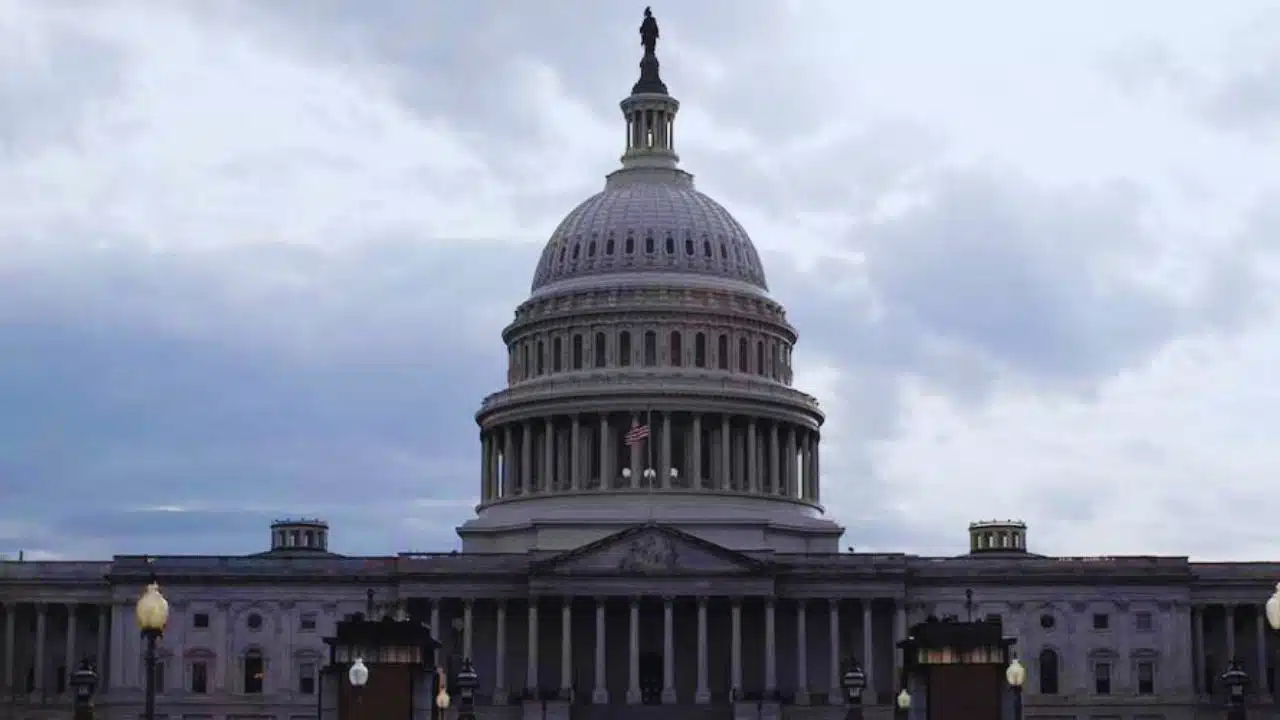
On Thursday, the Republican-led U.S. House of Representatives passed a contentious bill aimed at compelling President Joe Biden to expedite weapons shipments to Israel. The bill, known as the Israel Security Assistance Support Act, was approved by a vote of 224 to 187, largely along party lines. Sixteen Democrats joined the majority of Republicans in supporting the measure, while three Republicans sided with most Democrats in opposing it. Although the act is not expected to become law, its passage underscores the significant political divide in the U.S. over Israel policy, particularly in the context of an election year.
Background of the Conflict
The backdrop to this legislative move is the ongoing conflict between Israel and Hamas militants. On October 7, Hamas launched a severe and unprecedented attack on Israel, killing approximately 1,200 people and taking 253 hostages, according to Israeli tallies. In response, the Israeli government, led by Prime Minister Benjamin Netanyahu, has embarked on an extensive military campaign in Gaza aimed at eliminating the militant group. The conflict has resulted in significant civilian casualties and widespread destruction in Gaza.
Humanitarian Impact in Gaza
The human toll in Gaza has been devastating. Palestinian authorities report that at least 35,272 civilians have been killed during Israel’s military campaign. The coastal enclave, home to a dense population, has seen widespread malnutrition as access to food, water, and medical supplies has been severely disrupted. Much of Gaza’s infrastructure, including homes, schools, and hospitals, has been destroyed, leaving many residents homeless. The humanitarian crisis has prompted international calls for both sides to protect civilian lives and ensure aid reaches those in need.
Political Reactions in the U.S.
The bill’s passage has ignited a fierce political debate in the U.S. Republicans have vehemently criticized President Biden for delaying bomb shipments to Israel, accusing him of failing to support a key ally in its time of need. House Speaker Mike Johnson, speaking at a news conference alongside other Republican leaders, condemned Biden’s actions as politically motivated. “This is a catastrophic decision with global implications. It is obviously being done as a political calculation, and we cannot let this stand,” Johnson declared.
Democrats, however, have countered that Republicans are distorting the President’s position on Israel for political gain. House Democratic Leader Hakeem Jeffries dismissed the bill as a partisan ploy rather than a genuine legislative effort. “It is not a serious effort at legislation, which is why some of the most pro-Israel members of the House Democratic caucus will be voting no,” Jeffries stated at a news conference prior to the vote.
Military Aid to Israel
Israel has been a major recipient of U.S. military assistance for decades, with substantial annual aid packages supporting its defense capabilities. Despite the current delays in weapons shipments, Israel is still set to receive billions of dollars worth of U.S. military equipment. The Biden administration has specifically delayed a shipment of 2,000-pound and 500-pound bombs and is conducting a review of other weapons deliveries. Nonetheless, the support for Israel remains strong. Just recently, the State Department advanced a $1 billion package of weapons aid for Israel into the congressional review process, signaling continued U.S. commitment to its ally.
Implications for U.S. Foreign Policy
The legislative push by House Republicans to force weapons shipments to Israel has significant implications for U.S. foreign policy and its role in the Middle East. The move highlights the deep-seated divisions within American politics regarding support for Israel and the broader geopolitical dynamics of the region. The debate over military aid and the protection of civilians during conflicts reflects broader concerns about balancing strategic alliances with humanitarian responsibilities.
Conclusion
The passage of the Israel Security Assistance Support Act by the House of Representatives serves as a symbolic rebuke of President Biden’s cautious approach to military aid amid a complex and volatile conflict. While the bill is unlikely to become law, it underscores the polarized nature of U.S. politics regarding Israel. As the debate continues, the humanitarian crisis in Gaza remains a critical concern, further complicating the U.S. political landscape. The situation calls for careful consideration of both the strategic imperatives and the ethical responsibilities of U.S. foreign policy in the region.