

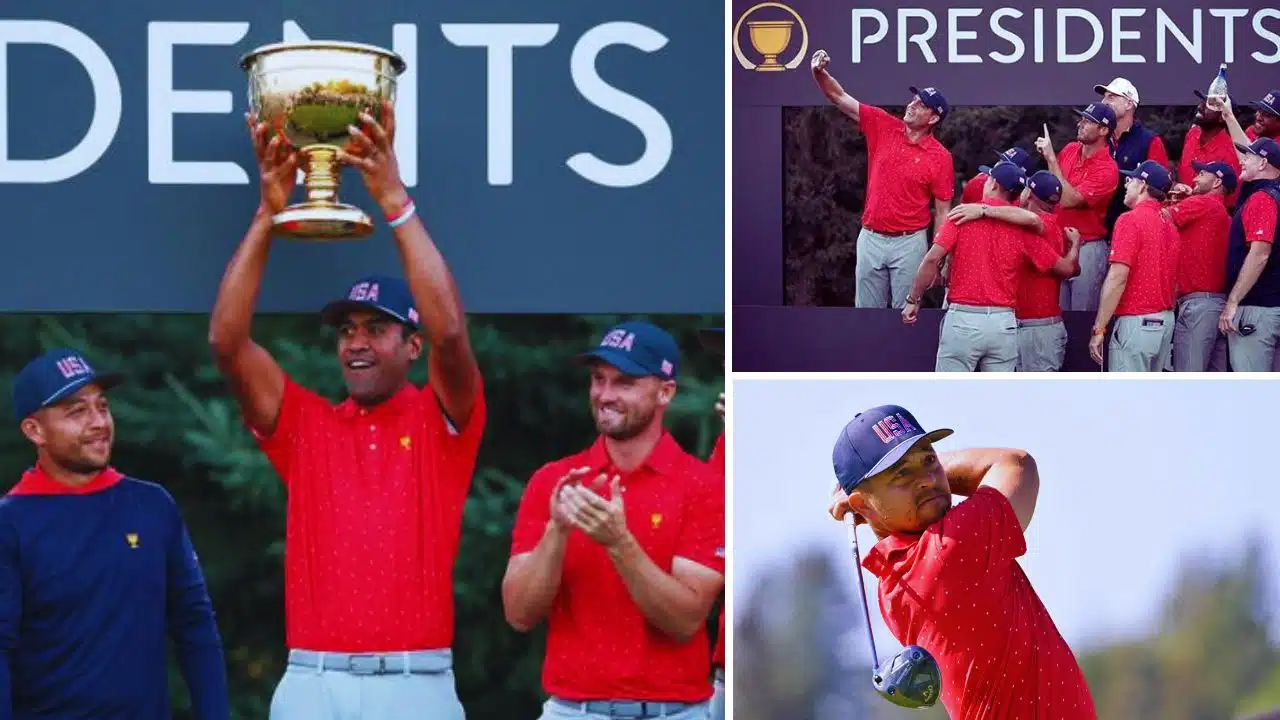
In an electrifying atmosphere at Royal Montreal, U.S. captain Jim Furyk stood tall as he raised the coveted gold trophy before a jubilant team, all dressed in vibrant red shirts. This celebration marked yet another successful chapter in the history of the Presidents Cup, a trophy that the Americans have proudly claimed for over two decades. This year, the U.S. team demonstrated their continued dominance, showcasing their skills and teamwork in a tournament that has become synonymous with American golf success.
Close Matches Highlighted by a Big Score
The final score of 18½ to 11½ indicated a clear victory for the United States, reflecting the largest margin of victory the Americans have achieved in Presidents Cup history. However, despite the scoreline, the matches were anything but a straightforward victory. A total of 30 matches were contested, with 20 of them being highly competitive, including nine matches on Sunday that were not decided until at least the 17th hole. This tension added an exciting layer to the tournament, showcasing the determination and resilience of both teams.
The Americans’ ability to secure their 10th consecutive win in this series emphasizes their remarkable consistency and strength. Since the inception of the Presidents Cup in 1994, the U.S. team has firmly established itself as a powerhouse in the tournament, with a winning streak that stretches back to 2005. This ongoing success is a testament to the talent and camaraderie within the team, which has continually evolved to meet the challenges presented by their international counterparts.
Standout Performances from U.S. Players
Among the standout performances was Xander Schauffele, who has had an exceptional year, achieving double-major wins and solidifying his place as a top competitor. In his match against Jason Day, Schauffele set the tone early by delivering an impressive four consecutive birdies. His decisive 4-and-3 victory was instrumental in boosting the team’s morale and momentum. Schauffele’s ability to handle the pressure and maintain focus under challenging circumstances highlighted his maturity as a player.
Another crucial contributor to the U.S. team’s success was Patrick Cantlay, who showcased his remarkable skills throughout the tournament. In his match against Taylor Pendrith, Cantlay went bogey-free, registering seven birdies, three of which came in the last four holes. His 3-and-1 victory added significant points to the U.S. tally, reinforcing the importance of individual performances in the broader context of the team’s success.
Perhaps most fittingly, the clinching point of the tournament came from Keegan Bradley, who experienced a poignant personal journey leading up to this victory. Having gone a decade without competing for the U.S. team, Bradley’s return was marked by emotional significance. As he faced Si Woo Kim on the 18th hole, Bradley secured the win and was immediately surrounded by his teammates in a moment of joyous celebration. Reflecting on the victory, Bradley stated, “I was just lucky enough to be in that spot today, but really, it was a meaningful moment in my life.” He recalled his previous experience as the clinching point for the Europeans in the Ryder Cup, saying, “Fast-forward 10 years later, and I got to do that today. Really something I’ll remember the rest of my life.”
Teamwork and Strategy Shine Through
The cohesive nature of the U.S. team was evident throughout the tournament. Their ability to work together and support each other was crucial to their success, as they won four of the five sessions. The only blemish on their record came during Friday’s foursomes, where the Internationals managed an impressive 5-0 shutout. However, this setback only fueled the Americans’ determination to perform at their best in subsequent matches.
Furyk expressed immense pride in his team’s performance, stating, “These guys get along so well, but as you know, they can flat out play.” He commended the players for their resilience and ability to handle pressure. “When it got tough, anytime the Internationals put some pressure on us, they played their tails off for us. I’m just so proud to be a part of it,” Furyk added. This camaraderie and team spirit were instrumental in the U.S. players’ success on the course.
A Tough Battle for the Internationals
On the other side, the Internationals faced significant challenges throughout the tournament. Captain Mike Weir acknowledged the disappointment of not securing a victory, especially given their efforts to build a competitive team. “We put our team together to win this thing,” Weir stated. “And when you don’t get a win, it’s disappointing, but there are a lot of great things to take away.” His leadership was commendable, as he inspired his team to fight hard and remain focused, despite the odds stacked against them.
Throughout the tournament, the Internationals showcased their skill in numerous close matches. The spirited play of Tom Kim stood out as he energized his team with his dynamic celebrations and fist pumps. Kim, reflecting on the experience, emphasized the importance of resilience, stating, “When you lose so many times, I feel like there’s always a story where people come back. Winning doesn’t last forever.” His belief in the team’s potential and hope for future success was a testament to the spirit of the International team.
The Internationals managed to secure points in several matches, including a notable victory for Hideki Matsuyama over Scottie Scheffler. Additionally, Corey Conners delivered an easy win over Tony Finau, showcasing the depth of talent within the International team. However, as they entered the singles matches trailing 11-7, it became increasingly clear that overcoming the deficit would be a daunting task.
Looking Ahead to the Future
As the tournament concluded, the Internationals must now wait two more years for the next matches, scheduled to take place in 2026 at Medinah, just outside Chicago. This hiatus presents an opportunity for reflection and preparation. Weir and his team will undoubtedly analyze their performances and seek ways to improve for the future.
The U.S. team’s victory at the Presidents Cup not only solidifies their long-standing dominance but also sets a high standard for future tournaments. With players like Schauffele, Cantlay, and Bradley leading the charge, the Americans are well-positioned to continue their success in international golf competitions. As both teams look forward to the next installment of the Presidents Cup, the lessons learned and experiences gained will undoubtedly play a significant role in shaping their strategies and performances in the years to come.
In conclusion, the Presidents Cup once again highlighted the fierce competition and passionate rivalry between the U.S. and International teams. As the Americans celebrate their hard-fought victory, the Internationals remain determined to regroup and come back stronger in future tournaments. The spirit of competition in golf is alive and well, and fans eagerly anticipate the next chapter in this storied rivalry.
The Information is Collected from ESPN and Yahoo.






















