

We’ve all experienced it at some point – that heart-stopping moment when your feet lose traction, and you find yourself tumbling to the ground. A slip and fall can happen in the blink of an eye, leaving you with bruises, scrapes, and maybe a bruised ego. But what happens when the injuries are more serious, and the fall wasn’t just an unfortunate accident but the result of someone else’s negligence? This is where the legal implications of a slip and fall come into play. This article will delve into the complexities of premises liability law, exploring the elements of a slip and fall case, the importance of seeking legal representation from a qualified slip and fall lawyer Las Vegas, and the steps you can take to protect your rights after an accident.
Premises Liability: Who is Responsible?
Premises liability law governs the duty of care that property owners and occupiers owe to those who enter their property. Essentially, it means that property owners have a legal responsibility to maintain a safe environment for visitors, customers, and even trespassers, depending on the circumstances. When someone is injured due to a hazardous condition on someone else’s property, the property owner or occupier may be held liable for the injuries.
Elements of a Slip and Fall Case
To successfully pursue a slip and fall claim, several key elements must be established:
1. Duty of Care
The first step is to establish that the property owner owed you a duty of care. This duty varies depending on your status on the property. For invitees, such as customers in a store, the property owner owes the highest duty of care, ensuring the premises are safe and free of hazards. For licensees, such as social guests, the duty is less stringent, requiring the property owner to warn of known dangers. Even trespassers are owed a duty to avoid intentional harm or gross negligence.
2. Breach of Duty
Once a duty of care is established, you must demonstrate that the property owner breached that duty by failing to exercise reasonable care. This could involve failing to repair a known hazard, failing to warn of a dangerous condition, or creating a dangerous condition through their actions or inaction.
3. Causation
It’s not enough to show that a hazardous condition existed; you must also prove that the hazardous condition was the direct cause of your injuries. This requires establishing a clear link between the dangerous condition and the slip and fall accident.
4. Damages
Finally, you must demonstrate that you suffered damages as a result of the slip and fall. These damages can include medical expenses, lost wages, pain and suffering, and other losses.
Common Causes of Slip and Falls
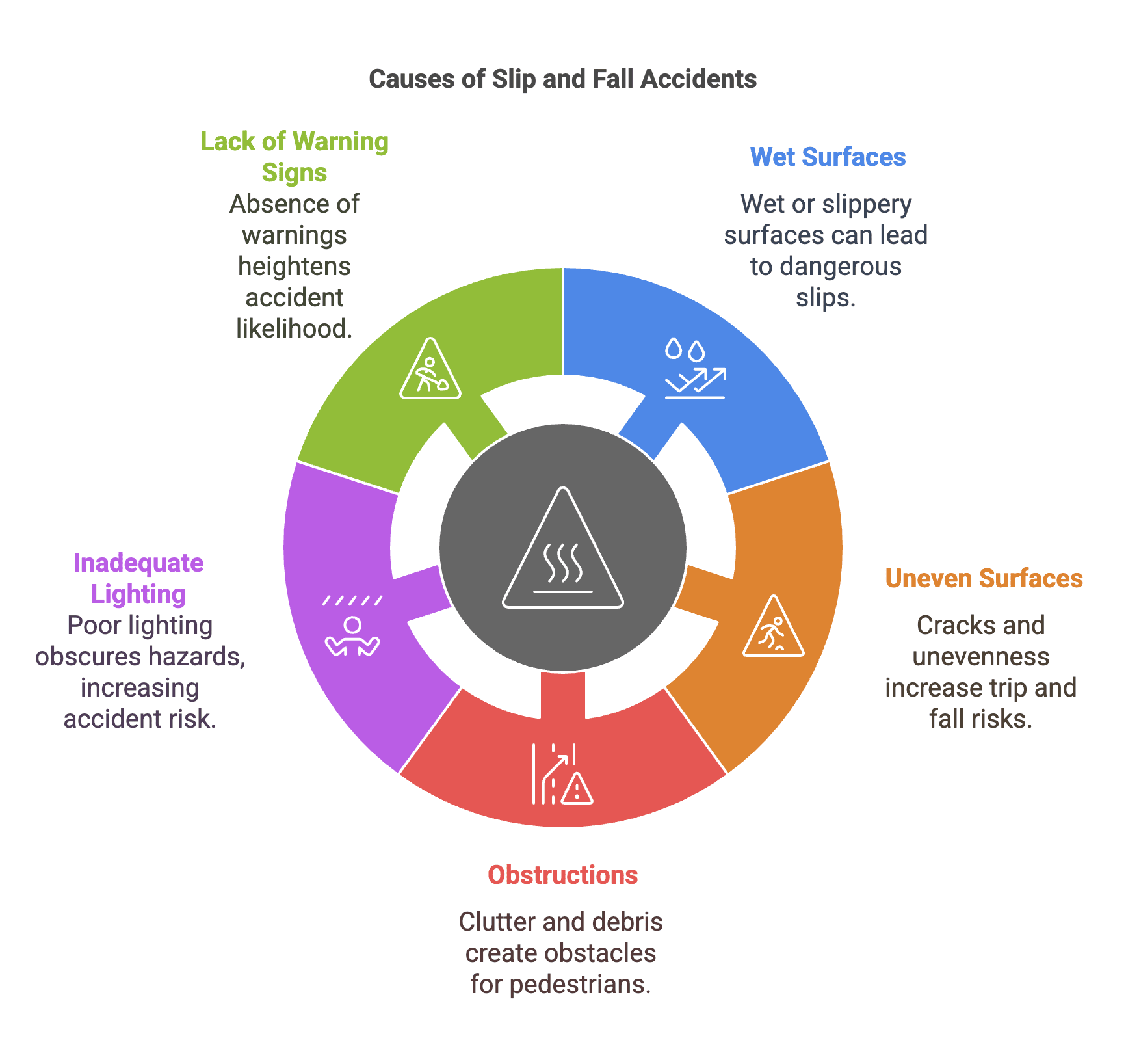
Slip and fall accidents can occur due to a wide range of hazardous conditions. These can be especially prevalent on construction sites, where a Las Vegas construction accident lawyer often sees cases involving falls from heights, slips on wet surfaces, or trips over debris. Some common causes of slip and falls in various settings include:
- Wet or Slippery Surfaces: Spilled liquids, wet floors, or icy patches can create treacherous conditions.
- Uneven Surfaces: Cracks in sidewalks, uneven stairs, or potholes can cause trips and falls.
- Obstructions: Clutter, debris, or poorly placed objects can create obstacles that lead to falls.
- Inadequate Lighting: Dim lighting or poorly lit areas can make it difficult to see hazards.
- Lack of Warning Signs: Failure to warn of dangerous conditions, such as wet floors or construction zones, can increase the risk of accidents.
The Role of a Slip and Fall Lawyer
Navigating the complexities of a slip and fall case can be challenging, especially when you’re dealing with injuries and trying to recover. A skilled slip and fall lawyer can be your advocate, guiding you through the legal process and protecting your rights. They can:
- Investigate the Accident: Your attorney will thoroughly investigate the accident scene, gather evidence, and interview witnesses to build a strong case on your behalf.
- Establish Negligence: Proving negligence is crucial in a slip and fall case. Your attorney will analyze the circumstances, gather evidence of the hazardous condition, and determine if the property owner had knowledge of the danger or should have known about it.
- Negotiate with Insurance Companies: Insurance companies often try to minimize payouts. Your attorney will handle all communication with insurance adjusters, negotiate for a fair settlement, and protect you from tactics designed to undervalue your claim.
- Litigate Your Case: If a fair settlement cannot be reached, your attorney will be prepared to take your case to court and fight for your rights before a judge and jury.
Documenting the Accident
After a slip and fall, it’s essential to take steps to document the accident and gather as much evidence as possible to support your claim. This includes taking photos of the accident scene and any visible injuries you sustained. If there were any witnesses to the accident, be sure to get their contact information so they can potentially provide statements or testimony later on. Seeking medical attention promptly is crucial, even if your injuries seem minor at first. This creates a medical record of your injuries and helps establish a clear link between the fall and your medical condition. It’s also important to report the accident to the property owner or manager as soon as possible.
Understanding Damages
If you’ve been injured in a slip and fall accident due to someone else’s negligence, you may be entitled to compensation for a variety of damages. These can include your medical expenses, both past and future, related to treating your injuries. If your injuries prevent you from working, you can also seek compensation for lost wages. Beyond the financial costs, you may also be entitled to compensation for pain and suffering, which encompasses the physical pain, emotional distress, and mental anguish you have endured as a result of the accident. In some cases, you can also seek damages for the loss of enjoyment of life, which compensates for the loss of your ability to participate in activities and hobbies that were once a part of your life.
Preventing Slip and Falls
While accidents can happen, there are steps property owners can take to minimize the risk of slip and falls on their premises. These include:
- Regular Inspections: Conducting routine inspections to identify and address potential hazards.
- Prompt Repairs: Repairing any hazardous conditions immediately, such as cracked sidewalks, uneven flooring, or loose handrails.
- Proper Maintenance: Maintaining clean and dry surfaces, especially in areas prone to spills or moisture.
- Adequate Lighting: Ensuring adequate lighting in all areas, including hallways, stairwells, and entryways.
- Warning Signs: Posting clear warning signs to alert visitors of potential hazards, such as wet floors or construction zones.
Beyond Slip and Falls: Other Types of Accidents
While this article focuses on slip and fall accidents, the principles of premises liability and personal injury law apply to a wide range of accidents that occur on someone else’s property. If you’ve suffered a brain injury due to a hazardous condition, a Las Vegas brain injury attorney can help you navigate the complexities of these cases and seek the compensation you deserve. Similarly, if you’ve been injured in a construction accident, a construction accident lawyer can help you understand your rights and options under workers’ compensation laws and other applicable legal frameworks.
Conclusion
Slip and falls are among the most common personal injury cases, yet they can have serious and lasting consequences. If you’ve been injured due to a hazardous condition on someone else’s property, it’s essential to understand your legal rights and seek the guidance of a qualified slip and fall lawyer. By documenting the accident, gathering evidence, and working with an experienced attorney, you can protect your interests and pursue the compensation you need to recover from your injuries and move forward with your life. Remember, property owners have a responsibility to maintain safe premises, and when they fail to do so, they can be held accountable for the harm they cause.






















