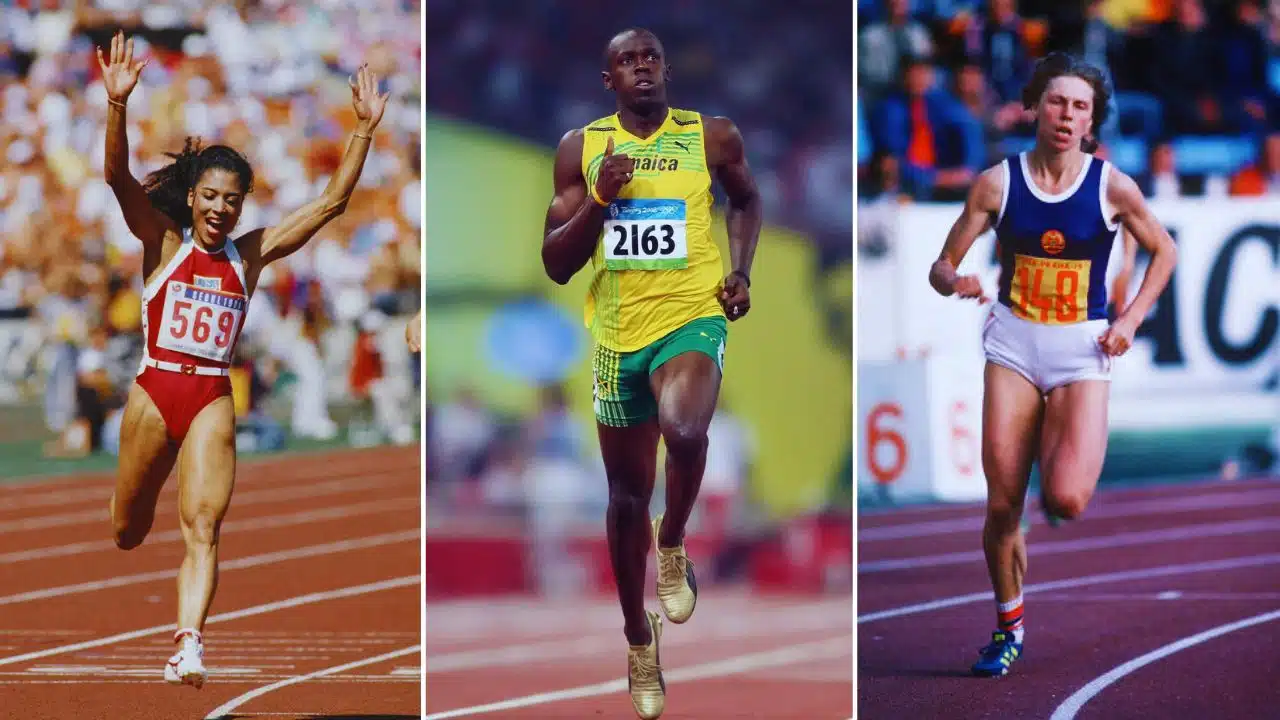
The 2024 Paris Olympics concluded on August 11th, marking another chapter in the history of global sports. While the event was filled with exhilarating performances and inspiring moments, it was also a testament to the enduring challenge of breaking world records in track and field. This year, only a few athletes managed to etch their names into the record books, with USA’s Sydney McLaughlin-Levrone and Sweden’s Armand Duplantis standing out as the sole record-breakers. Their achievements, while remarkable, also highlight the fact that some records in athletics seem almost insurmountable, enduring through the decades despite the relentless pursuit of excellence by generations of athletes.
Track and field records are more than just numbers; they represent the pinnacle of human physical achievement, often standing as symbols of national pride and individual legacy. However, as much as records are meant to be broken, certain marks have proven to be nearly impossible to surpass. These records, some of which have been unchallenged since the 1980s and 1990s, seem to exist in a realm beyond the reach of modern athletes. Whether due to the extraordinary talent of the athletes who set them, advancements in technology, or the evolving nature of the sport, these records may remain unbroken for the foreseeable future. In this detailed exploration, we delve into five such records that continue to captivate the imagination of sports enthusiasts worldwide.
1. Women’s 100 Metres – 10.49 Seconds, 1988
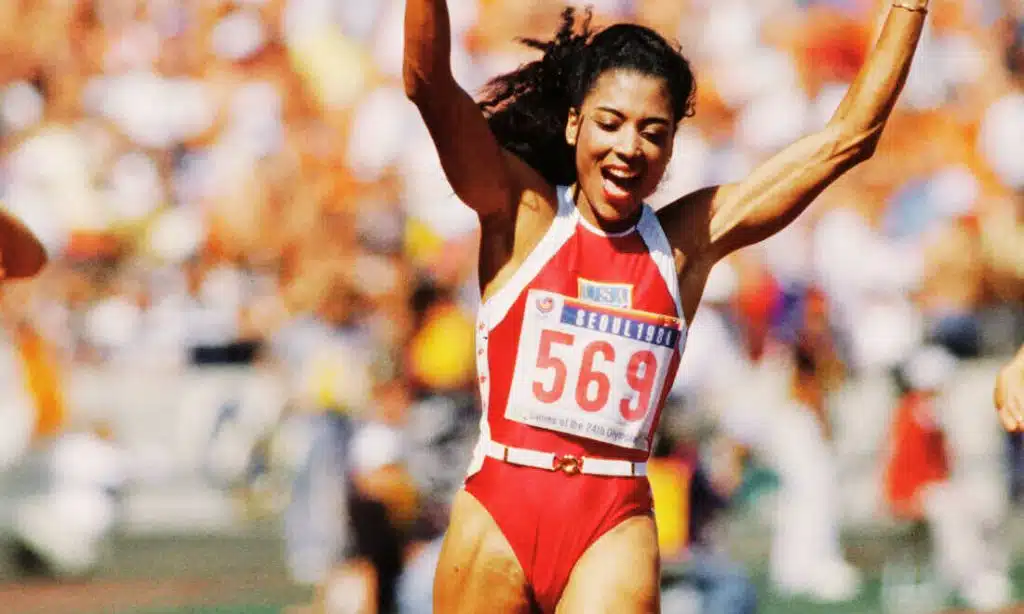
Florence Griffith-Joyner, affectionately known as “Flo Jo,” set the women’s 100 metres world record on July 16, 1988, during the U.S. Olympic trials in Indianapolis. Her astonishing time of 10.49 seconds sent shockwaves through the sports world, and it remains the gold standard in women’s sprinting. Flo Jo’s record was not just a result of her incredible speed but also of her unique running style, characterized by her long strides and powerful acceleration. The record has stood for over three decades, despite the continuous advancements in training, nutrition, and sports science.
In the years since, many have tried to come close, but none have succeeded in surpassing Flo Jo’s mark. Jamaica’s Elaine Thompson-Herah, who clocked an impressive 10.54 seconds at the Prefontaine Classic in 2021, is the closest anyone has come to breaking this record. Thompson-Herah’s performance reignited discussions about whether Flo Jo’s record would ever be broken, yet the gap between the two times remains significant. It’s worth noting that Flo Jo also holds the women’s 200 metres world record, a testament to her dominance in the sport during her career. Sadly, Florence Griffith-Joyner passed away in 1998 at the age of 38, but her legacy lives on, immortalized by the records she set.
The controversy surrounding Flo Jo’s record is also a significant part of its story. Over the years, there have been speculations and accusations regarding the possibility of wind assistance or the use of performance-enhancing drugs, though no conclusive evidence has ever been found. The wind speed during her record-setting run was officially recorded as 0.0 meters per second, well within the legal limit of 2.0 meters per second, but the debate persists among some critics. Despite these controversies, the record remains unchallenged and is a subject of admiration and awe in the athletics community.
2. Men’s 100 Metres – 9.58 Seconds, 2009
Usain Bolt, the Jamaican sprinter known as the “Lightning Bolt,” forever changed the landscape of sprinting when he shattered the men’s 100 metres and 200 metres world records at the 2009 World Athletics Championships in Berlin. Bolt’s 100 metres time of 9.58 seconds is not just a world record; it’s a symbol of his unparalleled dominance in the sport. Bolt’s performance was the culmination of years of meticulous preparation, natural talent, and an unyielding desire to be the best.
Before Bolt, the world record for the 100 metres had been steadily lowered over the decades, with each new record-holder chipping away fractions of a second. However, Bolt’s leap from 9.69 seconds (his previous record set at the 2008 Beijing Olympics) to 9.58 seconds was unprecedented. The margin by which he improved the record was the largest since electronic timing began in 1968, making his achievement even more remarkable. Bolt’s unique combination of height (he stands at 6 feet 5 inches), stride length, and explosive acceleration allowed him to cover the distance faster than anyone before or since.
Bolt’s 200 metres record, set just days after his 100 metres feat, is equally impressive. His time of 19.19 seconds in the 200 metres remains unchallenged, and like his 100 metres record, it represents a significant gap between him and the next fastest runners in history. Bolt’s dominance is further underscored by the fact that he holds the three fastest times ever recorded in the 100 metres (9.58, 9.63, and 9.69 seconds), and only two other sprinters in history have managed to break the 9.7-second barrier. These records have now stood for 15 years, and there is no indication that they will be broken anytime soon.
The legacy of Usain Bolt extends beyond the track. His charisma, sportsmanship, and ability to perform under pressure have made him a global icon. Bolt’s records are not just personal achievements; they are milestones in the history of athletics, representing the peak of human speed and endurance. Asafa Powell, a fellow Jamaican sprinter and former world record holder, has expressed his belief that while Bolt’s 100 metres record may stand for a long time, the 200 metres record could be broken in the future. However, as of now, no athlete has come close to challenging Bolt’s records, leaving his legacy intact.
3. Women’s 400 Metres – 47.60 Seconds, 1985
Marita Koch of East Germany set the women’s 400 metres world record on October 6, 1985, in Canberra, Australia. Her time of 47.60 seconds remains the fastest ever recorded in the event, and it has withstood the test of time for nearly four decades. Koch’s record is a testament to her extraordinary talent and the rigorous training regime she underwent during her career. However, it is also a record shrouded in controversy, as Koch competed during a period when East German athletes were later revealed to have been part of a state-sponsored doping program.
Koch’s dominance in the 400 metres was evident well before she set the world record. She had already broken the world record five times before her record-setting run in Canberra, and she was known for her incredible consistency and ability to perform under pressure. Despite the controversies that have surrounded her career, Koch has always maintained that she never failed a drug test. In an interview with Forbes, Koch reiterated her stance, stating that her achievements were the result of hard work and dedication.
In the years since Koch set the record, a few athletes have come close to breaking it, but none have succeeded. Bahrain’s Salwa Eid Nasser came within striking distance in 2019, clocking a time of 48.14 seconds at the World Championships in Doha. Nasser’s performance was the third-fastest in history, but still, nearly half a second slower than Koch’s record. Similarly, Shaunae Miller-Uibo of the Bahamas ran 48.36 seconds at the Tokyo 2021 Olympics, securing her place as one of the fastest women in history, but again, Koch’s record remained untouched.
The longevity of Koch’s record has sparked discussions about the evolution of the sport and whether modern athletes will ever be able to break it. Advances in training techniques, nutrition, and sports science have undoubtedly improved athletic performance, but Koch’s record has proven to be an exception to this trend. It stands as one of the most formidable records in track and field, a benchmark that continues to elude even the most talented athletes of today.
4. Women’s 800 Metres – 1 Minute 53.28 Seconds, 1983

Jarmila Kratochvílová of Czechoslovakia set the women’s 800 metres world record on July 26, 1983, in Munich, Germany. Her time of 1 minute 53.28 seconds is one of the oldest standing world records in athletics, and it has remained unbroken for over four decades. Kratochvílová’s achievement in the 800 metres is often regarded as one of the most astonishing performances in the history of middle-distance running.
Kratochvílová’s record is notable not only for its longevity but also for the circumstances under which it was set. The early 1980s were a period of intense competition in women’s athletics, with many records being broken and re-broken in quick succession. However, Kratochvílová’s time in the 800 metres was so far ahead of her contemporaries that it created a gap that has yet to be closed. Her record has stood for so long that many in the athletics community have begun to question whether it will ever be broken.
Like other records from this era, Kratochvílová’s achievement has been overshadowed by allegations of doping. Although no concrete evidence has ever been presented to prove that she used performance-enhancing drugs, the mere association with this period has cast a shadow over her record. Despite these allegations, Kratochvílová has always maintained her innocence, and her record has been recognized and upheld by all major athletics governing bodies.
The closest anyone has come to breaking Kratochvílová’s record was in 2008 when Pamela Jelimo of Kenya ran 1:54.01. Jelimo’s performance was the fastest in 25 years, but it still fell short of Kratochvílová’s time. More recently, Caster Semenya of South Africa, one of the most dominant middle-distance runners of the past decade, ran 1:54.25 in 2018, but again, Kratochvílová’s record remained out of reach. The fact that only a handful of athletes have even come close to this time in the past 40 years speaks to the extraordinary nature of Kratochvílová’s performance.
The future of the women’s 800 metres world record remains uncertain. While advances in sports science and technology have allowed athletes to push the boundaries of human performance, Kratochvílová’s record continues to stand as a testament to an era of athletic excellence that may never be replicated. Whether or not this record will ever be broken is a question that only time will answer, but for now, it remains one of the most unbreakable records in sports history.
5. Women’s Long Jump – 7.52 Metres, 1988
Galina Chistyakova set the women’s long jump world record on June 11, 1988, in Leningrad (now St. Petersburg), Soviet Union. Her leap of 7.52 metres is the farthest any woman has jumped in the history of the sport, and it has remained unchallenged for over three decades. Chistyakova’s record is a remarkable achievement, highlighting her exceptional athleticism and technical skill in one of track and field’s most demanding events.
The women’s long jump has seen many great athletes over the years, but none have been able to surpass Chistyakova’s record. The closest anyone has come to breaking it was in 2002 when Russia’s Tatyana Kotova jumped 7.42 metres, just 10 centimetres shy of the record. Since then, no athlete has come within 10 centimetres of Chistyakova’s mark, further solidifying its place in the annals of track and field history.
Chistyakova’s record is particularly impressive when considering the context of the sport at the time. The late 1980s were a period of intense competition in women’s athletics, with many records being set that still stand today. Chistyakova’s leap was not just a personal best; it was a performance that pushed the boundaries of what was thought possible in the women’s long jump. Her record has endured through generations of athletes, each striving to reach the same heights but ultimately falling short.
The women’s long jump world record has also been the subject of much debate and analysis. Some experts have suggested that the record may be unbeatable due to the unique combination of factors that contributed to Chistyakova’s performance, including her technique, physical conditioning, and the conditions on the day of the jump. While modern athletes have access to better training methods and technology, the gap between Chistyakova’s record and subsequent performances suggests that this record may stand for many more years to come.
Will Usain Bolt’s Records Ever Be Broken?
Usain Bolt’s records in the 100 metres and 200 metres have become benchmarks in the world of sprinting, with few athletes even daring to dream of surpassing them. Asafa Powell, a former world record holder in the 100 metres and a fellow Jamaican sprinter, has weighed in on the likelihood of Bolt’s records being broken. According to Powell, while Bolt’s 100 metres world record may stand for a long time, the 200 metres record is more vulnerable and could potentially be broken in the future.
Bolt’s dominance in the sport was not just about his records; it was also about the way he revolutionized sprinting. His combination of size, speed, and charisma made him a global superstar and brought unprecedented attention to track and field. Even after his retirement, Bolt’s legacy continues to influence the sport, with young athletes looking up to him as the ultimate example of what can be achieved through talent, hard work, and determination.
The possibility of Bolt’s records being broken has been a topic of much discussion among athletes, coaches, and analysts. While some believe that it is only a matter of time before a new generation of sprinters rises to the challenge, others argue that Bolt’s records are so extraordinary that they may never be surpassed. For now, Bolt’s times in the 100 metres and 200 metres stand as monuments to his greatness, and it remains to be seen whether anyone will ever come close to matching them.
Takeaways
In the world of athletics, records are more than just numbers on a scoreboard; they are symbols of human potential and the relentless pursuit of excellence. While some records are eventually broken, others seem to defy time, standing as enduring testaments to the athletes who set them. The records held by Florence Griffith-Joyner, Usain Bolt, Marita Koch, Jarmila Kratochvílová, and Galina Chistyakova are among the most remarkable in the history of track and field, and they continue to inspire awe and admiration.
These records are not just about individual achievement; they represent the pinnacle of what is possible in the sport. Whether due to the extraordinary talent of the athletes, the unique circumstances under which the records were set, or the evolving nature of athletics, these records may remain unbroken for the foreseeable future. As we look to the future, these marks will continue to challenge and inspire athletes around the world, reminding us of the incredible heights that can be reached through dedication, determination, and an unyielding desire to be the best.
The story of these unbreakable records is a reminder of the power of sport to push the boundaries of human performance. As new generations of athletes take to the track and field, the quest to break these records will continue, but for now, they stand as a testament to the incredible achievements of those who came before. Whether or not these records will ever be broken is a question that only time can answer, but for now, they remain as symbols of athletic immortality.