

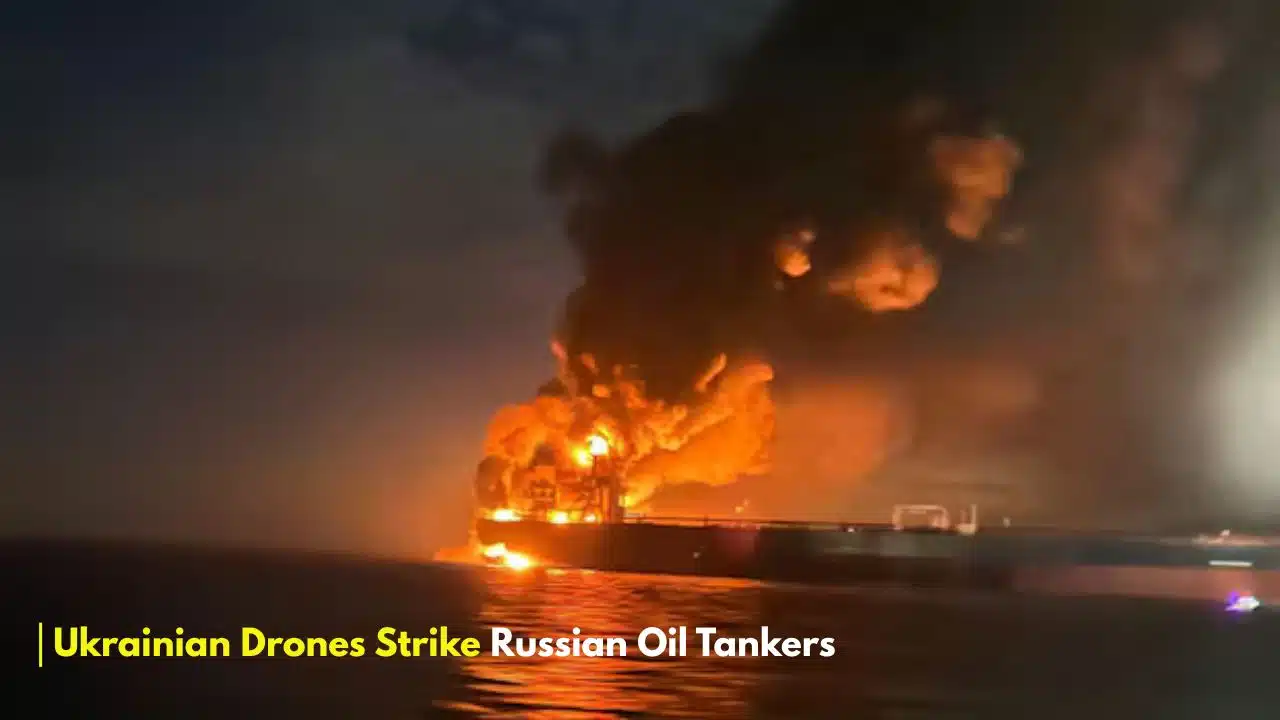
Ukrainian naval drones executed a series of high-impact strikes against Russian oil tankers and infrastructure in the Black Sea, dealing a significant blow to Russia’s oil export operations and financial resilience. The attacks, carried out on November 28, 2025, targeted two vessels of Russia’s so-called “shadow fleet”—the Kairos and Virat—alongside a critical oil terminal in Novorossiysk. These operations have not only disrupted Russian oil logistics but also intensified the ongoing economic warfare between Ukraine and Russia, with ripple effects felt in global energy markets and international diplomacy.
The Shadow Fleet and the Tanker Strikes
The shadow fleet refers to a network of oil tankers that operate under opaque ownership, flags of convenience, and irregular shipping practices to circumvent Western sanctions on Russian oil exports. The Kairos and Virat, both targeted by Ukrainian Sea Baby naval drones, are emblematic of this fleet. The Kairos, flagged in the Gambia, was en route to Novorossiysk to load oil, while the Virat, also sanctioned by the United States, the European Union, and several other countries, was similarly empty and heading for Russian waters at the time of the attacks.
Ukrainian security officials confirmed that the drones were deployed in a joint operation between the Security Service of Ukraine (SBU) and the Ukrainian Navy. Video footage released by the SBU showed both tankers suffering critical damage, with the Kairos partially consumed by flames and the Virat sustaining significant structural harm. Crews aboard both vessels were safely evacuated, and Turkish authorities launched rescue operations in the area, as the incidents occurred within Turkey’s exclusive economic zone.
The attacks were not isolated incidents. The Virat, for instance, had previously been struck by blasts on Friday and was attacked again early Saturday, as reported by Turkish officials. The crew of the Virat issued a distress call over open radio frequencies, reporting a “drone attack” and requesting immediate help. Both tankers were capable of transporting nearly $70 million worth of oil, and their disabling dealt a considerable setback to Russia’s ability to move oil and finance its military operations despite international sanctions.
Impact on Novorossiysk Terminal and Global Exports
The Caspian Pipeline Consortium (CPC) marine terminal in Novorossiysk, Russia’s largest Black Sea export hub, was also targeted in a separate naval drone strike. The terminal is crucial for the export of oil from both Russia and Kazakhstan, accounting for approximately 20% of Russia’s crude exports. The drone attack caused extensive damage to the terminal’s mooring system, forcing a complete halt to all oil loading operations.
The closure of the Novorossiysk terminal has created significant logistical challenges for energy producers and international buyers. Kazakhstan’s Energy Ministry announced plans to redirect export volumes to alternative routes, but the disruption has already caused delays and increased costs for global oil supply chains. The CPC, which operates a pipeline connecting Kazakhstan’s oil fields to the Black Sea, is a major conduit for global oil supplies, and the suspension of operations has created uncertainty in energy markets.
Economic and Market Consequences
The disruption at Novorossiysk has had immediate and far-reaching effects on global oil markets. A prolonged shutdown could have forced the costly closure of oil wells in West Siberia, significantly reducing Russia’s oil supply to international markets. The two-day suspension led to a temporary spike in oil prices, but prices eased once operations resumed, reflecting the market’s sensitivity to supply disruptions at key export terminals.
Analysts estimate that Ukraine’s campaign against Russian oil infrastructure has reduced Russia’s refining capacity by about 10%, exacerbating domestic fuel shortages and export bottlenecks. These disruptions have not only reduced export earnings but also driven up insurance and repair costs, while Western sanctions further complicate the restoration of damaged facilities.
Broader Strategic Implications
Ukraine’s targeting of Russia’s oil infrastructure is part of a broader economic warfare strategy, aimed at undermining the financial backbone of Russia’s war effort. Energy exports contribute roughly 35–40% of Russia’s federal budget revenues, and repeated attacks on critical facilities like Novorossiysk, Ryazan, and Novokuibyshevsk refineries have created cascading effects throughout the energy supply chain.
These disruptions have not only reduced Russia’s export capabilities but also contributed to market volatility and economic pressure, illustrating the strategic importance of energy infrastructure in contemporary conflicts. The shadow fleet, which enables Moscow to export large volumes of oil and finance its military operations in Ukraine, has become a prime target for Ukrainian naval drones. The use of drones in these operations highlights Ukraine’s growing technological capabilities and its willingness to employ innovative tactics to counter Russian aggression.
International Response and Geopolitical Tensions
Russia has condemned the attacks as acts of terrorism, while Ukrainian officials have justified them as legitimate military responses to Russian aggression. The strikes occurred within Turkey’s exclusive economic zone, prompting Turkish authorities to call for increased maritime security and diplomatic coordination to prevent further incidents. The timing of these attacks, just before peace talks in the United States, adds another layer of tension to the ongoing conflict and highlights the role of energy infrastructure as a strategic target in modern warfare.
The international community has expressed concern over the escalating use of drones in energy warfare, with calls for greater oversight and cooperation to prevent further incidents. The attacks have also raised questions about the effectiveness of Western sanctions and the resilience of Russia’s oil export network in the face of sustained Ukrainian pressure.
The Future of Energy Warfare
The attacks on Russian oil tankers and infrastructure mark a new chapter in the evolving nature of energy warfare. Drones have become a key tool in undermining Russia’s oil infrastructure and financial stability, with Ukraine demonstrating its ability to conduct complex, coordinated operations against high-value targets. The strategic use of drones not only disrupts Russia’s export capabilities but also creates economic and political pressure, forcing Moscow to divert resources to repair and protect its energy infrastructure.
As the conflict continues, the role of energy infrastructure as a strategic target is likely to grow, with both sides seeking to exploit vulnerabilities in each other’s supply chains. The attacks on the shadow fleet and the Novorossiysk terminal underscore the importance of energy security in modern warfare and the potential for technological innovation to reshape the battlefield.





















