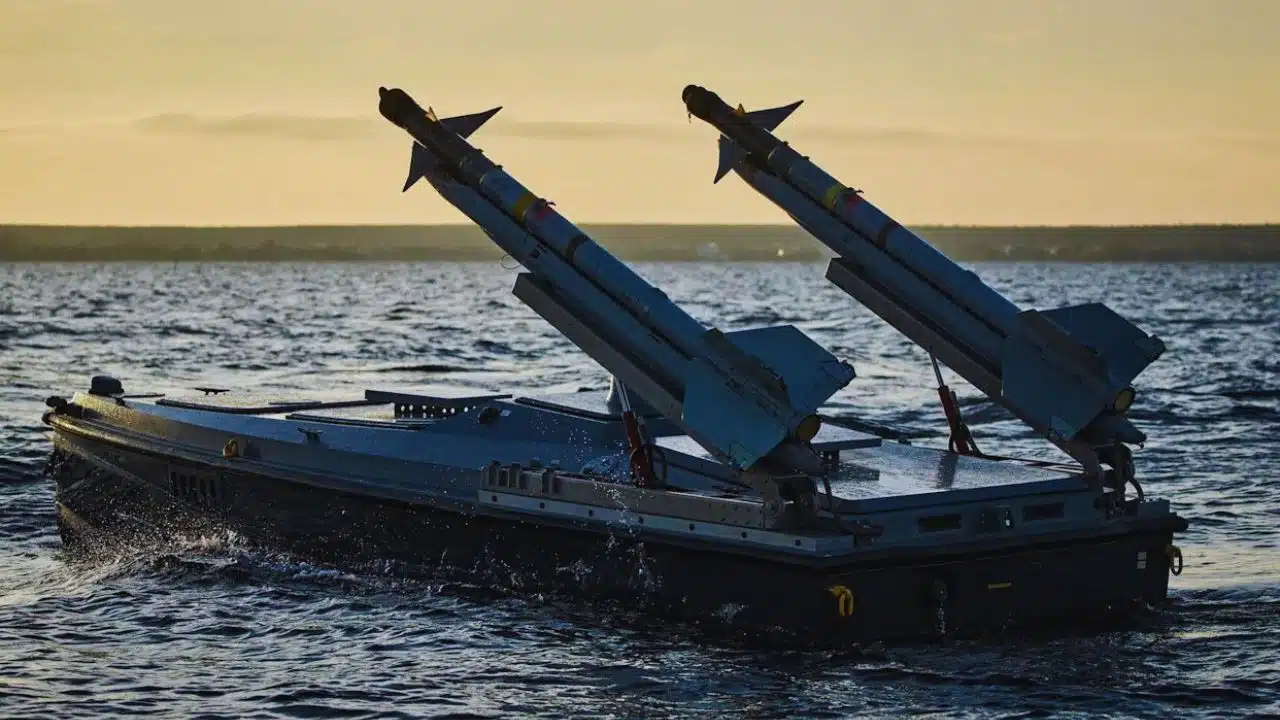
Ukraine naval drones armed with missiles are reshaping the fight in the Black Sea, with a Ukrainian sea-drone unit saying Russian helicopters have pulled back after becoming “easy targets,” even as Kyiv signals more complex, AI-enabled maritime strikes in 2026.
What happened, and why it matters
A Ukrainian military intelligence sea-drone unit (known publicly as Group 13) says Russia has sharply reduced helicopter use against Ukrainian naval drones after Ukraine began equipping uncrewed surface vessels with missiles.
That shift is significant because helicopters were one of Russia’s most practical tools for hunting low-profile drone boats at sea, especially when warships stayed closer to protected ports.
Separately, the same sea-drone command has said Ukraine expects more sophisticated maritime drone operations in 2026, including deeper use of artificial intelligence for target search and identification.
Who is involved
Group 13 operates under Ukraine’s military intelligence agency and has been central to Kyiv’s maritime drone campaign in and around the Black Sea.
A commander from the unit—identified by the call sign “Thirteen/13th” in public reporting—has described how tactics changed after Russia adapted its defenses and after Ukraine introduced missile-armed naval drones.
On the Russian side, helicopters have been used for patrol, interception, and attacks against drone boats, but the unit says that approach became riskier once drones began carrying missiles.
How Ukraine’s naval drones forced helicopters to retreat
According to the Ukrainian commander, Russian helicopters initially created serious problems for sea-drone missions by detecting and intercepting drone boats before they reached targets.
The commander says Russia later reduced helicopter operations against the drones after Ukraine added missile capability, describing helicopters as becoming “easy targets” once the drones could shoot back.
Ukraine previously described a milestone engagement in late December 2024 near Cape Tarkhankut off occupied Crimea, saying a Magura V5 naval drone used adapted missiles to down a Russian Mi-8 helicopter and hit another.
Missile-armed drones: what’s known publicly
Ukraine has tied the helicopter downing to the Magura V5 platform and a missile adaptation described as “SeeDragon,” presented as an air-to-air missile repurposed for sea-based launch.
Publicly reported specifications for the Magura V5 include a reported range of more than 800 kilometers, speed around 80 km/h, and a warhead capacity described as about 250 kilograms.
The same reporting describes the craft as about 5.5 meters long and costing roughly 10 million hryvnias (about $240,000 at the time of reporting).
The broader Black Sea shift
Ukraine’s expanding naval drone campaign has been credited in public reporting with pressuring Russia to move and better protect key naval assets, reducing routine exposure of high-value ships.
In parallel, the sea-drone commander has said Russia’s ships “barely operate,” often moving only about 25 miles (40 kilometers) from port to launch missiles and then returning to cover.
These adaptations suggest a tactical “cat-and-mouse” phase: Ukraine tries to widen the reach and roles of sea drones, while Russia relies more on stand-off strikes, concealment, and layered defenses near ports.
What Ukraine says comes next in 2026
The sea-drone commander has said Ukraine expects more complex operations next year, including improved autonomy that reduces how much an operator must manually search for targets.
He described current targeting as a combined process involving the operator and AI, with a future goal of drones independently searching for targets and distinguishing civilian from military vessels.
He also pointed to a growing store of operational video and sensor data that Ukraine believes can further train AI models used for maritime targeting and decision support.
Expanding platforms and missions
Group 13 has publicly been associated with the Magura “family” of naval drones, including the V5 (often described as a smaller strike/ramming drone) and the larger V7 described as a weapons platform.
In a public demonstration described in reporting, operators showed a V7 fitted with modified Sidewinder air-to-air missiles, highlighting the push to give sea drones an air-defense role.
Ukraine has also expanded drone-boat missions beyond open-sea attacks, including reported operations aimed at riverine targets, reflecting broader geographic and tactical experimentation.
Key timeline and capabilities
The events below summarize publicly reported milestones tied to the same evolving trend: Ukraine naval drones becoming multi-role platforms that complicate Russia’s air and sea response.
| Date / period | Reported development | Location (as reported) | Why it mattered |
| Summer 2023 (reported start of operations) | Magura drones described as operating since summer 2023 | Black Sea (general) | Marked the start of sustained use of uncrewed surface vessels for long-range maritime strikes. |
| Late Dec 2024 | Ukraine said a Magura V5 fired adapted missiles and downed a Mi-8, hitting another | Near Cape Tarkhankut, occupied Crimea | Signaled sea drones could threaten helicopters, not just ships or port infrastructure. |
| 2025 (reported by Ukrainian side) | Commander described adding missiles and pushing helicopters back | Black Sea (general) | Suggested a Russian shift away from helicopter interception due to higher risk. |
| Late 2025 / early 2026 planning | Commander outlined more complex, AI-enabled sea-drone operations | Ukraine (undisclosed location in reporting) | Points to autonomy, faster targeting, and potentially mixed-fleet operations as the next phase. |
Magura V5 vs V7 (as described publicly)
Public reporting frames these as complementary tools: one optimized for strike missions, the other increasingly positioned as a modular weapons platform.
| Feature | Magura V5 (reported) | Magura V7 (reported) |
| Role | Smaller strike drone; also shown with missile capability in reported helicopter engagement | Larger weapons platform shown with missile integration |
| Noted armament examples | “SeeDragon” missile use described in late-2024 helicopter engagement | Sidewinder missile integration shown in a demonstration |
| What Ukraine emphasizes | Long range and speed for reaching targets at sea | Payload flexibility and expanded mission set (including air-defense concept) |
| Source basis | Public claims and reported specs | Public claims and described demonstration |
Final Thoughts
Missile-armed Ukraine naval drones appear to be changing Russian risk calculations by threatening both ships and the helicopters once used to hunt drone boats, according to Ukraine’s sea-drone commander.
At the same time, Ukraine says Russia has adapted by limiting ship movements and operating closer to ports, turning the Black Sea into a contest of surveillance, concealment, and stand-off strikes.
The next phase, as described by the commander, is likely to center on AI-assisted autonomy, larger multi-role drone boats, and more complex operations that blend different drone types and mission profiles.