
Many families worry about what happens if they cannot pay final bills. They fear funeral costs, unpaid debts, and other surprises. They may start to look for life insurance policies, but often they feel lost in the jargon.
There are five main life insurance types you should know: term life, whole life, universal life, variable life, and burial insurance. This guide will explain each plan, from premium payments to cash value growth, from death benefit size to medical exam rules, and how you name a beneficiary.
You will learn which policy fits your age, budget, and goals. Keep reading.
Key Takeaways
- Term life covers 10–30 years, offers a $100,000+ death benefit, costs under $200 per year for a healthy 30-year-old male, and builds no cash value.
- Whole life locks coverage until death, starts at a $50,000 death benefit, grows cash value at a fixed rate after a medical exam, and costs about $1,100 per year.
- Universal life lets you adjust premiums, builds cash value based on a mortality table, and runs about $650 per year.
- Variable life ties cash value to stock or bond subaccounts, carries market risk, requires a medical exam, offers a $50,000 minimum death benefit, and costs about $850 per year.
- Final expense insurance covers funeral costs for ages 50–85 without a medical exam, pays $2,500–$40,000, and costs roughly $550 per year.
Term Life Insurance

Term life acts like a safety net for your family, so you can rest easy, even if your teenager burns dinner again. You pick a term—like ten or thirty years—pay steady premiums, then you can use an online tool or call a financial advisor to compare coverage and costs.
Key features and benefits
Term life insurance policy locks in coverage for 10, 15, 20, or 30 years. Issuers set death benefit amounts at $100,000 or more. This low cost plan costs less than many permanent options.
You get pure life insurance coverage. Cash value does not grow under these contracts.
Conversion to permanent policies can happen at any time before expiry. Clients use a life insurance calculator to test premium changes. Underwriting uses a brief medical exam for the shift.
This path builds cash value in a universal life policy. Families gain peace of mind and extra savings.
Who should consider it?
Young adults age 18 through 65 can use term life insurance. It gives a death benefit for a set time. Most families need extra cover while paying a mortgage loan or raising kids. Tight budgets welcome low premium rates.
Simple quotes pop up on web calculators.
People who want quick approval apply online. A few minutes of details nets quotes from an insurance company and advisor. You skip a long medical exam. You match coverage to college costs or loan plans.
This term life policy suits those with clear financial goals.
Whole Life Insurance
Whole life insurance locks in your coverage like a vault, it runs until you pass away. Permanent life insurance offers a death benefit that often starts at fifty thousand dollars. Policies suit adults aged eighteen to sixty five who want steady premiums.
Pricing can feel steep compared to term life insurance but you build value over time. A medical exam must clear applicants before they sign up.
Cash value grows at a fixed rate, like a slow but sure savings plan in your policy. Some folks see that nest egg as built in burial insurance, to cover funeral costs or to fund a dream vacation.
A loan against the balance won’t cut your death benefit unless you miss payments. Insurance agents and financial advisors often highlight tax advantages and tie them to estate planning goals.
Choosing this option feels like planting an oak tree, for a long lasting financial shield.
Variable Life Insurance
Variable life insurance pairs a death benefit with market investments. It works as a permanent policy for adults ages 18 to 65. You make premium payments and split them between a cash reserve and market funds.
The policy builds a cash value pool over time. A medical exam proves your health. This plan carries higher risks than a simple life policy. It offers at least a $50,000 death benefit.
You steer funds into a stock fund linked to the S&P 500 or a bond mix. The cash value may climb above other options. It can also drop when markets fall. You can work with a financial advisor for smart picks.
This path suits people who like market swings and seek long term growth.
Final Expense Insurance
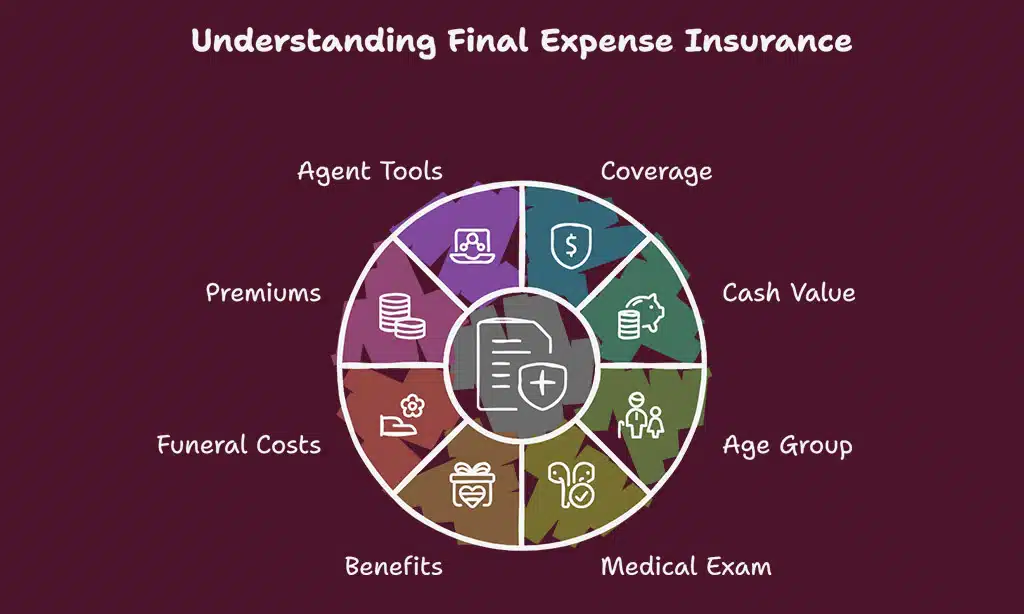
Final expense insurance covers funeral costs fast. Coverage lasts a lifetime. Policy builds cash value at a fixed rate. Healthy adults ages 50 to 85 use it most. No medical exam slows you down.
Benefits range from $2,500 to $40,000 to help.
Funeral costs can crush a family budget, like a sudden storm. Beneficiaries dodge extra bills at a sad time. You pay small premiums and rest easy. Insurance agents use online quote tools to show burial insurance rates.
How to Choose the Right Life Insurance Policy
Try an online quote tool to compare rate sheets for various coverage levels. Ask an insurance agent about your death benefit and your savings goals before you decide.
Assess your financial goals and needs
List your debts like credit card balances, home loan, and education debt. Add your income. Project future costs for your kids. The DIME method shines: Debts, Income, Mortgage, Education.
Earn $75,000 per year? Aim for $750,000 coverage.
Imagine life insurance as a safety net for your family. A term life insurance plan gives a big death benefit with low premiums. A whole life policy builds cash value year after year.
A final expense insurance policy eases funeral costs. Talk to an insurance agent or financial advisor. Use a budget calculator to see which coverage fits best.
Compare costs and coverage options
Readers, here is a quick cost vs coverage guide.
| Policy | Cost | Coverage | Quote Tip | Tool |
|---|---|---|---|---|
| Term Life | Under $200 yearly | $250,000 for a healthy 30-year-old male | Compare quotes from three insurers | Online quote portal |
| Whole Life | $1,100 annually | Fixed death benefit plus cash value | Check underwriting class | Premium calculator |
| Universal Life | $650 yearly | Flexible premiums; based on mortality table | Watch adjustable cost factors | Spreadsheet estimate tool |
| Variable Life | $850 per year | Investment subaccounts; market risk | Review subaccount fees | Investment platform |
| Final Expense | $550 yearly | Small benefit; covers funeral costs | Read policy fine print | Funeral cost estimator |
Consider your long-term plans
Project needs for 10, 20, 30 years. Age and health can change. Budget can shift with jobs or bills. Family size can grow or shrink. Add estate planning goals like paying a mortgage or funding college.
Permanent life insurance includes whole life insurance and universal life insurance. Both build cash value over time. You can borrow that cash for bills or emergencies.
Talk with a financial advisor or a licensed insurance agent. Compare term life insurance with permanent life options. Note interest rates for universal life insurance. Some policies let you adjust premium payments and death benefit.
Review rates tied to the S&P 500 for variable universal life insurance. Check the death benefit payout, premium payments, and final expense insurance for end-of-life expenses. Pick coverage that fits your budget and long term goals.
Takeaways
Life insurance can act like a safety net, covering funeral costs, debts, and supporting loved ones. A term plan can fit a tight budget; whole life can grow your cash value. Universal life gives you flexible premiums, variable life ties value to stocks, final expense handles burial bills.
You can run a cost calculator or talk with an insurance agent to find the right coverage amount. A savvy financial advisor will suggest add-ons that match your goals. Pick the plan that fits your budget and goals, then rest easy, knowing your family stands protected.
FAQs on Types of Life Insurance Policies
1. What is temporary life coverage?
Temporary life coverage works much like renting a safety net. It covers you for a set time, you choose your coverage amount and premium payments. If you pass in that span, it pays a death benefit.
2. How does lifetime fixed coverage work?
Lifetime fixed coverage sets one premium that does not change. It builds cash value you can borrow against. You hit two birds with one stone, you shield your family and grow savings. It also pays a death benefit to heirs.
3. What is a flexible savings policy?
A flexible savings policy lets you tweak premiums and death benefit as life shifts. It adds cash value life insurance perks and gives you flexible premiums. It is a quiet tool for smart estate planning.
4. How does market linked coverage differ?
Market linked coverage ties cash value to mutual funds or an index like S and P 500. It is a wild card, returns can swing up or down. You need a financial advisor to steer it right.
5. What is burial insurance?
Burial insurance, also called final expense life insurance, covers funeral costs and end of life expenses. It often skips the medical exam for quick approval. It gives peace of mind at the end.
6. How does group term life insurance work?
Group term life insurance is the plan your employer offers. They pay part of the premium payments, you pay the rest. It usually needs no medical exam, and your coverage amount ties to your salary.