


Real estate agents in Australia work in a dynamic, fast-paced industry where staying financially savvy is just as crucial as closing deals. Understanding how to manage and minimize tax liabilities can significantly impact their bottom line.
For agents, taxes often seem overwhelming, with complex rules and endless paperwork. However, with the right strategies, saving on taxes becomes an achievable goal.
This article explores how real estate agents save taxes in Australia, from leveraging deductions to staying informed about tax law changes.
By implementing these strategies, real estate professionals can retain more of their hard-earned income and invest it back into their businesses or personal growth.
How Real Estate Agents Save Taxes in Australia
We’ve found out some simple yet very effective tax saving strategies for the real estate agents in Australia. By following this actionable tips, real estate agents in Australia can save millions of taxes in 2025.
1. Understand Tax Deductions for Real Estate Agents
Tax deductions allow you to reduce your taxable income by claiming specific business-related expenses. For real estate agents, this means expenses incurred while conducting professional activities can often be deducted, lowering your overall tax bill. With the competitive nature of real estate, every dollar saved can be reinvested into growing your business.
Common Tax Deductions for Real Estate Agents
Here are some frequently overlooked tax deductions that can save money:
- Home office expenses: Costs associated with using a portion of your home for work purposes.
- Vehicle expenses: Mileage and maintenance for work-related travel.
- Marketing and advertising costs: Social media ads, flyers, and other promotional materials.
- Professional memberships and subscriptions: Fees for industry organizations or tools like property listing platforms.
Real-Life Insight:
For example, Linda, a real estate agent in Brisbane, was able to save $5,000 on her annual taxes by systematically tracking and claiming all her deductible expenses, including vehicle mileage and office supplies.
Tax Deductions Overview
| Expense Type | Average Savings (%) | Key Documentation Needed |
| Home Office Expenses | 10-20% | Workspace size and utility bills |
| Vehicle Expenses | 15-25% | Mileage log and receipts |
| Marketing Costs | 10-30% | Invoices and ROI tracking |
| Membership Fees | 5-15% | Membership statements |
Pro Tip:
Keep detailed and accurate records of all business-related expenses. Use software or apps to track and categorize these costs throughout the year. This ensures you maximize deductions while staying compliant with Australian Tax Office (ATO) regulations.
2. Maximize Vehicle and Travel Expense Claims
Real estate agents often rely heavily on their vehicles to travel between property showings, client meetings, and inspections. The following travel-related expenses are typically deductible:
- Mileage for work-related trips.
- Parking fees and tolls.
- Car maintenance and fuel costs (if the vehicle is used primarily for business).
Practical Example:
Sarah, a Melbourne-based real estate agent, drives 15,000 kilometers annually for work. By maintaining a detailed mileage log, she claims $7,500 in vehicle deductions, significantly reducing her taxable income.
Recordkeeping Tips
To ensure compliance with ATO requirements and maximize deductions:
- Log your mileage using a tracking app.
- Save receipts for fuel, maintenance, and other vehicle-related expenses.
- Consider maintaining a detailed travel diary to substantiate claims during audits.
Vehicle Expense Deductions
| Expense Type | Claim Percentage | Notes |
| Fuel Costs | 100% (business) | Maintain detailed receipts |
| Maintenance | 50-100% | Dependent on business use percentage |
| Tolls & Parking | 100% | Keep digital or paper records |
3. Leverage Home Office Deductions
Real estate agents who use a dedicated area in their homes for work can claim a portion of their household expenses. To qualify, you must:
- Have a specific workspace used exclusively for business activities.
- Calculate the percentage of your home utilized for work.
Deductible Items for Home Office
Expenses you can claim include:
- Internet and phone bills.
- Electricity and heating costs.
- Office furniture, computers, and printers.
Practical Insights:
Mark, a Sydney-based agent, dedicates 20% of his apartment as his home office. By claiming a proportional percentage of his rent and utility bills, Mark saves an average of $4,000 annually.
He also benefits by investing in ergonomic furniture, which is fully deductible.
Home Office Deductions
| Expense Type | Deductible Percentage | Notes |
| Internet & Phone | Proportional to usage | Keep a log of work-related usage. |
| Utilities | Based on workspace size | Measure your home office area. |
| Equipment Purchases | 100% (if business-use) | Maintain receipts for ATO review. |
4. Invest in Professional Development

Investing in your professional growth not only enhances your skills but also offers tax advantages. Real estate agents can deduct expenses for:
- Courses and certifications related to real estate.
- Seminars and workshops designed to improve professional knowledge.
Deductible Professional Development Costs
Here are some examples:
- Online learning platforms: Subscriptions to platforms like Udemy or LinkedIn Learning.
- Industry books and journals: Educational materials relevant to your field.
- Travel expenses: Transportation and accommodation costs for attending out-of-town seminars.
Case Study:
Julie, a Brisbane agent, completed a $2,000 advanced negotiation course. By claiming this expense, she not only improved her deal-closing rates but also reduced her taxable income by the course cost.
Development Cost Benefits
| Training Type | Cost Range | Average Tax Savings (%) | Notes |
| Online Courses | $50-$500 | 10-20% | Track subscription invoices |
| Certifications | $1,000+ | 15-30% | Maintain course receipts |
| Seminars & Workshops | $500-$3,000 | 20-40% | Record all travel expenses |
5. Utilize Superannuation Contributions
Making additional contributions to your superannuation fund can be a smart tax-saving strategy. Benefits include:
- Reducing taxable income: Contributions are tax-deductible up to the annual limit.
- Long-term financial planning: Secure your retirement while lowering your current tax obligations.
Government Co-Contribution Schemes
The Australian government offers incentives for eligible taxpayers to contribute to their super funds. Check the ATO website for details on how real estate agents can benefit.
Super Contribution Benefits
| Contribution Type | Annual Cap | Tax Savings (%) | Notes |
| Employer Contributions | $27,500 | 15-30% | Ensure within annual limits |
| Personal Contributions | $100,000 | Varies | Check eligibility for deduction |
6. Claim Marketing and Advertising Costs
Effective marketing is essential for real estate agents, and many related costs are tax-deductible. Examples include:
- Social media ad campaigns.
- Printed materials such as flyers, brochures, and property signs.
- Professional photography and videography for property listings.
Practical Example:
Tom, a Perth agent, spent $10,000 on targeted social media ads. By claiming this as a deductible expense, he saved $3,000 in taxes while increasing his client base.
Marketing Expense Deductions
| Marketing Type | Cost Range | Deduction Potential (%) | Notes |
| Social Media Ads | $500-$10,000 | 10-30% | Monitor ad ROI |
| Printed Materials | $100-$5,000 | 10-25% | Keep vendor invoices |
| Professional Photography | $500-$3,000 | 15-30% | Maintain client contracts |
7. Use Depreciation Schedules for Investment Properties
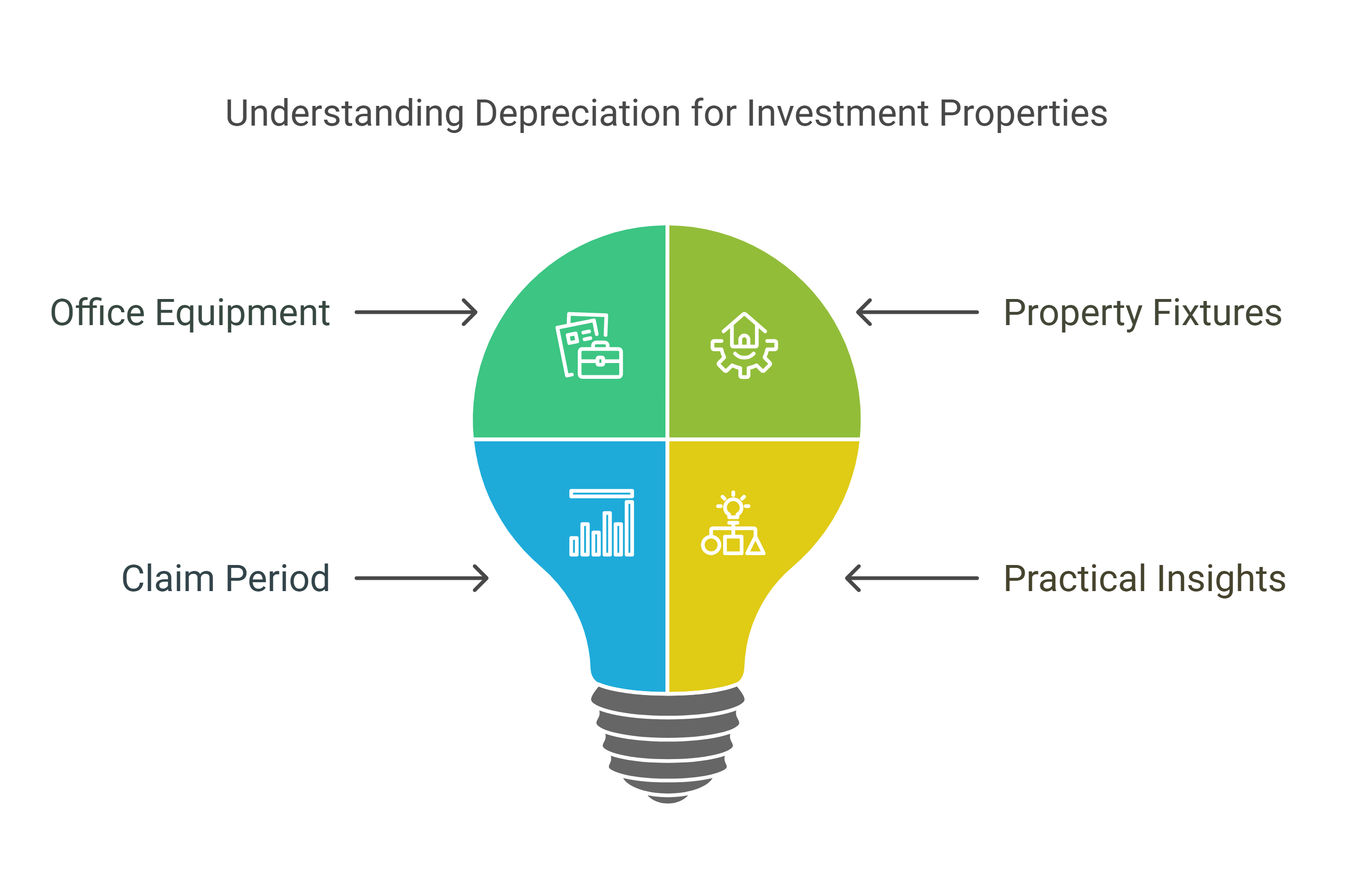
If you own investment properties, depreciation allows you to claim a portion of the property’s wear and tear each year. Deductible items include:
- Office equipment.
- Property fixtures and fittings.
Practical Insights:
Real estate agent Paul, who owns an investment property in Sydney, saved over $8,000 annually by claiming depreciation on fixtures like air conditioning systems and built-in wardrobes.
Depreciable Assets
| Depreciable Asset | Claim Period | Notes |
| Office Desk | 10 years | Maintain purchase receipts. |
| Property Fixtures | Varies | Consult a quantity surveyor. |
8. Take Advantage of GST Credits
If your business is registered for GST, you can claim credits for the GST paid on business purchases. To ensure you maximize this benefit:
- Keep all invoices with GST clearly listed.
- Review expenses regularly to avoid missing eligible claims.
Practical Example:
An agent registered for GST claimed input tax credits for a $5,000 advertising campaign, reducing their GST liability by $500.
GST Credit Insights
| Expense Type | GST Rate | Key Documentation |
| Office Supplies | 10% | Tax invoices |
| Professional Services | 10% | Detailed receipts |
9. Plan for Tax Time with a Professional Accountant
Navigating tax regulations can be challenging. A professional accountant experienced in real estate can:
- Identify potential deductions you may have overlooked.
- Ensure your records comply with ATO standards.
Checklist for Choosing a Tax Accountant:
- Experience with real estate professionals.
- Up-to-date knowledge of Australian tax laws.
- Transparent fee structure.
- Positive reviews from other real estate agents.
Pro Tip:
Schedule quarterly consultations with your accountant to ensure ongoing compliance and maximize potential deductions.
10. Stay Updated on Tax Law Changes
Australian tax laws frequently change, which can impact your deductions and credits. Staying informed helps you:
- Avoid penalties for non-compliance.
- Identify new opportunities for savings.
Resources for Tax Updates
- Visit the ATO website for official updates.
- Subscribe to newsletters from professional associations.
- Attend webinars and workshops on tax laws for real estate agents.
Takeaways
By implementing how real estate agents save taxes in Australia, you can significantly reduce your tax burden and improve financial stability.
From leveraging deductions to staying informed about tax law changes, each strategy provides actionable insights for maximizing savings. Don’t hesitate to consult with a tax professional to tailor these tips to your unique situation.
Start planning today and share these valuable tips with fellow real estate agents who could benefit from tax savings!





















