


Switching your business to Web3 can feel tricky. Many businesses struggle to understand blockchain technology, digital assets, or smart contracts. The shift from Web 2.0 to Web3 may seem like a maze with unclear paths and risks.
Web3 opens doors to more control over data and secure transactions. It empowers both businesses and customers by promoting trust through decentralized systems. This isn’t just another system update; it’s a chance for you to rethink how you connect with customers.
This guide breaks the complex process into simple steps. You’ll learn what matters most when planning your web3 strategy, like security, blockchain infrastructure, and customer engagement strategies.
Ready? Let’s start the journey!
Key Takeaways
- Web3 gives users control of their data. It uses blockchain, decentralization, and smart contracts to promote trust and security.
- Tokenized loyalty programs, NFTs, DAOs, and DeFi tools can build better customer engagement and improve business processes.
- Start small with platforms like Ethereum for blockchain setup. Test features like wallet integration or smart contracts before scaling up.
- Ensure legal compliance with privacy laws (like GDPR) and tax rules for digital assets to avoid fines or penalties.
- Educate your team on Web3 basics, cybersecurity, and tools like Web3.js while teaching customers through guides, workshops, or videos.
Understand Web3 Fundamentals
Web3 means more control for users. It is called “read-write-own” because people own their digital data. Blockchain technology powers this change, using secure transactions and smart contracts to help businesses and consumers trust each other online.
Key features include decentralization, tokenization, ownership, and privacy. Decentralized applications (dApps) let users interact without middlemen. Digital assets like NFTs can prove digital ownership or offer rewards in loyalty programs.
These tools can shape new business models while keeping customer data safe.
Identify Web3 Use Cases for Your Business
Tokenized loyalty programs can boost customer retention. Retailers can use blockchain for rewards that customers truly own. For example, customers could earn tokens to spend or trade, giving them more value than traditional points.
Smart contracts simplify business deals in B2B relationships. These digital agreements execute automatically when terms are met. They cut paperwork and reduce errors, saving time and money.
Creators can use NFTs to sell rare content or access exclusive events. Fans gain proof of ownership tied to the Ethereum blockchain. This builds trust within creative industries like art and music.
DAOs give communities voting power on key decisions. Members have a voice by using crypto tokens as votes, making governance transparent and fair.
DeFi reduces transaction fees while giving better financial options to users worldwide. Businesses offering these tools expand into decentralized finance easily with lower costs than banks offer now.
Build or Integrate Blockchain Infrastructure
Start small with blockchain technology. Use platforms like Ethereum or Polkadot to build your base. These systems handle smart contracts and digital assets well. They also offer cross-blockchain protocols for better connections.
Wallet integration is key for secure transactions. Tools like Web3.js and Ethers.js make this easier. Audit smart contracts often, as flaws can risk data ownership. Scale your infrastructure based on users’ needs to avoid high gas fees or slow processing times.
Prioritize Security and Risk Management

Protecting digital assets should be your main focus. Use strong security practices to keep data and funds safe. Conduct regular smart contract audits to catch errors early. Poor coding can lead to theft or loss, so test often.
Manage private keys carefully, as losing them means losing access forever.
Consider insurance for digital assets, especially with decentralized finance (DeFi) tools. This helps recover losses when something goes wrong. Tools like MAGNETIQ help reduce fraud by using smart contracts for secure transactions.
Prioritizing risk management now saves headaches later in this digital economy shift!
Ensure Compliance with Legal and Regulatory Requirements
Follow data privacy laws like GDPR. These rules protect user information. Violating them can lead to heavy fines. In 2021, Amazon faced a $888 million fine under GDPR for mishandling data.
Understand tax and securities regulations for tokens and cryptocurrencies. Some countries treat digital assets as taxable income or investments. Missteps here could result in penalties.
Address intellectual property issues with NFTs. Define ownership rights clearly to avoid disputes over digital creations. Collaborate with legal experts who know blockchain technologies well for guidance on industry regulations, secure transactions, and compliance standards.
Focus on User Experience (UX) Design
Make wallet integration simple. Complicated steps can push users away. Guide them with clear instructions to set up wallets, access blockchain networks, and secure transactions.
Explain gas fees upfront. Users dislike surprises during payments. Share tips to reduce costs or speed up digital asset transactions. Boost trust by being transparent about how data ownership works and ensuring safety in online shopping journeys.
Educate and Upskill Your Team for Web3
Training your team is key to moving into Web3. They must learn the basics and gain new skills for success.
- Teach blockchain basics to everyone. Explain how blockchain technology works, including smart contracts and decentralization.
- Offer tokenomics training sessions. Show your team how digital assets work in systems like loyalty rewards or nfts.
- Train employees on cybersecurity. Web3 introduces risks, like wallet hacks or data breaches, so safety should come first.
- Use tools that make learning easy. Platforms like MAGNETIQ simplify blockchain infrastructure for beginners.
- Introduce hands-on exercises with Web3.js or ethers.js. Practice helps staff understand coding for decentralized applications.
- Share examples of successful web 3.0 businesses like Axie Infinity to inspire them.
- Break down gas fees and wallet integration steps clearly during workshops.
- Focus on teaching legal rules and industry regulations tied to decentralized finance (defi).
- Emphasize data migration from old systems without losing key information.
- Hold open discussions on customer experiences in virtual spaces, such as social media or gaming platforms using blockchain tools.
Engage and Educate Your Customers About Web3
Web3 can confuse many people. Make it simple and fun for your customers to understand.
- Use clear examples like NFTs or digital ownership to explain how Web3 works in daily life.
- Share easy guides about wallets, blockchain technology, and secure transactions on your website or social media.
- Hold free workshops online or in-person to teach customers about smart contracts and decentralized applications.
- Offer rewards programs tied to Web3 tools, such as token-based discounts or exclusive NFT collection items.
- Create videos using influencers to show how digital assets work on platforms like the Ethereum blockchain.
- Print simple flyers with steps for wallet integration or understanding gas fees for new users in stores.
- Send email tips explaining the benefits of data ownership and secure payments through blockchains.
- Answer questions openly about risks, industry regulations, and the digital economy during live Q&A sessions with subscribers or buyers.
- Start a community forum where users discuss topics like DAOs, decentralized finance (DeFi), and supply chain management improvements from Web3 tech.
Foster Community Building and Governance
Build trust by using token-based governance. Let the community vote on decisions with tools like DAOs. Offer rewards such as airdrops or staking to boost engagement.
Transparent communication matters. Share updates and changes clearly. Decentralized systems reduce middlemen, making processes fairer and smoother for users.
Test, Optimize, and Scale Your Web3 Transition
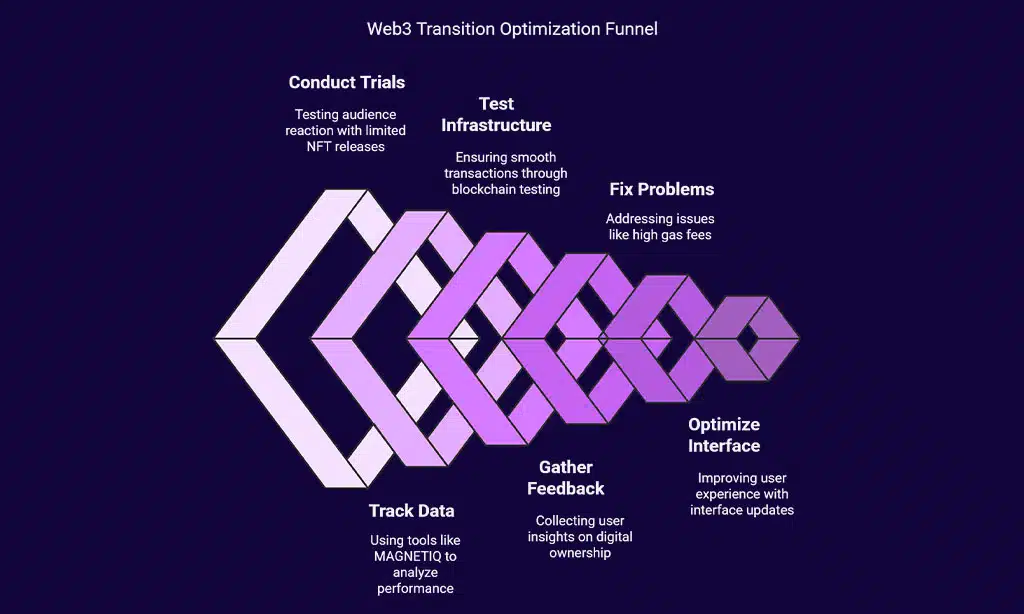
Web3 is new and exciting. Testing helps businesses adapt and grow in this space.
- Start small with trials. Release a limited NFT collection, like special edition shoes, to test your audience’s reaction.
- Use tools like MAGNETIQ for tracking data. This shows what works and where changes are needed.
- Test blockchain infrastructure under real conditions. Check smart contracts, wallet integration, and gas fees for smooth transactions.
- Gather feedback from users. Ask about their experience with digital ownership features or decentralized applications.
- Fix problems quickly. For example, if gas fees are too high, explore other networks or solutions like Ethereum Layer 2 scaling.
- Optimize the user interface regularly. A confusing web interface can push users away.
- Scale slowly by adding more features step by step. You don’t have to build everything at once!
- Offer rewards during tests to keep user engagement high. Think discounts or loyalty points tied to digital assets.
- Train staff continuously on Web3 tools like web3.js and ethers.js to stay updated on innovations.
- Expand community involvement through DAOs or social media platforms like Discord for feedback and governance input.
- Monitor industry trends weekly—Web3 evolves fast! Adopt new ideas that fit your business model before competitors do.
Leverage Decentralized Technologies to Unlock New Business Models
Decentralized technologies create fresh opportunities for businesses. Blockchain infrastructure secures transactions and builds trust without middlemen. Smart contracts automate steps, cutting costs and saving time.
Tokenized reward programs keep customers loyal. NFTs give artists or game developers new ways to earn through digital ownership. DAOs help groups make decisions together, sharing power fairly.
Using DeFi tools opens access to financing without banks slowing things down.
Monitor and Adapt to Emerging Web3 Trends
Web3 trends change fast. Businesses must stay alert to new tools like DAOs, DeFi, and NFTs. Future Today Strategy Group predicts Web3 adoption to skyrocket by 2025. Early movers could lead the digital economy with token-based loyalty programs or smart contracts.
PwC highlights fresh chances in decentralized finance and blockchain technology. Watch gas fees and wallet integrations closely, as they impact user experience. Regularly review market shifts in areas like secure transactions or data ownership to keep your web3 strategy sharp.
Takeaways
Shifting your business to Web3 is a big step, but it’s worth it. Focus on clear goals, secure tools, and customer trust. Use smart contracts and digital assets wisely. Test small changes first, then grow faster with feedback.
The future of the internet is here—stay ready!
FAQs
1. What is Web3, and why should businesses care about it?
Web3 refers to a decentralized internet built on blockchain technology. It offers digital ownership, secure transactions, and new ways for businesses to engage in the digital economy.
2. How can smart contracts help my business transition to Web3?
Smart contracts automate agreements on the blockchain. They reduce errors, cut costs, and make processes like payments or royalty distribution more efficient.
3. What role do NFTs play in a Web3 strategy?
NFTs give businesses a way to represent digital assets with proof of ownership. They’re useful for selling products or creating unique customer experiences.
4. Are gas fees something I need to consider when using blockchain infrastructure?
Yes, gas fees are transaction costs on networks like Ethereum blockchain. These fees impact scalability and should be factored into your web interfaces or wallet integration plans.
5. How does community building fit into transitioning to Web3?
Community engagement is key in Web3 through DAOs (decentralized autonomous organizations). Strong communities drive trust and adoption of decentralized applications or services.
6. Is there a learning curve for adopting blockchain technology?
Yes, but tools like web3.js and ethers.js simplify development while open-source resources provide guidance for scaling up your business-to-business (B2B) operations securely within industry regulations.





















