


Leadership is more than setting goals or managing tasks. Many leaders struggle to connect with their teams, understand emotions, and handle challenges effectively. This can result in misunderstandings, low morale, and poor employee engagement.
One key factor that separates good leaders from great ones is emotional intelligence. Emotionally intelligent leaders understand their feelings, empathize with others, and build trust within their teams.
These traits are vital for boosting team dynamics and creating psychological safety at work.
This blog will explore the ten essential traits of emotionally intelligent leaders. Each trait helps improve your leadership skills and strengthens workplace relationships. Keep reading to discover how these qualities can transform your leadership style!
Self-Awareness: Understanding Your Emotions
Recognizing your emotional state helps you manage reactions and maintain balance. Emotionally intelligent leaders assess how their feelings influence decisions, relationships, and workplace dynamics.
For example, understanding anger allows them to pause before addressing conflicts or giving feedback.
Self-awareness builds confidence and encourages better communication skills. Leaders who identify negative emotions can prevent stress management issues from spilling into teamwork or decision-making processes.
Daniel Goleman highlights this skill as crucial for influencing emotions constructively in others.
Self-Management: Staying in Control Under Pressure
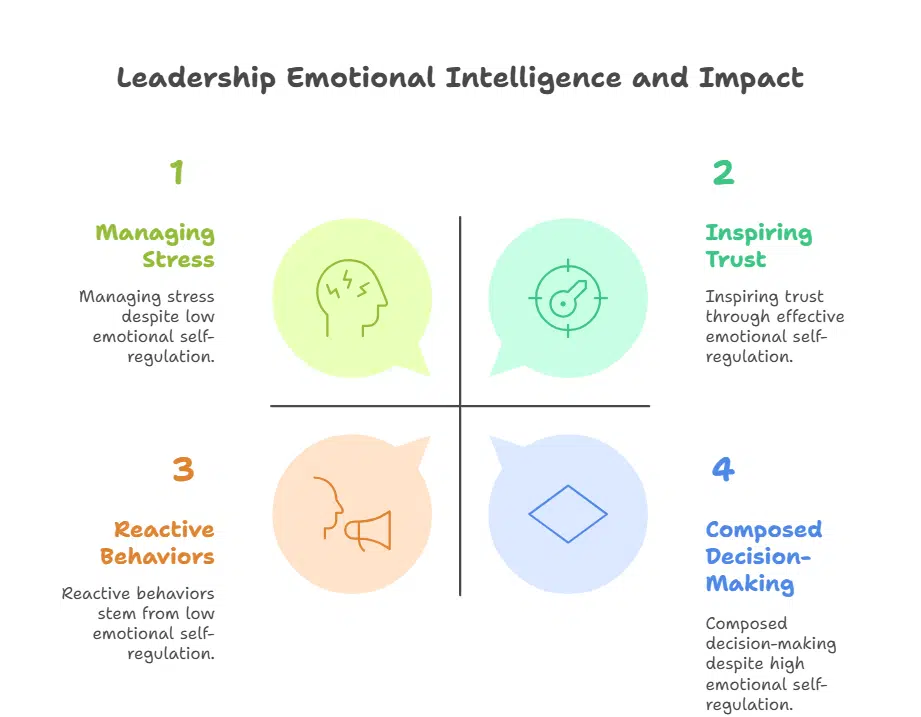
Emotionally intelligent leaders excel at managing emotions in high-stress situations. They rely on emotional self-regulation to remain calm and focused during crises. Staying composed helps them think critically and make rational decisions under pressure.
Harvard Business Review highlights that self-management improves workplace outcomes by reducing reactive behaviors.
Leaders with strong stress management skills inspire trust among peers and team members. Their ability to influence emotions encourages positivity even when challenges arise. They create psychological safety by maintaining a steady demeanor, fostering better conflict resolution, and promoting job satisfaction across teams.
Empathy: Recognizing and Respecting Others’ Feelings
Empathy enables leaders to connect with their teams on a human level. Understanding emotional responses helps them identify what motivates or challenges their employees. For example, workplace empathy fosters trust and improves psychological safety in a company culture.
Leaders who respect others’ feelings create stronger interpersonal relationships and lower turnover rates.
Acknowledging basic human needs builds organizational commitment and boosts morale. Noticing facial expressions, non-verbal communication, or body language can reveal unspoken concerns during workplace conflicts.
This attention strengthens team dynamics while supporting employee retention efforts. Compassionate leadership drives better conflict resolution and enhances collaboration across all levels of an organization.
Emotionally intelligent leaders observe team dynamics and spot shifts in emotional states. They use social skills to address conflicts early, fostering psychological safety within the group.
This awareness helps them guide communication and encourage collaboration among members with diverse ideas.
Successful leaders also adapt their approach based on employee motivations and cultural differences. Understanding stereotypes or biases allows them to create an inclusive environment.
These leadership qualities build trust and improve teamwork, leading to better conflict resolution and stronger connections throughout the workplace.
Relationship Management: Building Strong Connections
Strong connections in teams rely on trust and mutual respect. Leaders with high emotional intelligence use empathy to understand team needs and create supportive environments. They influence emotions positively, helping manage conflicts and reducing workplace stress.
Open communication fosters psychological safety, encouraging employees to express ideas freely.
Effective leaders address conflict resolution by finding mutually beneficial solutions. Strong interpersonal skills help them build relationships while respecting diverse perspectives.
Active listening strengthens bonds between team members and mentors alike. These leadership qualities improve collaboration, boost employee retention rates, and enhance team performance.
Active Listening: Giving Full Attention to Others
Active listening strengthens workplace empathy and improves communication. Emotionally intelligent leaders focus on the speaker without distractions, making others feel valued. This approach builds psychological safety within teams and enhances conflict resolution abilities by understanding different perspectives.
Leaders skilled in active listening ask open-ended questions to clarify thoughts. They observe nonverbal cues like tone or body language to fully grasp emotions. Daniel Goleman highlights this as a critical leadership skill for fostering trust and managing emotions effectively during team discussions.
Adaptability: Embracing Change and Uncertainty

Emotionally intelligent leaders remain adaptable during organizational change. They modify their leadership approach to address new challenges and support team transitions. A growth mindset enables them to lead teams through uncertainty, creating an encouraging environment for all members.
Managing change becomes more manageable when leaders display positivity and motivate the group with optimism.
They handle changing dynamics with analytical thinking and effective problem-solving skills. Empathy helps them address team concerns during uncertain times, promoting a sense of security in the workplace.
This capability strengthens trust and enhances employee retention as workers feel appreciated during transitions.
Accountability: Taking Ownership of Actions and Decisions
Leaders with high emotional intelligence accept responsibility for their actions and decisions, good or bad. They understand how owning up to mistakes fosters trust and psychological safety within teams.
A 2023 study on leadership development highlighted accountability as a core trait that strengthens team dynamics and workplace empathy.
Taking ownership means addressing errors openly without blame-shifting or excuses. For example, leaders like Daniel Goleman have emphasized that acknowledging failures promotes growth mindsets across organizations.
By prioritizing transparency, such individuals create an environment where team members feel empowered to focus on problem-solving instead of fear.
Humility: Acknowledging Mistakes and Learning from Them
Admitting mistakes shows strength and emotional intelligence. Leaders with humility accept errors, take responsibility, and focus on solutions. This approach fosters psychological safety within teams, encouraging open communication and trust.
Emotionally intelligent leaders embrace a growth mindset by learning from setbacks instead of avoiding accountability.
Acknowledging faults inspires respect among peers and team members. For example, apologizing for a decision that impacts employee retention demonstrates integrity. Such actions highlight leadership qualities that prioritize personal development as well as team dynamics.
Gratitude: Recognizing and Appreciating Team Contributions
Grateful leaders inspire trust and loyalty in their teams. Recognizing individual efforts boosts morale and strengthens team dynamics. A quick thank-you or public acknowledgment can influence emotions positively.
Studies show that 81% of employees feel motivated when appreciated at work.
Emotionally intelligent leaders understand the human side of business. They use gratitude to promote psychological safety, ensuring everyone feels valued. Celebrating milestones, sharing credit for success, and showing empathy build stronger relationships within teams.
Takeaways
Emotionally intelligent leaders inspire trust and drive success. They combine self-awareness, empathy, and adaptability to lead with impact. By mastering these traits, they create stronger teams and healthier workplaces.
These skills are essential for leadership development in today’s fast-changing world. Start building your emotional intelligence today to grow as a leader who truly makes a difference.
FAQs on Traits Of Emotionally Intelligent Leaders
1. What is emotional intelligence in leadership?
Emotional intelligence in leadership refers to the ability to manage emotions, understand team dynamics, and influence emotions to create a positive work environment.
2. Why are emotionally intelligent leaders important in the workplace?
Emotionally intelligent leaders improve employee retention, foster psychological safety, and enhance relationship management by showing workplace empathy and strong social skills.
3. How do emotionally intelligent leaders handle conflict resolution?
They use active listening, social awareness, and problem-solving skills to address conflicts while maintaining trust and respect within their teams.
4. Can emotional intelligence help with stress management for leaders?
Yes, managing emotions effectively helps leaders stay calm under pressure while supporting burnt-out employees during challenging times like work-from-home transitions.
5. What role does curiosity play in developing emotional intelligence?
Curiosity drives growth mindset development by encouraging leaders to learn about others’ perspectives and improve their own leadership qualities through continuous learning.
6. Are there resources for improving emotional intelligence as a leader?
Yes! Leadership development programs, online courses on topics like emotional quotient (EQ), or insights from experts such as Daniel Goleman can help build these critical skills.





















