
Losing a loved one is always devastating, but when that loss results from someone else’s negligence or wrongful actions, the grief is often accompanied by legal and financial concerns.
If you’re facing such a situation, understanding the things to know about wrongful death claims is crucial. A wrongful death claim allows family members or beneficiaries to seek compensation for their loss, covering financial burdens and holding responsible parties accountable.
In this comprehensive guide, we’ll walk you through 10 essential things to know about wrongful death claims, covering legal definitions, liability, compensation, and the legal process involved. By the end of this article, you’ll have a clear understanding of wrongful death claims and what steps to take if you need to file one.
1. What Is a Wrongful Death Claim?
A wrongful death claim arises when a person dies due to another party’s negligence, recklessness, or intentional misconduct. These claims fall under civil law, allowing surviving family members to seek financial compensation. Unlike criminal cases, wrongful death lawsuits focus on financial recovery rather than punishment. Such claims can involve accidents, medical malpractice, or intentional acts.
Who Can File a Wrongful Death Lawsuit?
The eligibility to file a wrongful death claim varies by state. Typically, the following individuals can initiate a claim:
| Eligible Party | Description |
| Spouse or Legal Partner | The closest legal relation of the deceased. |
| Children | Both biological and adopted children may be eligible. |
| Parents | If the deceased was unmarried, parents may file a claim. |
| Personal Representative | A legally appointed executor of the deceased’s estate. |
| Extended Family Members | In some cases, siblings or grandparents may be eligible. |
Understanding things to know about wrongful death claims, including who can file them, helps families make informed decisions when seeking justice.
2. Common Causes of Wrongful Death Claims
Wrongful death cases stem from a wide range of circumstances, often involving negligence or misconduct. Some common causes include:
| Cause | Explanation |
| Medical Malpractice | Errors in diagnosis, surgical mistakes, or improper treatment. |
| Car & Truck Accidents | Fatal crashes due to reckless driving, DUI, or distracted driving. |
| Workplace Accidents | Unsafe work environments leading to fatal injuries. |
| Defective Products | Dangerous consumer goods causing fatal harm. |
| Criminal Acts | Homicide or other violent crimes leading to death. |
| Slip and Fall Accidents | Poorly maintained premises leading to fatal injuries. |
Recognizing the common causes is one of the essential things to know about wrongful death claims, as it helps victims’ families understand their legal rights.
3. The Legal Process of Filing a Wrongful Death Claim
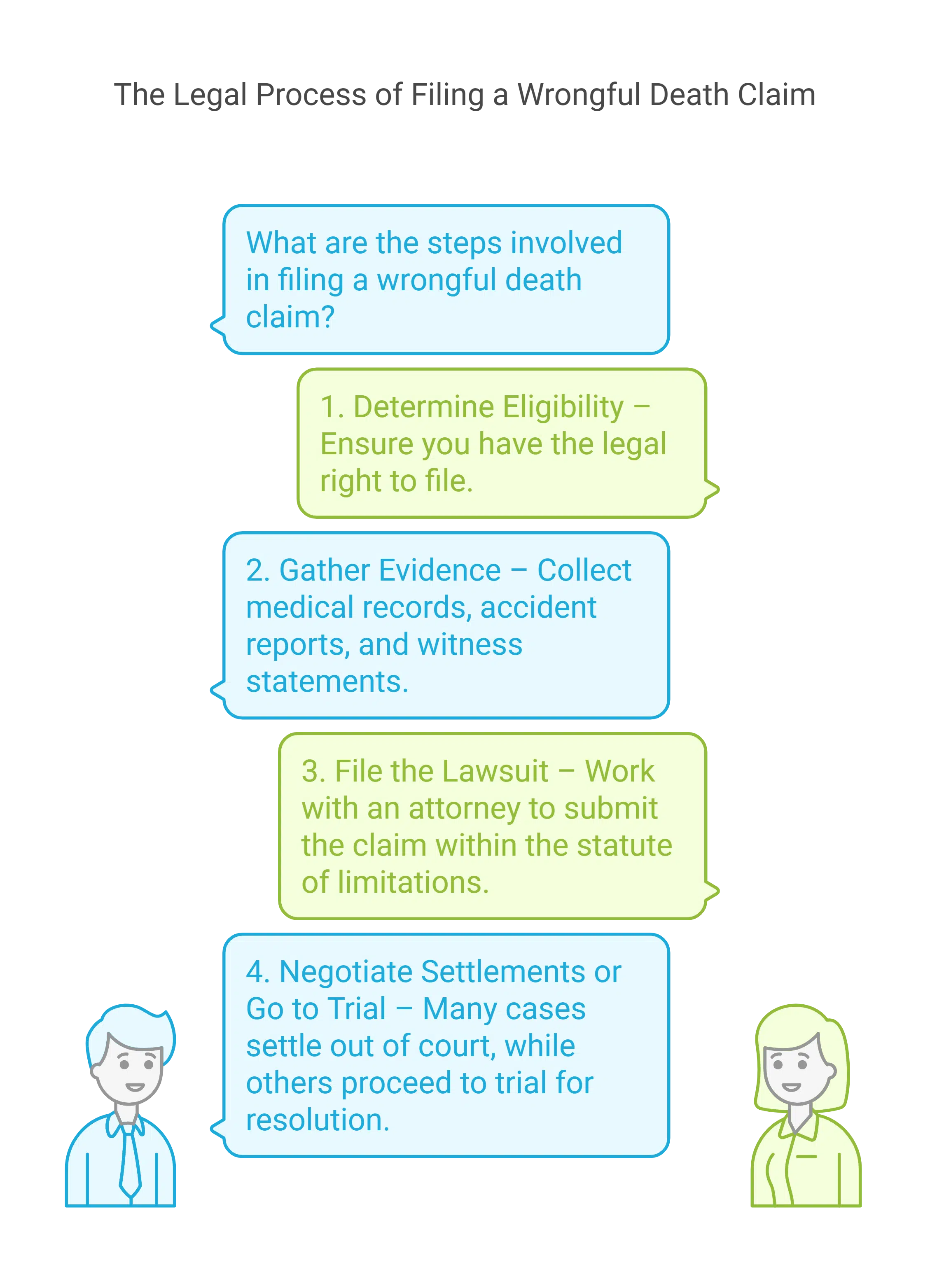
Understanding the things to know about wrongful death claims means knowing the legal steps involved:
- Determine Eligibility – Ensure you have the legal right to file.
- Gather Evidence – Collect medical records, accident reports, and witness statements.
- File the Lawsuit – Work with an attorney to submit the claim within the statute of limitations.
- Negotiate Settlements or Go to Trial – Many cases settle out of court, while others proceed to trial for resolution.
A strong legal approach increases the chances of securing fair compensation.
4. Proving Liability in a Wrongful Death Case
A successful wrongful death claim requires proving four key elements:
| Legal Element | Explanation |
| Duty of Care | The defendant had a legal responsibility toward the deceased. |
| Breach of Duty | The defendant failed to uphold their duty of care. |
| Causation | The breach directly caused the death. |
| Damages | The surviving family suffered losses due to the death. |
Proving liability is one of the crucial things to know about wrongful death claims, as it determines the outcome of the case.
5. Compensation in Wrongful Death Cases
Compensation varies based on the case details but typically includes:
| Type of Damage | Description |
| Economic Damages | Covers medical bills, funeral costs, and lost income. |
| Non-Economic Damages | Includes pain, suffering, and emotional distress. |
| Punitive Damages | Awarded in cases of extreme negligence to punish the wrongdoer. |
Factors Affecting Compensation Amount
- The deceased’s income and future earning potential.
- Financial dependence of survivors.
- State laws and damage caps.
Understanding compensation is vital among things to know about wrongful death claims, as it helps families estimate potential recovery amounts.
6. Statute of Limitations for Wrongful Death Claims
Every state sets a statute of limitations for wrongful death claims, typically ranging from one to three years. Exceptions may apply in cases of:
| Exception | Description |
| Delayed Discovery | If the cause of death wasn’t immediately known. |
| Minors Involved | If a minor is the plaintiff, the deadline may extend. |
| Government Claims | Claims against government entities often have shorter deadlines. |
7. Role of Insurance in Wrongful Death Cases
Insurance companies play a significant role in wrongful death settlements. However, they often attempt to minimize payouts. Families should be cautious when:
- Receiving initial settlement offers.
- Dealing with insurance adjusters.
- Providing recorded statements without legal advice.
A wrongful death attorney can help negotiate fair settlements and avoid legal pitfalls.
8. Differences Between Civil and Criminal Wrongful Death Cases
A wrongful death lawsuit is a civil case seeking financial compensation, while a criminal case involves government prosecution for punishment. Even if a defendant is acquitted in a criminal trial, families can still pursue a wrongful death claim.
9. Importance of Hiring a Wrongful Death Attorney
- Handles legal complexities.
- Gathers critical evidence.
- Negotiates settlements.
- Represents you in court.
What to Look for in a Wrongful Death Lawyer
- Experience in similar cases.
- Good track record.
- Client testimonials.
Hiring an attorney is one of the most important things to know about wrongful death claims to ensure a successful case outcome.
10. Steps to Take If You Are Considering a Wrongful Death Claim
- Gather necessary documentation.
- Consult with a lawyer.
- Be cautious when dealing with insurers.
- Weigh settlement vs. trial options.
Taking immediate action can help protect your legal rights and financial interests.
Final Thoughts
Understanding these things to know about wrongful death claims empowers grieving families to seek justice and financial stability. If you’re considering a wrongful death lawsuit, consulting with a qualified attorney is the best course of action.
Legal representation ensures you receive the compensation you deserve and hold the responsible party accountable.
If you or a loved one is dealing with a wrongful death case, don’t hesitate to take legal steps today. Seeking justice is not just about compensation—it’s about accountability and closure.