


Many people start real estate investing and feel lost in local markets. Local trends can make or break your property investment, from rental income to cash flow. This guide will help you spot the best deals, avoid costly mistakes, and grow your return on investment.
Stick around for simple tips every smart real estate investor should know.
Key Takeaways
- Check the rent-to-value (RTV) ratio and aim for at least 1%. For example, a $100,000 home should get you about $1,000 each month in rent. Cities like Dayton and Middletown, Ohio with 40%–50% renters offer strong cash flow.
- Watch local trends before you buy. Empty stores may mean trouble for future rental income. Ask neighbors about crime or noise and check why tenants left past properties.
- Study city rules on taxes, rentals, and property types before investing. Some cities limit short-term rentals or charge high property taxes. Always get a tax depreciation report to claim allowed deductions.
- Use six months’ savings per property as backup for repairs or loss of income. Buy when prices are low to help your return grow—like one house that jumped from $161,000 to $415,000 over time.
- Strong credit helps you get loans for both single-family homes and multi-family properties. Compare different neighborhoods and use tools like RealWealth’s resources or podcasts by Kathy Fettke to learn more about market changes in 2024.
Understanding Supply and Demand in Local Property Markets

Supply and demand drive the real estate market. If you chase great rental property returns, keep your eye on the rent-to-value ratio (RTV). Aim for at least 1%. For example, a $100,000 investment property should bring in about $1,000 monthly rent to meet that mark.
You can spot better cash flow in cities with high renter populations—think Dayton and Middletown, Ohio—where renters make up 40% to 50% of residents.
Large pools of renters boost stable rental income. A healthy RTV helps cover expenses like maintenance fees, property taxes, landlord insurance and even some vacancy time without sweating bullets.
Real estate investors use smart strategies from others to speed up their learning curve. Don’t only look for deals near you; turnkey companies help find solid markets far from home base.
Trying out different neighborhoods or buying multi-family homes instead of single-family might work wonders based on local market trends and supply-demand swings. So grab a property manager if needed—but always crunch your numbers first!
Analyzing Neighborhood Dynamics for Property Investors
Check if houses in the area keep or lose value by asking for a home appraisal. Home inspections spot big problems, like old roofs or mold. These can eat up your cash flow fast. Walk around to see how clean and safe the neighborhood feels at different times of day.
Talk to neighbors about noise, crime, or anything odd. A good property manager knows if more families choose single-family homes or prefer multi-family buildings nearby. Watch out for empty stores—closed shops may mean bad news for future sales or rental income.
Look at tenant records, too. Ask why tenants left before and confirm their work history with pay stubs. Good renters help you get steady passive income instead of headaches from missed rent or damage claims on landlord insurance policies.
Check local laws and home owners association rules so weird fees do not kill your plans for flipping houses. Updates from real estate agents about school zones and new roads often tip off where prices will rise next year—not every investment property is worth the same over time!
Assessing Local Economic Conditions Affecting Real Estate
Property investment feels like riding a bike with one hand—steady only if you pay attention to every bump. A city that leans too hard on just one big company or industry can leave your real estate investments shaky, so pick areas where businesses grow across different fields.
If the tech sector tanks and that’s all the town has, property values could tumble fast.
Higher job growth often means more renters and buyers for single-family homes and multi-family homes. Watch out for shifts in interest rates—they change monthly payments, down payment needs, even how much folks borrow from banks through helocs or bridge loans.
Lower unemployment brings people looking for places to live, boosting rental income but sometimes raising property taxes and maintenance fees. Smart investors also chat with a CPA for help lowering taxed gains and finding hidden tax incentives tied to local economic health.
Keep cash flow solid by balancing risk: smaller down payments free up money for the next good deal while letting tenants help pay off those commercial mortgages over time.
Timing Investments with Market Cycles
Market cycles can work for or against you. During a dip, real estate rarely falls to zero, unlike the stock market or bonds. A smart investor keeps cash flow steady and watches for lows—buying then is like finding money in your couch cushions.
Six months’ cash reserves per investment property helps weather drops, repairs, and changes without panic.
A well-timed move means more than luck; rental properties should bring in at least 1% of their value each month as rent. For example, one three-bedroom house bought for $161,000 surged up to $415,000 over time—a sweet capital gains story not found in mutual funds or many investment trusts.
Good timing gives landlords a shot at better net income and stronger returns compared to going all-in on commercial real estate during peaks. Watch those local trends like a hawk; today’s low price could be tomorrow’s treasure chest for your self-directed IRA or student loan payoff plan.
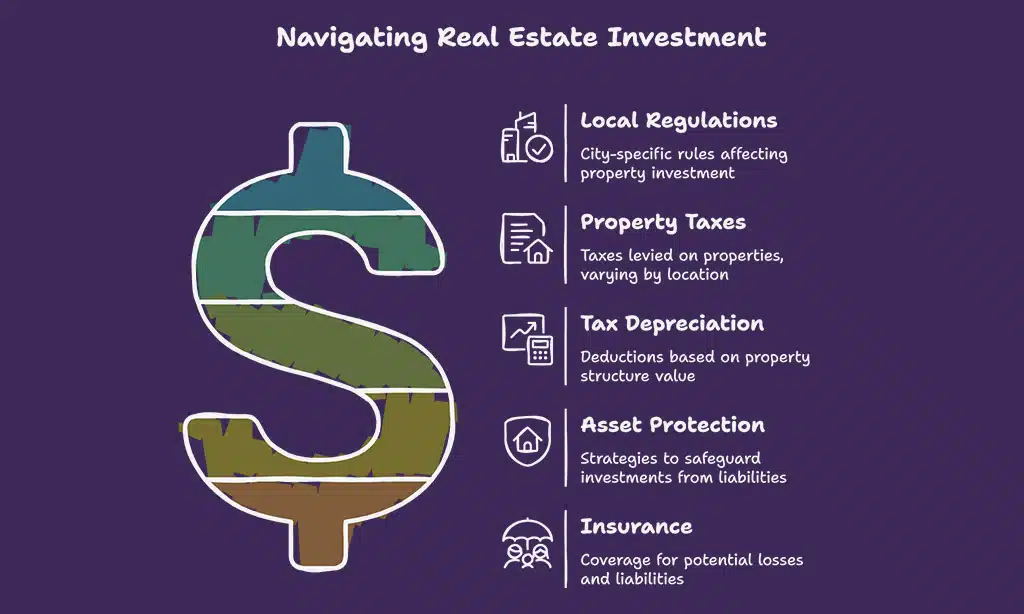
Rules change fast in real estate, and each city plays by its own book. Some places charge high property taxes while others keep them low to attract more buyers. If you buy an investment property, research all local laws about rentals, down payments, landlord insurance, and tenant management.
Cities like Austin may limit short-term leases or ban certain rental types outright. Study rules on multi-family homes versus single-family homes before spending your first dollar.
A missed step could cut cash flow or stall a deal cold.
Properties lose value over time—this affects tax obligations for every owner. Smart investors order a tax depreciation report from licensed surveyors. These reports break out what can be deducted each year—but only the structure brings deductions; land value does not count here.
Many put properties into LLCs to protect assets if things get messy with lawsuits or unpaid rent, which happens even with turnkey property in good neighborhoods. Landlord insurance fills another safety gap and covers losses too big for regular policies to handle alone.
Stay sharp on these points—rules bend little for those who skip due diligence or slack off learning key facts of real estate investing in 2024’s quick-change market.
Evaluating Property Type Preferences Among Local Buyers
Local buyers often lean toward single-family homes or multi-family homes. Some seek out apartments, while others want commercial spaces for business. Many compare new builds with resale properties, looking for deals like discounted condos that bring more cash flow potential.
Visiting a property two or three times—in person or online—helps spot red flags and check if rental income will meet goals.
Before closing on investment properties, smart investors pick up landlord insurance to guard their funds against loss. Watch local trends closely. Sometimes buyers chase turnkey property for passive income, while others prefer fixer-uppers for quick property flipping gains.
Property managers and investor groups love real estate investment trusts (REITs), too—they offer steady returns without the hassle of tenant management or maintenance fees.
Competing in the Local Real Estate Market
Strong credit scores open doors for borrowing. A good score helps you get financing for your real property. Reliable collateral, like home equity or a mortgage, can strengthen your position with lenders.
Always check the local market before jumping in. Prices change fast as new listings pop up and buyers race to grab deals.
Talk to a property manager about rental income potential. Compare single-family homes with multi-family ones in your area—each has pros and cons for cash flow and maintenance fees.
Use tools such as RealWealth’s free resources to learn more about property investment trends, tax benefits, and landlord insurance needs. Don’t miss out on podcasts like “Real Wealth Show” by Kathy Fettke—they offer useful insights that help manage risk while growing net worth through wise real estate investing decisions.
Takeaways
Local markets can make or break your property investments. Understanding things like supply, demand, and taxes helps you spot better deals. Work with a good property manager to keep rental income steady.
Stay focused on your goals and budget, because every market has its own rhythm. Keep learning, talk to other investors, and you’ll soon outfox the competition—one deal at a time!
FAQs
1. What should I look for when picking a local real estate market?
Focus on cash flow, rental income, and property taxes. Check the area’s history with single-family homes or multi-family homes. Ask if there’s strong demand for rental properties.
2. How does a property manager help my investment property?
A good property manager handles tenant management, maintenance fees, and day-to-day issues. They keep your passive income steady and protect your investment funds from slipping through the cracks.
3. Why is due diligence important before buying an investment home?
You need to review financials, check landlord insurance requirements, and understand lending rules in that city or county. Due diligence means you spot risks early—nobody wants a lemon dressed as turnkey property.
4. How much down payment do I need for real estate investing?
Lenders often want at least 20 percent down payment for most residential rentals like single-family houses or duplexes. Your budget matters—a bigger down payment can lower monthly costs and risk.
5. Should I consider long-term investments over flipping properties?
If you want steady taxable income and less stress than quick flips bring, long-term investment in rental properties may suit you better. Real estate education helps here—know what fits your goals before jumping in feet first.
6. Can self-directed IRAs really work with property investments?
Yes! You can use self-directed IRAs to buy certain types of real estate such as multi-unit buildings or even land—but watch out for strict IRS rules about leverage and who manages those assets to avoid headaches later on!






















