Traveling to Europe is a dream for many of us, but lately, the rules feel a bit like a moving target. You book your flight, plan your route, and then panic sets in: “Wait, do I need a visa now?” If you are confused, you are not the only one. Here is the deal: starting in late 2026, most travelers from outside the European Union, including Americans, Canadians, and Australians, will need a new digital approval called ETIAS to visit Europe.
I know, it sounds like just another form to fill out. But once you understand it, it is actually quite simple. I’m going to walk you through exactly what the ETIAS system is, how to get it without overpaying, and the common mistakes that trip people up. Let’s sort this out together.
What ETIAS System?
Think of ETIAS as a digital “thumbs up” before you board your flight. It is not a traditional visa, but a pre-travel screening for people who don’t usually need a visa to visit Europe.
Definition and Goals of ETIAS
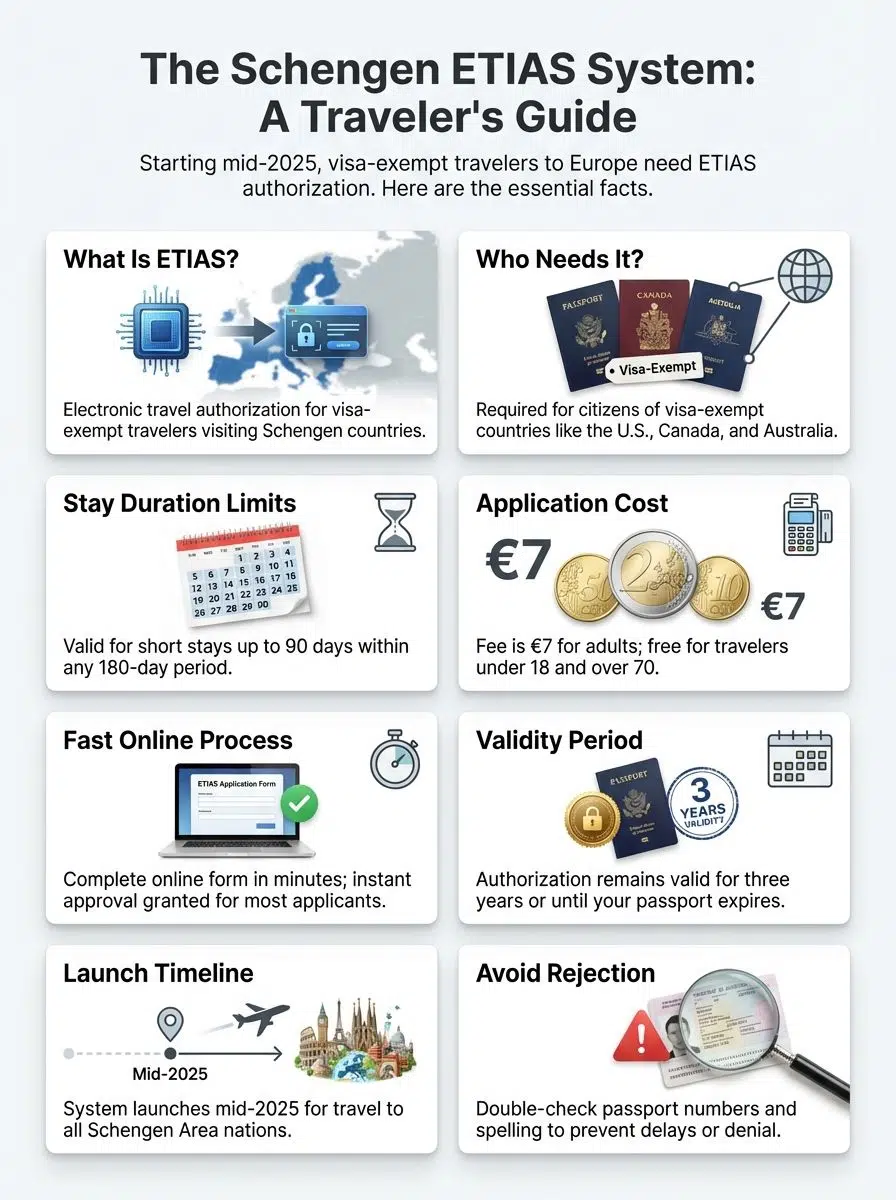
ETIAS stands for European Travel Information and Authorization System. It is an electronic travel authorization for visitors from visa-exempt countries who want to enter the Schengen Area.
For my American readers, the best comparison is the ESTA system used by the United States. Just as Europeans need an ESTA to visit New York or Los Angeles, we will soon need an ETIAS to visit Paris or Rome.
The system works by collecting your data before you travel. You fill out an online form, and the system runs a background check against international security databases. This allows authorities to spot potential security risks, health threats, or migration issues before a traveler even arrives at the airport.
“The main goal is simple: speed up the border crossing for low-risk travelers while keeping the region safe from security threats.”
This new rule applies to short stays. That means you can use it for tourism, business, or transit for up to 90 days within any 180-day period.
Why the EU is Doing This Now
You might wonder why this is happening now. The primary driver is security. Currently, border guards often don’t know anything about a visa-exempt traveler until they hand over their passport at the booth.
With over 30 million non-EU travelers visiting every year, that is a huge blind spot. By implementing Regulation (EU) 2018/1240, the EU connects its borders to a centralized intelligence hub.
This system allows them to identify high-risk individuals early. It creates a safer environment for locals and tourists alike. Plus, for the honest traveler, it implies a smoother experience at the border since you have already been “pre-screened.”
How ETIAS Actually Works
The ETIAS system acts like a smart filter. It processes your application in minutes by checking your answers against massive global databases.
The “Behind the Scenes” Security Check
When you hit submit, the system does not just file your paperwork. It instantly cross-references your details with specific high-level security networks:
- SIS (Schengen Information System): Checks for lost documents or wanted persons.
- VIS (Visa Information System): Looks for previous visa refusals.
- Europol & Interpol Data: Scans for connections to serious crime or terrorism.
- SLTD (Stolen and Lost Travel Documents): Verifies your passport is valid and safe.
If your record is clean, the computer approves you automatically. This happens for about 95% of applicants within minutes. If there is a “hit” or a match in one of these databases, your application goes to a human for manual review.
How It Works at the Airport
Once you land in Europe, you won’t need to present a paper certificate. Your ETIAS is electronically linked to your passport.
When the border guard scans your passport, their screen will show that you have a valid authorization. You still need to go through border control, but the officer will already know you have been pre-approved.
A Quick Tip: Always travel with the same passport you used to apply. If you get a new passport, your ETIAS is no longer valid, and you must apply again.
Who Needs to Apply [And Who Doesn’t]
Most of my readers from North America and Australia will fall into the “Must Apply” bucket. But let’s look at the specific rules so you can be sure.
Eligibility Checklist
You will need an ETIAS if you meet these criteria:
- You are from a Visa-Exempt Country: This includes citizens of the United States, Canada, Australia, New Zealand, Japan, South Korea, and roughly 50 other nations.
- Your Trip is Short: You are visiting for tourism, business meetings, or medical treatment for less than 90 days.
- You Are Not Working: ETIAS does not cover long-term employment or study visas.
You also need a passport that is valid for at least three months beyond your planned departure date. I always recommend having at least six months of validity just to be safe.
Who Is Exempt?
Not everyone needs this pass. You can skip the application if you fall into one of these categories:
- EU Citizens & Residents: If you hold a passport or a long-term residency permit from a Schengen country.
- Schengen Visa Holders: If you already gone through the process of getting a full visa, you do not need an ETIAS on top of it.
- Airport Transit (Some Cases): If you are just changing planes and never leaving the international transit zone, you might be exempt, but check with your airline first.
ETIAS vs. US ESTA: A Quick Comparison
To help you visualize this, here is how the European system stacks up against the American one you might know.
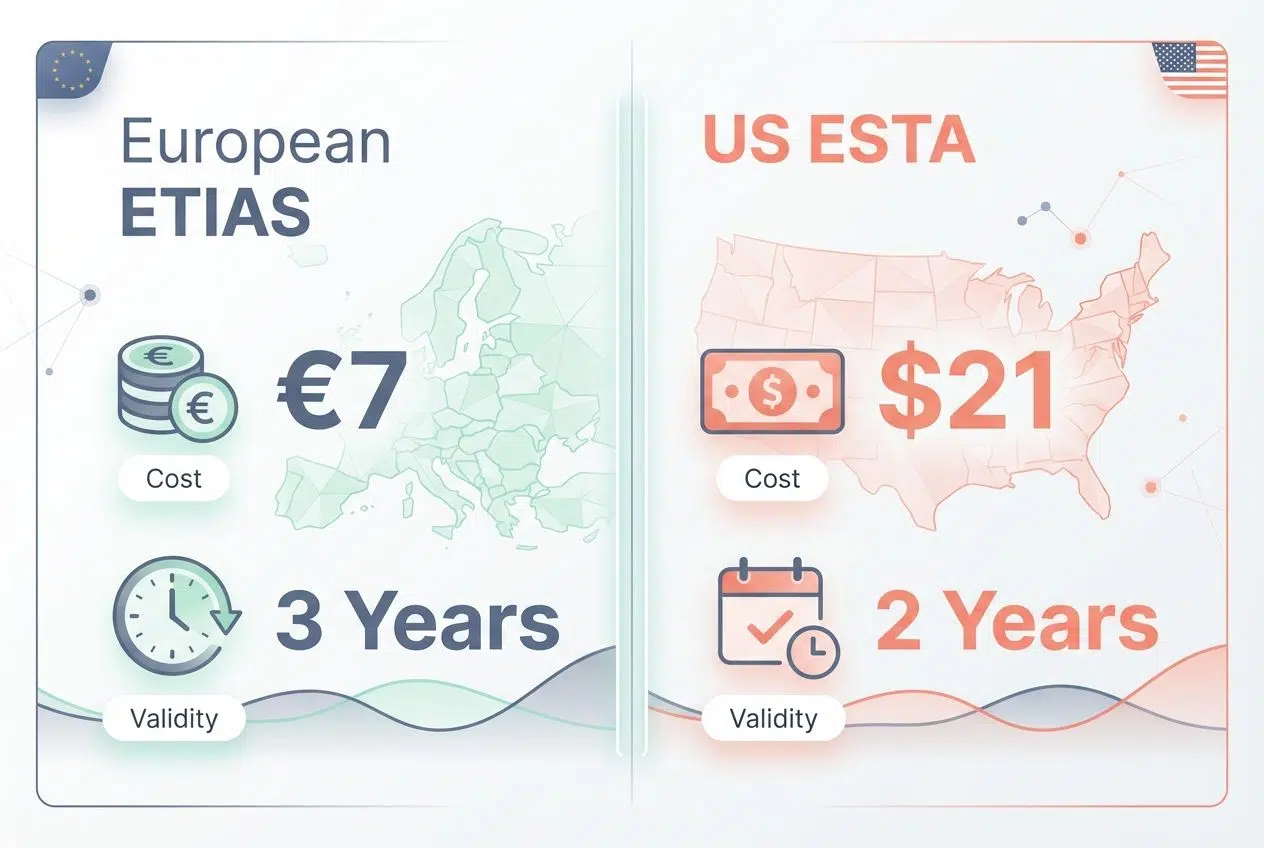
| Feature | European ETIAS | US ESTA |
|---|---|---|
| Validity | 3 Years (or until passport expires) | 2 Years (or until passport expires) |
| Cost | €7 (Approx. $8 USD) | $21 USD |
| Max Stay | 90 Days per 180-day period | 90 Days per visit |
| Processing | Usually minutes (up to 96 hours) | Usually 72 hours |
Your Step-by-Step Application Guide
Applying is easier than booking a flight. You can do it from your phone or laptop in about 10 minutes. Here is your game plan.
How to Apply Without the Headache
- Go to the Official Source: Use the official ETIAS website (europa.eu).
Warning: Avoid third-party “service” sites that charge extra fees for doing the exact same thing. - Enter Your Personal Data: Fill in your name, date of birth, and parents’ first names. Make sure your name matches your passport exactly.
- Input Passport Details: Enter your passport number, issue date, and expiry date.
- Answer Security Questions: You will see boxes to check regarding your criminal history, travel to conflict zones, and health status. Be honest.
- Pay the Fee: The cost is €7. You can pay with a credit or debit card.
- Submit and Wait: Check your email. Most people get an approval notification almost instantly.
Documents You Need on Hand
You do not need to scan a stack of papers. You just need one thing physically with you: Your valid passport. You will also need a credit card for payment and an email address you check regularly. The system might ask for a digital photo, but usually, it pulls the data directly from your biometric passport.
Fees and Processing Time
The standard fee is €7. However, there are two great perks regarding the cost:
- Under 18s are Free: Minors still need an ETIAS, but parents do not have to pay the fee for them.
- Over 70s are Free: Senior travelers also get the fee waived.
Pro Tip: While approval is usually instant, the official advice is to apply at least 96 hours (4 days) before your flight. If your application triggers a manual review, it can take up to 30 days. Don’t leave it until the night before!
Advantages for Travelers
I know, paying a new fee is annoying. But there is a silver lining. This system actually brings a few benefits to your travel experience.
Smoother Border Crossings
Because the security check happens before you fly, the actual interaction with the border guard is faster. Many European airports are installing automated e-gates that open with a simple passport scan for ETIAS holders.
This means less time standing in line after a long red-eye flight and more time enjoying your first croissant.
Enhanced Safety
It is comforting to know that everyone on your plane and in your hotel has passed the same security screening. By filtering out individuals with stolen passports or criminal intent, the system makes the entire Schengen zone safer for tourists.
Common Issues [And How to Avoid Them]
Even though the form is simple, small mistakes can cause big delays. I have seen this happen with other visa forms, and the same rules apply here.
The Most Common Mistakes
- The “O” vs. “0” Error: This is the number one reason for rejection. People type the letter “O” instead of the number “0” in their passport number. Look closely!
- Name Mismatches: If your passport says “Jonathan” but you type “Jon,” the system will flag it. Use your full legal name.
- Forgetting Middle Names: If your middle name appears on your passport’s bio page, it must appear on your application.
- Typing the Wrong Birth Date: It sounds silly, but in the US, we use Month/Day/Year, while Europe uses Day/Month/Year. Read the form labels carefully.
What Causes Rejection?
Rejections are rare, but they happen. The main triggers are:
- Using a passport that has been reported lost or stolen.
- Having a recent serious criminal record.
- Overstaying a previous visa in Europe.
- Failing to reply to a request for more information. (Check your spam folder!)
ETIAS Implementation Schedule
The launch date for ETIAS has shifted a few times, which has caused some confusion. As of early 2026, here is the latest status.
When Does It Start?
The system is currently expected to launch in late 2026. There will likely be a “grace period” of about six months where the system is active but not yet mandatory. During this time, border guards will inform travelers about the new requirement.
However, once that grace period ends (likely in 2027), it will be fully mandatory. If you show up at the airport without it, the airline will not let you board.
Where Will You Need It?
You will need an ETIAS for 30 European countries. This includes every country in the Schengen Area plus a few others. The list includes popular destinations like France, Germany, Italy, Spain, Greece, and Portugal. It also includes Switzerland, Norway, and Iceland, which are not in the EU but are part of the Schengen travel zone.
Keep an eye on countries like Cyprus, Bulgaria, and Romania. They are in the process of joining the Schengen zone fully and will also require an ETIAS.
Wrapping Up
The ETIAS system is a big change, but it doesn’t have to be a scary one. It is really just a quick online check to keep travel safe and smooth for everyone.
My advice? Don’t stress about it until about three months before your trip. Then, spend ten minutes on the official site, pay your €7, and you are good to go for three whole years.
Smart planning turns a chaotic trip into a breeze. So get your passport ready, watch out for that launch date in late 2026, and start dreaming about your next European adventure!