
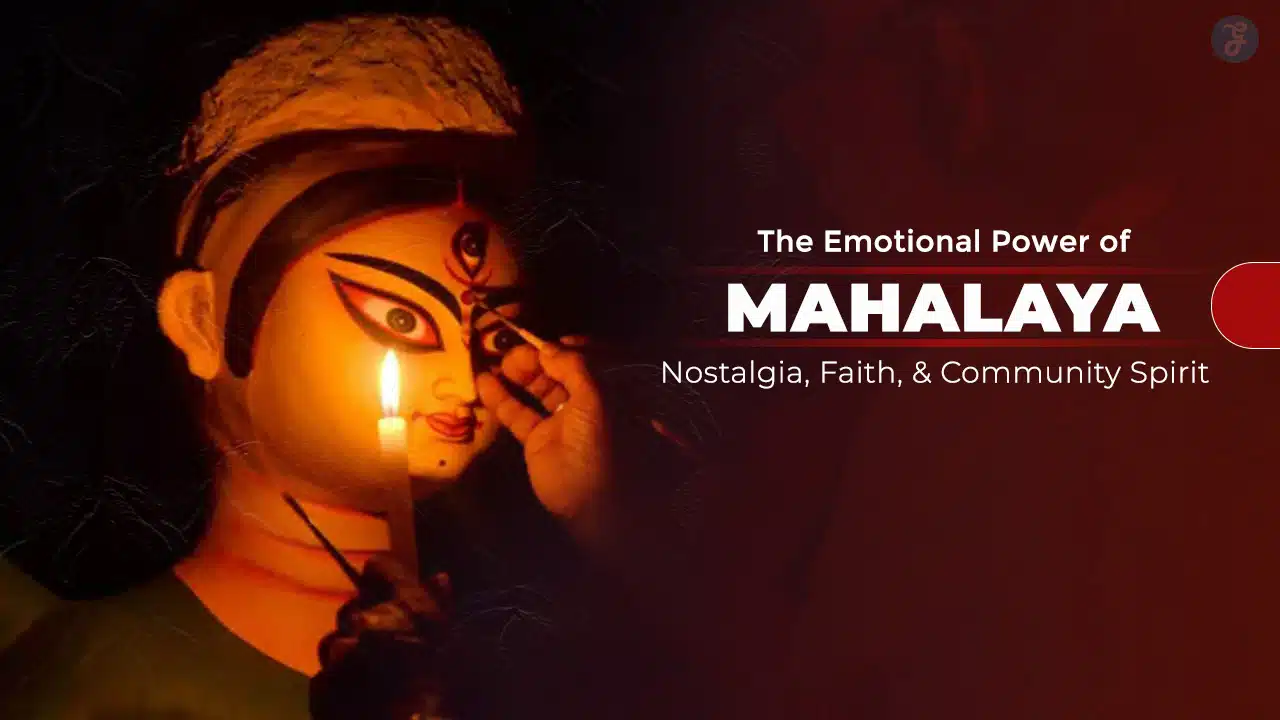
Do you feel that Mahalaya morning has lost its spark? You miss the crackle of All India Radio and the thrill of hearing Birendra Krishna Bhadra call out the mahishasura mardini. That old rush as the world woke up with faith feels far away.
You want that jolt again.
The emotional power of Mahalaya lies in its blend of ancestor worship and festive spirit. Mahalaya Amavasya ends Pitru Paksha, the 16-day ritual to honor ancestors, and starts Devi Paksha, the run-up to Durga Puja, the big party for Goddess Durga.
This post will guide you through nostalgia, faith, and community. We will show how songs, rituals, and shared meals can spark that old joy. Read on.
Key Takeaways
- Since 1931, All India Radio has aired Birendra Krishna Bhadra’s Mahishasura Mardini at 4 AM on Mahalaya Amavasya, and a 1976 swap to Uttam Kumar sparked enough uproar that radio fans forced a return to Bhadra’s original recitation.
- Mahalaya Amavasya ends the 16-day Pitru Paksha, when families perform shraddha and tarpan rituals with water, rice, sesame seeds, and barley and feed crows for ancestral blessings.
- Mahalaya also starts the nine-day Devi Paksha before Durga Puja, as communities string marigolds, light earthen lamps, display kalash with mango leaves, and chant “Ma Asche” to welcome Goddess Durga.
- Families rise at dawn, brew tea, spot shiuli flowers, light camphor lamps, and huddle around radios to share Mahishasura Mardini verses—blending nostalgia, faith, and a communal spark.
- Regional rites unite Hindus across Bengal, Assam, Odisha, and Karnataka with riverbank garlands, banana-leaf plates, panta bhaat, momos, sweets, and Tarpanam mantras that bond past and present.
The Nostalgia of Mahalaya
The fade-in voice on the national broadcaster feels like a hand-me-down gift from our elders, crisp as morning dew. We mark Mahalaya Amavasya with fluttering hearts, as the ancient chant washes over us like a wave.
What are common memories of Mahalaya mornings?
Families stir at 4 AM on Mahalaya Amavasya. Women brew tea, and men tune to All India Radio. Birendra Krishna Bhadra and Bani Kumar lead the Mahishasura Mardini saga with the Durgā Saptashatī.
Voices echo like temple bells. Grandparents light camphor lamps. Children spot kash phool on the porch. Shiuli flowers carpet the yard, marking Sharadiya Navaratri’s start.
Siblings dip hands in holy rivers at dawn. They pour water for pitrs in sarva pitru amavasya tarpan. Fathers hum hymns to Goddess Durga’s triumph. Mothers drape red veils and wear shell earrings, recalling Maa Durga atop Kailash Parvat.
Hats brim with devatas’ songs. Some shed tears for lost parents, mixing joy and grief. Idol makers chat about Durga Puja plans. Community spirit blooms as preparations unfold.
Why is Birendra Krishna Bhadra’s recitation so iconic?
Birendra Krishna Bhadra sings sacred shlokas at 4 AM on Mahalaya Amavasya. He narrates Mahishasura Mardini with steady calm and fierce drama. His voice welcomes Goddess Durga with ancestral blessings.
The public broadcaster, All India Radio, has aired his live show since 1931. Millions across India tune in for this radio ritual before Durga Puja. Each word feels like a drumbeat, pulling listeners into the divine battle.
A 1976 swap to Uttam Kumar sparked uproar among fans. Crowd pressure forced a return to Bhadra’s original transmission. His recitation still anchors Pitru Paksha and Sarvapitri Amavasya rites.
Today, his calm tone lights new hope, binding listeners in shared faith.
Faith and Spiritual Significance
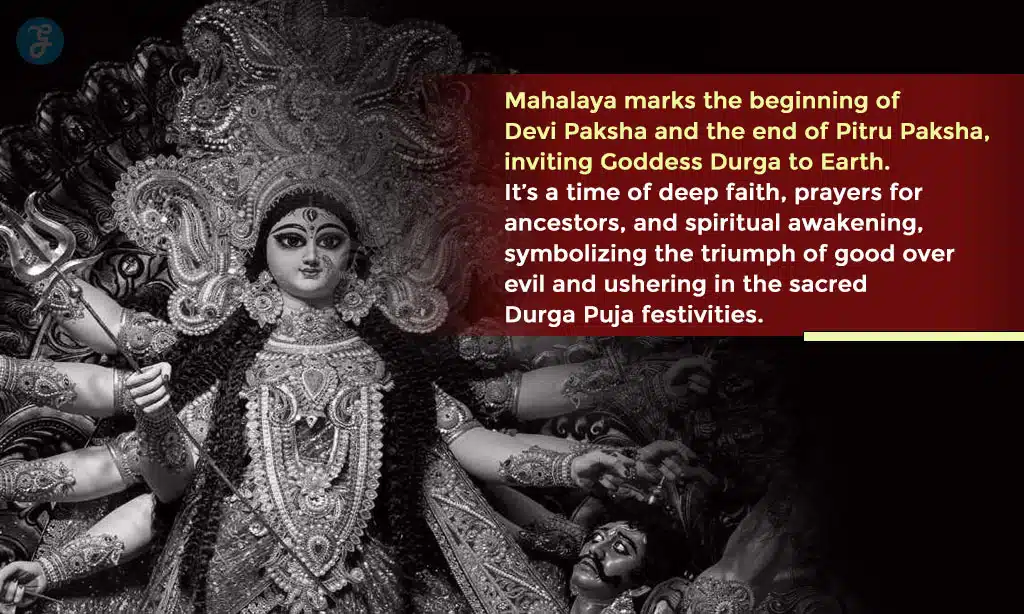
Families honor ancestors with water and rice during Pitru Paksha. All India Radio’s Mahishasura Mardini chant sweeps the air, as devotees ready themselves to welcome the Divine Feminine.
How are ancestors honored through Mahalaya rituals?
Devotees lead shraddha rituals in the morning. Offerings include food, water, sesame seeds, and barley on banana leaves. Priests chant mantras from goddess Chandi texts. Next comes tarpan water mixed with cow ghee for the Pitrs.
People honor ancestors by feeding crows rice grains as sacred rites. Hindus believe this frees ancestral souls and brings ancestral blessings.
Charity flows in pitru paksha and sets the tone for Durga Puja by sharing grains, clothes, and cooked meals with the needy. Each of the fifteen lunar phases brings special purification and spiritual merit.
On Sarva Pitru Amavasya, All India Radio airs Birendra Krishna Bhadra reading Mahishasura Mardini to invoke the divine feminine. Devotees light oil lamps near Kailash Parvat images while recalling Lord Vishnu and Goddess Durga’s courage.
This chain of pooja and ancestral rituals bonds past and present in a living tradition.
How do people welcome the Divine Goddess during Mahalaya?
Groups gather at dawn across courtyards. They light earthen lamps. Community members string marigold garlands. Families chant “Ma Asche” to hail the returning goddess Durga. Listeners tune radios to All India Radio.
Radio channels play Mahishasura Mardini by Birendra Krishna Bhadra with Bani Kumar’s script.
Homes display kalash and mango leaves at entrances. Sweets and rice sit on small brass plates. Priests invoke ancestral blessings from pitru paksha. Communities recall Kailash Parvat as the Divine Mother’s abode.
Celebrations mark the shift from Pitru Paksha to Devi Paksha on Mahalaya Amavasya. Spirits rise with belief in cosmic triumph and festival launch in Bengal and Assam.
Community Spirit and Togetherness
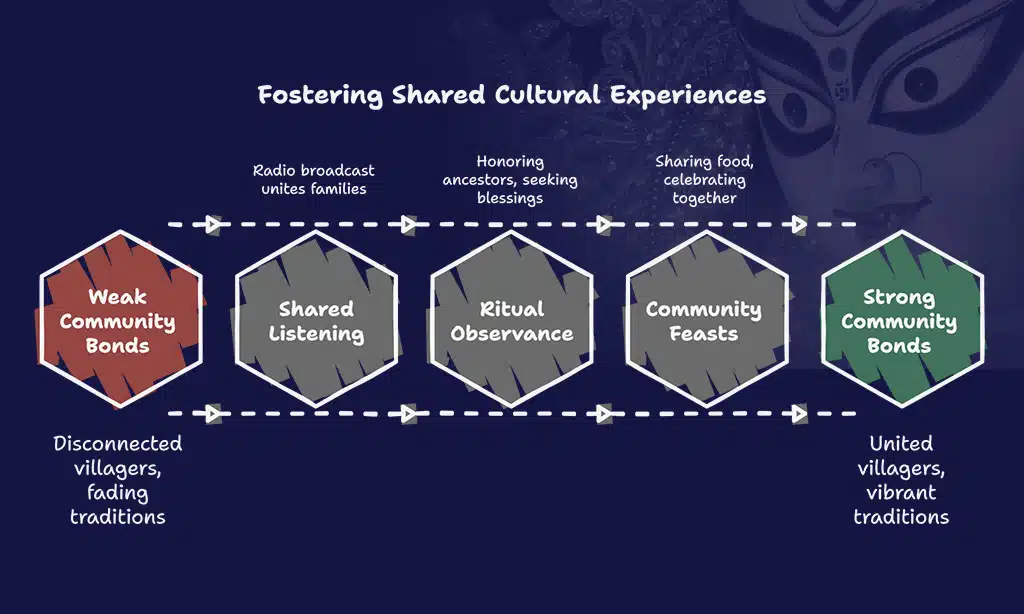
Villagers crowd verandas at dawn, sipping tea and sharing pitru paksha tales. All India Radio’s Mahishasura Mardini broadcast sweeps through lanes, bonding souls and hinting at regional feasts to come.
Mahalaya Amavasya falls on a new moon of the Hindu calendar. Families huddle around the transistor. All India Radio airs the Mahishasura Mardini script by Bani Kumar. Birendra Krishna Bhadra’s resonant voice fills living rooms from Kolkata to the foot of Kailash Parvat in tales of Goddess Durga’s victory.
Children peep through windows, elders bow. Kids use their human intelligence to guess the next verse. They share smiles and nods across kitchens. This shared listening cements old bonds and sparks new ones.
Banana leaves brim with panta bhaat, momos, and sweets before dawn. During Pitru Paksha, families pour water at Sarva Pitru Amavasya, chanting Tarpanam for ancestral blessings. They honor Adi Shakti and Goddess Lakshmi with flowers and rice.
Neighbors laugh over spilled grains and swap folk rhymes from Durga Puja rehearsals. That act grows the karmic bond. These ancestral rituals stitch the community, weaving art, dance, and eco-mindful customs into one grand tapestry of spirituality and collective joy.
What are the regional celebrations and traditions of Mahalaya?
West Bengal and Assam light up at dawn with the famous Mahishasura Mardini recital by Birendra Krishna Bhadra on All India Radio. People huddle under blankets, tuning in to that 4 a.m.
call. Odisha greets the new moon with flower garlands and banana leaf plates by riverbanks, honoring Goddess Durga’s gentle power. Karnataka homes fill with incense smoke as families pour water in sarva pitru amavasya rites, offering food to ancestors during pitru paksha.
Temples and courtyards echo mythological narratives about Kailash Parvat and divine battles. Devotees chant Tarpanam mantras to cleanse inherited karma. A string of diyas guides ancestral blessings toward the living.
These regional rituals feed the spirit of Durga Puja and stitch strands of community faith across the Hindu calendar.
Takeaways
Folks across Bengal rise at dawn on Mahalaya Amavasya, tuning in to AIR for Bhadra’s Mahishasura Mardini. It marks the close of Pitru Paksha and lights a spark of faith. Families swap old tales over sweet rice and chai in small courtyards.
Rituals knit memory and worship into one warm embrace. These ties reach back to Kailash Parvat myths and forefathers’ blessings. Nostalgia and hope flow in each chant and prayer.
Shared joy and reverence bond hearts for the coming Durga Puja.