

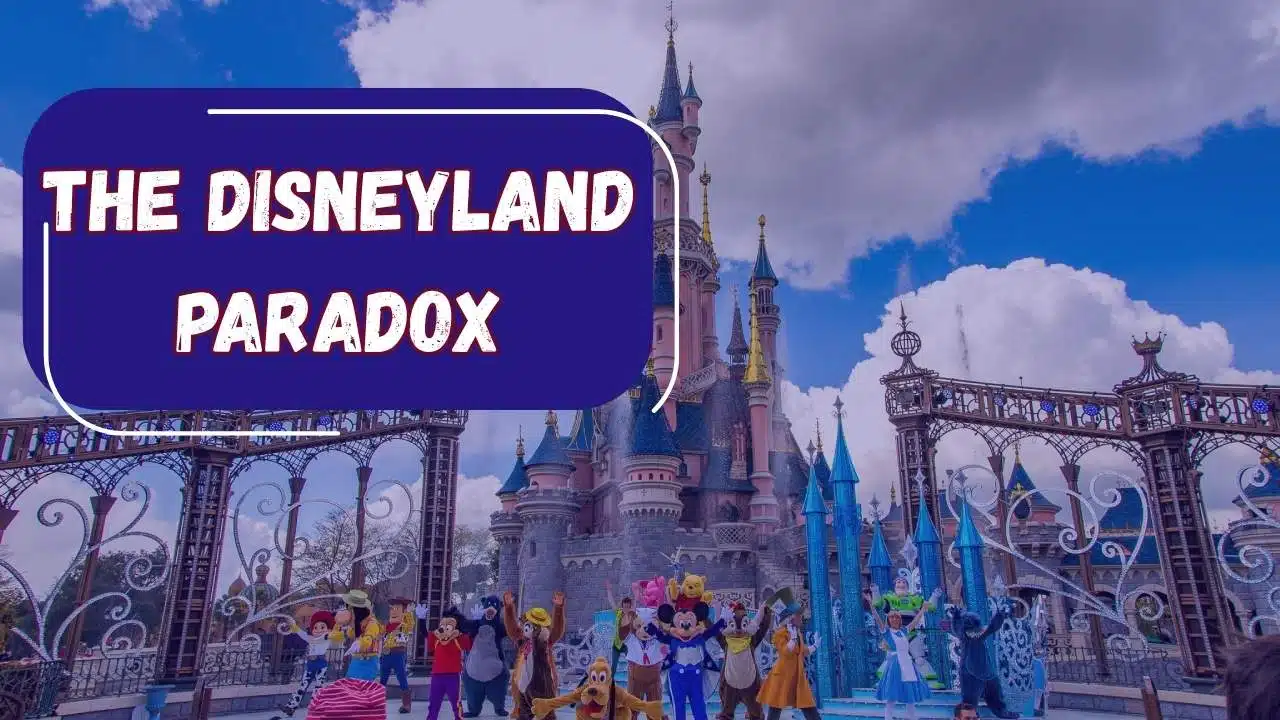
The Disneyland Paradox: Disneyland is a place where imagination refuses to grow old and dreams do not sit quietly in the corners of childhood; they walk beside you, wave at you, and sing to you. In the 1950s, Walt Disney—the magician of the animation world—discovered the key to people’s hearts through entertainment. Through Disneyland, he opened a gateway to a realm of imagination, where visitors could slip effortlessly into a fairy-tale world hand in hand with their beloved fairy-tale characters.
On July 17, 1955, Walt Disney’s Disneyland was first opened to the public. Characters like Mickey Mouse, Peter Pan, and Tiana colored our childhoods, and Disney’s cartoons became globally beloved. Disneyland, the dream kingdom, is his creation.
Disneyland has never ceased to spark fascination. Is it merely a theme park, or is it truly a realm of dreams? Since its opening, it has remained at the top of the list of theme parks. The Disneyland in California and its international branches are now more renowned and valuable than ever, thanks to their craftsmanship and visionary design.
Many ask: Is it art? Or has it become a symbol of unregulated capitalism? Or perhaps both? This article delves deep into that dream world of the Disneyland paradox.
A Brief History of the Beginning of Disneyland
Walt Disney’s full name was Walter Elias Disney, and he envisioned creating the world’s most joyful place. However, interestingly, the idea came to him from solving a real problem in his life.
One day, Disney was sitting on a bench in Griffith Park while his two daughters were happily riding the merry-go-round in the same park. He thought: what if parks were built in a way so that families—parents and children—could all enjoy them together? Imagine a place where people of every age could ride and have fun, and also meet their favorite cartoon characters.
From that single spark of imagination, he envisioned a park where laughter echoed across every age, where families could weave memories together and step into the enchanting worlds of their cherished characters.
In 1952, Walt founded a company called WED Enterprises, assembling a team of engineers, carpenters, and scientists to help realize his dream. Later, this company became Imagineering—named by combining Imagine and Engineering, because their job was to dream up new ideas and then bring those ideas to life with engineering.
After much planning, on December 21, 1954, construction began on a 160-acre piece of land near the Santa Ana Freeway in Anaheim, California. But the cost was huge—Walt Disney alone couldn’t afford it. To raise money, he sold shares of Disneyland to big television networks and corporations, who invested in exchange for equity. Over time, Walt Disney bought back those shares and gradually secured his sole control. On July 17, 1955, Disneyland officially opened its doors to the public.
Disneyland Paradox: Is This Truly a Work of Art?
There is a proverb: “In art we both lose ourselves and find ourselves.” Disneyland is very much like that. Some feel that there’s nothing better than this place. Today, it stands as an emblem of American culture, rooted in the heart of California’s Orange County. According to LA-based Disneyland fan Tod Martens, “stepping into Disneyland is like stepping into a storybook.”
Over time, Disneyland grew, adding theme parks such as Frontierland, Adventureland, Tomorrowland, and Fantasyland. In Adventureland, for example, they recreated wild environments inspired by jungles of Africa, Asia, and America. There is also a Disney+ documentary series called Behind the Attraction, which, for the first time, reveals the technical and artistic mastery behind Disneyland’s most famous rides.
In a 2015 article for the Los Angeles Times, Todd Martens once noted, “Disneyland’s design is deeply intentional—every architectural detail and layout exists not just to impress, but to reinforce the emotional narrative at the heart of the park.”
Disneyland is not just a visual art—it appeals to people’s emotions and awakens a sense of wonder. Because of this emotional power, its popularity has only grown over time. Even in the 21st century, it continues to maintain its enchanting appeal.
Walt Disney once said, “Disneyland will never stop building.” That prediction holds: what began as a 160-acre park with one hotel has now become a sprawling 510-acre resort. Inside, there are three large hotels with a total of 2,224 rooms, a shopping complex, and around 20,000 cast members continually performing in various fantasy roles. From its humble founding in 1955, Disneyland has gradually grown into one of the finest theme parks on earth.
The Theme Parks
When Disneyland opened on July 17, 1955, it started with about 18 rides and five theme parks, including Frontierland, Adventureland, Tomorrowland, and Fantasyland. From the very beginning, each land was crafted with meticulous care, not merely as a collection of attractions, but as a distinct world with its own story, atmosphere, and rhythm.
Frontierland
Frontierland is a tribute to the pioneering spirit of early America. Built along rolling, pine-covered landscapes, it evokes the rugged charm of frontier towns and the adventurous lives of settlers. Visitors can wander past rustic log cabins, explore a bustling frontier village, or take a riverboat along winding waters that mimic the American wilderness.
Every detail—from the wooden fences to the saloon doors—is designed to transport guests to a time when the country was young and full of promise. Moreover, celebrate resilience, discovery, and the courage to dream.
Adventureland
Adventureland plunges guests into untamed jungles and exotic landscapes inspired by Africa, Asia, and the Americas. Towering trees, winding paths, and the distant calls of wildlife create a sense of thrilling exploration, inviting visitors to momentarily leave the comforts of civilization behind. Iconic rides and immersive experiences, like the Jungle Cruise and the newly reimagined Tiana’s Bayou Adventure, bring the magic of story and adventure together.
The latter, inspired by The Princess and the Frog, immerses guests in the mystical charm of New Orleans bayous, complete with shimmering fireflies, jazz-infused melodies, and the warm glow of lanterns—a celebration of nature, culture, and imagination.
Tomorrowland
Tomorrowland captures the optimism and excitement of the future. Sleek architecture, neon accents, and thrilling rides like Space Mountain and Star Wars: Rise of the Resistance transport visitors into a world where science fiction meets reality.
The land celebrates human ingenuity and the boundless possibilities of exploration, whether it’s soaring among distant stars or imagining the cities of tomorrow. With interactive experiences, futuristic design, and storytelling at every turn, Tomorrowland inspires wonder about the world yet to come.
Fantasyland
Fantasyland is the heart of Disneyland’s magic—a land where fairy tales leap from storybooks into reality. Towering castles, cobblestone streets, and vibrant villages bring beloved characters and stories to life. Guests can journey with princesses, sail with pirates, or explore enchanted forests, all while feeling as if they’ve stepped into the pages of their favorite tales.
Recent enhancements, such as updated ride experiences and interactive storytelling zones, ensure that every visit renews the timeless wonder of childhood dreams, blending nostalgia with innovation in perfect harmony.
Avengers Campus & New Expansions
Disneyland continues to expand its imaginative reach with lands like Avengers Campus and upcoming areas inspired by Avatar: The Way of Water. In Avengers Campus, visitors step into the Marvel universe, joining heroes on high-energy adventures that include multiversal battles and flight simulations.
The Pandora-inspired land promises breathtaking bioluminescent landscapes, floating mountains, and alien rivers, transporting guests into worlds both otherworldly and deeply immersive. These expansions reaffirm Disneyland’s ever-evolving nature—a living canvas where dreams, adventure, and storytelling are constantly renewed.
The Capitalism Behind Disneyland
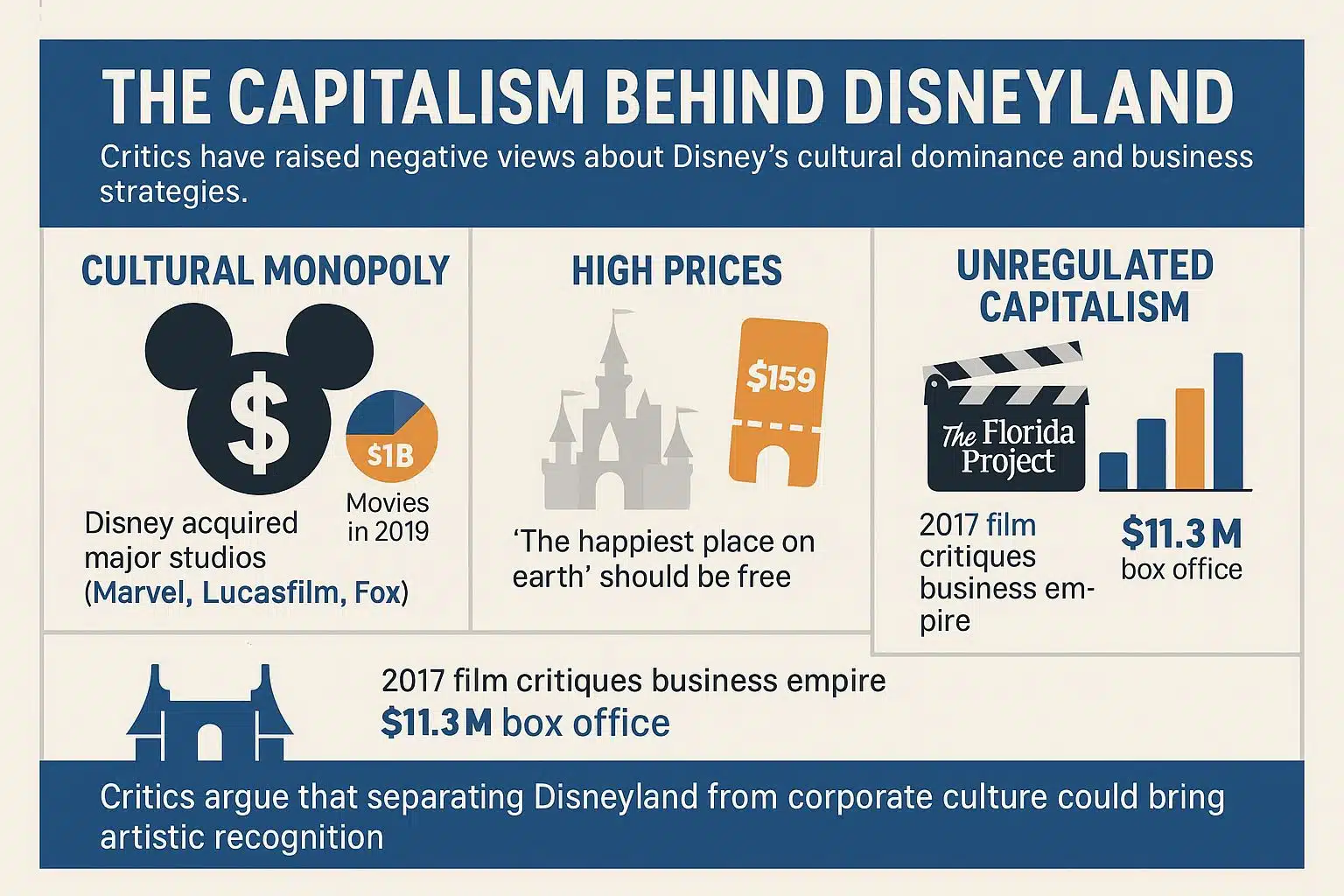
In recent decades, critics have raised negative views about Disney’s cultural dominance and business strategies. One major concern is that Disney acquired major studios — like Marvel, Lucasfilm, and Fox—which gives it a form of cultural monopoly.
Statistically, some of the movies from these studios earned over a billion U.S. dollars at the box office in 2019. Despite earning massive profits from theme parks, films, and streaming services, in October 2020, Disney laid off 32,000 employees working in its parks.
There is also strong criticism over the entrance price to Disneyland. Disney claims it is “the happiest place on earth,” but Paul Beatty, the Booker Prize–winning novelist, pointed out that if Disneyland truly is the “happiest place on earth,” the entry would be free—it should not be equivalent to the annual per capita income of a small sub-Saharan African country.
Another piece of criticism focuses on Disneyland as a symbol of unregulated capitalism. For example, the 2017 film The Florida Project by Sean Baker tells the story of a fictional family living in the shadow of Disneyland—and through that story, the movie powerfully critiques Disney’s business empire. The film, made on a $2 million budget, grossed $11.3 million at the box office and holds a 7.6/10 rating on IMDb from over 84,000 votes.
Critics argue that if Disneyland could be separated from the broader corporate culture of art and business, then perhaps it would begin to receive the recognition it deserves as an art form—rather than merely being seen as an extension of capitalism.
Final Words: Resilience Through Crisis, and Lasting Legacy
Throughout its history, Disneyland has proven remarkably resilient. Even in moments of crisis—from national tragedies to global pandemics—its magic endures. The park briefly closed during events like the “September 11 attacks and the COVID-19 pandemic.” Yet it reopened each time, stronger and more vibrant, a testament to the enduring power of imagination.
Every castle, every jungle path, and every futuristic skyline reflects his belief that dreams are worth building, shaping, and sharing. Disneyland is more than a theme park; it is a place where generations rediscover wonder and where stories, old and new, continue to inspire, enchant, and endure.
Walt Disney himself did not live to witness the park’s full evolution, passing away in 1966. But through his dream park and Disney’s creative legacy, he lives on in the hearts of people around the world—now and forever.






















