
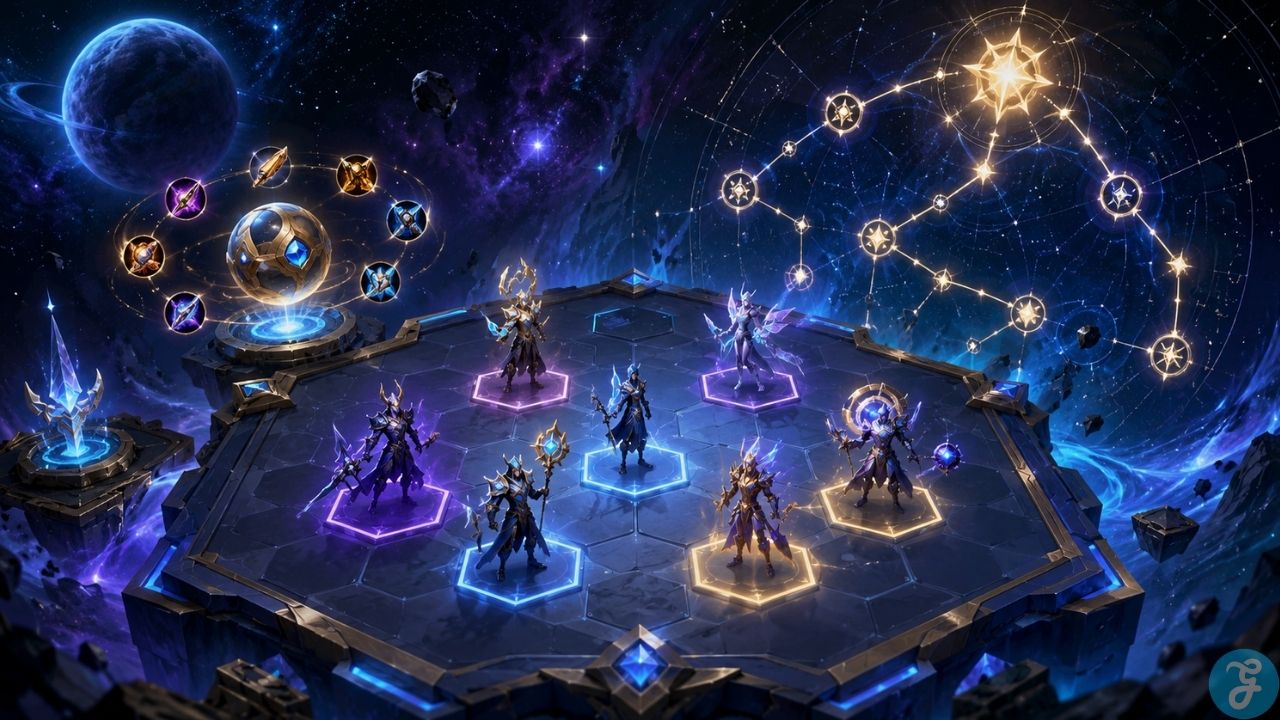
I’ve been playing Teamfight Tactics since Set 1, so I’ve watched the game change through almost every major system, mechanic, and design experiment Riot has introduced. Some sets rewarded hard forcing. Others punished it immediately. Some encouraged vertical traits, while others were built around flexible boards and constant pivots.
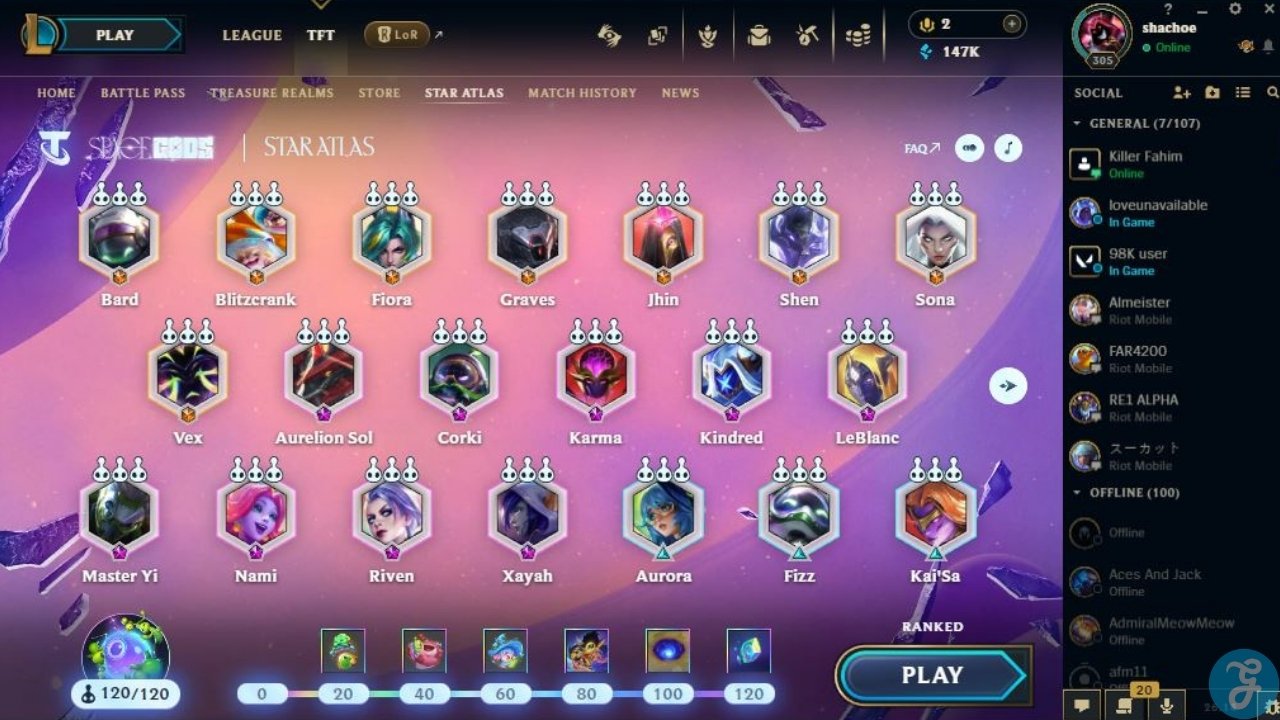
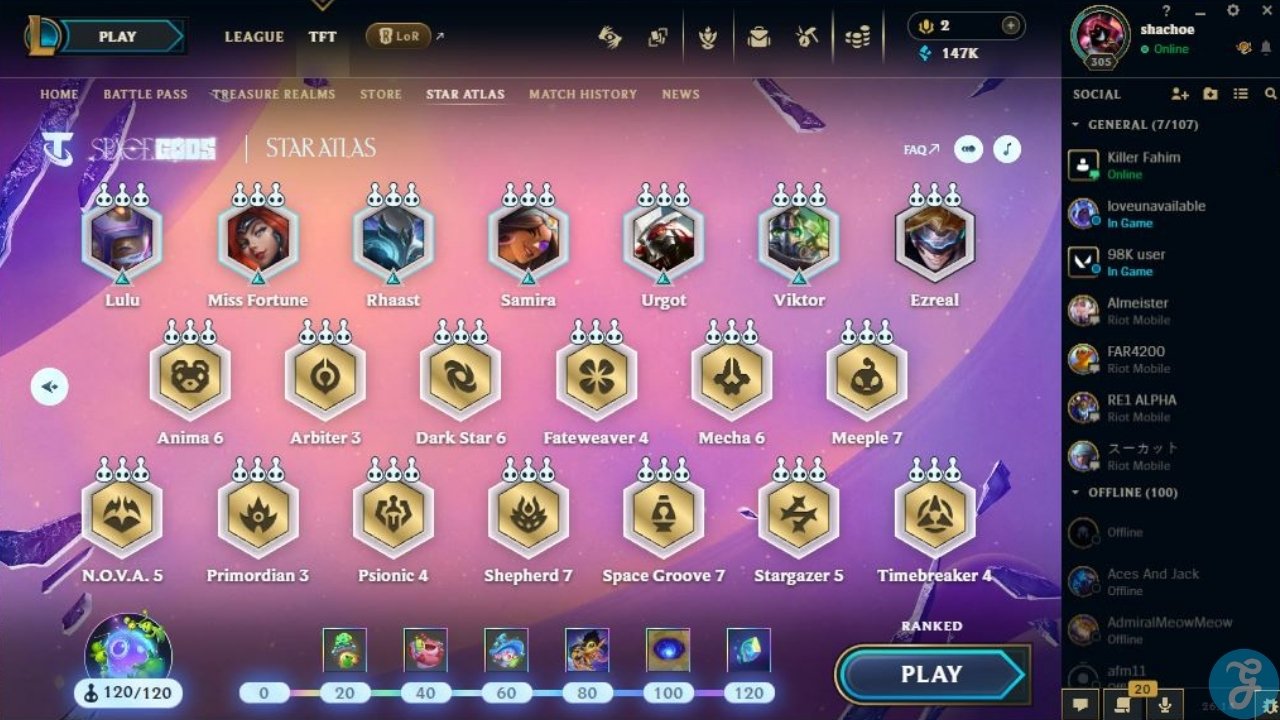
The TFT Space Gods Star Atlas looked like another progression system at first. Riot introduced it as a tracker that rewards players for trying different parts of the set, finishing in the top four, and winning with specific traits, champions, or setups.
After completing every objective, I can say it’s much more demanding than it initially appears.
The basic objectives aren’t the real problem. The difficult part is completing objectives tied to chase traits, unusual compositions, specific champions, and Augments that may never appear when you need them.
I also completed the entire thing in Ranked.
Yes, that made climbing harder. Forcing anything in TFT is usually a bad idea, and Star Atlas regularly asks you to do exactly that. Still, I approached it as a challenge rather than treating every game as an LP calculation. Sometimes having fun with the set matters more than protecting a few Ranked points.
What Star Atlas Changes About the Way You Play TFT
TFT normally rewards adaptation.
You enter a game with an idea, but that idea should change depending on your items, shops, Augments, opening encounter, contested units, and available economy. You may prefer one composition, but the game rarely owes you the pieces required to play it.
Star Atlas adds another condition to that decision-making process: you’re no longer playing only for the strongest possible board. You’re also trying to satisfy a specific objective.
That creates an immediate conflict.
The optimal Ranked decision might be to play a strong uncontested composition that matches your items. The Star Atlas decision might be to field a certain champion, activate an awkward trait, hit a chase breakpoint, or win using a particular setup.
Sometimes those two goals line up naturally. When they do, the objective feels fair.
When they don’t, your game becomes much harder.
I had rounds where the correct move for climbing would have been an easy pivot, but the Atlas objective required me to stay committed. I sometimes delayed leveling, held units that weakened my economy, or passed on a safer board because the objective demanded something more specific.
That tension is what made the system interesting. It’s also what made parts of it frustrating.
Winning Wasn’t the Hardest Requirement
Many Star Atlas objectives require a win, which sounds like the main challenge. In practice, winning with a normal composition wasn’t the worst part for me.
The harder objectives involved chase traits and setups that depended on getting a particular Augment.
A win condition is at least something you can influence through positioning, tempo, itemization, scouting, and board strength. Augment-dependent objectives introduce a different problem: you may never receive the option you need.
You can play several games waiting for the right setup and still miss it completely.
Even when the correct Augment appears, that doesn’t guarantee success. You still need the appropriate units, items, economy, and timing to turn the opportunity into a winning board.
That’s where Star Atlas becomes a mixture of skill and RNG.
The skill comes from recognizing the opening and converting it. The RNG comes from whether the opening exists at all.
Why Chase-Trait Objectives Were the Real Test
Chase traits are supposed to be difficult. They usually require additional emblems, increased team size, excellent economy, or a very specific combination of resources.
Space Gods includes several high-end vertical breakpoints, including traits such as Dark Star, Meeple, Stargazer, Shepherd, and others that become much more ambitious at their upper levels. The set’s Stargazer trait also changes its constellation from game to game, making board construction and positioning part of the challenge.
Trying to hit those chase traits for Star Atlas made one thing obvious: you cannot begin every lobby by deciding that you’re definitely playing one particular vertical.
You can aim for it. You can prepare for it. You can recognize the conditions that make it possible.
You still need an exit plan.
Emblem access is too unreliable to treat a chase trait as guaranteed. Augments such as Spreading Roots and Branching Out can create opportunities, but they don’t always give you the emblem you originally wanted. Riot’s own patch notes list those among the emblem-related options that can interact strongly with certain encounters.
Once reforging becomes involved, the entire attempt can turn into a gamble.
The mistake is believing you must continue chasing the same trait after the game has clearly given you a different direction.
My Best Setup for Attempting Chase Traits
My preferred opening for chase-trait attempts was Stargazers with The Mountain Constellation, especially when I could pair it with Pandora’s Items.
That combination gave me a realistic foundation for attempting something ambitious without immediately destroying my board strength.
The Mountain setup provided a direction I was comfortable building around, while Pandora’s Items gave me more control over otherwise awkward item outcomes. It didn’t remove the RNG, but it allowed me to keep cycling toward something useful instead of becoming stuck with items that didn’t fit the board.
That distinction matters.
You shouldn’t read Pandora’s Items as permission to ignore your current board while waiting for perfect items. You still need to build enough immediate strength to survive. Use Pandora’s to improve your long-term setup, but don’t leave half your bench or item inventory inactive for several stages.
A chase trait means nothing if you lose before reaching it.
My Most Important Tip: Pivot Around the Emblem You Receive
This was the most practical lesson from my entire Star Atlas run.
When you reforge an emblem, don’t become emotionally attached to the emblem you wanted.
Play around the emblem you actually received.
Suppose you enter the game hoping to complete one specific chase trait. You take an emblem-related Augment, reforge the result, and receive something completely different. At that point, you have two choices.
You can keep gambling resources while forcing the original plan.
Or you can examine your board, items, shops, and remaining health, then pivot toward a composition that uses the new emblem effectively.
I chose the second option whenever it was realistically available.
That doesn’t mean pivoting blindly every time an emblem changes. The new trait still needs to make sense with your board. You should ask:
- Do I already own two or three useful units for this trait?
- Can my current carry use the emblem?
- Does the emblem create a meaningful breakpoint?
- Are the required units contested?
- Can I pivot without losing too much board strength or economy?
- Does the resulting composition still have a realistic chance of winning?
Keeping several possible boards in mind is far more effective than memorizing one chase-trait composition and repeatedly forcing it.
The emblem should open a route. It shouldn’t become a command.
Don’t Force an Objective Without a Real Opening
TFT players use the word “flexible” so often that it can lose its meaning. During my Star Atlas run, flexibility meant being willing to abandon an objective attempt when the game clearly wasn’t supporting it.
There’s a difference between committing to a difficult objective and throwing away a game.
I looked for genuine signals before forcing something:
A suitable opening trait, usable early units, compatible components, an Augment that supported the plan, and enough economy to reach the required level or breakpoint.
When several of those conditions appeared together, I went for it.
When they didn’t, I played the strongest board available and waited for another game.
You don’t need to complete every objective immediately. Treating each lobby as your final chance will make you rush decisions, hold useless units, ruin your economy, and pass on obvious pivots.
Star Atlas rewards persistence. It doesn’t reward impatience.
Completing Everything in Ranked Made Climbing Harder
I completed all of my objectives in Ranked.
No normal-game safety net. No separate queue for the awkward objectives. All Ranked, baby.
Naturally, that affected my climb.
There were games where I knew I was making a decision that was worse for LP but better for the objective. There were also games where an ambitious setup collapsed and sent me straight toward the bottom of the lobby.
That’s the price of forcing unusual conditions in a game built around adaptation.
I accepted that because I was treating Star Atlas as part of the fun of Space Gods. Ranked matters to me, but it isn’t the only reason I play TFT. After playing since Set 1, I don’t need every session to be a perfectly optimized climb.
Sometimes I want a challenge that changes how I approach the set.
Star Atlas gave me that.
It pushed me toward champions and traits I might otherwise have ignored. It made me explore alternative lines instead of defaulting to the same reliable compositions. It also tested how quickly I could turn a bad emblem or unexpected Augment into a playable board.
My rank may have taken some damage, but the experience was more memorable than simply repeating the strongest meta line.
The Objectives Improved My Understanding of Space Gods
One of the best parts of completing Star Atlas was being forced to learn more of the set.
It’s easy to believe you understand a TFT set after learning four or five strong compositions. You know the carries, frontline units, standard item holders, level timings, and common transitions.
That isn’t the same as understanding the whole set.
Star Atlas pushed me into less familiar situations. I had to examine champions I hadn’t prioritized, identify unusual trait interactions, and find ways to keep weak-looking objective boards alive.
That made me better at recognizing flexible transitions.
A champion that looks irrelevant in one composition may become the bridge into another. An emblem that feels useless may save the game once you stop viewing it through the lens of your original plan. A temporary trait breakpoint may stabilize your board long enough to reach the real objective.
Those lessons apply beyond Star Atlas.
They’re fundamental TFT skills.
Is Star Atlas Skill-Based or Just an RNG Grind?
Honestly, it’s a mix of both.
Some objectives test genuine game knowledge. You need to understand economy, tempo, positioning, item distribution, trait breakpoints, and when to pivot. A less experienced player may receive the perfect opening and still fail to convert it.
Other objectives depend too heavily on being offered the right Augment or emblem route.
You can prepare correctly and still miss the required setup. That’s where the challenge stops feeling entirely skill-based and begins feeling like an RNG grind.
I don’t think that ruins the system. TFT has always been about making decisions within random conditions. Star Atlas simply pushes that randomness further in certain objectives.
Still, there’s room for improvement.
The most satisfying objectives are the ones that encourage unusual play without requiring a highly specific roll. Riot should lean more heavily into objectives that test adaptation, positioning, trait combinations, or alternative carries.
Waiting for one particular Augment isn’t especially strategic. Converting an unexpected Augment into a win is.
Going Forward, TFT Will Feel Different Without Mortdog
Completing the Star Atlas near the end of this era also feels strange because TFT is moving forward without Stephen “Mortdog” Mortimer at Riot.
Mortdog announced on July 7, 2026, that his time at Riot and on TFT had ended after just under ten years with the company.
As someone who has played since Set 1, I’m going to miss him.
TFT has grown far beyond one developer, and a large team has always been responsible for building, balancing, and maintaining the game. Still, Mortdog became the public face of TFT in a way that few game designers ever manage.
He streamed the game. He explained difficult balance decisions. He openly discussed design mistakes. He interacted with players even when the community was angry, unreasonable, or convinced that one bad patch meant the game was finished.
You didn’t have to agree with every decision to appreciate that level of visibility.
His presence gave TFT a more direct connection between the developers and the people playing the game. When something was broken, confusing, or controversial, players knew there was a real person willing to discuss it.
That relationship will be difficult to replace.
I’m not assuming TFT will suddenly decline without him. The game has talented developers, years of accumulated experience, and systems planned well beyond a single set. But it will feel different.
For those of us who have been here since the early sets, Mortdog’s departure feels like the end of a major chapter. Star Atlas may be one of my final big completion memories from the period when he was still closely associated with the game.
I’ll miss the streams, the explanations, the patch discussions, and the willingness to take responsibility when an idea didn’t work.
Whatever direction TFT takes next, his contribution to the game is already permanent.
Was Completing the TFT Space Gods Star Atlas Worth It?
Yes. It was frustrating at times. It hurt my Ranked climb. Some objectives depended too heavily on Augments, emblems, and reforging luck. Chase traits could turn a solid game into a desperate experiment very quickly.
I still enjoyed it.
The TFT Space Gods Star Atlas gave me a reason to explore more of the set instead of repeating the same compositions. It challenged my ability to recognize openings, manage risk, and pivot around unexpected resources.
My biggest recommendation is simple: don’t force the objective before the game gives you a reason to attempt it.
Look for Stargazer Mountain openings. Take advantage of Pandora’s Items when it fits. Use Spreading Roots, Branching Out, and similar options as opportunities rather than guarantees. Most importantly, build around the emblem you receive instead of destroying your game chasing the emblem you originally wanted.
Accept that some attempts will fail.
Accept that your LP may suffer, especially if you insist on doing everything in Ranked like I did.
Then enjoy the challenge.
TFT has always been at its best when you stop demanding one exact outcome and start solving the game that actually appears in front of you. Completing Star Atlas tested that skill more than anything else.