Tesla CEO Elon Musk recently unveiled two new autonomous electric vehicles that have the potential to revolutionize urban transportation: the highly anticipated Cybercab robotaxi and the larger Robovan.
The unveiling took place during a special event at Warner Bros. Studios in Burbank, California, where Musk demonstrated the futuristic designs and cutting-edge technology behind these autonomous vehicles.
With the potential to revolutionize transportation and logistics, these vehicles represent Tesla’s bold steps toward a self-driving future.
The Cybercab: A Glimpse into the Future of Transportation
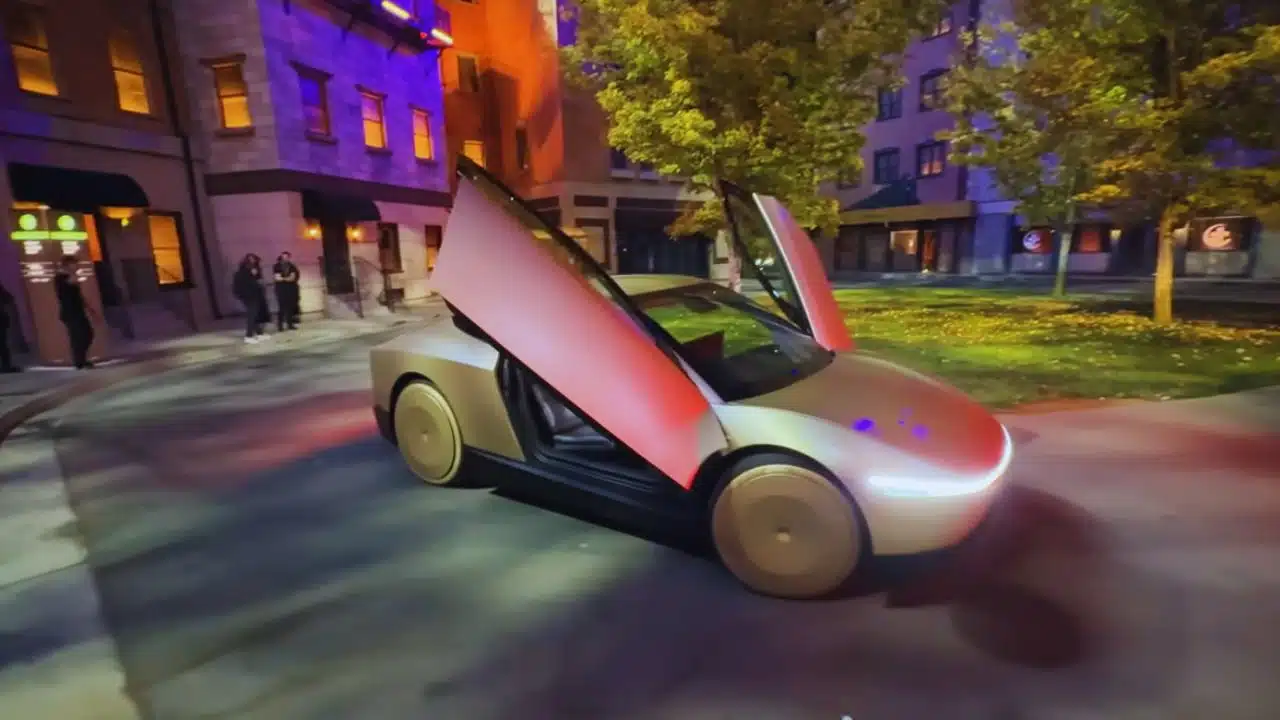
Musk arrived on stage in the highly anticipated Cybercab, a fully autonomous vehicle with a sleek, futuristic look. One of the most striking features of the Cybercab is its butterfly doors, which open upwards, giving it a sci-fi feel.
The Cybercab is entirely driverless—it has no steering wheel or pedals, making it the ultimate vision of a hands-free, self-driving experience.
The vehicle also uses inductive charging, meaning it can recharge wirelessly without needing to plug in. This makes the Cybercab not only cutting-edge in terms of autonomy but also in energy efficiency and ease of use.
Tesla aims to begin producing the Cybercab by 2026, although Musk acknowledged that his timelines are often on the optimistic side. Nonetheless, the unveiling has sparked excitement, showing off what could be the future of autonomous public transport.
Robotaxi is premium point-to-point electric transport, accessible to everyone pic.twitter.com/oLykwaaTHm
— Tesla (@Tesla) October 11, 2024
A Surprise Addition: The Robovan
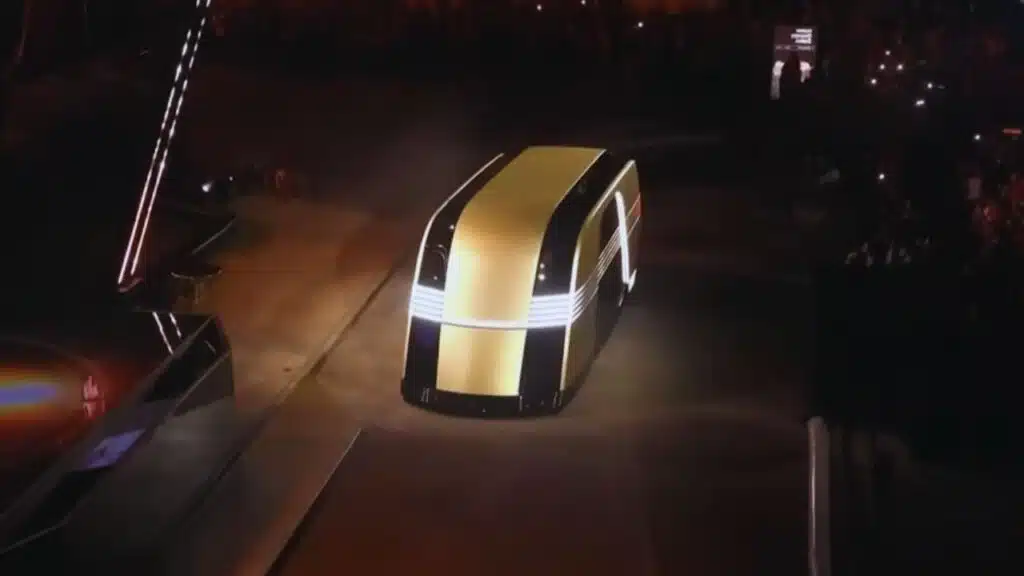
While the Cybercab was the star of the show, Tesla had another surprise in store—the unveiling of the Robovan. Designed to carry people or goods, the Robovan is a much larger, fully autonomous vehicle.
This adds a new dimension to Tesla’s vision for the future, suggesting the company’s ambitions go beyond just robotaxis to include large-scale transportation and logistics solutions.
Details about the Robovan’s specific capabilities are still scarce, but it could play a significant role in everything from public transport to commercial delivery services. Its introduction hints at Tesla’s desire to dominate the autonomous vehicle market across multiple sectors.
Tesla’s Robotaxi Plans: The Road to Autonomous Ridesharing
Earlier this year, Tesla introduced a ridesharing feature in its app, signaling its readiness to roll out robotaxi services in the near future.
Musk asserts that Tesla owners can recover the cost of their vehicles by utilizing them for ridesharing trips when they are not in use. The Cybercab, being fully autonomous, would be ideal for this service, operating without the need for a human driver.
Tesla already has significant experience in developing autonomous driving technology. While the current cars require a driver to remain in control, the move toward fully driverless vehicles like the Cybercab and Robovan marks a bold leap forward for the company.
However, the rollout will depend heavily on regulatory approval, as safety concerns remain a major hurdle for autonomous vehicles.
Robotaxi & Robovan pic.twitter.com/pI2neyJBSL
— Tesla (@Tesla) October 11, 2024
The Competition: Waymo and Cruise
Tesla won’t be alone in the race to dominate the autonomous vehicle market. Alphabet-owned Waymo and General Motors-backed Cruise will pose stiff competition for Tesla.
Waymo has been running limited robotaxi services for paying passengers in select cities for several years, although the service remains tightly regulated.
Cruise, on the other hand, has faced setbacks, including several on-road incidents during testing, which caused a temporary halt in operations last year.
Both companies are still navigating the regulatory and technical challenges that come with deploying autonomous vehicles on public roads.
Tesla’s experience with advanced self-driving features, however, gives it a competitive edge as it moves toward the full-scale production of the Cybercab and Robovan.
Tesla’s Vision for the Future
With the unveiling of the Cybercab and Robovan, Tesla is pushing the boundaries of autonomous transportation. The company’s vision extends beyond cars—it envisions a future where autonomous technology is at the core of public transport, commercial delivery, and personal mobility.
As with all cutting-edge technology, the path to full implementation may be slow, with regulatory approvals and safety testing required before these vehicles can hit the streets.
Still, Tesla’s move into the autonomous vehicle market marks a significant step toward realizing Musk’s futuristic vision for sustainable, electric, and autonomous transportation.