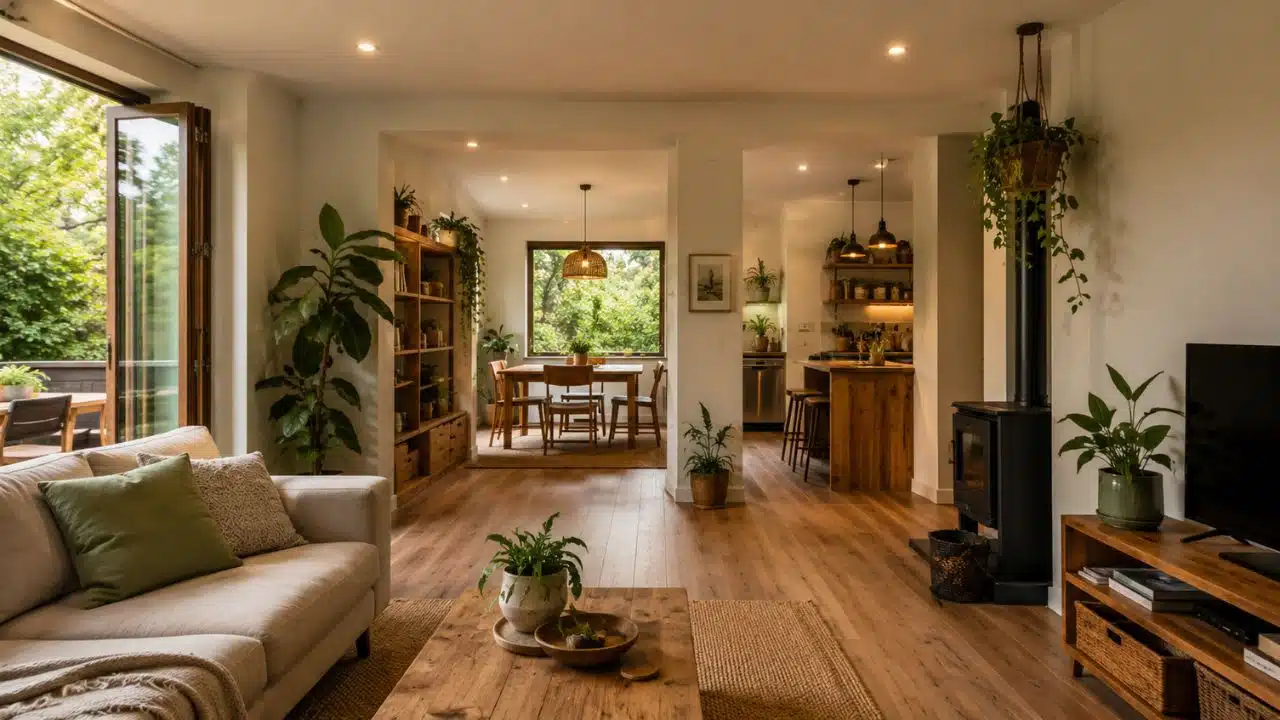
A sustainable home setup does not start with a shopping cart full of bamboo organizers, smart gadgets, and products with leaves printed on the label. It starts with, “Where is your home wasting energy, water, money, materials, comfort, and attention every single day?”
A truly eco-friendly home is not built from one dramatic renovation. It is built through practical choices that work together: efficient lighting, durable furniture, smarter water use, better insulation, honest indoor air decisions, thoughtful solar planning, safer paint, and daily habits that reduce waste without making the home harder to live in.
This matters because “green home” advice can quickly become either too vague or too expensive. One article tells you to buy solar panels immediately. Another tells you to fill every room with plants. Another pushes luxury furniture, trendy paint, or complicated gadgets. The result is confusion, not progress.
A good green home guide should help you prioritize. Some upgrades are easy and affordable. Some are worth doing only when you renovate. Some depend on climate, budget, home ownership, local rules, roof condition, water costs, family needs, and how long you plan to stay in the house.
This guide gives you a complete, practical framework for building a more sustainable household one smart layer at a time.
What a Sustainable Home Setup Really Means
A sustainable home setup is a home system that uses fewer resources, creates less waste, supports healthier indoor living, and stays practical enough to maintain. That last part matters.
If a “green” upgrade is expensive, fragile, difficult to clean, annoying to use, or wrong for your climate, it may not be sustainable in real life. A product that gets replaced quickly is not better just because it uses eco-friendly language. A plant-filled room is not healthier if the soil grows mold. A solar system is not the best first step if your home still leaks energy through the attic. A low-VOC paint choice loses value if the wall needs repainting again next year because the wrong finish was used.
Sustainability at home is not about perfection. It is about reducing avoidable waste and making better long-term decisions.
The strongest sustainable household choices usually do at least one of these things: reduce energy use, reduce water use, last longer, avoid unnecessary chemical exposure, improve comfort, support repair instead of replacement, or help the home perform better over time. That is the lens this guide uses.
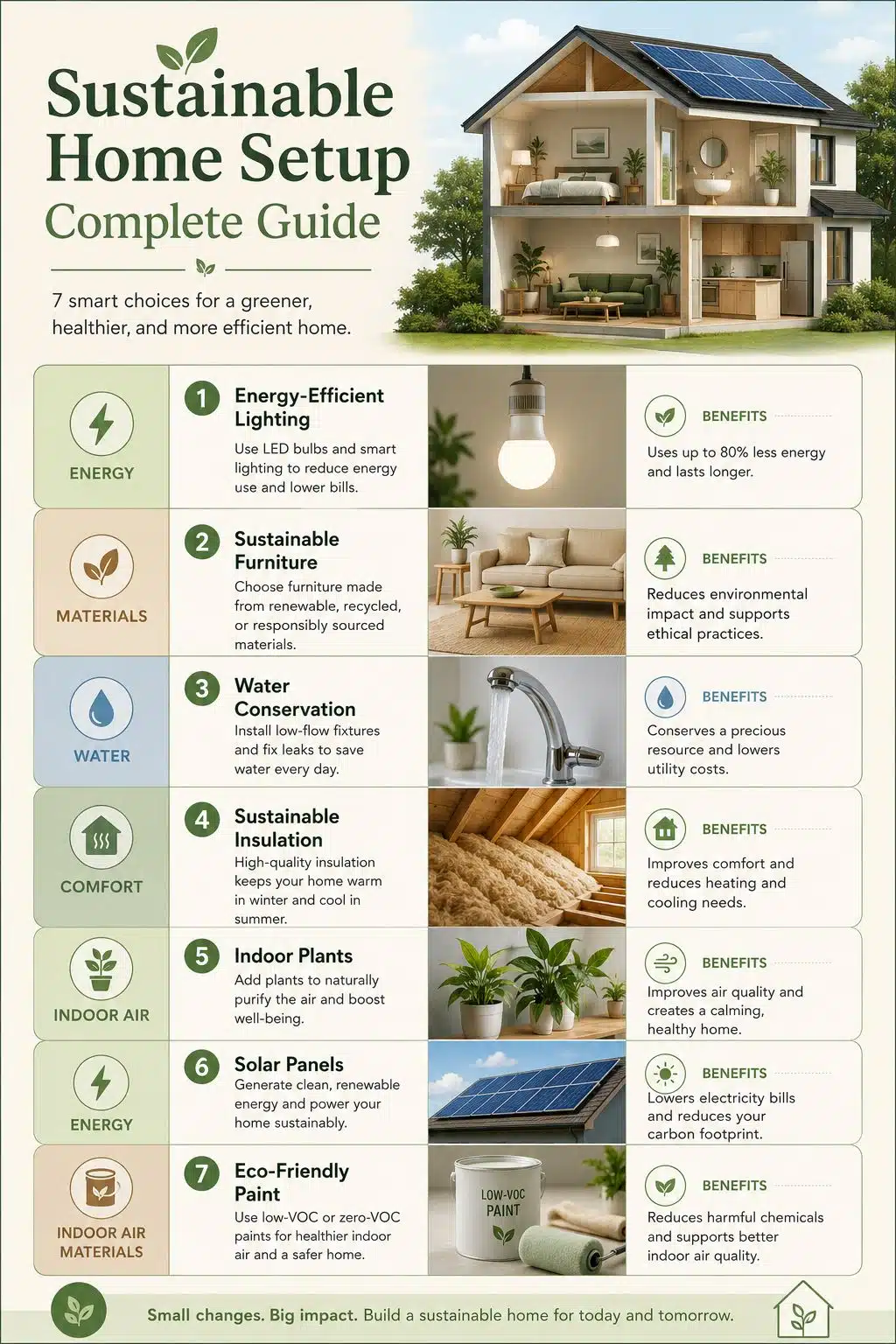
7 Core Areas of a Sustainable Home Setup
A sustainable home works best when upgrades support one another. Start with the areas that affect daily use most often, then move toward bigger decisions such as insulation and solar.
1. Energy-Efficient Lighting Explained
Lighting is one of the easiest places to begin because most households can improve it without renovation.
Old incandescent and halogen bulbs waste a lot of energy as heat. Modern LEDs use far less electricity, last longer, and come in enough shapes, brightness levels, and color temperatures to fit most home spaces. But a smart lighting upgrade is not only about replacing every bulb as quickly as possible.
The better approach is to choose lighting by room.
In a bedroom, warm dimmable LEDs can create a calmer evening routine. In a kitchen, brighter task lighting makes cooking safer and easier. In a home office, a good desk lamp can reduce eye strain without blasting the whole room with overhead light. In hallways, closets, garages, and outdoor entry areas, motion sensors or timers can stop lights from staying on when nobody needs them.
A common mistake is shopping by watts instead of lumens. Watts measure energy use. Lumens measure brightness. Since LEDs use much less energy than older bulbs, wattage no longer tells you what your eyes actually need.
Color temperature matters too. Warm light feels better in relaxing spaces. Cooler or neutral light may work better in task areas. If you choose the wrong color temperature, an efficient bulb can still make a room feel uncomfortable.
Also check compatibility. Dimmers need dimmable LEDs. Outdoor fixtures need bulbs rated for damp or wet locations. Enclosed fixtures may need bulbs designed to handle trapped heat. Recessed lights may need proper retrofit kits.
Energy-efficient lighting is a good first step in a sustainable home setup because it is visible, affordable, and easy to adjust. It also teaches the larger lesson of sustainable living: the best upgrade is not the one with the most features. It is the one that fits the way the home is actually used.
2. Sustainable Furniture Buying Guide
Furniture has a quiet environmental cost because it is easy to buy badly and replace often.
A cheap table that breaks in two years is not sustainable. A sofa with weak foam, poor fabric, and no repair options may become landfill long before it should. A trendy chair made from a “natural” material can still be a poor choice if it does not survive daily life.
The most sustainable furniture is often the furniture you keep.
That may mean buying secondhand, refinishing solid wood, reupholstering a quality chair, choosing modular furniture, repairing loose joints, or buying one better-made item instead of replacing weak pieces repeatedly.
When buying new, look for signs that the piece was designed for long-term use. Strong frames, replaceable parts, washable covers, durable fabric, and repairable construction matter more than a product description filled with green language. For wood furniture, responsibly sourced certifications such as FSC can help. For indoor emissions, certifications such as GREENGUARD can be useful signals, especially for furniture used in bedrooms, nurseries, and enclosed spaces.
Sustainable furniture should also fit your real home. A massive sectional may look beautiful online but become wasteful if it will not fit a future room. A delicate light-colored sofa may be a bad match for pets or children. A dining table that cannot handle daily meals is not a practical sustainable choice.
Before buying furniture, ask yourself whether the piece can be cleaned, repaired, moved, and used for years. If the answer is no, it may not be as eco-friendly as it looks.
3. Water Conservation Methods at Home
A green home guide should never ignore water.
Water waste often hides in plain sight: long showers, old toilets, running faucets, inefficient fixtures, leaky pipes, overwatered lawns, and outdoor irrigation that runs at the wrong time of day. In many homes, hot water waste also means energy waste because water must be heated before it reaches the shower, sink, dishwasher, or washing machine.
Start with leaks. A dripping faucet or running toilet may seem small, but small waste becomes large when it happens every day.
Then look at fixtures. Efficient showerheads, faucet aerators, and WaterSense-labeled toilets can reduce water use without making the home feel less comfortable. In the kitchen, running full dishwasher loads usually beats washing dishes under a constantly running faucet. In the laundry room, full loads, cold-water washing when appropriate, and efficient machines can lower both water and energy use.
Outdoor water use deserves special attention. In dry or hot climates, lawns and gardens can become the biggest water draw. Native plants, climate-appropriate landscaping, mulch, drip irrigation, rain barrels where legal and practical, and smart irrigation controllers can make a meaningful difference.
Water conservation is not about making the home feel restricted. It is about stopping water from disappearing without improving your life.
A sustainable household uses water where it matters and reduces waste where it does not.
4. Sustainable Insulation Materials Explained
Insulation is not exciting, but it can be one of the most important parts of a sustainable home setup.
A poorly insulated home loses heat in winter and gains heat in summer. That makes heating and cooling systems work harder. Rooms feel uneven. Drafts make people adjust the thermostat more often. Energy bills rise because the home cannot hold comfortable temperatures well.
Good insulation slows heat transfer. But insulation only works well when it is installed correctly and paired with air sealing.
R-value is the number many homeowners hear first. It measures resistance to heat flow. Higher R-value usually means better thermal resistance, but the right level depends on climate, home design, and location within the house. Attics, walls, floors, basements, and crawl spaces each have different needs.
Material choice is also important. Cellulose can be appealing because it often uses recycled paper, but moisture control matters. Mineral wool offers fire resistance and sound control. Fiberglass is common and widely available. Wood fiber, cork, sheep’s wool, denim, and other alternative materials can work in certain projects, though cost and availability vary. Foam insulation can perform well in specific applications, but it raises more questions around chemicals, embodied impact, and installation quality.
There is no perfect insulation material for every home. The best choice depends on the building, climate, budget, moisture risk, fire considerations, and installation method.
Air sealing should come before simply adding more insulation. Gaps around attic penetrations, ducts, recessed lights, plumbing openings, windows, doors, and rim joists can reduce performance. If air keeps leaking, insulation cannot do its full job.
This is where sustainable thinking becomes practical. Sometimes the greenest upgrade is not the newest material. It is fixing the weak point that makes the whole system waste energy.
5. Indoor Plants for Air Quality
Indoor plants belong in a sustainable home, but they should be discussed honestly.
Plants can make a room feel calmer, softer, and more connected to nature. They support biophilic design, add texture, and can make people more attentive to their indoor environment. In that sense, they can absolutely improve the feeling of a home.
But houseplants should not be treated as a serious replacement for ventilation, filtration, source control, or humidity management.
The popular idea that a few houseplants “clean the air” is often overstated. Real homes are not sealed lab chambers. They have cooking pollution, dust, furniture emissions, cleaning products, pets, outdoor air exchange, humidity changes, and ventilation patterns. A few plants will not solve those problems.
That does not mean plants are useless. It means they should be used for the right reason.
Use plants to make your home feel better. Use ventilation, source reduction, humidity control, and proper filtration for actual air quality problems.
Plant care also affects sustainability. Overwatering can lead to moldy soil and fungus gnats. Dusty leaves can collect particles. Some popular houseplants can be toxic to pets or children if chewed. A sustainable home should not introduce new risks while trying to look healthier.
Beginner-friendly plants such as pothos, snake plant, spider plant, ZZ plant, rubber plant, and some philodendrons can work well in many homes, but always check pet and child safety before buying.
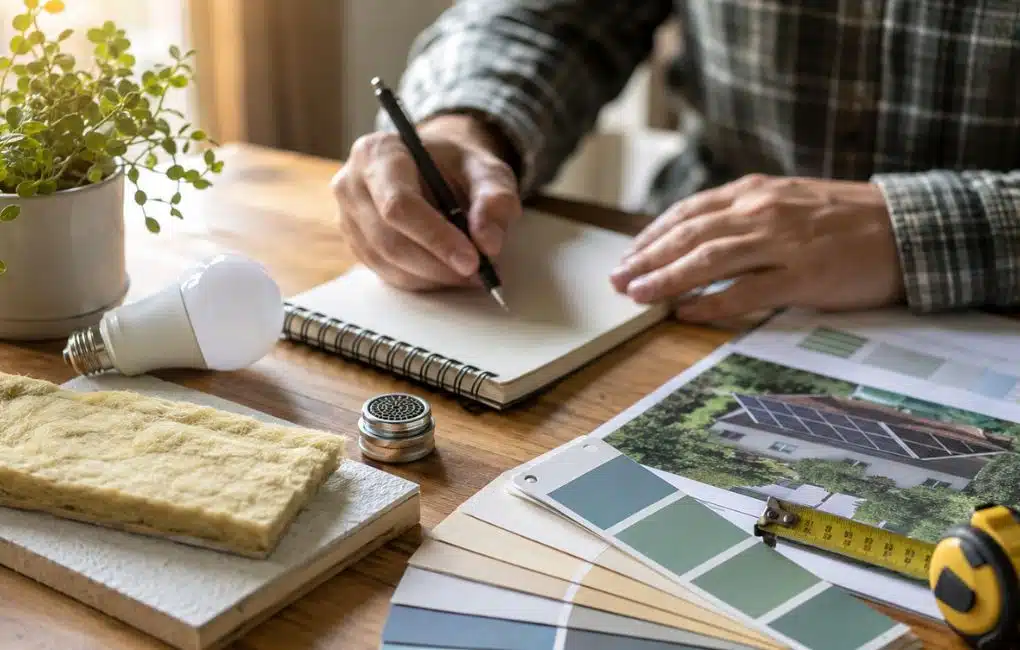
6. Solar Panel Decision Framework for Homeowners
Solar panels can be a major sustainability upgrade, but they are not automatically the right first step.
A good solar decision depends on roof condition, roof age, shading, direction, usable space, local sunlight, utility rules, electricity rates, incentives, installation costs, financing, battery needs, and how long you plan to stay in the home.
Start with the roof. If the roof needs replacement soon, installing solar first can create extra cost later. If the roof is heavily shaded, the system may underperform. If the roof has limited usable space, a smaller system may not offset enough electricity to make financial sense.
Then look at your energy use. A household with high daytime electricity use may benefit differently from one that uses most electricity at night. Net metering rules, time-of-use rates, export credits, and battery costs can all change the financial case.
Solar is often most effective after basic efficiency upgrades. If you reduce waste through lighting, insulation, air sealing, efficient appliances, and smarter water heating, you may need a smaller solar system. That can improve payback and prevent oversizing.
The right solar question is not “Is solar good?” Solar can be excellent. The right question is “Is solar good for this home, under these rules, with this roof, at this price?”
Get multiple quotes. Ask about warranties. Understand financing. Check local incentives. Confirm who handles maintenance. Ask what happens if you sell the home. Do the math before signing.
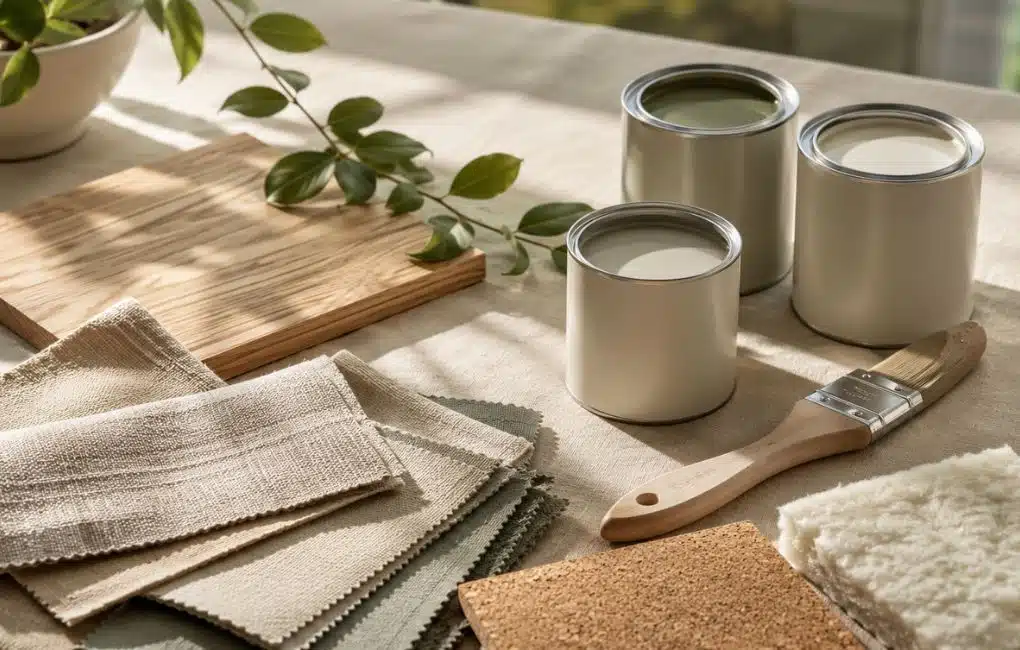
7. Eco-Friendly Paint Options Compared
Paint affects both the look and indoor environment of a home. Many paints, stains, varnishes, and finishes can release volatile organic compounds, known as VOCs. Exposure tends to be higher during and shortly after painting, but product choice, ventilation, curing time, and room use all matter.
Eco-friendly paint can mean several things: low-VOC paint, zero-VOC paint, natural mineral paint, limewash, clay paint, milk paint, recycled-content paint, or paint with third-party certification. These are not interchangeable.
Low-VOC and zero-VOC paints are practical choices for most households because they are widely available and familiar to use. Still, labels matter. Tinting can affect VOC levels. Some paints may be low in VOCs but still contain ingredients sensitive users care about. Natural paints can be beautiful, but they may cost more, require different application methods, or perform differently in high-moisture rooms.
Choose paint by room. Bathrooms need moisture resistance. Kitchens need durability and cleanability. Bedrooms may prioritize lower odor and lower emissions. Children’s rooms may need washable finishes. Historic walls may suit limewash or mineral paint. High-traffic spaces need paint that will not need constant touch-ups.
The most sustainable paint job is not only the lowest-VOC option. It is a paint job that performs well, lasts longer, reduces waste, and does not need to be redone too soon.
Ventilation during and after painting still matters. So does proper storage or disposal of leftover paint.
Sustainable Home Setup at a Glance
| Home Area | Main Goal | Best First Move |
| Energy-efficient lighting | Lower electricity use and improve daily comfort | Replace old bulbs with properly chosen LEDs |
| Sustainable furniture | Reduce waste and buy pieces that last | Choose secondhand, repairable, durable, or certified materials |
| Water conservation | Cut water waste and hot-water energy use | Fix leaks and upgrade showerheads, faucets, and toilets |
| Sustainable insulation | Reduce heating and cooling demand | Air seal and insulate weak areas of the home |
| Indoor plants | Improve comfort and natural feel | Use plants for wellbeing, not as air purifier replacements |
| Solar panels | Generate cleaner electricity | Check roof, usage, incentives, and payback before buying |
| Eco-friendly paint | Reduce indoor emissions and waste | Choose low-VOC, durable, room-appropriate paint |
Best Sustainable Home Setup Sequence
A sustainable home setup works better when upgrades happen in a sensible order. Start with the affordable, high-use changes that are easy to verify. Then move into bigger projects that depend on climate, ownership, structure, and budget.
| Stage | Upgrade Focus | Why It Comes First or Later |
| Stage 1 | Lighting and daily energy habits | Easy, affordable, and useful in almost every home |
| Stage 2 | Leak fixes and water-saving fixtures | Reduces waste without major renovation |
| Stage 3 | Air sealing and insulation | Improves comfort and lowers heating and cooling demand |
| Stage 4 | Durable furniture and safer paint | Reduces material waste and supports healthier interiors |
| Stage 5 | Plants and indoor comfort choices | Improves home feel when used honestly |
| Stage 6 | Solar evaluation | Works best after reducing avoidable energy waste |
This order is not fixed. Renters, homeowners, apartment dwellers, and families in different climates will need different paths. But the principle holds: reduce waste before adding expensive systems.
Room-by-Room Green Home Guide
A sustainable household becomes easier to manage when you look at one room at a time.
In the kitchen, focus on efficient lighting, durable cookware, full dishwasher loads, low-waste food storage, composting where possible, and reducing water waste at the sink. If you cook often, ventilation matters too.
In the bathroom, focus on efficient showerheads, faucet aerators, leak checks, moisture control, low-VOC paint, and ventilation. A bathroom that stays damp can create more problems than any eco product can fix.
In the bedroom, focus on comfortable LED lighting, lower-emission furniture, washable textiles, good ventilation, and avoiding unnecessary fragrances. A bedroom should support rest, not trap odors and chemical-heavy products.
In the living room, focus on durable furniture, layered lighting, repairable pieces, secondhand finds, and indoor plants used for comfort rather than exaggerated air-cleaning claims.
In the laundry area, focus on full loads, cold-water washing when appropriate, efficient machines, drying racks when practical, and moisture control.
In the attic, basement, and crawl spaces, focus on insulation, air sealing, moisture, leaks, and ventilation. These areas may not be beautiful, but they often decide how efficient and comfortable the home feels.
Outdoors, focus on shade, native or climate-appropriate plants, efficient watering, composting where practical, and outdoor lighting that improves safety without wasting energy or creating unnecessary glare.
Common Sustainable Home Mistakes to Avoid
- Buying before diagnosing.
- A humidifier will not fix a damp room. Plants will not solve poor ventilation. Solar panels will not correct basic energy waste. A smart gadget will not help if nobody uses it properly.
- Choosing eco aesthetics over durability. Natural textures, beige packaging, and recycled claims do not matter much if the product fails quickly.
- Ignoring indoor air. A home can be energy efficient and still feel unhealthy if it traps VOCs, smoke, dust, excess moisture, or cooking pollution.
- Treating certifications as magic. ENERGY STAR, WaterSense, FSC, and GREENGUARD can all be useful signals, but each measures something specific. A certification helps you ask better questions. It does not remove the need for judgment.
- Trying to do everything at once. That usually leads to overspending and unfinished projects. A sustainable home setup is easier when you improve one system at a time.
Sustainable Household Checklist
- Replace old inefficient bulbs with quality LEDs. Fix obvious leaks. Add faucet aerators or efficient showerheads where needed. Check whether toilets run after flushing. Use full loads in dishwashers and washing machines.
- Look at comfort. Notice drafty rooms, hot rooms, cold rooms, damp spaces, musty smells, harsh lighting, and rooms that need frequent repainting or repairs. These are clues.
- Review materials. Buy less, buy better, repair what can be repaired, and choose secondhand when it makes sense. When buying new, look for durability, repairability, lower emissions, and responsible sourcing.
- Evaluate bigger upgrades. Air sealing, insulation, solar panels, appliance replacement, and major water systems deserve more planning. Get quotes. Compare options. Understand payback. Avoid pressure-based decisions.
A sustainable household is not built in one weekend. It is built by making each replacement, repair, and upgrade more intentional.
Wrapping Up
A sustainable home setup is not about turning your home into a showroom for green products. It is about making the home work better with less waste.
Start where daily use is highest: lighting, water, comfort, air, and materials. Choose durable furniture instead of disposable pieces. Reduce water waste before it becomes routine. Improve insulation before oversizing energy systems. Use plants for comfort, not as fake air purifiers. Treat solar as a serious decision, not a trend. Choose paint that is safer, durable, and right for the room.
An eco-friendly home does not have to be perfect. It has to be thoughtful, efficient, healthier to live in, and easier to maintain over time. That is what a real sustainable household looks like.
Frequently Asked Questions About Sustainable Home Setup
1. What is a sustainable home setup?
A sustainable home setup is a practical home system that reduces energy use, water waste, material waste, and avoidable indoor pollution while improving comfort and durability. It includes choices such as efficient lighting, water-saving fixtures, insulation, durable furniture, safer paint, smart solar planning, and better household habits.
2. How do I start building an eco-friendly home?
Start with simple high-use upgrades. Replace old bulbs with LEDs, fix leaks, install efficient showerheads or faucet aerators, reduce unnecessary energy use, choose durable or secondhand furniture, and improve ventilation. Bigger upgrades such as insulation and solar should come after you understand where your home wastes the most energy.
3. What is the most affordable sustainable home upgrade?
Energy-efficient lighting is usually one of the most affordable sustainable home upgrades. LEDs are widely available, easy to install, and useful in almost every room. Leak fixes, faucet aerators, better thermostat habits, and secondhand furniture are also budget-friendly options.
4. Is solar necessary for a sustainable household?
No. Solar can be a strong sustainability upgrade, but it is not necessary for every sustainable household. Many homes should first reduce energy waste through lighting, air sealing, insulation, efficient appliances, and smarter daily habits. Solar works best when the roof, budget, utility rules, and payback make sense.
5. Do indoor plants make a home more sustainable?
Indoor plants can make a home feel calmer and more connected to nature, but they should not be treated as a major air-cleaning solution. Use plants for comfort, design, and wellbeing. For real air quality improvement, focus on source control, ventilation, humidity management, and filtration when needed.
6. What should a green home guide include?
A useful green home guide should include energy efficiency, water conservation, insulation, durable materials, indoor air quality, furniture choices, paint options, solar planning, and daily household habits. It should help people prioritize based on budget, climate, home condition, and real-life use.