Australia’s farming industry faces unique challenges, from arid climates to unpredictable weather patterns. As the world shifts towards sustainable agriculture, Australian farmers are adopting innovative practices to ensure long-term productivity while protecting the environment.
Sustainable farming practices are not just about reducing environmental harm; they also improve soil health, conserve water, and increase resilience against climate change.
With global demand for eco-friendly food production growing, Australian farmers have a significant opportunity to lead the way in sustainable agriculture.
This article explores the top 10 sustainable farming practices that Australian farmers can implement in 2025. These practices are designed to optimize resources, reduce waste, and maintain biodiversity, ensuring the future of farming in Australia remains bright and sustainable.
Why Sustainable Farming Matters in Australia?
Addressing Key Challenges
- Water Scarcity: Australia’s dry climate makes water management a top priority.
- Soil Degradation: Intensive farming practices have led to declining soil fertility.
- Climate Change: Extreme weather events are impacting crop and livestock production.
Benefits of Sustainable Farming
- Environmental Protection: Reduces greenhouse gas emissions and conserves natural resources.
- Economic Viability: Lowers input costs and enhances farm productivity.
- Social Responsibility: Meets consumer demand for sustainably produced food.
1. Conservation Tillage
Conservation tillage is a farming practice that minimizes soil disruption, aiming to protect soil structure and organic content.
Unlike conventional tillage, which involves extensive plowing, conservation tillage uses methods like no-till or reduced-till to plant crops. This approach significantly reduces soil erosion caused by wind and water, a common issue in Australia’s arid regions.
Additionally, it enhances water retention by allowing the soil to absorb and hold moisture more effectively. By maintaining soil cover with crop residues, conservation tillage also fosters the growth of beneficial microorganisms, improving soil health over time.
It requires less fuel, lowering operational costs, and aligns with sustainable farming goals by reducing greenhouse gas emissions.
| Benefit | Impact |
| Reduced Soil Erosion | Protects topsoil from wind and water erosion |
| Improved Soil Health | Retains organic matter and soil structure |
| Lower Fuel Costs | Reduces machinery use and operational costs |
2. Crop Rotation and Diversification
Crop rotation and diversification involve alternating the types of crops grown in a field across seasons. This practice is crucial for maintaining soil fertility and breaking the life cycles of pests and diseases.
For example, growing legumes like lentils or chickpeas after cereals such as wheat enriches the soil with nitrogen, reducing the need for synthetic fertilizers. Diversifying crops also mitigates the risks associated with market fluctuations or climate changes, ensuring economic stability for farmers.
In Australia, where monoculture has historically led to soil degradation, adopting crop rotation and diversification helps restore soil health and encourages the adoption of sustainable agricultural practices.
| Rotation Example | Benefit |
| Legumes after Cereals | Enriches soil with nitrogen |
| Root Crops after Grains | Breaks pest and disease cycles |
| Mixed Grains and Pulses | Improves soil structure and reduces erosion |
3. Agroforestry
Agroforestry integrates trees and shrubs into agricultural systems, offering numerous environmental and economic benefits.
In Australia’s farming landscapes, agroforestry serves as a vital tool for combating soil erosion, improving water retention, and sequestering carbon. Farmers can plant shelterbelts to protect crops from wind damage or use riparian buffer zones to prevent water pollution in streams and rivers.
The trees also provide habitats for wildlife, enhancing biodiversity on the farm. Economically, agroforestry offers additional revenue streams through the production of timber, fruits, or nuts. It’s a long-term solution that promotes ecological balance while improving the resilience of agricultural systems.
| Agroforestry Practice | Benefit |
| Shelterbelts | Protects crops and livestock from wind damage |
| Alley Cropping | Enhances biodiversity and soil health |
| Riparian Buffer Zones | Prevents water pollution |
4. Precision Agriculture
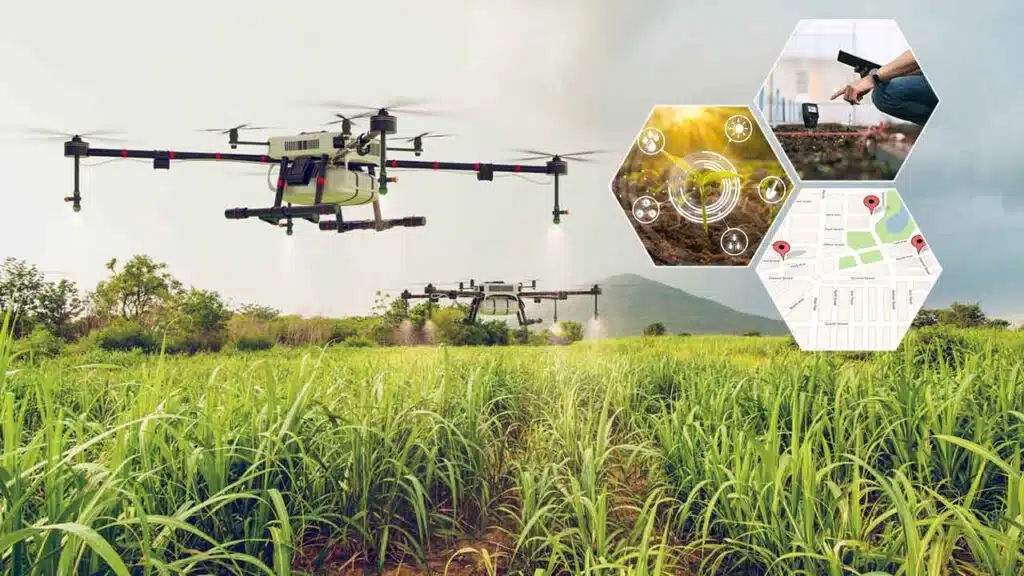
Precision agriculture is revolutionizing farming by leveraging advanced technologies to optimize resource use. Using GPS mapping, drones, and soil sensors, farmers can monitor their fields with incredible accuracy.
This practice enables targeted applications of water, fertilizers, and pesticides, reducing waste and input costs. For Australian farmers, precision agriculture is particularly valuable in addressing challenges like water scarcity and variable soil quality.
It also minimizes environmental impacts by reducing chemical runoff and conserving natural resources. With the integration of real-time data and analytics, precision agriculture not only improves productivity but also enhances decision-making, paving the way for sustainable farming practices.
| Technology | Application |
| GPS Mapping | Guides machinery for accurate planting |
| Soil Sensors | Monitors moisture and nutrient levels |
| Drones | Maps fields and detects crop health issues |
5. Integrated Pest Management (IPM)
Integrated Pest Management (IPM) is a holistic approach to controlling pests that minimizes reliance on chemical pesticides. Instead, it combines biological controls, like introducing natural predators, with cultural practices such as crop rotation and mechanical traps.
IPM is highly beneficial for Australian farmers as it reduces environmental harm and promotes long-term pest control. By focusing on prevention and monitoring, IPM ensures that interventions are only applied when necessary, making it a cost-effective solution.
Moreover, it supports biodiversity by protecting beneficial insects and maintaining ecological balance, aligning with sustainable agriculture goals while safeguarding crops from pest damage.
| IPM Strategy | Benefit |
| Biological Control | Reduces pest populations naturally |
| Crop Rotation | Disrupts pest life cycles |
| Pheromone Traps | Monitors and controls specific pest species |
6. Cover Cropping
Cover cropping involves planting crops like clover, rye, or vetch in between main crop cycles to improve soil health. This practice helps prevent soil erosion, suppress weeds, and add organic matter to the soil, enhancing its fertility.
In Australia’s dry climate, cover crops are particularly useful for retaining moisture and reducing evaporation. They also contribute to carbon sequestration, playing a role in mitigating climate change.
By fostering beneficial microorganisms, cover cropping creates healthier soils that are more resilient to drought and other environmental stresses. It’s a simple yet powerful technique that benefits both the environment and agricultural productivity.
| Cover Crop | Benefit |
| Clover | Fixes nitrogen in the soil |
| Rye | Prevents erosion and suppresses weeds |
| Buckwheat | Attracts beneficial pollinators |
7. Organic Farming
Organic farming eliminates the use of synthetic chemicals and genetically modified organisms, focusing instead on natural inputs like compost and biological pest control.
This practice improves soil fertility and supports biodiversity, making it a sustainable alternative to conventional farming.
In Australia, where consumer demand for organic produce is steadily increasing, adopting organic farming not only benefits the environment but also opens up premium market opportunities.
Techniques like crop rotation, green manure, and natural pest deterrents ensure the long-term health of the soil. Organic farming aligns with the global shift toward eco-friendly practices, providing both environmental and economic benefits.
| Organic Practice | Benefit |
| Composting | Recycles farm waste into nutrient-rich compost |
| Biological Pest Control | Reduces environmental impact |
| Organic Certification | Increases market value of produce |
8. Water-Smart Farming Techniques
Water-smart farming techniques are essential in Australia’s arid climate, where water conservation is critical. Methods like drip irrigation deliver water directly to plant roots, minimizing waste, while rainwater harvesting collects and stores water for later use.
Drought-resistant crop varieties are another important tool, enabling farmers to maintain yields despite low rainfall. Mulching is widely used to retain soil moisture and reduce evaporation.
Together, these techniques improve water efficiency, ensuring that farming remains viable even in regions with limited water resources. By adopting water-smart practices, Australian farmers can enhance productivity while safeguarding this precious natural resource for future generations.
| Technique | Benefit |
| Drip Irrigation | Reduces water waste and targets root zones |
| Rainwater Harvesting | Provides supplementary water supply |
| Mulching | Retains soil moisture and prevents evaporation |
9. Renewable Energy on Farms
Renewable energy systems like solar panels, wind turbines, and biogas generators are transforming Australian farms by reducing reliance on fossil fuels.
Solar panels power irrigation systems, machinery, and farm buildings, while wind turbines generate electricity for remote areas. Biogas systems convert organic waste into renewable energy, creating a sustainable solution for waste management.
These technologies not only lower operational costs but also contribute to reducing greenhouse gas emissions. For Australian farmers, renewable energy represents an opportunity to achieve energy independence while aligning with national sustainability goals. It’s an investment that pays off environmentally and economically.
| Energy Source | Application |
| Solar Panels | Powers irrigation systems and machinery |
| Wind Turbines | Generates electricity for farm operations |
| Biogas Systems | Converts organic waste into renewable energy |
10. Biodiversity Conservation
Biodiversity conservation involves protecting and enhancing the variety of plant and animal life on farms. In Australia, this practice is crucial for supporting ecosystems that provide essential services like pollination, pest control, and soil health.
Techniques include planting native species, preserving wetlands, and reducing pesticide use to protect beneficial insects and wildlife. Biodiversity conservation also helps farms become more resilient to climate change by fostering a balanced and stable environment.
For Australian farmers, integrating biodiversity-friendly practices ensures long-term productivity while contributing to global efforts to preserve natural ecosystems and combat biodiversity loss.
| Conservation Strategy | Benefit |
| Native Plantings | Attracts pollinators and beneficial insects |
| Wetland Preservation | Enhances water quality and biodiversity |
| Reduced Pesticide Use | Protects beneficial organisms |
Takeaways
Sustainable farming practices are essential for the future of agriculture in Australia. By adopting methods like conservation tillage, precision agriculture, and renewable energy, farmers can address environmental challenges while maintaining profitability.
These practices not only protect natural resources but also position Australian farmers as leaders in sustainable food production. With growing global demand for eco-friendly practices, the shift towards sustainability is both a necessity and an opportunity for long-term success.
Let me know if further refinements are needed!