Injuries can strike unexpectedly, leaving you with physical, emotional, and financial hardships. If you’ve suffered an injury due to the fault or negligence of another party, you may be entitled to personal injury compensation in Australia.
However, maximizing the compensation you receive involves more than just filing a claim. It requires a detailed understanding of the process, a strategic approach, and adherence to certain steps to ensure you receive the compensation you deserve.
In this article, we’ll dive into 7 strategies to maximize your personal injury compensation in Australia, providing actionable insights, expert tips, and examples that will guide you through each stage of your claim. Whether you’re recovering from an injury or considering making a claim, this guide will help you maximize your chances of success.
Strategy 1: Seek Immediate Medical Attention and Documentation

When you sustain an injury, one of the most important things you can do is seek immediate medical attention. Even if your injury seems minor at first, it’s critical to get checked by a medical professional. Not only is this necessary for your health, but it also serves as the foundation of your compensation claim.
Timely medical documentation is one of the most valuable pieces of evidence you can present. Insurance companies and courts rely heavily on medical records to assess the severity of the injury and the associated costs. Delayed medical visits or inconsistent documentation can create gaps in your case, ultimately affecting the amount of compensation you receive.
Key Types of Medical Evidence to Collect
Here are the key types of medical evidence to ensure you gather immediately following your injury:
| Type of Evidence | Details | Why It’s Important |
| Medical Reports | Doctor’s notes, hospital records, and specialist opinions. | Establishes the cause and severity of your injury. |
| Prescriptions & Treatments | Records of medications and prescribed therapies. | Proves ongoing medical care and the cost of treatment. |
| Diagnostic Tests | X-rays, MRIs, CT scans, and blood tests. | Provides scientific proof of the injury’s extent. |
| Specialist Assessments | Expert opinions or additional evaluations by specialists. | Determines long-term impacts and future medical needs. |
Example:
Sarah, an Australian woman, was involved in a car accident and sustained whiplash. She immediately visited her GP, who documented her symptoms and prescribed physical therapy. She also underwent an MRI that revealed mild spinal damage, which was critical for supporting her claim and ensuring she was compensated for ongoing treatment.
Strategy 2: Consult with a Personal Injury Lawyer
Navigating the legal complexities of a personal injury claim can be daunting. A personal injury lawyer is an invaluable ally in your quest for compensation. Not only can they guide you through the legal process, but they also have the expertise to negotiate effectively with insurance companies, who may attempt to offer settlements that are much lower than what you’re entitled to.
With a lawyer on your side, you are more likely to receive the full compensation you deserve. A skilled personal injury lawyer understands how to evaluate your case accurately and how to present it to the insurer or court for maximum impact.
How to Choose the Right Personal Injury Lawyer
Here are some practical tips for choosing the right lawyer:
| Factor | Why It’s Important | Questions to Ask |
| Experience | Ensure the lawyer has handled cases similar to yours. | “How many years of experience do you have in personal injury law?” |
| Reputation | Research the lawyer’s reputation to ensure they’re trustworthy. | “Can you provide client testimonials or references?” |
| No Win, No Fee | Many personal injury lawyers operate on a no-win, no-fee basis. | “Do you offer a no-win, no-fee agreement?” |
| Communication | Choose someone who communicates clearly and regularly. | “How often will you update me on the progress of my case?” |
Case Study:
John was injured in a workplace accident and struggled to negotiate with his employer’s insurance company. He hired an experienced personal injury lawyer who not only secured a fair settlement but also advised him on the necessary medical treatments he could claim for, ultimately maximizing his compensation.
Strategy 3: Understand the Types of Personal Injury Claims
Understanding what you can claim for is essential for maximizing your compensation. In Australia, personal injury claims typically include both economic and non-economic damages. Knowing the different categories of compensation will ensure that you don’t miss out on any potential benefits.
Here’s a breakdown of the key types of compensation:
| Type of Compensation | What It Covers |
| Economic Damages | Covers lost wages, medical expenses, and rehabilitation costs. |
| Non-Economic Damages | Addresses pain and suffering, emotional distress, and loss of enjoyment of life. |
| Future Economic Losses | Covers any future loss of earnings or ongoing medical expenses due to the injury. |
| Punitive Damages | In some cases, punitive damages may be awarded to punish the wrongdoer. |
Claiming for Loss of Income and Future Earnings
When an injury results in lost wages or affects your future earning potential, you should claim compensation for these losses. This can be especially important for individuals whose injuries will prevent them from returning to their previous work or whose careers are limited due to the injury.
Steps to Claim for Lost Income:
- Document your income: Use pay slips, tax returns, or bank statements to prove your pre-injury earnings.
- Obtain an assessment of future losses: If your injury affects your ability to work in the future, get a professional assessment of your future loss of earnings.
Example:
Mark, a construction worker who sustained a back injury, was unable to return to his high-paying job. His lawyer helped him claim compensation not only for the income he lost during his recovery period but also for his reduced earning capacity in the future. This increased his compensation significantly.
Strategy 4: Gather and Preserve Evidence for Your Case
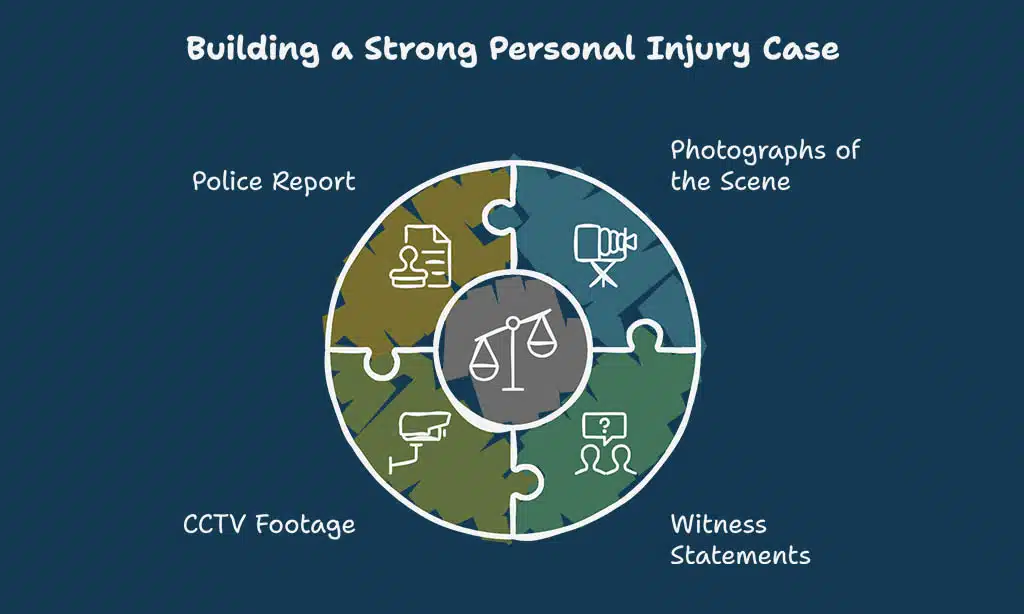
The quality and quantity of evidence you can gather will play a pivotal role in the outcome of your personal injury claim. The more detailed and comprehensive the evidence, the stronger your case will be. This includes not only medical documentation but also physical evidence of the accident and its aftermath.
Here are the key types of evidence that can make or break your claim:
| Type of Evidence | What to Collect | Why It’s Important |
| Photographs of the Scene | Take photos of the accident scene, including vehicle damage or injuries. | Visual proof of the accident’s impact and context. |
| Witness Statements | Collect names and contact details of witnesses who saw the accident. | Witnesses can corroborate your version of events. |
| CCTV Footage | Request footage from nearby surveillance cameras. | Provides additional visual evidence supporting your claim. |
| Police Report | Obtain a copy of the police report if one was filed. | Establishes official details of the accident and the involved parties. |
How to Organize and Protect Evidence
Maintaining an organized system for your evidence is key to ensuring it’s easy to access when needed. Use a digital storage system and physical folders for any documents. Backup photos and videos on cloud storage to avoid accidental loss. Ensure that evidence is submitted promptly to avoid delays in your claim process.
Strategy 5: Stay Consistent with Your Treatment Plan
Insurance companies and the courts will scrutinize whether you followed your doctor’s prescribed treatment plan. Failing to do so could significantly impact your compensation, as they may argue that you’re not taking your injury seriously or that it isn’t as severe as you claim.
If you’re advised to undergo physical therapy, attend follow-up appointments, or follow a specific rehabilitation program, it’s essential to comply with these instructions. Consistent treatment not only aids your recovery but also strengthens your case.
How to Avoid Gaps in Treatment:
- Don’t miss appointments: Keep a record of all your medical appointments and treatments.
- Update your treatment plan: If your condition worsens, make sure it’s documented in your medical records.
- Stay proactive: If you encounter challenges in your recovery, seek additional medical advice.
Example:
Rebecca suffered from a knee injury after a fall. She was advised to undergo several rounds of physiotherapy. However, due to a busy schedule, she missed some appointments. This led the insurance company to argue that her injury wasn’t as severe as she claimed. Consistency with her treatment helped her case immensely when she resumed therapy and followed her doctor’s advice.
Strategy 6: Know the Statutory Time Limits for Your Claim
Each state and territory in Australia has a specific time limit for filing a personal injury claim, and missing this deadline can result in the dismissal of your case. These time limits can range from 3 to 6 years, depending on the type of injury and the circumstances of the claim.
It’s crucial to act swiftly after an injury to ensure that your case doesn’t fall outside of the time limit.
| State/Territory | Time Limit |
| New South Wales | 3 years from the date of the accident. |
| Victoria | 3 years for most personal injuries. |
| Queensland | 3 years from the date of the injury. |
| Western Australia | 3 years from the date of the injury or knowledge of it. |
Exceptions to the Statutory Time Limits
Some exceptions allow for an extension of time limits, such as when the injured party is a minor or if the injury wasn’t immediately apparent. However, exceptions vary by jurisdiction, so it’s essential to consult with a lawyer immediately after an injury to ensure compliance with time limits.
Strategy 7: Explore Alternative Dispute Resolution [ADR] Options
Alternative Dispute Resolution [ADR] refers to non-litigation methods such as mediation or arbitration that can be used to resolve personal injury claims outside of court. ADR can be an effective way to maximize your compensation, especially when both parties are motivated to reach a fair settlement quickly.
Pros and Cons of ADR
| Pros | Cons |
| Faster resolution | May not always result in a favorable outcome. |
| Lower legal costs | Requires willingness from both parties to negotiate. |
| Confidential | Some cases may require further litigation if ADR fails. |
Wrap-Up: Taking Action to Maximize Your Personal Injury Compensation
The journey to obtaining the compensation you deserve can be long, but by following these 7 strategies to maximize your personal injury compensation in Australia, you can significantly improve your chances of success.
From seeking immediate medical care to consulting with the right lawyer, understanding the compensation types, and gathering vital evidence, each step is crucial.
By staying proactive and knowledgeable, you’ll be in the best position to secure the compensation that supports your recovery, financially and emotionally. Always remember to follow your treatment plan, comply with statutory deadlines, and consider ADR as an option for resolving your case quickly. With these strategies, you’ll be well-equipped to navigate the claims process and achieve the best possible outcome.