
Workplace injuries are unfortunately common across all industries in Australia, with thousands of workers impacted each year. While it can be a daunting process, understanding how to navigate workplace injury claims in Australia is critical to ensuring your rights are protected and that you receive the compensation you deserve.
Whether dealing with a short-term injury or a life-changing accident, understanding the steps involved in making a successful claim is essential.
This comprehensive guide delves into six key considerations for workplace injury claims in Australia, providing practical, easy-to-understand insights to help workers navigate this often-complex process.
By the end of this article, you will be better equipped to take the necessary steps to secure your compensation while minimizing stress during what can be a difficult time.
Introduction to Workplace Injury Claims in Australia
In Australia, the workers’ compensation system is designed to ensure employees who sustain injuries while working are financially supported and receive necessary medical treatment. However, the process of filing a claim, gathering the required evidence, and ensuring your claim is processed efficiently can seem overwhelming.
Understanding how workplace injury claims in Australia function, what types of injuries are eligible, and the key laws that govern the claims process is the first step in making sure you’re properly compensated. Each state and territory in Australia has its own workers’ compensation system, so being aware of local laws and regulations is important for understanding your rights and obligations.
Key Stats:
- In Australia, more than 100,000 workers file injury claims annually.
- Most workplace injuries involve musculoskeletal disorders (30% of claims) or falls (20% of claims).
1. Understanding Your Eligibility for Workplace Injury Claims
Before proceeding with a workplace injury claim in Australia, it’s crucial to determine whether you’re eligible for compensation. While it may seem straightforward, various factors such as the nature of the injury, its severity, and whether it was caused by your work activities all play a role.
What qualifies as a workplace injury?
A workplace injury refers to an accident, illness, or condition that occurs in the course of your employment. This could include:
- Physical injuries such as broken bones, sprains, cuts, or burns.
- Psychological injuries like stress, anxiety, or post-traumatic stress disorder (PTSD) caused by workplace bullying, harassment, or traumatic events.
- Repetitive strain injuries (RSI), like carpal tunnel syndrome or back injuries, caused by performing the same physical activity repeatedly.
- Occupational diseases such as respiratory conditions resulting from exposure to harmful chemicals or long-term exposure to noise.
Types of workplace injuries covered under Australian law
While injuries that occur directly on the job are more obvious candidates for a claim, Australian workers’ compensation laws also cover a variety of other injury types. For example, injuries that arise during work-related travel or during a break while still on the premises may qualify.
| Injury Type | Examples | Eligible for Compensation? |
| Physical injuries | Broken bones, fractures, cuts | Yes |
| Psychological injuries | PTSD, anxiety from bullying | Yes, with supporting evidence |
| Occupational diseases | Asthma from exposure to dust | Yes |
| Repetitive strain injuries | Carpal tunnel syndrome, back pain | Yes |
2. Key Legal Framework for Workplace Injury Claims

Australia’s workers’ compensation system is governed by both federal and state-specific laws. These laws ensure workers are entitled to compensation when they are injured in the workplace, but they also outline the responsibilities of both employers and employees.
Workers’ compensation laws in Australia
In Australia, workers’ compensation is not governed by a single federal law. Instead, each state and territory has its own legislation, and understanding the local laws is crucial to navigating workplace injury claims in Australia.
For example:
- New South Wales (NSW) has the Workplace Injury Management and Workers Compensation Act 1998, which ensures workers can access compensation for lost wages, medical expenses, and rehabilitation costs.
- Queensland follows the WorkCover Queensland Act, which provides similar coverage and benefits for injured workers in the state.
These laws ensure that workers receive compensation for medical expenses, rehabilitation, lost wages, and other costs related to their injuries. However, the exact process and benefits available may vary from state to state.
How the system works across different states
Workers’ compensation systems differ in how claims are handled, and it’s important to familiarize yourself with the specific requirements in your state. For instance:
- In Victoria, workers are covered by the Victorian WorkCover Authority, which offers compensation for injuries, as well as the opportunity to appeal if a claim is denied.
- In Western Australia, the WorkCover WA system is slightly different in terms of medical assessments and claim processing times.
| State/Territory | Workers’ Compensation Body | Key Benefits |
| New South Wales | State Insurance Regulatory Authority (SIRA) | Medical costs, rehabilitation, lost wages |
| Victoria | WorkSafe Victoria | Medical treatment, financial assistance |
| Queensland | WorkCover Queensland | Lump sum compensation, rehabilitation |
| Western Australia | WorkCover WA | Medical support, loss of earnings |
Legal requirements and documentation
To successfully file a workplace injury claim in Australia, certain legal documentation is required, such as:
- A completed workers’ compensation claim form.
- Medical reports from doctors or specialists.
- Evidence of lost wages (e.g., pay slips).
- Any other supporting documents, such as witness statements or photographic evidence of the injury.
Case Study:
John, a construction worker in Queensland, was injured while lifting a heavy object. He reported his injury within 24 hours, saw his doctor, and provided detailed medical documentation. As a result, his claim was processed without any delays, and he received timely compensation for lost wages and medical expenses.
3. Common Mistakes to Avoid in Injury Claims
Filing a workplace injury claim in Australia is a detailed process, and even small mistakes can lead to delays or a denied claim. By understanding common errors and how to avoid them, you can improve your chances of success.
Delays in reporting the injury
One of the most common and detrimental mistakes is failing to report your injury promptly. In most states, you are required to report the injury to your employer within a set time frame (usually within 30 days). Failing to do so can raise doubts about the legitimacy of your claim.
Tip: Report any workplace injury as soon as possible to ensure the best chance of a successful claim. Document the details of the injury (e.g., date, time, cause) and make sure your employer is informed.
Inaccurate or incomplete documentation
Incorrect or missing information can lead to your claim being delayed or rejected. For instance, a missing medical report or incomplete wage details can stall the process.
Tip: Ensure that all forms are completed accurately and that you provide comprehensive documentation. Double-check everything before submission.
Failing to follow medical advice
Your treating doctor’s advice is key to both your recovery and your claim’s success. Ignoring recommended treatments or failing to attend necessary medical appointments can lead to complications in your claim.
Tip: Follow all medical recommendations closely and keep records of your treatments, appointments, and any improvement or setbacks.
How these mistakes can affect your claim
These mistakes can not only delay your claim but might also result in a loss of benefits or reduced compensation. By staying organized and proactive, you can avoid these pitfalls and streamline the process.
4. Importance of Medical Evidence in Workplace Injury Claims
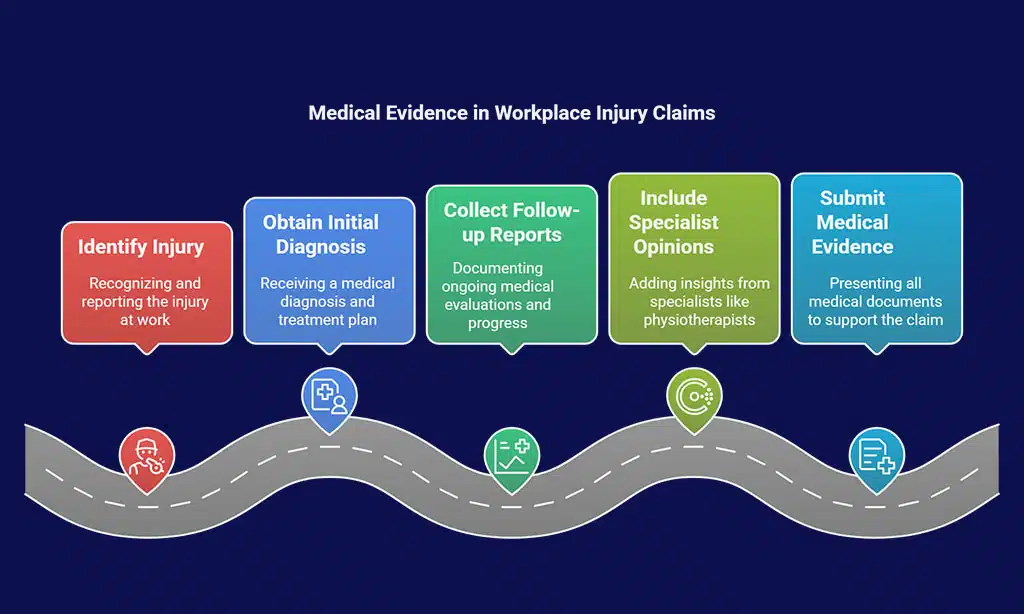
One of the most critical components of a workplace injury claim in Australia is medical evidence. Without this documentation, your claim may not stand up to scrutiny, as insurance companies and workers’ compensation bodies rely on medical proof to assess the severity of your injury.
How medical reports strengthen your claim
Medical reports provide the necessary evidence to support the link between your injury and your job. They also demonstrate the severity of your condition, which influences the amount of compensation you may receive.
Key medical documents to include:
- Initial diagnosis and treatment plans
- Follow-up visits and rehabilitation progress
- Specialist opinions if applicable (e.g., physiotherapists, psychologists)
| Medical Evidence | Role in Claim Process |
| Doctor’s Report | Validates the injury and treatment plan |
| Test Results (X-rays, MRI, etc.) | Demonstrates the physical impact of the injury |
| Physiotherapist Assessments | Establishes the long-term recovery plan |
Case Study:
Sarah, a receptionist in Sydney, sustained a repetitive strain injury to her wrist. She kept detailed records of her doctor’s visits, including a report from her physiotherapist detailing the long-term impact of her injury. This evidence played a crucial role in securing her compensation for lost wages and medical bills.
5. The Role of Employers in Workplace Injury Claims
Employers play an essential role in facilitating workplace injury claims in Australia. While employees are entitled to compensation, the process is smoother and faster when the employer fulfills their responsibilities.
Employer responsibilities under the law
Employers are legally required to:
- Provide a safe working environment
- Offer workers’ compensation insurance
- Assist with the claims process by reporting the injury and providing required documents
How employers can assist in the claims process
- Report the injury: Employers must report the injury to the appropriate insurance body, usually within a set timeframe.
- Complete necessary forms: Employers may need to complete forms regarding the nature of the injury and the circumstances surrounding it.
- Provide modified work: If appropriate, employers should offer modified duties to help the injured worker return to work as soon as they are able.
What happens if the employer disputes the claim
In some cases, an employer may dispute a claim, arguing that the injury was not work-related or that the employee is exaggerating their condition. In such cases, the worker has the right to appeal the decision.
Tip: If your employer disputes your claim, seek legal advice to ensure your rights are protected.
6. Understanding the Compensation Process
Once your claim is accepted, understanding how compensation is calculated and distributed is key. Compensation can cover medical expenses, lost wages, and rehabilitation costs, and in some cases, workers may also receive a lump-sum payment.
Types of compensation available for injured workers
- Medical expenses: Covers the cost of treatment, rehabilitation, and medications.
- Wages replacement: Compensation for lost income due to the inability to work.
- Lump-sum payment: In cases of permanent disability or serious injury.
| Type of Compensation | What It Covers |
| Medical Expenses | Treatment, rehabilitation, prescriptions |
| Lost Wages | Salary replacement during recovery or permanent incapacity |
| Lump-Sum Payments | Permanent disability, long-term incapacity |
How compensation amounts are determined
Compensation is typically calculated based on:
- The severity of the injury
- Your pre-injury wage
- The amount of time you are expected to be off work
- Your long-term rehabilitation needs
Case Study:
In a high-profile case, Mark, an electrician in Melbourne, sustained severe burns from a workplace electrical accident. His compensation included coverage for his extensive medical treatment, rehabilitation, and a lump-sum payment for the permanent disability he sustained. His claim was expedited due to thorough medical documentation and employer cooperation.
Filing a workplace injury claim in Australia can be complex, but with the right information, preparation, and assistance, you can ensure that your claim is successful. Remember, the system is designed to protect you, but staying informed and organized is crucial.
From understanding your eligibility and avoiding common mistakes to securing the right medical evidence and working with your employer, each step you take can impact the outcome of your claim.
By following the strategies outlined in this guide, you’ll have a much clearer understanding of how to navigate the claims process and secure the compensation you need to recover and get back to work.