

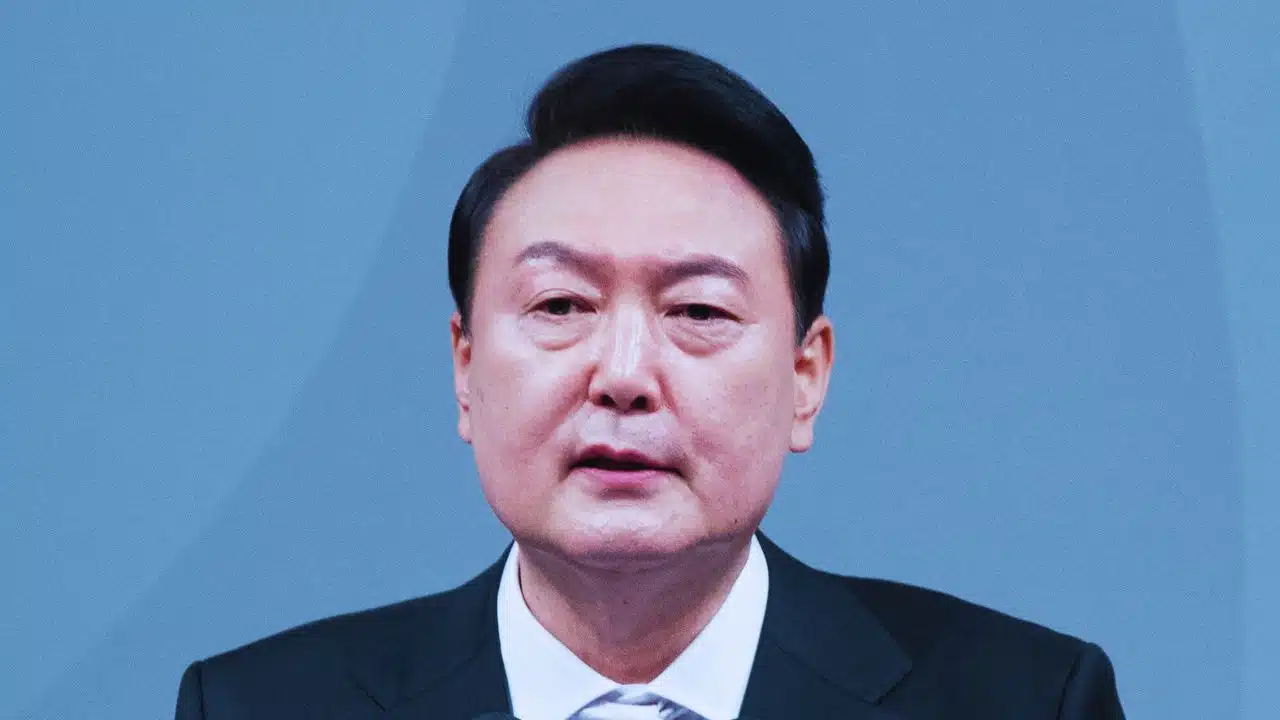
The South Korean National Assembly has impeached President Yoon Suk Yeol following his controversial declaration of emergency martial law, a move that has plunged the nation into political turmoil and heightened tensions among citizens. The impeachment vote, conducted on Saturday, has sparked strong reactions both within parliament and across the country.
Impeachment Vote: A Historic Parliamentary Decision
The impeachment motion, introduced by opposition lawmakers, was passed with overwhelming support in the National Assembly. Out of 300 members, 204 voted in favor of impeaching President Yoon, while 85 voted against. Three members abstained, and eight votes were deemed invalid. This decisive majority highlights the deep divisions within South Korean politics, as opposition parties accuse President Yoon of overstepping his constitutional authority during his brief imposition of martial law.
The martial law, which lasted six hours, was declared in response to escalating civil unrest. Critics argue that this declaration was unjustified and an abuse of power, which has led to the president facing allegations of insurrection—a grave charge under South Korean law.
Public Reactions: Celebrations and Protests Erupt Nationwide
The impeachment has triggered contrasting public reactions across South Korea. Outside the National Assembly compound, thousands of people gathered to celebrate the impeachment, viewing it as a victory for democracy and accountability. Many chanted slogans and waved banners calling for justice and the protection of South Korea’s democratic principles.
However, in stark contrast, large crowds of President Yoon’s supporters convened in downtown Seoul to express their outrage. Chanting slogans in his favor, they accused the opposition parties of politicizing the issue and undermining the stability of the nation. The division between these two groups underscores the polarizing nature of President Yoon’s leadership.
In a televised address shortly after the impeachment vote, President Yoon expressed his determination to continue serving the country. “I vow to do my best for South Korea until the end,” he said, emphasizing his commitment to upholding the nation’s interests. He refrained from addressing the allegations directly, choosing instead to focus on a message of resilience.
Despite his removal from active duties, President Yoon remains in office in a suspended capacity until the Constitutional Court delivers its verdict on the impeachment.
Interim Leadership: Prime Minister Han Takes Charge
Following the impeachment, South Korea’s Prime Minister Han Duck-soo has assumed the role of acting president, as mandated by the country’s laws. The transition of power is critical to maintaining governmental stability during this uncertain period.
The Constitutional Court now has up to 180 days to review the impeachment and decide whether to reinstate President Yoon or formally remove him from office. The court’s decision will have far-reaching implications for the country’s political landscape.
Democratic Party’s Next Move: Impeaching the Prime Minister
The opposition Democratic Party has not stopped at President Yoon’s impeachment. Lawmakers are now moving to impeach Prime Minister Han Duck-soo, accusing him of failing to prevent the president’s controversial actions. They argue that his inability to manage the crisis allowed the imposition of martial law, which they consider a violation of democratic principles.
The opposition also plans to pursue criminal charges against President Yoon, accusing him of perpetrating an insurrection. If convicted, he could face the death penalty or life imprisonment, as South Korea’s legal system treats insurrection as one of the most serious crimes.
Key Arrests: High-Ranking Officials Detained for Alleged Role in Insurrection
The fallout from the martial law declaration has extended beyond the president. Several senior officials have been arrested for allegedly collaborating in what the opposition calls an “orchestrated insurrection.” Those detained include the Defense Minister, the National Police Chief, the head of the Seoul Metropolitan Police, and the commander of military counterintelligence.
These arrests highlight the scale of the investigation, as authorities seek to determine the extent of the involvement of government and military officials in the events leading to the declaration of martial law.
What Led to the Impeachment? A Timeline of Events
The path to impeachment began with growing public discontent over President Yoon’s handling of civil unrest and his decision to impose martial law. Critics argue that his declaration of emergency powers was unnecessary and unconstitutional, as it gave the military excessive authority to suppress protests.
Opposition lawmakers quickly mobilized to hold the president accountable, introducing the impeachment motion on grounds of abuse of power and constitutional violations. The National Assembly’s vote marks a critical turning point in South Korea’s political history.
Constitutional Court’s Role: Deciding the President’s Fate
The Constitutional Court will now review the impeachment case to determine whether there is sufficient evidence to permanently remove President Yoon from office. This process, which could take up to six months, will involve a thorough examination of the allegations and the legal basis for the impeachment.
If the court upholds the National Assembly’s decision, President Yoon will become only the second South Korean leader to be removed from office through impeachment, following the ousting of Park Geun-hye in 2017.
The impeachment has plunged South Korea into a period of political uncertainty. The nation’s economy, already under pressure from global challenges, could face further instability as the political crisis unfolds.
The opposition’s efforts to impeach both the president and prime minister signal a broader push to reshape the government’s leadership. If successful, these actions could result in significant changes to South Korea’s political and institutional landscape.
A Nation Divided: Democracy Under Scrutiny
The impeachment of President Yoon Suk Yeol reflects the growing divisions within South Korea’s political and social fabric. As the Constitutional Court deliberates, the country faces critical questions about the balance of power, the role of democratic institutions, and the accountability of its leaders.
The next few months will be pivotal in determining South Korea’s direction, as both the government and citizens navigate this unprecedented political crisis.
























