

You might wonder why your utility bills stay high, even after installing solar panels. Solar panel costs have fallen by more than half in the past decade. You will learn how net metering and battery storage can help you cut energy costs.
Read on.
Key Takeaways
- Solar panel costs dropped from over $50,000 ten years ago to about $25,000 today. A 30% federal tax credit and state programs help most homeowners recoup their investment in 2–6 years.
- Panels still generate 40%–70% of their capacity on cloudy days and often work better in cold weather. Net metering lets you bank or sell extra power to lower your bills.
- Professional roof installations use flashings and sealants to handle 2–4 pounds per square foot, prevent leaks, and can even shield roofs from snow and debris.
- Systems need one cleaning and inspection each year, last over 20 years, lose only 0.5%–1% efficiency per year, and often carry 20–30 year warranties.
- Homes with solar sell for about 4.1% more. Panels offset their manufacturing carbon footprint in roughly three years, and EPA guidelines support recycling of glass, aluminum, silicon, and copper.
Are Solar Panels Too Expensive to Install?
A home solar setup cost more than fifty thousand dollars ten years ago. Full solar panel installation now runs about twenty five thousand dollars; Chicago projects often fall between eighteen thousand and twenty five thousand dollars.
Tech gains, extra suppliers, federal incentives pushed panel prices down. The Inflation Reduction Act adds a thirty percent investment tax credit or a three dollar fifty cent production tax credit per kilowatt hour.
Some homeowners get payback in as little as two years. Most families see returns in four to six years. This shift helps energy independence and lifts solar panel efficiency for reliable home power.
Photovoltaic cells last more than twenty years, and net metering boosts home energy savings. Illinois Solar for All offers low income families reduced rates on photovoltaic power systems.
No program supplies free panels, yet tax credits shrink total investment. Incentives make renewable energy systems more affordable.
Do Solar Panels Only Work on Sunny Days?
Clouds do not stop solar panels from working. Panels still hit 40 to 70 percent output on gray days. Thin clouds lower production by 10 to 15 percent, thick ones by 30 to 40 percent.
A panel installation in Missouri sees 206 clear days each year, so solar energy still flows most of the time. Cold snaps below 40°F hardly dent solar panel efficiency, and chilly temps can even boost output.
A typical Chicago winter at 10 to 15°F still powers solar power systems well.
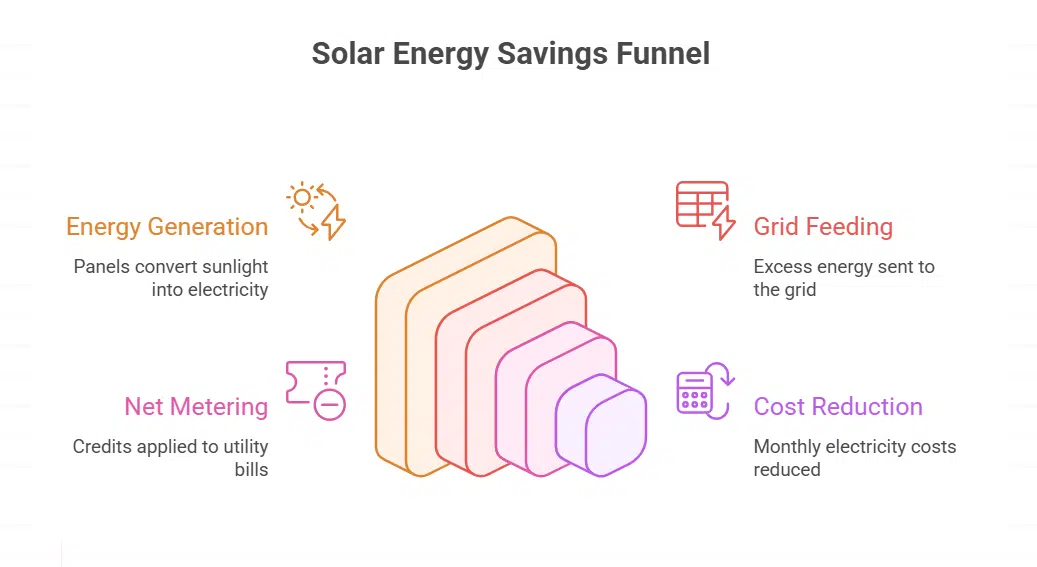
Shorter daylight in winter cuts total yield, but net metering can balance that drop. Many systems connect to the utility company grid, letting you bank extra power on cloudy afternoons.
Modern inverters and battery storage units catch surplus energy for a rainy day. You track solar panel performance on apps, making home energy savings clear. Long solar panel lifespan lets you tap renewable energy and shrink your carbon footprint for decades.
Will Solar Panels Damage My Roof?
Solaris Renewables mounts solar panels on roofs in good condition, using roof flashings and sealants around every bolt. Crew members inspect rafters to handle 2 to 4 pounds per square foot of panel weight.
Teams adapt fixtures for metal, tile, tar, gravel, and flat roofs. A sturdy photovoltaic (pv) system can block snow, rain, and debris, slowing roof wear.
Homeowners avoid voiding warranties and risking leaks by skipping DIY solar panel installation. Professional crews follow solar technology standards and meet building codes for clean energy systems.
They plan solar panel maintenance and use net metering to keep energy independence high. Ground mounting offers an option for steep or aged roofs.
Common Misconceptions About Solar Homes
Some homeowners assume a solar-equipped roof means they cut the power cord to the grid, ignoring net metering credits. Others think a solar battery, meter, or converter keeps lights on during a blackout.
Are Solar Homes Always Off-Grid?
Many solar homes tie into the utility power grid. Owners send extra solar energy back under net metering. Homeowners earn credits and slash utility bills. Renewable energy and government incentives, like the 30% federal tax credit, cut costs.
Owners gain energy independence yet stay linked to the grid.
Renters join via landlord solar panel installs, virtual metering programs, or community solar farms. They skip roof work and still tap clean electricity. This setup uses storage units for cloudy days or outages.
It meets home energy needs without full off-grid systems. These options keep carbon footprints in check.
Do Solar Panels Provide Power During Outages?
Most grid-connected solar homes lose power during a grid outage. Net metering ties panels to utility companies and the electrical grid, so systems shut off when the grid dies. Only true off grid solar systems with solar batteries and a solar inverter offer backup power for energy independence.
Power surges can fry electronics in a blink. A surge protector at your breaker panel acts like a guard dog, watching voltage spikes and blocking them. It guards your appliances and keeps renewable energy systems safe during a blackout.
Do Solar Panels Need Constant Maintenance?
Solar panels need little upkeep over 25 years of service. One routine cleaning, plus an annual inspection by a pro, usually does the trick. They have few moving parts, so big repairs are rare.
You cover your connection or loan fees, plus a modest cleaning bill, then you watch utility bills drop. This simple care keeps your renewable energy source humming.
A friend asked if an off-grid solar pv system feels like a full-time job. I told him it runs like a well-oiled machine, with just a spray nozzle and wiring check once a year. Installers glance at net meters to see power flow, then leave without fuss.
Light solar panel maintenance frees you to enjoy lower energy bills.
Can Solar Panels Lower My Property Value?

People fear solar panels may lower a home’s value. Markets prove that idea wrong. Sales data show homes with solar sell for about 4.1% more than those without. Buyers seek energy efficiency, independence, and sustainable energy.
They crave lower utility bills and a smaller carbon footprint.
Real estate pros praise solar panel installation on roofs. New owners enjoy net metering perks, and federal and local incentives. Each home shines on listings with a rooftop solar photovoltaic system.
That upgrade boosts green living appeal, and cuts energy costs.
Is Solar Energy Efficient Enough to Meet My Needs?
Solar panels capture sunlight exposure through photovoltaic cells. They convert up to 22% of that solar energy into electricity. High-efficiency models reach 23% conversion. Such solar panel efficiency dwarfs late 1990s levels, which fell under 15%.
Factories back products with 20 to 30 year performance warranties. They guarantee at least 80% capacity at term end. Actual degradation runs only 0.5 to 1% per year. Net metering credits let owners export excess power.
Energy storage systems store extra juice for nighttime use. This mix cuts utility bills and increases home energy savings.
Are Solar Panels Environmentally Friendly?
Panels produce no emissions during use. Manufacturing and shipping create a carbon footprint that solar installations offset in about three years. Glass, aluminum, silicon, and copper from retired panels head to recycling centers.
Recycling cuts demand for new raw materials and trims energy consumption. The Environmental Protection Agency maps out guidelines for end-of-life management.
Manufacturers adopt cleaner methods for production and disposal. The EPA tracks improvements in solar panel recycling and end of life management. Grid tied inverters and net metering let homes sell power back to utilities.
Households gain renewable energy that cuts fossil fuel use and air pollution. Photovoltaic cell efficiency climbs each year as technology advances.
Takeaways
This guide cut through the noise and saved you time. You can now ignore pricey rumors about PV modules, net metering, and repairs. You know cheap rooftop solar panels can slash your utility bills.
You grasp that proper installation can extend panel lifespan by decades. You see how solar photovoltaic cells work on cloudy days. You feel ready to boost your home energy savings, shrink your carbon footprint, and keep that meter spinning backward.
Time to turn sunshine into dollars.
FAQs on Solar Energy Myths
1. Is it true that solar panels do not work on cloudy days?
That’s one solar myth. Solar panels draw solar energy even on gray days. Like a sponge, they soak up daylight. They can still cut power for LED lights or a CFL bulb.
2. Is solar panel installation too pricey for my home?
Installation costs can seem steep, but net metering and lower utility bills help a lot, you get solar energy benefits in home energy savings. You recoup costs of electricity fast.
3. Do I need a big roof for roof solar panels?
Not really. Roof solar panels come in many sizes. You can fit a residential solar system on most rooftops, you pick a home solar energy system that suits your space.
4. Will solar panels demand constant care and maintenance?
No, your solar-powered panels need simple cleaning now and then. Most have a long solar panel lifespan of over twenty five years, you save on upkeep.
5. Are solar panels harmful to the environment?
That is a solar energy misconception. Panels cut your carbon footprint, they fight climate change with clean, renewable energy. They use recycled materials, and you can send old parts for solar panel recycling.
6. Can solar power cover all my home energy needs?
Yes, many residential solar systems can generate electricity for your house. Modern solar cells have high conversion efficiency, they boost energy efficiencies and energy independence. You can pair them with LED lights to cut your electricity bill further. You can also use a standalone solar setup, it works away from the power lines.
























