

Imagine a skyscraper that “breathes” light. In 2026, the glass façades of our cities are no longer just static shields against the elements; they are active, intelligent participants in the energy grid. With urbanization accelerating and the climate crisis intensifying, traditional glass towers have become energy liabilities, bleeding cooling in summer and heat in winter.
Enter smart windows—the game-changing technology transforming skylines from energy sinks into models of efficiency. As cities worldwide race toward net-zero goals, this adaptive glass technology is not just a luxury upgrade; it is becoming the new standard for the sustainable metropolis.
What Are Smart Windows?
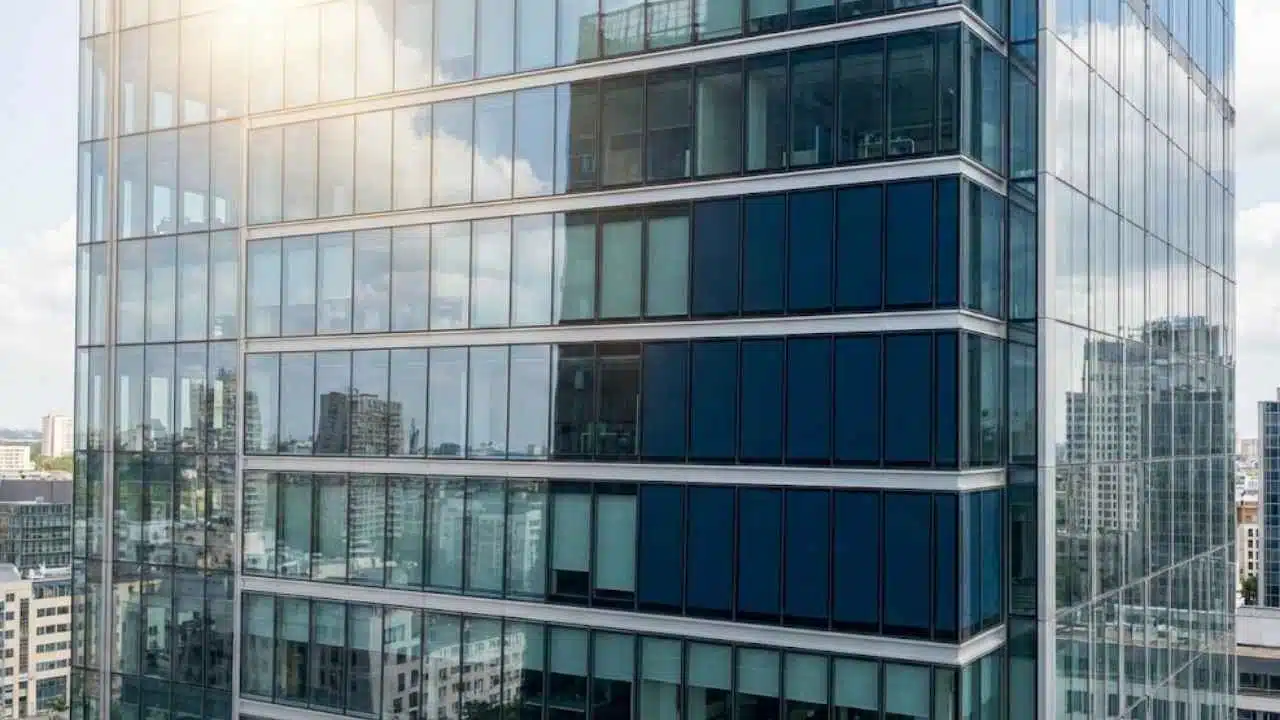
Think of them as sunglasses for a building that know exactly when to put themselves on. By replacing mechanical shading systems, they remove the visual clutter of dust-gathering blinds and shades, offering the clean, unobstructed aesthetic that modern architects crave. In 2026, this technology has evolved from a novelty into a sophisticated building component that bridges the gap between the interior environment and the exterior world.
Definition and Core Concept
Smart windows, technically known as dynamic glazing, are glass units that can alter their light transmission properties in response to an external stimulus. Unlike standard “static” glass, which has fixed tint and thermal properties, smart windows can transition from transparent to opaque (or tinted) on demand.
This transformation is either active (controllable by users or building automation systems via electricity) or passive (reacting automatically to environmental conditions like heat or UV light). In 2026, the definition has expanded beyond simple tinting; these windows now function as transparent connected devices, integrated into the building’s digital nervous system to balance occupant comfort with extreme energy efficiency.
How Smart Windows Differ From Traditional Glass
The fundamental difference lies in adaptability.
- Static vs. Adaptive: Traditional Low-E glass is “always on”—it blocks a fixed percentage of heat and light regardless of whether it’s a cloudy winter morning or a scorching summer afternoon. Smart windows adapt, darkening to block glare when the sun is peak and clearing to harvest free daylight when it’s overcast.
- Dynamic Control: While traditional glass relies on clunky mechanical blinds to manage glare (often blocking the view entirely), smart windows manage heat and light at the molecular level, preserving the view while rejecting the solar energy.
How Smart Windows Save Energy in Skyscrapers
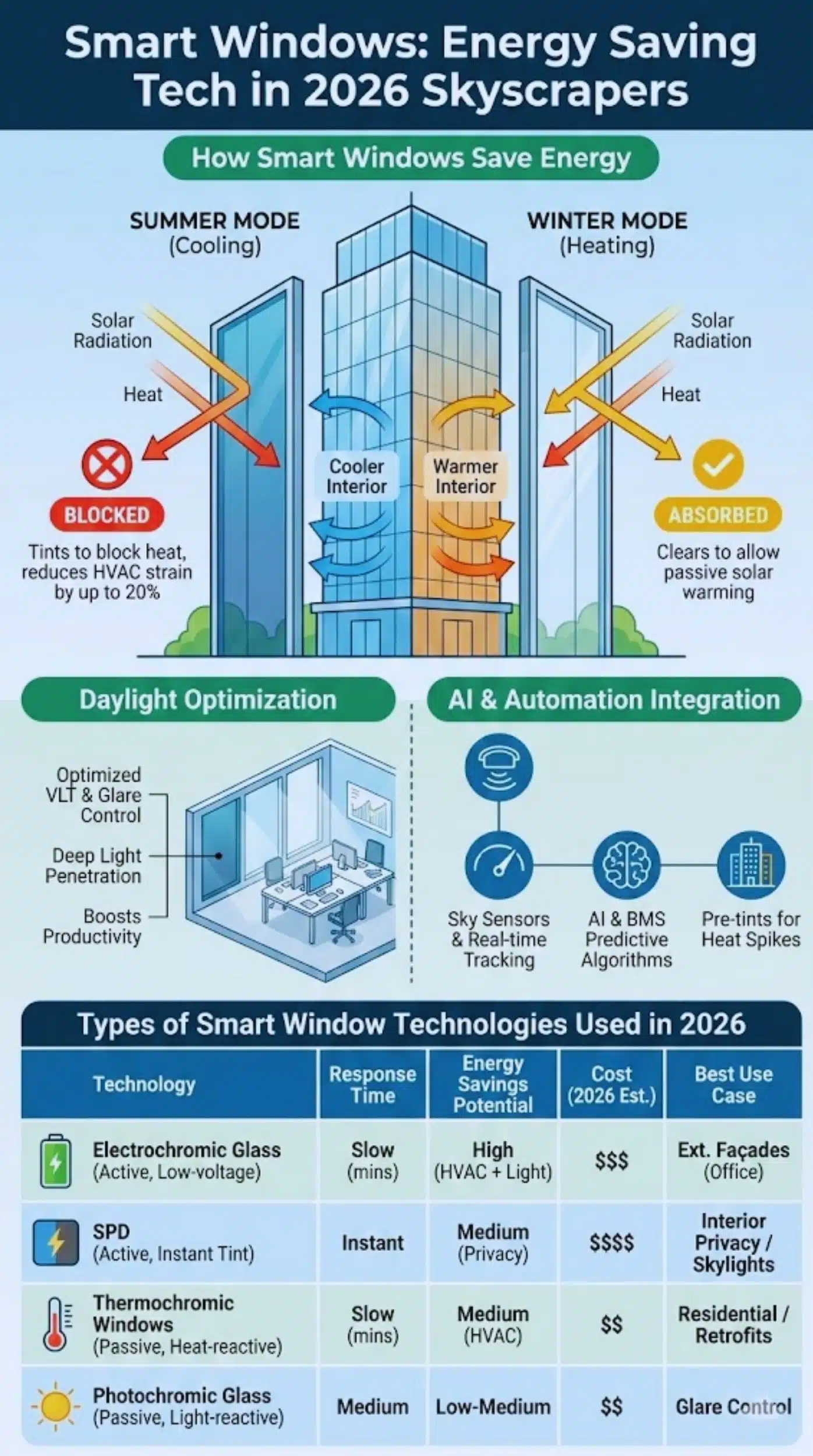
Skyscrapers are traditionally energy guzzlers, with massive HVAC systems fighting a constant battle against solar radiation and heat loss. Smart windows fundamentally change this equation by acting as a dynamic thermal barrier, drastically lowering the carbon footprint of vertical cities. Instead of treating the window as a hole in the wall where energy escapes, these systems turn the glass into an active tool for thermal management.
Solar Heat Gain Control
In high-rise architecture, the sun is both a friend and a formidable enemy. Cooling accounts for a massive portion of a skyscraper’s energy load. Smart windows address this by dynamically modifying the Solar Heat Gain Coefficient (SHGC).
- Summer Mode: The glass tints largely to block near-infrared radiation (heat) before it enters the building, reducing the strain on HVAC systems by up to 20%.
- Winter Mode: The glass clears to allow maximum solar penetration, passively warming the interior and reducing heating requirements.
Daylight Optimization
Artificial lighting consumes significant energy in commercial towers. Smart windows optimize Visible Light Transmission (VLT). By maintaining the perfect tint level, they allow sufficient natural light to penetrate deep into floor plates without the accompanying glare. This significantly reduces the need for overhead LEDs. Furthermore, access to natural circadian lighting—unfiltered by closed blinds—has been proven to boost employee productivity and well-being.
AI & Automation Integration
The “smart” in smart windows comes from their brain, not just the glass. In 2026, these systems are paired with Building Management Systems (BMS) driven by AI.
- Sensors: Roof-mounted sky sensors track cloud cover and sun angle in real-time.
- Predictive Algorithms: The system anticipates a heat spike based on weather forecasts and pre-tints the east-facing façade before the sun even rises, ensuring the building never overheats.
Types of Smart Window Technologies Used in 2026
The market has matured significantly, moving away from “one-size-fits-all” solutions to specialized applications for different climates and building types. Whether it is a luxury hotel requiring instant privacy or a corporate HQ needing precise daylight control to reduce eye strain, there is now a specific chemical or electrical mechanism tailored to every architectural need.
Electrochromic Glass
Currently the gold standard for skyscrapers. This “active” glass uses a low-voltage electric current to move ions between layers, changing the tint. It offers the most control, allowing users to select tint levels (e.g., 1%, 20%, 60% transmission). It is the primary choice for office towers like the new JPMorgan Chase headquarters in NYC.
Thermochromic Windows
A “passive” technology that uses heat-sensitive materials. As the window heats up from direct sunlight, it automatically darkens. No wiring is required, making it cheaper and easier to install, though it lacks the manual control of electrochromic systems.
Photochromic Glass
Similar to transition lenses in eyeglasses, this passive glass darkens when exposed to UV light. It is excellent for glare control but offers less precise management of building temperatures compared to active systems.
Suspended Particle Devices (SPD)
SPD glass responds instantly. Millions of microscopic particles are suspended in a film; when power is applied, they align to let light through. When power is cut, they scatter, turning the glass opaque. It is used primarily for privacy (conference rooms) rather than exterior façades due to higher power consumption.
Technology Comparison Table
| Technology | Type | Response Time | Energy Savings Potential | Cost (2026 Est.) | Best Use Case |
| Electrochromic | Active | Slow (mins) | High (HVAC + Light) | $$$ | Ext. Façades (Office) |
| SPD | Active | Instant | Medium (Privacy) | $$$$ | Interior Privacy / Skylights |
| Thermochromic | Passive | Slow (mins) | Medium (HVAC) | $$ | Residential / Retrofits |
| Photochromic | Passive | Medium | Low-Medium | $$ | Glare Control |
Smart Windows in Modern Skyscrapers (Real-World Use Cases)
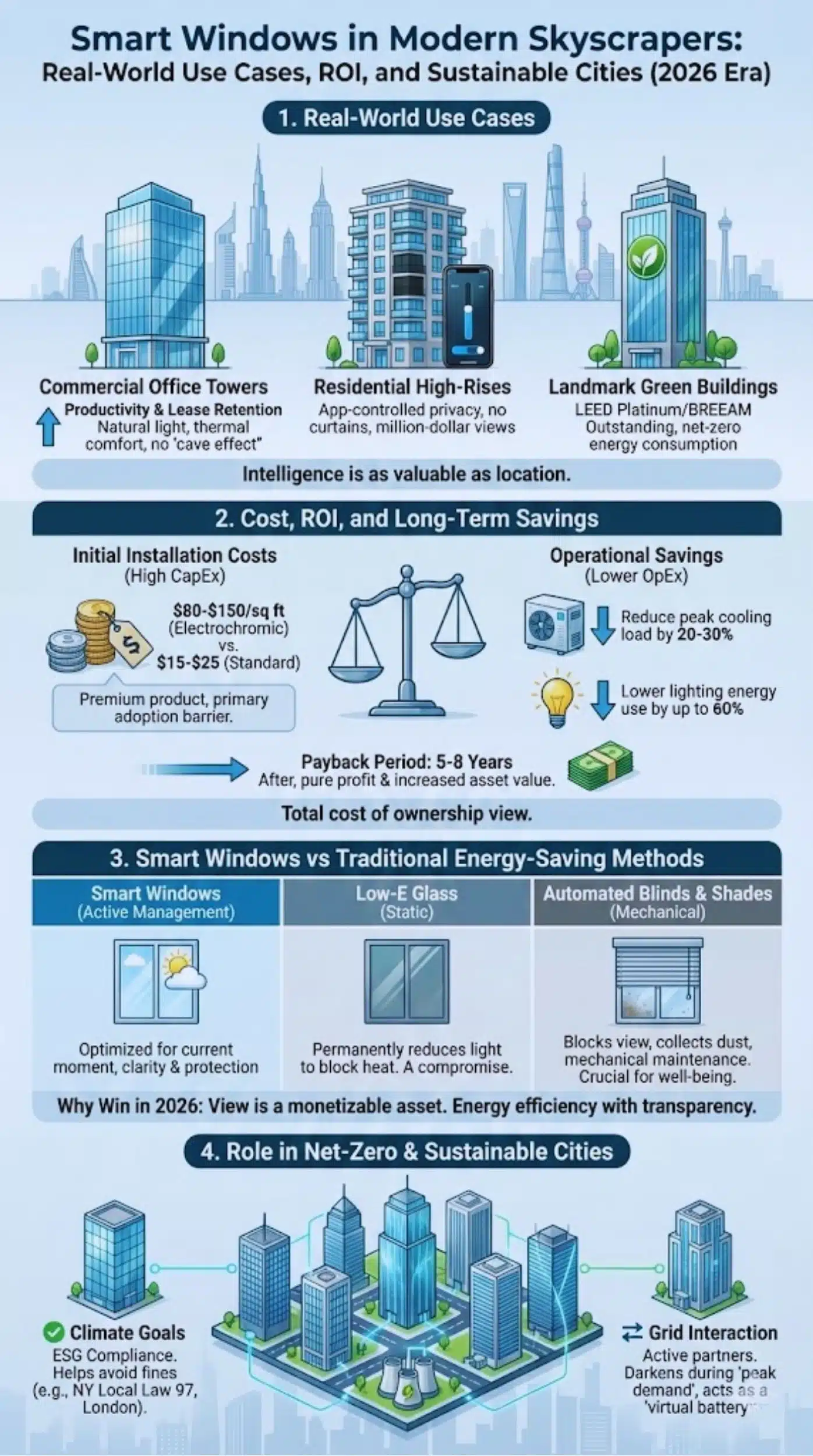
Adoption is no longer limited to experimental projects; it is visible in the skylines of Dubai, New York, and Shanghai. Major real estate developers are now using dynamic glass as a primary selling point to attract high-value tenants who demand sustainability alongside luxury. In the post-2020s era, the “intelligence” of a building is just as valuable as its location.
Commercial Office Towers
In 2026, Grade-A office spaces use smart glass as a productivity tool. Tenants demand natural light without the “cave effect” of closed blinds. Buildings utilizing electrochromic glass report significantly higher lease retention rates because the environment is thermally comfortable and visually connecting.
Residential High-Rises
Luxury condos are adopting smart glass to eliminate the need for curtains on floor-to-ceiling windows. Residents can “dim” their windows via smartphone apps or voice assistants, ensuring privacy without sacrificing their million-dollar city views.
Landmark Green Buildings
Towers aiming for LEED Platinum or BREEAM Outstanding certifications heavily rely on smart glazing. For instance, net-zero skyscrapers use dynamic glass to ensure their energy consumption is low enough to be covered by on-site renewable sources.
Cost, ROI, and Long-Term Savings
While the sticker price can still be shocking, financial modeling in 2026 looks at the “total cost of ownership” rather than just the glazing budget. When you factor in the reduced size of required heating and cooling plants, the capital premium shrinks significantly, making the investment mathematically sound for long-term holders. Developers are realizing that cheap glass is actually an expensive mistake over the life of a building.
Initial Installation Costs
Smart windows remain a premium product. In 2026, installed costs for electrochromic glass range from $80 to $150 per square foot, compared to $15–$25 for standard Low-E glass. This high CapEx is the primary barrier to adoption.
Operational Savings Over Time
However, the OpEx story is different. Smart windows can:
- Reduce peak cooling load by 20–30%, allowing developers to install smaller, cheaper HVAC chillers (saving millions upfront on mechanical systems).
- Lower lighting energy use by up to 60%.
Payback Period for Skyscrapers
For a typical 40-story commercial tower, the payback period has compressed to 5–8 years. After this point, the energy savings are pure profit, increasing the building’s Net Operating Income (NOI) and overall asset value.
Smart Windows vs Traditional Energy-Saving Methods
Static solutions like films and tints are inherently limited; they perform the same way on a cloudy day as they do during a heatwave. Smart windows represent a leap from passive resistance to active management, ensuring the building envelope is always optimized for the current moment, not just the average weather. The era of compromising your view to save a few dollars on cooling is officially over.
Low-E Glass
Low-Emissivity (Low-E) glass is the current standard. It has a static coating that reflects heat.
- Verdict: Smart windows win because Low-E is a compromise; it permanently reduces light to block heat, whereas smart windows give you both clarity and protection when needed.
Automated Blinds & Shades
Mechanical shades are the old-school solution to glare.
- Verdict: Shades block the view and collect dust. They break mechanically and require maintenance. Smart windows provide glare control while maintaining the view, a crucial factor for psychological well-being.
Why Smart Windows Win in 2026
In 2026, the “view” is a monetizable asset. Blocking it with blinds devalues the property. Smart windows offer the best of both worlds: the energy efficiency of a wall with the transparency of a window.
Role of Smart Windows in Net-Zero & Sustainable Cities
As urban centers strive to become “Smart Cities,” buildings must communicate with the energy grid to manage peak loads. Dynamic glazing allows skyscrapers to shed energy demand instantly during grid emergencies, making them active partners in grid stability rather than just consumers. This connectivity is becoming a requirement for regulatory approval in forward-thinking metropolises.
Smart windows are critical infrastructure for ESG (Environmental, Social, and Governance) compliance.
- Climate Goals: Cities like New York (Local Law 97) and London impose heavy fines on carbon-heavy buildings. Smart windows help older and new buildings stay below emissions caps.
- Grid Interaction: Future-ready buildings communicate with the city grid, darkening windows during “peak demand” hours to reduce load on the city’s power plant, acting as a “virtual battery.”
Challenges and Limitations of Smart Windows
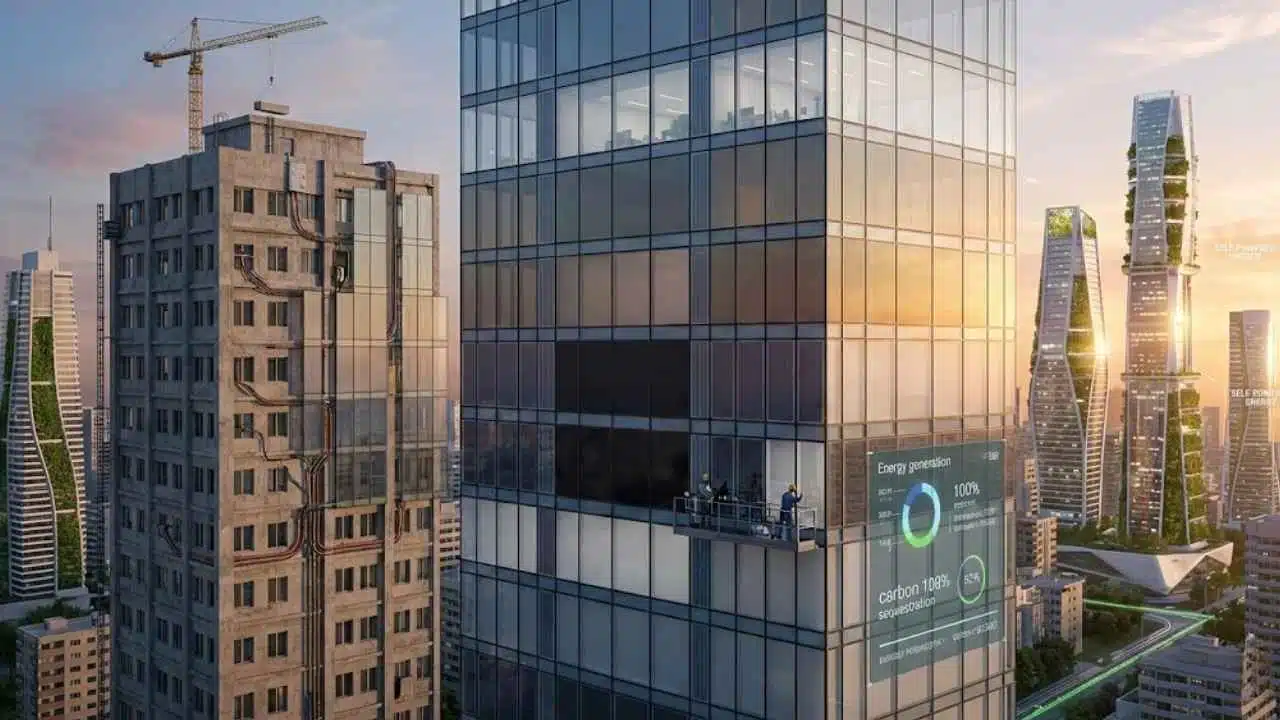
Despite the benefits, the industry still faces hurdles regarding standardization and supply chain consistency. Furthermore, integrating these complex electronic systems into the rough-and-tumble environment of a construction site requires a level of precision and care that traditional glazing contractors are still learning to master. There is also the “fear of the new,” as conservative developers hesitate to rely on software to run their building façades.
High Upfront Costs
Despite falling prices, smart glass is still 3-5x more expensive than standard glass. Developers often “value engineer” it out of projects to save initial capital, ignoring long-term gains.
Retrofitting Challenges
Installing smart glass in existing skyscrapers is difficult. Active systems require running electrical wiring to every window frame—a logistical nightmare in older concrete buildings. Wireless, battery-powered versions are emerging but still face maintenance hurdles.
Maintenance & Tech Learning Curve
If a smart controller fails, a whole façade can get stuck in “dark mode.” Maintenance teams need specialized training to handle the electronics, unlike simple glass replacement.
Future of Smart Windows Beyond 2026
The horizon sees a convergence of nanotechnology and IoT, where glass will eventually harvest energy as efficiently as it blocks it. We are moving toward a future where the building envelope acts like a biological skin—self-healing, energy-generating, and fully autonomous. The goal is no longer just “net-zero” energy, but “net-positive,” where skyscrapers give back more power than they take.
The next generation of glazing is multifunctional.
- Transparent Solar (BIPV): Windows that not only darken but generate electricity while doing so.
- Self-Powered Glass: Windows containing transparent solar cells to power their own tinting, removing the need for complex wiring.
- Carbon-Negative Buildings: With AI-driven materials, future skyscrapers will actively sequester carbon or generate more energy than they use, with smart windows acting as the building’s “skin,” regulating its metabolism.
Final Thoughts
As we move through 2026, smart windows have graduated from a futuristic novelty to a necessity for high-performance architecture. The skyline of the future is not just taller; it is smarter. For developers, architects, and city planners, the choice is no longer between aesthetics and efficiency—smart glass delivers both. While the upfront cost remains a hurdle, the environmental and economic cost of inaction is far higher. The windows of tomorrow are here, and they are clearing the view for a sustainable future.
























