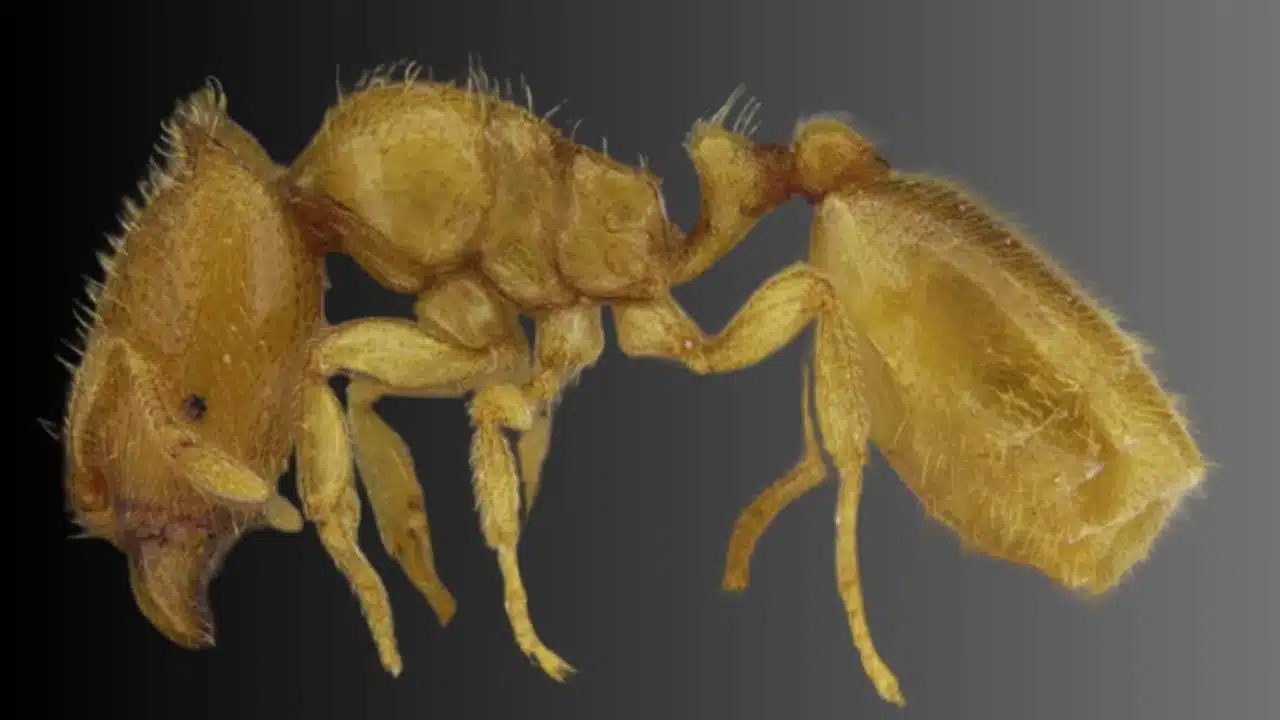
Sharjah has added a new milestone to its growing environmental achievements with the discovery of a previously unknown ant species deep within the Hajar Mountains. The Environment and Protected Areas Authority (EPAA), working through the Al Dhaid Wildlife Centre, confirmed that the species has been officially classified and named Carebara Sharjahensis, now commonly referred to as the Sharjah Ant. This announcement highlights Sharjah’s increasing contribution to scientific research, environmental documentation, and biodiversity conservation.
The discovery took place in Wadi Shees, a region known for its rugged terrain and ecological richness. The Hajar Mountains have long been recognised as one of the most biologically diverse landscapes in the UAE. For decades, researchers have documented rare plants, reptiles, insects, and small mammals in its valleys, but finding a completely new ant species — especially one from a genus never before recorded in the country — underscores how much of this terrain is still unexplored.
The species was identified by Professor Dr. Mustafa Sharaf, a specialist at the Al Dhaid Wildlife Centre renowned for his work in ant taxonomy. After conducting several rounds of intensive field surveys, Dr. Sharaf located just a single soldier ant, which became the basis for the species’ classification. Even after multiple return visits, no additional specimens were found. This rarity alone signals something remarkable: the species likely lives a highly concealed, subterranean lifestyle, making it exceptionally difficult to detect.
This is not only the first time the Carebara genus has ever been documented in the UAE, but also only the third confirmed species from this genus in the entire Arabian Peninsula. Such findings reinforce the idea that even familiar ecosystems may still shelter species that have never been scientifically examined. The EPAA described the discovery as “a meaningful addition to the UAE’s biodiversity record” and emphasised that it offers valuable insights into the still-undocumented life forms of the Hajar Mountains.
Researchers have also noted the species’ distinct physical characteristics, which set it apart from similar members of the Carebara genus. Although some features resemble those of a species previously recorded in Zimbabwe, the Sharjah Ant displays a unique combination of anatomical traits. Most notably, the soldier ant possesses well-developed lateral horns on both sides of its head, accompanied by fine sensory hairs that likely help it navigate underground environments. Its body displays a uniform yellow coloration, and its head and thorax include several structural details that confirm it as a completely separate and newly identified species.
EPAA officials emphasised that discoveries like this are not simply scientific milestones—they are reminders of the hidden complexity of the UAE’s natural landscapes. Because this ant seems to inhabit tiny microhabitats beneath soil layers or within decomposing organic matter, its survival depends heavily on the protection of fragile ecosystems. Every new species found in these mountains expands the scientific understanding of the region and strengthens the case for preserving habitats that could be home to other rare or unknown organisms.
According to the EPAA, the discovery demonstrates the effectiveness of Sharjah’s environmental monitoring systems and reflects the dedication of the researchers who continuously study the region’s wildlife. Sharjah has invested heavily in conservation programs, ecological surveys, and research centers that combine fieldwork with advanced scientific methods. The identification of Carebara Sharjahensis stands as a clear result of these long-term efforts and the Emirate’s prioritization of scientific inquiry as a foundation for environmental management.
The Al Dhaid Wildlife Centre team expressed its commitment to continuing research in the area in hopes of locating the rest of the ant colony, including the queen, workers, and male ants. Finding additional individuals would provide crucial insights into the species’ behavioural patterns, colony structure, feeding habits, and environmental needs. The initial evidence strongly suggests that the Sharjah Ant thrives below ground, making the search difficult but scientifically invaluable.
As EPAA continues its broader mission of safeguarding the Hajar Mountains, this discovery highlights the region’s ecological importance on both regional and global levels. The mountain range, already known for having many species not found anywhere else, serves as a living laboratory for scientists. The emergence of a newly documented ant species ensures Sharjah remains an influential hub for biodiversity research in the Middle East.
Strengthening Sharjah’s Role in Global Biodiversity Research
The discovery of Carebara Sharjahensis does more than add a species to scientific records — it enhances Sharjah’s growing reputation as a center for environmental research and biodiversity conservation. EPAA reaffirmed that this achievement illustrates the success of Sharjah’s long-standing strategy to place science and knowledge at the core of its environmental projects. This approach is evident in the Emirate’s network of protected areas, research facilities, and wildlife conservation programs, all working together to document and protect the natural richness of the region.
Sharjah’s environmental leadership has been shaped by a proactive commitment to fieldwork, scientific collaboration, and the preservation of its mountain habitats. The EPAA continues to support wildlife surveys, species documentation, and ecological studies that deepen understanding of native and endemic species. The challenging landscapes of the Hajar Mountains, including hidden valleys and underground ecosystems, require persistent and well-planned research to uncover their secrets. The discovery of the Sharjah Ant is a testament to this ongoing dedication.
EPAA officials noted that the finding also strengthens global recognition of Sharjah as a key player in biodiversity science. The presence of such a rare species, especially from a genus not previously recorded in the UAE, places the region on the international map of scientific exploration and biological discovery. It also reinforces the importance of protecting mountain ecosystems that may contain species with highly restricted or fragile populations.
This achievement arrives at a time when biodiversity loss is a growing global concern. New discoveries help scientists better understand environmental shifts, species distribution, and ecological resilience. Each documented species contributes to the global catalog of life and helps inform conservation strategies for future generations.
Researchers will continue their mission to find additional specimens and gather more information about Carebara Sharjahensis. Understanding its ecological role will provide insight into soil ecosystems, nutrient cycling, and subterranean biodiversity—areas that often remain under-studied despite their importance to overall environmental health.
Sharjah authorities highlighted that continued protection of the Hajar Mountains is essential to preserving such discoveries. The rugged geography, combined with unique microclimates, supports a wide range of organisms that depend on undisturbed habitats. The EPAA remains committed to maintaining strict conservation measures, conducting regular field assessments, and supporting scientific teams focused on uncovering more hidden species.
In the broader context, the discovery of the Sharjah Ant reaffirms the Emirate’s dedication to merging scientific research with environmental stewardship. It underscores the belief that knowledge, conservation, and responsible environmental policy must work together to protect the rare natural assets of the region. With each new scientific breakthrough, Sharjah moves further toward becoming a leading global contributor to biodiversity research, ensuring that its natural heritage remains protected and appreciated for generations to come.