

Runway’s latest AI video model, Gen 4.5, has taken the top spot on a leading independent text-to-video benchmark, outperforming rival systems from Google and OpenAI. The result signals that a relatively small startup can now beat some of the world’s biggest tech companies on perceived video quality in blind tests.
Startup edges out tech giants
Runway’s Gen 4.5 now ranks first on the Video Arena leaderboard, a benchmark run by independent AI evaluation firm Artificial Analysis that compares text-to-video models in blind, head-to-head user studies. In these tests, viewers are shown clips from competing systems without knowing which company produced them and asked to pick the better output, producing an Elo-style rating for each model.
According to reports, Google’s Veo 3 system currently sits in second place on that leaderboard, while OpenAI’s Sora 2 Pro model ranks lower, underscoring how Runway has leapfrogged much larger rivals on this particular benchmark. Social posts highlighting the results say Gen 4.5 has achieved an Elo score above 1,200 on the Artificial Analysis text-to-video board, placing it ahead of both Google and OpenAI.
Runway, backed by investors including Nvidia and SoftBank, has roughly 100 employees, making its performance against far bigger, better-funded labs especially notable in the current AI race. Company leaders have framed the benchmark win as proof that frontier AI video will not be controlled exclusively by a handful of tech giants.
Inside the Gen 4.5 model
Gen 4.5 is a text-to-video model designed to turn written prompts describing scenes, motion and camera moves into high-definition, short-form video. The system supports outputs at 1080p resolution, 24 frames per second, and clips of up to around 18 seconds, targeting a sweet spot for social, advertising, and previsualization work.
Under the hood, Runway describes Gen 4.5 as using an in-house spatiotemporal hybrid Transformer architecture, optimized specifically for handling motion, cinematography and temporal coherence rather than just single images. Internal testing cited by the company indicates that the success rate on complex camera behaviors such as “bullet time” or handheld tracking shots has climbed to about two-thirds of attempts, a double‑digit improvement over the previous generation.
Gen 4.5 builds on earlier Runway research, including Gen‑3 Alpha, which already focused on more realistic motion, better character consistency and faster generation than Gen‑2. With the new model, Runway says it has further boosted fidelity, temporal stability and control while maintaining the relatively fast generation speeds that made Gen‑4 attractive to working creators.
What sets Gen 4.5 apart
Runway and early reviewers highlight three main strengths of Gen 4.5: physical realism, motion quality and adherence to detailed prompts. The model is reported to handle cause-and-effect more convincingly than its predecessors, making objects appear to have believable weight, momentum and fluid dynamics rather than the “floaty” or distorted motion that has plagued earlier video generators.
The startup also emphasizes “cinematic” output, saying Gen 4.5 can maintain consistent framing, depth, and camera language across a scene, and flex between photorealistic, stylized, and animated looks while keeping characters and environments coherent from frame to frame. Independent coverage notes that these improvements translate into sharper motion, higher visual fidelity and fewer obvious artifacts, which likely contributed to the model’s advantage in blind benchmark comparisons.
For professional users, this combination of prompt following and visual control is significant because it reduces the amount of trial-and-error generation and post-production cleanup required to reach usable footage. As a result, Runway’s latest model is being positioned not just as a novelty, but as infrastructure that could slot directly into advertising, film previsualization, social campaigns and other production pipelines.
Stakes in the AI video race
The benchmark win lands in the middle of a rapidly intensifying competition over text-to-video, where Google and OpenAI have framed their own systems as pioneering work on realistic, physics-aware video. Google’s Veo series and OpenAI’s Sora line have drawn attention with cinematic demos, but in the Artificial Analysis leaderboard used here, Runway’s Gen 4.5 currently leads user preference rankings.
For the broader market, the result is a reminder that model quality is no longer strictly correlated with company size or training budget, and that specialized research teams can still create category-leading systems. Commentators note that as models like Gen 4.5 improve physics, motion and narrative coherence, the economics of content production may shift, with more of the creative process moving into AI-native tools rather than traditional shoots and VFX pipelines.
At the same time, the rise of photorealistic AI video raises familiar concerns about misinformation, deepfakes and synthetic media at scale, which Runway has previously tried to address through technologies such as provenance metadata and safety tooling around its models. How aggressively Gen 4.5 is adopted across entertainment, marketing and social platforms will likely depend not just on visual quality, but also on how those safety and governance questions are handled.
Rollout and what users can expect
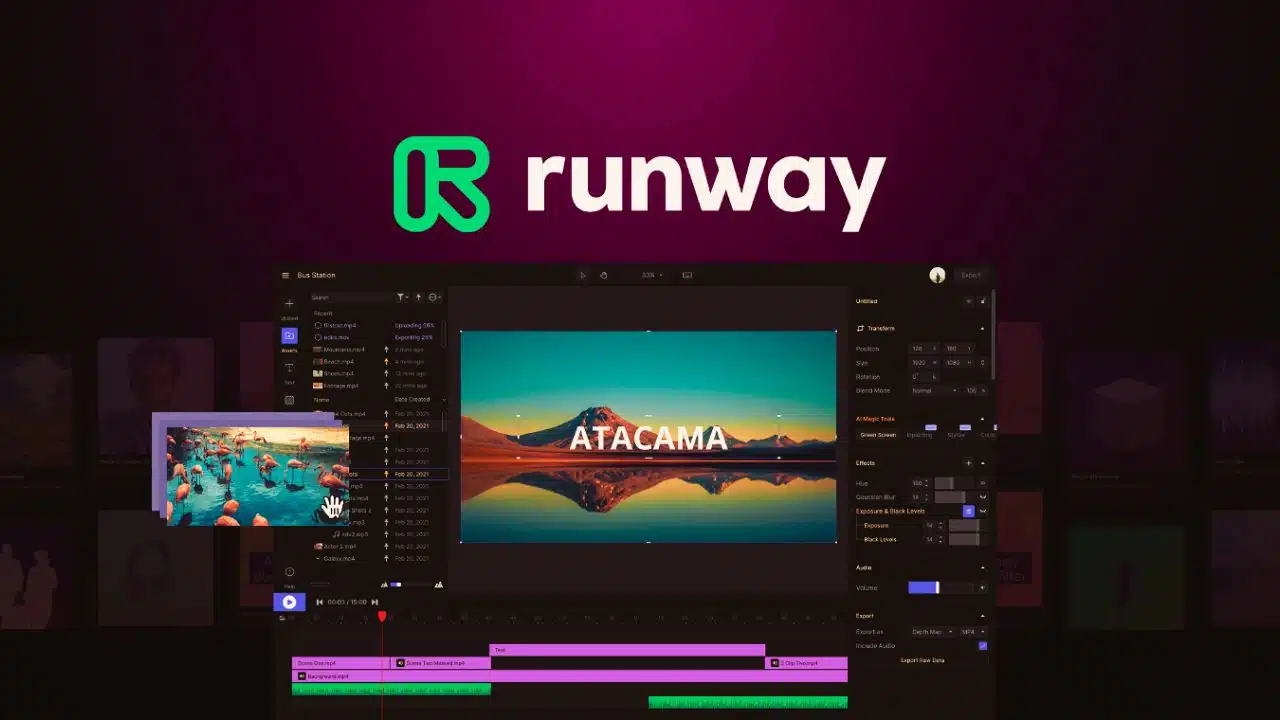
Runway is rolling out Gen 4.5 gradually, with the company indicating that access will extend to all customers over the course of the launch week. The model is being integrated into Runway’s existing suite of creative tools, so users of prior generations will see the new system appear inside familiar text-to-video and control interfaces.
Executives have hinted that Gen 4.5 is just the first in a wave of new releases, signaling an aggressive roadmap as the startup tries to stay ahead of far larger rivals in this fast-moving segment. For creative teams, agencies, and independent filmmakers already experimenting with AI video, the benchmark result means that Runway’s platform is emerging as one of the most closely watched contenders in the next phase of the generative media race.





















