

Australia has quickly become one of the world’s key players in the almond and nut farming industry. Known for its expansive landscapes and ideal growing conditions, the country has positioned itself as a powerhouse for producing and exporting almonds, macadamias, pistachios, walnuts, and other nuts.
The rise of almond and nut farming in Australia is a transformative development, one that has reshaped the agricultural landscape and driven significant economic growth.
As global demand for plant-based, healthy, and sustainable food products continues to soar, Australian nut farming is experiencing unprecedented growth. With almonds leading the charge, Australia has firmly established itself as a major global producer, alongside other nuts like macadamias and pistachios.
This article will explore the factors behind this rise, the key regions and crops driving the industry, and the future outlook for almond and nut farming in Australia.
The rise of almond and nut farming in Australia is more than just a trend; it is a movement that reflects changing consumer preferences and growing environmental concerns.
Australia’s nut industry, once primarily focused on small-scale production, has rapidly expanded in recent years due to a combination of favorable environmental conditions, technological advancements, and increasing global demand for nuts as a sustainable, healthy food option.
From almonds to macadamias, Australian farmers have embraced a range of nut crops that are well-suited to thze country’s climate, and their success has propelled Australia into the global spotlight. Nuts, especially almonds, have become a significant export commodity, generating billions of dollars annually and supporting thousands of jobs in regional areas. With a promising future ahead, the rise of almond and nut farming in Australia is positioned to continue its upward trajectory.
The Growth of Almond Farming in Australia
Almond farming in Australia has a rich history that dates back to the mid-1800s when early settlers introduced almond trees to the country. However, it wasn’t until the late 20th century that almond farming began to see significant growth.
With the expansion of irrigation networks in areas like the Riverland in South Australia and the Sunraysia region in Victoria, almond farming became more viable, and Australia began to tap into global markets.
Today, Australia is one of the largest almond producers in the world, with production focused on a few key regions. The growth of almond farming has been driven by both technological innovations, such as more efficient irrigation systems and pest management, and the increasing demand for almonds worldwide.
The rise of almond and nut farming in Australia reflects the country’s adaptability and innovation in agricultural practices.
Key Regions for Almond Production in Australia
Australia’s almond industry is concentrated in a few key regions known for their ideal growing conditions.
The Riverland region in South Australia is the heart of Australia’s almond production, with its Mediterranean-type climate, reliable irrigation, and vast expanses of land suited for large-scale almond orchards. The Sunraysia region in Victoria has also emerged as a major player, with its hot summers and mild winters providing an excellent environment for almond farming.
Other regions, such as parts of New South Wales and Western Australia, are also seeing growth in almond production. However, the Riverland and Sunraysia regions remain the primary areas for commercial almond farming, supporting both local economies and Australia’s standing as one of the world’s largest almond exporters.
Top Almond Producing Regions in Australia
| Region | Hectares of Almond Orchards | Percentage of National Production |
| Riverland, SA | 20,000+ | 45% |
| Sunraysia, VIC | 16,000+ | 35% |
| Other Regions | 5,000+ | 20% |
Economic Impact of Almond Farming
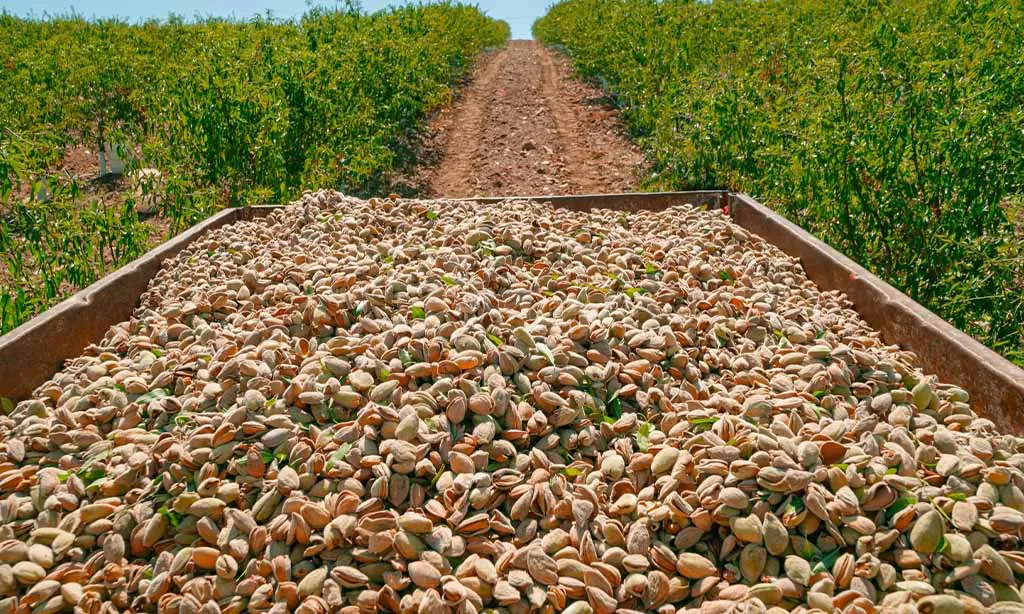
The economic impact of almond farming in Australia is substantial. The industry contributes billions of dollars annually to the Australian economy, with almond exports alone generating over $1 billion in revenue. Almond farming supports thousands of jobs in both farming and ancillary industries such as processing, packaging, and logistics.
The rise of almond and nut farming in Australia has transformed regional economies, particularly in South Australia and Victoria, where almond farming plays a key role in local job creation and economic development.
These regions have seen an influx of investment in infrastructure, technology, and workforce training, further bolstering the almond industry’s growth.
Recent Advancements in Almond Farming Techniques
In recent years, almond farmers in Australia have adopted cutting-edge farming techniques that have improved yields and reduced costs. One key advancement is the use of drip irrigation systems, which deliver water directly to the roots of almond trees, improving water efficiency in regions where water availability is a concern.
Other technological innovations include the use of integrated pest management (IPM) systems, which reduce the need for chemical pesticides, and new almond varieties that are more resistant to disease and pests.
These advancements have not only made almond farming more sustainable but have also enabled farmers to increase production while maintaining a commitment to environmental stewardship. With the rise of almond and nut farming in Australia, these innovations are set to continue shaping the industry for years to come.
The Expansion of Other Nut Farming in Australia
While almonds dominate Australia’s nut industry, other nuts, such as macadamias, pistachios, and walnuts, are also gaining ground. The rise of almond and nut farming in Australia is driving farmers to diversify their crops, capitalizing on the growing global demand for various types of nuts.
Growth of Macadamia Farming in Australia
Macadamias are another success story in Australian nut farming. Australia is the world’s largest producer of macadamia nuts, accounting for more than 40% of global production. The warm climate of Queensland and northern New South Wales is particularly well-suited to macadamia farming, and farmers in these regions have seen impressive growth in recent years.
Macadamia farming has proven to be highly lucrative, with macadamias being sold at a premium price due to their high nutritional value and culinary versatility. Australia’s macadamia industry is projected to continue growing, driven by both domestic consumption and increasing demand in international markets.
Pistachios and Walnuts: A Growing Niche
Pistachios and walnuts are emerging as niche crops in Australia, with farmers increasingly exploring their potential. While these crops are still in the early stages compared to almonds and macadamias, there are signs of growth, especially in areas with Mediterranean-type climates and reliable irrigation.
In particular, pistachios have gained attention due to their high market value and nutritional benefits. Walnuts, while less common, are also starting to make their mark, especially in regions like Tasmania and Victoria. These crops are being tested in small-scale trials and are showing promise as future contenders in Australia’s nut farming industry.
List: Key Nuts Grown in Australia and Their Regional Significance
- Almonds:
- Primary regions: Riverland (SA), Sunraysia (VIC)
- Importance: Largest nut crop in Australia, major export commodity.
- Macadamias:
- Primary regions: Queensland, Northern New South Wales
- Importance: Australia’s largest nut export by volume.
- Pistachios:
- Primary regions: Central Australia, Riverland (SA)
- Importance: Gaining popularity due to growing demand in Asia.
- Walnuts:
- Primary regions: Tasmania, Victoria
- Importance: Emerging niche crop with increasing interest from international markets.
Economic Benefits of Nut Farming in Australia
The rise of almond and nut farming in Australia has created significant employment opportunities in both farming and processing sectors. The almond industry alone supports thousands of jobs in rural areas, ranging from farm workers to laborers in processing plants and exporters.
Moreover, the growth of nut farming has spurred investment in infrastructure, including processing facilities, logistics networks, and research and development. This has helped to boost the Australian economy and improve the economic stability of regional communities that rely heavily on agriculture.
The Role of Technology in Improving Yields and Profitability
Technology has been a major driver in the rise of almond and nut farming in Australia. From precision agriculture tools that monitor soil moisture levels to automated harvesting machines, the adoption of new technologies has helped farmers improve their yields and profitability.
For instance, Australia’s adoption of drone technology allows farmers to monitor the health of their almond orchards remotely, helping them to detect issues early and optimize crop management. These technologies have played a key role in maintaining Australia’s competitiveness in the global nut market.
Sustainability and Innovation in Almond and Nut Farming
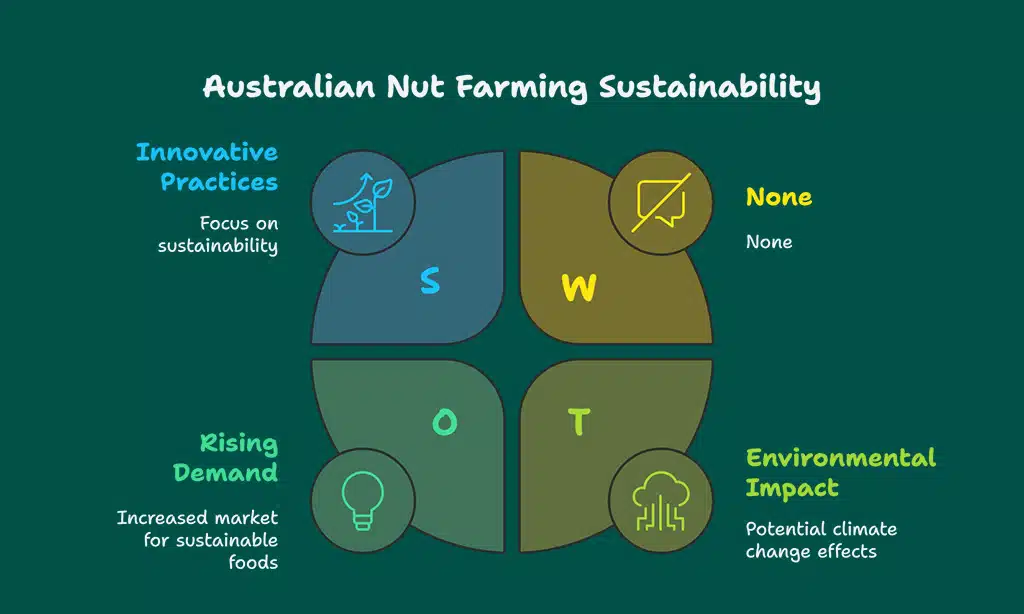
As demand for sustainable food options rises, Australian nut farmers have increasingly turned to innovative practices to minimize their environmental impact. The rise of almond and nut farming in Australia has seen a growing focus on sustainability, including water conservation, reduced pesticide use, and organic farming practices.
Organic Farming Practices
A growing number of Australian nut farmers are adopting organic farming practices, both to meet consumer demand for sustainable products and to improve soil health. Organic certification is becoming an important selling point, especially in international markets where consumers are increasingly choosing organic products over conventionally grown alternatives.
Benefits of Organic Farming in Nut Production
| Benefit | Impact on Farming Practices |
| Soil Health | Improved soil structure and biodiversity. |
| Reduced Pesticide Use | Lower chemical residues, better for the environment. |
| Market Demand | Increased demand for organic products. |
Technological Innovations Shaping the Future of Nut Farming
The future of nut farming in Australia is heavily influenced by technological advancements. From AI-powered pest management systems to innovations in irrigation techniques, technology is revolutionizing how Australian farmers grow and harvest almonds and other nuts.
For example, AI systems are now being used to detect diseases and pests in real time, enabling farmers to take preventative measures before problems become widespread. These innovations are helping farmers reduce costs, increase productivity, and maintain sustainable practices.
Future Outlook for Almond and Nut Farming in Australia
The future of the rise of almond and nut farming in Australia looks incredibly promising. As global demand for nuts continues to rise, Australian farmers are well-positioned to meet this demand. The industry is expected to see continued growth, with projections indicating that Australia’s almond production will increase by at least 5% annually over the next decade.
Projected Growth in Almond and Nut Farming
With its ideal growing conditions, highly productive farmland, and access to international markets, Australia is poised for sustained growth in the almond and nut farming sector. The Australian government’s continued support for research and development, along with the global shift toward healthier, plant-based diets, will ensure that the country remains at the forefront of the nut farming industry.
Global Nut Production vs. Australia’s Market Share
| Country | Almond Production (Metric Tons) | Market Share (%) |
| USA | 1,500,000 | 50% |
| Australia | 200,000 | 15% |
| Spain | 200,000 | 15% |
| Iran | 120,000 | 10% |
| Other Countries | 100,000 | 10% |
Wrap Up
The rise of almond and nut farming in Australia represents a significant transformation in the nation’s agricultural landscape. Thanks to ideal growing conditions, technological innovations, and increasing global demand, Australia has established itself as a major player in the global nut industry.
From almonds to macadamias, Australian farmers are embracing sustainable farming practices and leveraging cutting-edge technology to meet the growing demand for healthy, plant-based foods.
As the global nut market continues to grow, the rise of almond and nut farming in Australia is set to continue its upward trajectory, offering new economic opportunities, driving technological advancements, and contributing to global sustainability efforts.
With a promising future ahead, the Australian nut farming industry is poised to thrive, benefiting both local economies and international consumers alike.





















