

Closets are overflowing, yet the feeling of having nothing to wear remains a near-universal complaint. For anyone with a keen eye for style, the tension between maintaining a relevant, expressive wardrobe and managing the physical accumulation of garments is an ongoing challenge. The mainstream fashion system is built on a model of rapid obsolescence, churning out dozens of micro-seasons per year composed of cheap, synthetic textiles designed to degrade after a handful of wears.
Achieving meaningful sustainability does not mean abandoning a love for personal style or wearing uniform, uninspired clothing. Instead, the true shift happens within the home ecosystem. By auditing how garments are purchased, maintained, repaired, and eventually phased out, individuals can significantly alter their ecological footprint. Reducing fashion waste is not an all-or-nothing lifestyle sacrifice; it is a practical, intentional framework for managing textiles so they retain their aesthetic and material value for as long as possible.
The Hidden Scale of Domestic Textile Waste
The volume of discarded clothing leaving modern households has scaled drastically over the past two decades. Global fiber production has nearly doubled since the early 2000s, moving from roughly 58 million tons to over 110 million tons annually. This hyper-production has created a severe disposal crisis. Data from environmental protection agencies indicates that textile waste is one of the fastest-growing material segments in municipal solid waste streams, with millions of tons of clothing landfilled each year in North America alone.
The core of the problem rests on the composition of modern garments. More than 60 percent of clothing manufactured worldwide is composed of synthetic fibers like polyester, nylon, and acrylic. These materials are essentially crude oil derivatives, plastics spun into threads. When a synthetic garment is buried in a landfill, it does not decompose naturally. Instead, it fragments over centuries into microscopic plastic particles that contaminate surrounding soil structures and local water tables.
Beyond landfill volume, the domestic care cycle introduces its own environmental strains. Every time a synthetic shirt or pair of leggings twists inside a standard washing machine, friction causes the fabric to shed thousands of microscopic plastic lint fibers. These microplastics are too fine for municipal filtration plants to capture completely, meaning they flow directly into marine environments, entering the digestive tracts of aquatic life and eventually returning to human food systems.
The Anatomy of Closet Accumulation
To address clothing waste at its source, you must understand the psychological and structural reasons why closets become congested with unworn items.
The Fast Fashion Quality Decline
Modern apparel manufacturing prioritizes low production costs over durability. To keep retail prices low, brands utilize loose, single-needle stitching, cheap plastic zippers, and lightweight fabrics that lack structural density. When a garment is constructed poorly, it loses its shape, warps at the seams, or develops small holes after just two or three laundry cycles. This rapid structural decay forces consumers into a continuous cycle of replacement, turning clothing into a quasi-disposable commodity.
The Trap of Synthetic Blends
When evaluating clothing quality, look closely at the interior fabric composition tag. Garments made from a complex blend of fibers—such as a sweater knit from a mix of cotton, polyester, and elastane—present a dead end for sustainability. While a pure 100 percent cotton shirt can be mechanically shredded and spun into new yarn, or composted if it contains no synthetic dyes, blended fabrics are virtually impossible to recycle. The technology required to separate fused natural and synthetic fibers at a commercial scale is not available in most regional waste facilities, meaning these pieces are destined for the landfill from the day they are spun.
The Degradation Timeline of Common Wardrobe Materials
Understanding how different materials behave once they leave your home highlights why fabric selection matters at the point of purchase.
| Fabric Type | Source Material | Estimated Landfill Degradation Time | Environmental Friction Point |
| Organic Cotton | Plant-based | 1 to 5 months | Requires high water volumes during crop cultivation. |
| Pure Wool | Animal-based | 1 to 5 years | Releases methane if buried without oxygen access. |
| Polyester | Petroleum-based | 200 to 500 years | Sheds non-biodegradable microplastics during every wash. |
| Nylon | Petroleum-based | 30 to 40 years | High energy consumption during raw material extraction. |
| Rayon / Viscose | Wood pulp-based | 6 weeks to 6 months | Chemically intensive processing can pollute local rivers. |
Laundry Chemistry: Extending Fabric Lifespan at Home
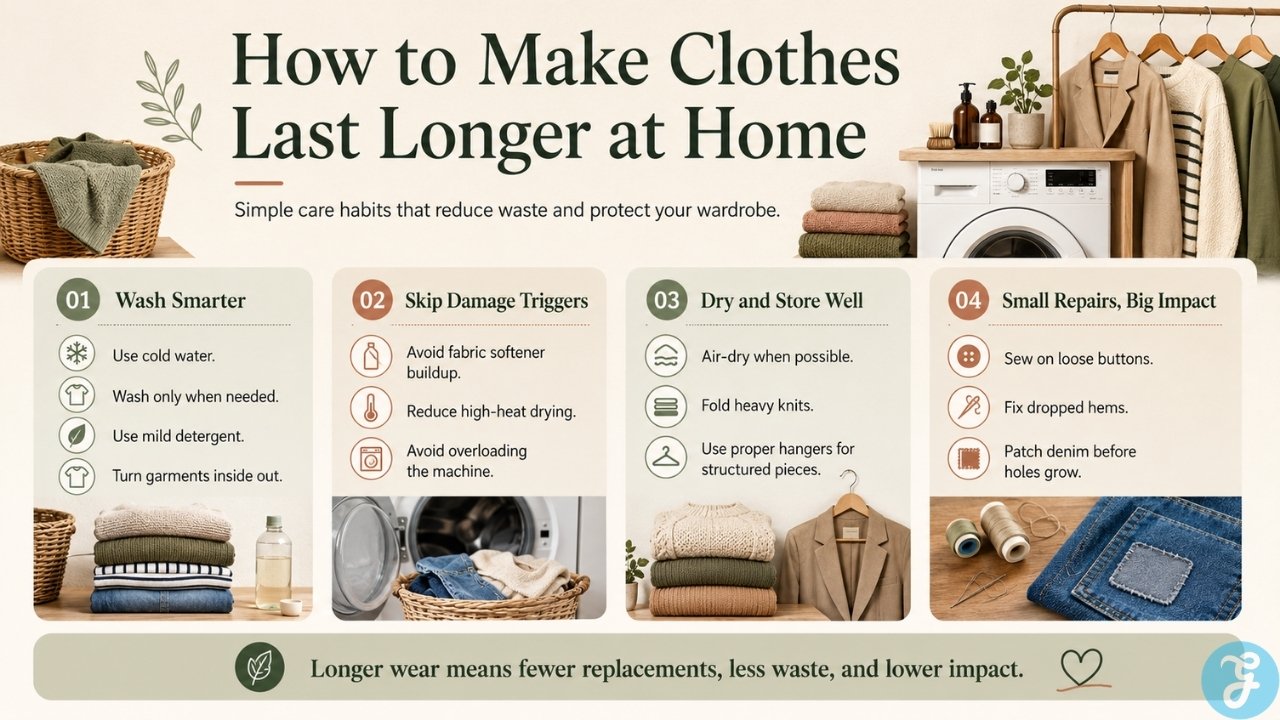
The way garments are laundered inside the home has a massive impact on their long-term survival. Up to 70 percent of a garment’s total carbon footprint and material wear occurs during the consumer care phase. Mechanical agitation, high water temperatures, and harsh chemical detergents accelerate the breakdown of fabric bonds, leading to premature thinning, fading, and tearing.
Altering the Wash Temperature Baseline
The belief that clothing requires hot water to become clean is a remnant of early laundry practices when detergents were less chemically advanced. Modern laundry enzymes are engineered to break down oils, sweat, and surface dirt effectively at low temperatures. Shifting your washing machine baseline to a cold water cycle protects delicate fibers from thermal shock, prevents the shrinkage of natural materials like wool and cotton, and reduces household energy consumption.
The Hidden Dangers of Fabric Softeners
Commercial liquid fabric softeners do not actually clean or improve the structural integrity of textiles. Instead, they deposit a thin, chemical layer of silicone derivatives over the surface of the fibers to create an artificial sensation of slickness. This chemical coating causes several practical issues over time:
-
Reduced Absorbency: On items like bath towels, gym wear, or linen shirts, the silicone layer clogs the natural pores of the fabric, destroying its ability to wick away moisture and trapping bacteria underneath.
-
Fiber Weakness: The chemical weight of the softener weakens the structural elasticity of knits, causing waistbands to sag and necklines to stretch out permanently.
-
Flammability Risks: Silicone coatings can significantly reduce the flame-retardant capabilities of certain safety fabrics and children’s sleepwear.
To keep fabrics soft without structural damage, replace commercial softeners with half a cup of plain white distilled vinegar added directly to the fabric softener rinse compartment. The vinegar cuts through residual detergent buildup, Northwest odors, and rinses away completely clean without leaving a harmful residue.
Revisiting the Air-Drying Method
The mechanical tumble dryer is a primary cause of fabric thinning. The lint gathered in a dryer screen is not abstract dust; it consists of actual structural fragments of your clothing torn away by heat and continuous friction. Whenever possible, hang garments to air-dry on a sturdy folding rack or an outdoor clothesline. For heavy knitwear and sweaters, dry them flat on a clean towel to prevent the weight of the water from pulling the shoulders out of shape.
The Mechanics of Care and Fabric Preservation
Keeping clothing looking pristine requires intentional storage habits that prevent physical distortion and damage from domestic pests.
Hanging vs. Folding Rules
Improper closet storage can ruin high-quality garments just as fast as poor laundry habits. Lightweight silk blouses, structured blazers, and tailored trousers should always be placed on wide, contoured wooden or velvet hangers to preserve their shoulder shape. Avoid thin wire hangers completely, as they concentrate weight into narrow points, creating permanent puckers and stretch marks in the fabric.
Conversely, heavy knits, wool sweaters, and embellished garments should never be hung in a closet. Gravity pulls the dense yarns downward, stretching the vertical length of the piece and leaving the hem distorted. Fold these items neatly and store them flat on shelves or inside dresser drawers.
Preventing Pest Damage Without Toxic Chemicals
Natural fibers like cashmere, wool, and silk are highly susceptible to damage from clothes moths, whose larvae feed directly on keratin proteins. Traditional chemical mothballs utilize naphthalene or paradichlorobenzene, both of which emit strong, toxic vapors that saturate fabrics and pose health risks to households.
To protect valuable textiles safely, store seasonal woolens inside airtight canvas or recycled plastic storage bins during the warmer months. Add blocks of natural cedar wood or sachets filled with dried lavender, rosemary, and cloves. The natural aromatic oils in these plants act as highly effective deterrents to adult moths looking for a place to lay eggs, keeping your knitwear free of unexpected holes without contaminating your living space.
The Art of Minimalist Repair and Customization
A primary driver of clothing waste is the immediate abandonment of a garment due to a minor, easily fixable defect. Learning basic hand-sewing skills allows individuals to reclaim control over their wardrobe lifespan, saving money while keeping textiles out of the waste system.
Re-attaching Buttons and Fixing Dropped Hems
A missing button or a loose hemline should not render a tailored piece useless. A basic home sewing kit containing a variety of thread colors, hand needles, and a pair of sharp shears is all that is required to perform fundamental maintenance. Re-attaching a button takes less than five minutes of focused work and can secure a favorite coat or shirt for another decade of use. Similarly, a simple blind hem stitch can restore an unraveling pant cuff without requiring a trip to a commercial tailor.
Visible Mending for Denim and Casual Wear
For casual items like jeans, work shirts, and chore jackets, holes and friction frays do not need to be hidden perfectly. The practice of visible mending—inspired by traditional Japanese techniques like Sashiko—turns structural repairs into a deliberate design choice. By using contrasting heavy cotton threads and overlapping fabric patches to reinforce worn knees or elbows, you can create a unique, individualized piece of clothing that tells a story of care and longevity.
Dye Bath Rescues for Faded Garments
Dark cotton garments like black jeans, navy sweatshirts, and olive jackets frequently lose their color depth long before the actual fabric wears out. Instead of discarding a faded item, restore its visual appeal with a home dye bath. Using concentrated liquid fiber-reactive dyes in a standard wash basin can saturate worn fibers with fresh pigment, covering up stubborn bleach spots or underarm discoloration and extending the garment’s aesthetic life by several seasons.
When a wardrobe audit becomes necessary, managing the exit path of your clothing requires careful research. Many well-meaning consumers pack their unwanted garments into large plastic trash bags and drop them off at charity bins, operating under the assumption that their old clothing will go directly to someone in need. The internal reality of the global secondhand textile market is far more complex.
The Reality of Clothing Donations
According to textile distribution research, thrift stores and local charities sell only about 10 to 20 percent of the total volume of clothing dropped off at their donation doors. The remaining 80 to 90 percent is immediately packaged into massive mechanical bales and sold to commercial textile graders and exporters. From there, these tons of clothing are shipped globally to developing countries, where the sheer volume often overwhelms local economies and ecosystems.
In locations like the Kantamanto Market in Ghana or the Atacama Desert in Chile, millions of pieces of low-quality fast fashion arrive weekly. Because much of this clothing is unsellable due to poor construction or damage, it winds up piled in unregulated coastal landfills or burned in open-air pits, transforming a domestic de-cluttering task into a localized environmental disaster abroad.
A Responsible Framework for Moving Items Out
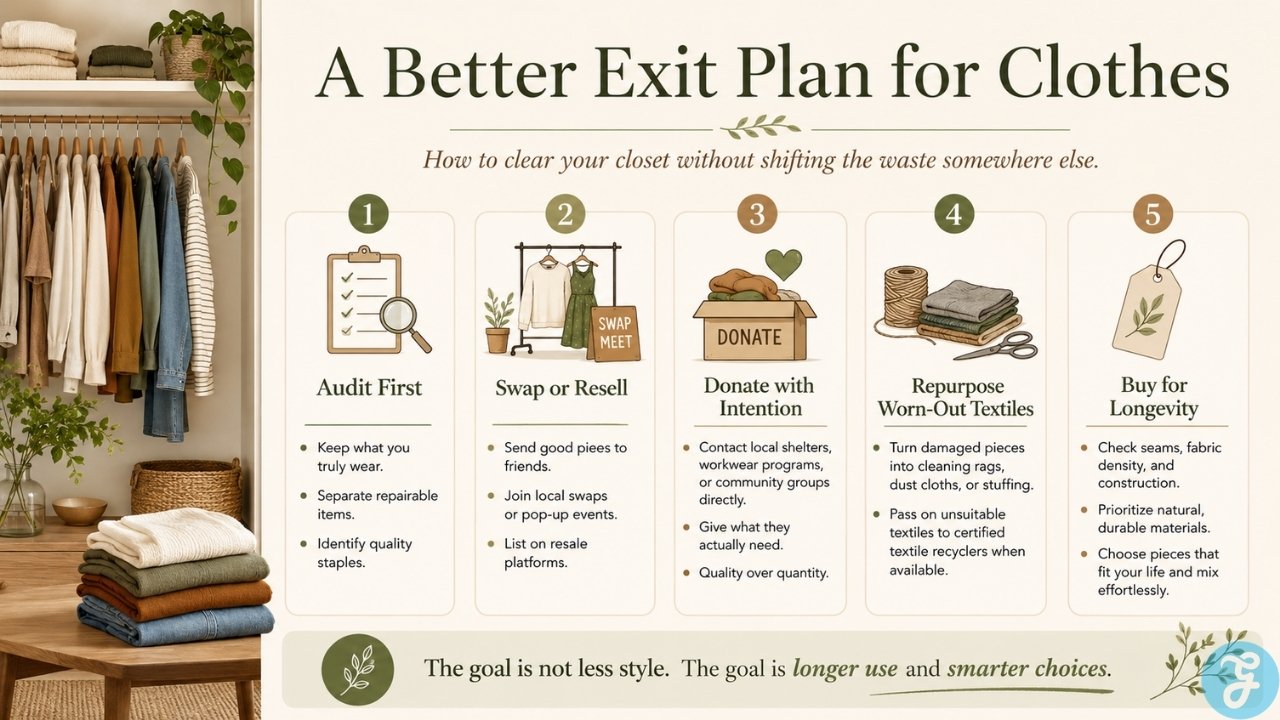
To ensure your clothing does not end up as pollution elsewhere, handle the removal process through a clear hierarchy of local options:
-
Direct Peer Swaps: Host an informal clothing swap with friends, coworkers, or neighborhood groups. This keeps garments inside your immediate social community where they are highly likely to be worn directly.
-
Targeted Local Shelters: Reach out directly to local family shelters, crisis support centers, or professional dress-for-work programs. These organizations often have specific, immediate needs for seasonal coats, warm blankets, or professional interview attire, bypassing the commercial export supply chain.
-
Resale and Consignment: For high-quality, branded pieces, utilize local consignment boutiques or peer-to-peer digital marketplaces. When a buyer pays a fair market price for an individual item, they are significantly more likely to care for it and keep it in active rotation.
-
Industrial Rags: If a garment is stained beyond repair, torn into shreds, or completely unusable, do not donate it for wear. Cut the fabric down into square rags to replace paper towels for household cleaning, or look for localized industrial textile recyclers who shred raw fibers for use as building insulation or car seat stuffing.
Curating a Wardrobe Built for Longevity
The most sustainable item of clothing is always the one that already exists inside your closet. However, when new additions become necessary to replace worn-out staples, altering how you assess a purchase can break the cycle of accumulation.
The Three-Washing-Cycles Rule
Before taking a new piece to the register or entering credit card details online, pause and ask yourself if you can envision wearing the garment in at least thirty distinct stylistic combinations across multiple seasons. This mental check cuts through impulsive shopping urges driven by digital algorithms and encourages an investment approach to personal style.
Physical Quality Checks in the Fitting Room
When shopping for new or vintage clothing, execute a rapid physical inspection to check for structural longevity:
-
The Light Transparency Check: Hold the fabric up to a direct light source. If the weave looks uneven, thin, or threadbare in random spots, the fabric will likely warp and pill quickly.
-
The Tension Test: Gently pull on opposite sides of a main seam. If the threads pull apart easily or reveal wide gaps between the fabric panels, the garment is constructed poorly and will unravel under movement stress.
-
Hem Closures: Look at the internal edge stitching. High-quality items utilize clean overlock stitches, bound seams, or deep hems with substantial fabric allowance, whereas fast fashion pieces often leave raw edges exposed or secured with thin, single threads.
Final Thoughts
Establishing a sustainable home routine around clothing is a process of changing your relationship with materials. The practice of reducing fashion waste does not require a flawless transition to an austere lifestyle or the abandonment of self-expression. By shifting laundry practices to low-temperature cycles, mastering basic mending techniques, storing textiles carefully, and managing the exit paths of unwanted garments responsibly, you can build a highly functional, stylish wardrobe. This approach respects both your financial resources and the physical limits of the planet over the long term.
Frequently Asked Questions (FAQs) on Reducing Fashion Waste
What should you do with clothes that are too damaged or stained to donate?
Do not drop unwearable items at traditional thrift stores, as this simply shifts the disposal burden onto charities. Instead, check with local animal shelters, veterinary clinics, or automotive shops that frequently use raw cotton items as cleaning rags or bedding. Alternatively, seek out localized industrial textile recycling banks that explicitly grind down damaged fabrics for use as building insulation or carpet padding.
Do major retail clothing take-back programs actually solve the waste problem?
No. Tracking data reveals that less than one percent of materials collected in retail drop boxes are spun into new clothing. Most items are downcycled into low-value materials or exported globally, which can overwhelm developing economies. Because these programs often reward drop-offs with shopping vouchers, they can accidentally encourage a faster cycle of consumption rather than reducing waste at the source.
How does reducing laundry frequency directly impact fabric degradation?
Every washing cycle exposes garments to mechanical friction and chemical stress, which thins and tears individual threads over time. Washing clothes only when they are genuinely soiled slows this structural wear significantly. For sturdy items like denim, jackets, or blazers, spot-cleaning with a damp cloth or airing them out on a clothesline preserves the fabric bonds and prevents premature thinning.
What are the most reliable indicators of clothing durability when shopping secondhand?
Look at the internal construction rather than the brand name. Turn the garment inside out to check the seams; high-quality pieces usually have wide fabric borders along the interior edges to prevent fraying and allow for future alterations. Tight, uniform stitching, heavy metal zippers, and tightly bound buttonholes are reliable signs that the item was built to last.





















