

Raksha Bandhan is one of the most cherished Hindu festivals, celebrated with immense enthusiasm across India and in Indian communities around the globe. It is a day dedicated to the unique and sacred bond between brothers and sisters, a relationship woven with affection, care, playful quarrels, and unconditional love.
In 2025, Raksha Bandhan will be celebrated on Saturday, August 9. The day coincides with Shravan Purnima, the full moon of the Hindu month of Shravana, considered highly auspicious in the Hindu calendar.
Panchang and Shubh Muhurat for Raksha Bandhan 2025
According to the Hindu Panchang:
-
Purnima Tithi Begins – August 8, 2025, at 2:12 PM
-
Purnima Tithi Ends – August 9, 2025, at 1:24 PM
-
Rakhi Thread Ceremony Time – August 9, 2025, from 5:47 AM to 1:24 PM
The morning of August 9 is considered ideal for the Rakhi tying ritual because Bhadra Kaal, an inauspicious period, ends before sunrise. This means families can perform the ceremony without hindrance.
Some astrologers also recommend avoiding Rahu Kaal—on this day, it falls between approximately 9:08 AM and 10:47 AM—if following strict muhurat traditions.
Why Raksha Bandhan Is Celebrated
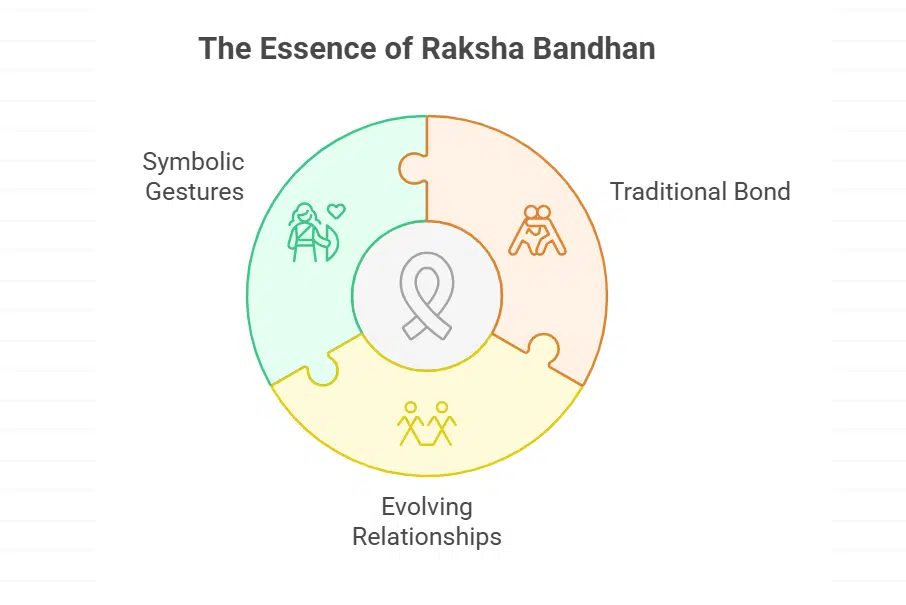
The festival’s name literally means “the bond of protection”. It is a celebration of love and trust, where sisters tie a sacred thread (Rakhi) on their brothers’ wrists, wishing them health, happiness, and longevity. In return, brothers pledge to protect their sisters in all circumstances.
While the custom traditionally revolves around blood siblings, it has evolved to include cousins, close friends, sisters tying Rakhis to sisters-in-law (Lumba Rakhi in Rajasthan), and even non-relatives as a gesture of goodwill and protection. Many women tie Rakhis to soldiers, symbolically extending the protection bond to the guardians of the nation.
Traditional Raksha Bandhan Rituals
Celebrating Raksha Bandhan involves a series of customs rooted in centuries-old tradition:
-
Early Morning Bath – Both brothers and sisters wake up early and bathe to purify themselves before the ceremony.
-
Wearing Traditional Attire – Sisters often wear sarees, lehengas, or salwar suits, while brothers wear kurtas or ethnic outfits.
-
Puja to Deities – Families begin by offering prayers to Lord Ganesha for the removal of obstacles, followed by prayers to Lord Vishnu and Lord Shiva for blessings and protection.
-
Preparation of the Rakhi Thali – This plate usually contains:
-
Roli (vermilion powder)
-
Akshata (unbroken rice grains)
-
Sweets
-
A diya (lamp)
-
The Rakhi thread itself
-
-
The Rakhi Ceremony – Sisters apply a tilak on the brother’s forehead, perform aarti, and tie the Rakhi on his wrist while silently praying for his well-being. They offer sweets to their brothers.
-
Return Gesture from Brothers – Brothers present gifts such as money, clothes, or jewelry and promise to protect their sisters. In some traditions, brothers touch their sister’s feet to seek blessings in return.
-
Family Meal – The celebration often concludes with a lavish meal featuring festive dishes such as kheer, halwa, puri-sabzi, and raita.
Legends Associated with Raksha Bandhan
Several myths and historical events are linked to the origins of Raksha Bandhan:
1. Yamuna and Yama
Goddess Yamuna once tied a Rakhi to her brother, Yama, the god of death, after not meeting him for twelve years. In return, Yama granted her immortality, promising to visit her regularly. This story is seen as the root of the protective blessing associated with Rakhi.
2. The Birth of Santoshi Mata
When Lord Ganesha’s sons, Shubh and Labh, longed for a sister, Ganesha created Santoshi Mata from divine flames so they could celebrate Rakhi with her. Today, Santoshi Mata is worshipped as the goddess of satisfaction and contentment.
Facing an attack from Bahadur Shah of Gujarat, Queen Karnavati of Chittor sent a Rakhi to Mughal Emperor Humayun seeking protection. Though Humayun could not arrive in time to prevent her sacrifice (jauhar), he later honored the gesture by defeating Bahadur Shah and restoring her kingdom to her son.
4. Indra Dev and Sachi
During a battle between gods and demons, Indra’s wife, Sachi, tied a protective thread around Indra’s wrist, given to her by Lord Vishnu. Indra then went on to win the battle, symbolizing the protective power of Rakhi.
5. Goddess Lakshmi and King Bali
When Lord Vishnu stayed at King Bali’s palace, Goddess Lakshmi tied a Rakhi to Bali, making him her brother and requesting Vishnu’s return to Vaikuntha. Bali agreed, marking the occasion as a symbol of love and sacrifice.
Regional Variations of Raksha Bandhan
The festival is celebrated differently across India:
-
Maharashtra – Observed as Narali Purnima, where fishermen offer coconuts to the sea for protection before setting sail after the monsoon.
-
Bihar & Madhya Pradesh – Coincides with Kajari Purnima, linked to agricultural prosperity.
-
West Bengal & Odisha – Celebrated alongside Jhulan Purnima, dedicated to Radha and Krishna.
-
Uttarakhand – Known for Janopunyu, where Brahmins change their sacred thread (janeu).
-
Rajasthan – Sisters tie Lumba Rakhi to their brothers’ wives as a sign of respect and inclusion in the family bond.
Raksha Bandhan in the Modern Era
In today’s world, Raksha Bandhan is not confined to physical distance. With the help of courier services and online gifting platforms, Rakhis are sent across cities, countries, and continents. The celebration has also embraced digital Rakhis, where siblings exchange greetings and virtual Rakhis through video calls.
Social initiatives have also grown around the festival. Women tie Rakhis to soldiers at borders, police officers, and doctors as a sign of gratitude for their service and protection. Many NGOs use the occasion to promote social causes like environmental awareness and women’s safety.
Takeaways
Raksha Bandhan is far more than a ritual—it is a celebration of love, responsibility, trust, and cultural heritage. It binds not just siblings but communities and even strangers in a thread of unity and goodwill. As August 9, 2025, approaches, preparations are underway in homes and hearts alike, ensuring that this year’s festival will be marked with joy, devotion, and togetherness.





















