

New Zealand’s agricultural industry is a cornerstone of its economy, contributing significantly to its GDP and global reputation for producing high-quality dairy, meat, and other agricultural products. However, with the intensification of farming, protecting the country’s waterways has become an urgent priority.
Waterways are essential for irrigation, livestock, and maintaining soil health, but agricultural runoff, soil erosion, and livestock contamination pose significant risks to these vital resources. As environmental concerns increase, there is a pressing need for farmers to adopt sustainable practices to protect waterways on New Zealand farms.
Farmers in New Zealand have a unique opportunity to safeguard the quality of their water sources while maintaining farm productivity. This guide offers practical insights into five effective ways to protect waterways on New Zealand farms, empowering farmers with actionable steps, real-world examples, and scientifically backed strategies.
Why Protecting Waterways is Crucial for New Zealand Farms?
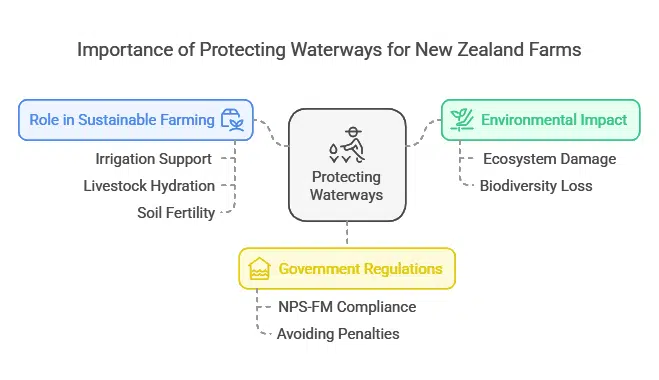
The health of waterways is integral to the farming industry. Water is essential for irrigation, livestock hydration, and maintaining soil health. Without clean, well-managed water sources, farmers may face reduced yields, contamination risks, and challenges in meeting increasing consumer demands for sustainable products. Let’s explore why it’s so important to protect waterways on New Zealand farms.
Environmental Impact of Polluted Waterways
Polluted waterways can cause severe damage to local ecosystems, impacting biodiversity and water quality. Nutrient pollution from excess nitrogen and phosphorus leads to eutrophication, which depletes oxygen levels and harms aquatic life. In New Zealand, over 60% of nutrient pollution in freshwater comes from agricultural activities, including runoff from fertilizers, animal waste, and sedimentation.
The Role of Waterways in Sustainable Farming
Waterways serve many essential functions in farming. Clean water supports irrigation, provides drinking water for livestock, and enhances soil fertility through natural processes like nutrient cycling. When waterways are healthy, they contribute to the overall sustainability of farming operations by promoting biodiversity and ensuring consistent water supply for farming activities.
Government Regulations and Compliance
In New Zealand, farmers must comply with the National Policy Statement for Freshwater Management (NPS-FM), which outlines guidelines to improve freshwater health. Protecting waterways on New Zealand farms is not only an environmental necessity but also a legal obligation. By adopting sustainable practices, farmers can meet these regulations, ensuring compliance and avoiding potential penalties.
1. Implement Riparian Planting for Waterway Protection
Riparian planting is one of the most effective ways to protect waterways on New Zealand farms. It involves establishing native vegetation along the banks of rivers, streams, and lakes to create a natural buffer zone that filters runoff, stabilizes soil, and provides wildlife habitats.
What is Riparian Planting?
Riparian planting refers to planting native trees, shrubs, and grasses along waterways to reduce the amount of nutrients, sediment, and contaminants entering the water. These plants help prevent soil erosion, improve water quality, and enhance the overall health of the ecosystem.
Benefits of Riparian Zones
Riparian zones provide numerous benefits to both the environment and farming practices:
- Pollution Filtration: Riparian plants filter out excess nutrients, pesticides, and contaminants, preventing them from entering waterways.
- Erosion Control: The root systems of riparian plants stabilize the soil along the banks, preventing erosion and reducing sedimentation.
- Biodiversity: Riparian zones provide important habitats for aquatic and terrestrial wildlife, enhancing farm biodiversity.
Riparian Zone Benefits
| Benefit | Description |
| Pollution Filtration | Removes excess nutrients and pollutants from runoff |
| Erosion Control | Stabilizes soil and reduces sediment in waterways |
| Biodiversity | Creates habitats for wildlife, supporting ecological health |
| Carbon Sequestration | Captures carbon dioxide, helping to mitigate climate change |
How to Establish Riparian Planting?
Establishing riparian zones requires careful planning:
- Assess Vulnerable Areas: Identify areas of your farm where erosion is a problem or where runoff may enter the waterway.
- Select Appropriate Plants: Choose native species that are well-suited to your local environment and capable of filtering pollutants.
- Implement Planting: Plant a mix of trees, shrubs, and grasses to create a diverse riparian zone.
- Ongoing Maintenance: Regularly maintain the riparian planting by removing invasive species and ensuring the plants are thriving.
2. Control Livestock Access to Waterways
Uncontrolled access to waterways can significantly harm water quality. Livestock, especially cattle, often trample the banks of rivers and streams, causing soil erosion, nutrient contamination, and water pollution. Limiting livestock access is a crucial step in protecting waterways on New Zealand farms.
The Impact of Livestock on Water Quality
Allowing livestock to access waterways can cause multiple issues:
- Trampling: Livestock can damage riparian zones, leading to erosion and sedimentation of water bodies.
- Contamination: Animal waste, including manure and urine, introduces pathogens, excess nutrients, and organic matter into the water, degrading water quality.
- Nutrient Runoff: Livestock excrete large amounts of nitrogen and phosphorus, which contribute to nutrient pollution and algal blooms.
Effective Fencing Techniques
Fencing is a proven way to restrict livestock from entering sensitive water areas. Consider these fencing options:
- Permanent Fencing: Post-and-wire fencing provides long-lasting protection and ensures livestock are kept away from water bodies.
- Electric Fencing: Temporary electric fences are ideal for rotational grazing, where livestock are moved between different grazing areas.
- High-Strength Netting: Heavy-duty mesh fencing keeps larger animals like cattle from entering water bodies.
Types of Livestock Fencing for Waterway Protection
| Fencing Type | Description | Pros | Cons |
| Permanent Fencing | Strong post-and-wire fencing | Durable, long-lasting, highly effective | Higher initial cost |
| Electric Fencing | Temporary electric barriers used in rotational grazing | Flexible, easily moved | Requires regular maintenance |
| High-Strength Netting | Mesh fences designed for high-strength areas | Effective for keeping large livestock out | Can be difficult to install |
Alternative Watering Systems for Livestock
To reduce the impact on water quality, consider installing off-stream watering systems. These systems supply clean, fresh water to livestock without the need for them to access the waterway. Solutions include:
Water Troughs: Water troughs connected to pumps or tanks ensure livestock have access to water without contaminating the stream or river.
3. Utilize Sustainable Farming Practices
Sustainable farming practices reduce the environmental footprint of agriculture by promoting soil health, reducing nutrient runoff, and conserving water. These practices are key to protecting waterways on New Zealand farms.
Reducing Agricultural Runoff
Agricultural runoff is a significant source of water pollution. To reduce runoff and protect waterways, consider the following practices:
- Nutrient Management: Apply fertilizers based on soil tests to ensure that nutrients are not over-applied. This reduces the amount of fertilizer that runs off into waterways.
- Buffer Strips: Establish buffer strips of native vegetation between farmland and waterways to intercept and filter runoff before it reaches the water.
- Cover Cropping: Plant cover crops during the off-season to prevent soil erosion, absorb nutrients, and reduce runoff.
Best Practices for Reducing Runoff
| Practice | Description | Benefits |
| Nutrient Management | Applying fertilizers based on soil nutrient testing | Reduces excess nutrient runoff into water |
| Buffer Strips | Planting native grasses along field edges | Filters nutrients, prevents sediment runoff |
| Cover Cropping | Planting crops like clover to protect soil during the off-season | Prevents erosion, improves soil health |
Conservation Tillage and Crop Rotation
Conservation tillage involves minimal soil disturbance, which helps to maintain soil structure and reduce erosion. When paired with crop rotation, this method improves soil fertility and prevents over-reliance on chemical inputs.
Benefits of Cover Cropping
Cover crops such as ryegrass, clover, or mustard help reduce nutrient runoff by absorbing excess nitrogen and phosphorus. They also improve soil health, increase organic matter, and promote water retention, which further benefits waterway health.
4. Enhance Erosion Control Measures
Soil erosion is a persistent problem for farms, particularly near waterways. It leads to sedimentation, which clogs rivers and streams, harming aquatic life. Implementing erosion control strategies helps prevent this issue and protects water quality.
Identifying Erosion-Prone Areas
Farmers must assess their land to identify areas that are at risk of erosion. These include:
- Sloped Land: Areas with steep inclines are particularly prone to erosion during heavy rainfall.
- Exposed Soil: Areas with little vegetation, such as over-grazed paddocks, are more vulnerable to erosion.
Erosion Control Methods
To prevent erosion, farmers can use the following techniques:
- Vegetative Cover: Plant grasses or shrubs to stabilize the soil and prevent erosion.
- Silt Fences: Install silt fences to capture sediment before it enters the waterway.
- Terracing: Create terraces on steep slopes to slow water runoff and prevent erosion.
Erosion Control Techniques for Waterways
| Technique | Description | Best Use |
| Vegetative Cover | Planting grasses and shrubs to stabilize soil | On slopes, hillsides, and near waterways |
| Silt Fences | Barriers that trap sediment from runoff | On eroded land or near construction sites |
| Terracing | Creating flat terraces on steep slopes to reduce runoff | On steep hillsides with heavy rainfall |
Role of Geotextiles and Bioengineering
Geotextiles are fabric-like materials that stabilize soil and reduce water flow speed. Paired with bioengineering techniques like deep-rooted plants, geotextiles offer long-term erosion prevention while enhancing riparian zone effectiveness.
5. Monitor Water Quality Regularly

Monitoring the quality of water on your farm is essential to ensure that protective measures are working and to identify issues before they become significant problems. By regularly testing water, farmers can take proactive steps to protect waterways on New Zealand farms.
Importance of Water Quality Monitoring
Regular water quality testing allows farmers to assess the effectiveness of their waterway protection strategies. Early detection of problems—such as nutrient imbalances, excessive turbidity, or contamination—enables farmers to adjust their practices before significant damage occurs.
Key Parameters for Water Quality Testing
Farmers should regularly test for:
- pH levels: Ensuring the water is neither too acidic nor too alkaline for aquatic organisms.
- Nutrient levels: Monitoring nitrogen and phosphorus to prevent nutrient pollution.
- Turbidity: Measuring the clarity of the water to detect excess sediment.
Water Quality Testing Parameters
| Parameter | Ideal Range |
Importance |
| pH Levels | 6.5 – 8.5 | Ensures healthy water for aquatic life |
| Nutrient Levels | Low levels of nitrogen & phosphorus | Prevents algae blooms and improves water quality |
| Turbidity | Low turbidity (clear water) | Indicates the presence of sediment or pollutants |
Partnering with Local Agencies for Monitoring
Farmers can collaborate with local councils or environmental agencies to conduct comprehensive water quality assessments. These partnerships often provide valuable resources, financial assistance, and expert guidance on improving waterway management.
Wrap Up: Protecting Waterways for a Sustainable Future
Protecting waterways on New Zealand farms is not just an environmental responsibility but a crucial aspect of sustainable farming.
By adopting best practices such as riparian planting, controlling livestock access, reducing runoff, and enhancing erosion control, farmers can ensure the health of their waterways, improve farm productivity, and comply with government regulations.
These five practical methods offer actionable, effective solutions to the challenges posed by agricultural runoff, erosion, and pollution.
By implementing these strategies, farmers can help create a sustainable agricultural future that benefits both the environment and the agricultural community.
Protecting waterways on New Zealand farms is not just essential for the present but also for future generations, ensuring the sustainability of both farming practices and the ecosystems that support them.





















