

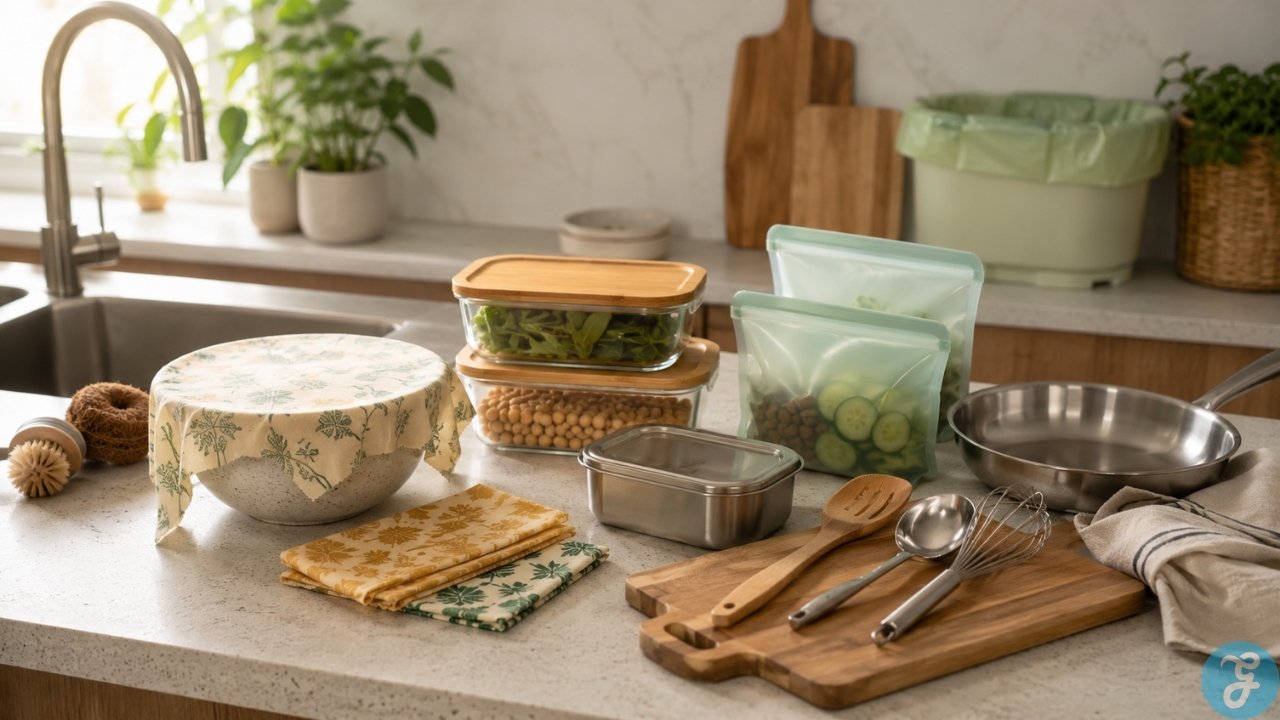
The push toward a zero waste kitchen often starts with the best intentions, but it can quickly stall when faced with the sheer volume of hidden synthetics tracking into our homes. Transitioning to plastic-free kitchen swaps is not about tossing out every piece of plastic tupperware you currently own, as that actually creates immediate landfill waste. Instead, it involves a strategic phase-out of single-use items, synthetic cleaning tools, and toxic cooking gear as they wear down, replacing them with long-lasting kitchen plastic alternatives.
Understanding which sustainable kitchen items offer the greatest longevity helps you avoid wasting money on aesthetic zero waste trends that fail under daily kitchen use.
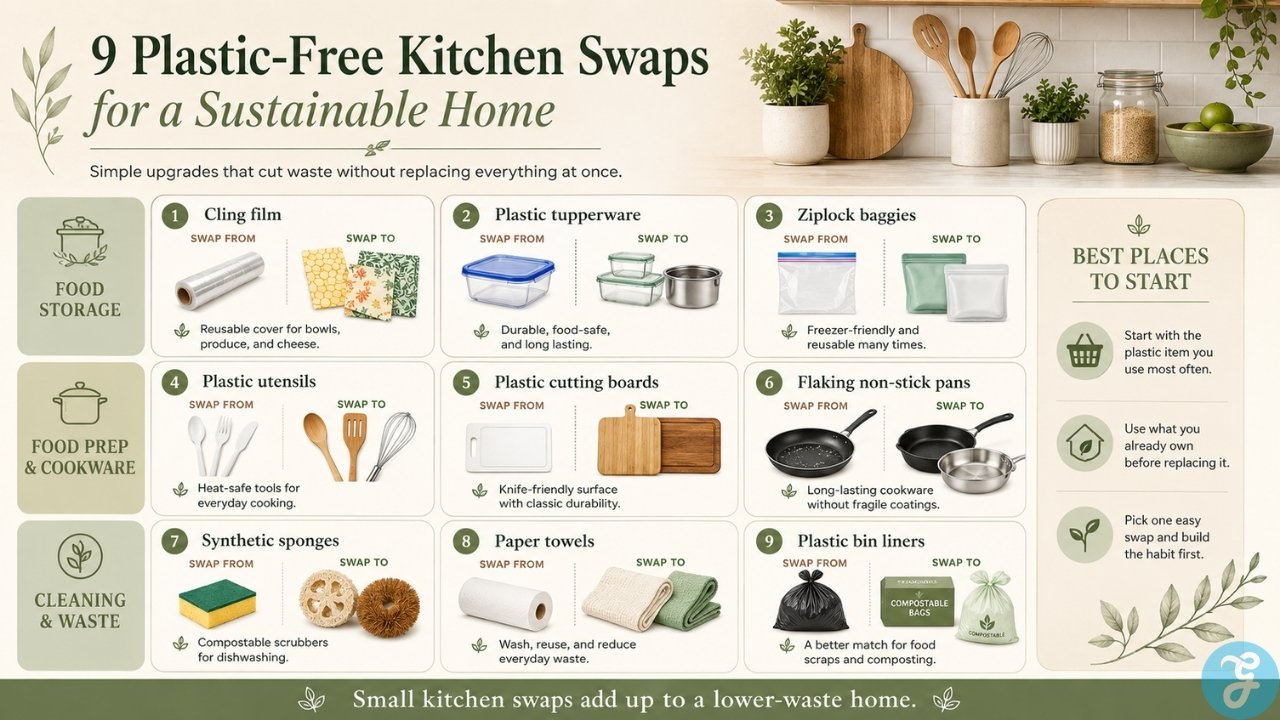
| Swap Category | Plastic Item | Sustainable Alternative |
| Food Storage | Cling Film | Beeswax Wraps |
| Food Storage | Tupperware Pots | Glass & Stainless Steel |
| Food Storage | Ziplock Baggies | Reusable Silicone Bags |
| Food Prep | Synthetic Spatulas | Wood & Stainless Steel |
| Food Prep | Plastic Cutting Boards | Bamboo & Hardwood |
| Food Prep | Flaking Non-Stick Pans | Cast Iron & Stainless Steel |
| Maintenance | Polyurethane Sponges | Loofah & Coconut Fibers |
| Maintenance | Paper Towels | Cotton Cloth Wipes |
| Waste Management | Plastic Bin Liners | Certified Compostable Bags |
Food Storage Upgrades for Freshness and Health
Chemical migration and microplastic shedding are major concerns when synthetic materials contact food, especially during heating or long-term storage. Shifting your storage habits is one of the most immediate paths to a zero waste setup.
1. Beeswax Wraps Instead of Cling Film
Traditional plastic wrap is impossible to recycle and ends up polluting marine systems or clogging landfills. Beeswax food wraps, made from organic cotton infused with beeswax, tree resin, and jojoba oil, offer a malleable alternative that seals tightly around bowls, half-cut produce, and architectural cheese loaves using the natural warmth of your hands.
The Longevity Catch
These wraps cannot handle high heat. Washing them in hot water or using them to cover hot microwave dishes melts the protective wax coating instantly, rendering the fabric useless. They also require dedicated maintenance, requiring a quick rinse in cold water with mild ethanol-free dish soap, followed by air drying. For raw meats, they are completely unsafe due to cross-contamination risks that cold water cannot properly sanitize.
2. Glass and Stainless Steel Containers Instead of Plastic Tupperware
Repeated washing and microwaving cause plastic food containers to degrade, creating surface fractures that harbor bacteria and release millions of polymer fragments into your leftovers. Transitioning to high-borosilicate glass or food-grade stainless steel canisters preserves food flavor cleanly and provides structural durability that lasts for decades.
3. Reusable Silicone Bags Instead of Ziplock Baggies
Single-use storage bags are a major source of everyday kitchen waste. Heavy-duty, platinum-cured silicone bags offer a durable alternative that survives the freezer, sous-vide cooking, and high-temperature dishwasher cycles without structural degradation or chemical leaching.
The Maintenance Friction
While these storage bags are incredibly durable, cleaning their interior corners can be highly irritating. Grease and thick sauces tend to get trapped in the bottom seams, and if they are not propped open completely during the drying phase, they trap residual moisture, leading to unpleasant stale odors or mildew growth. They represent a significant upfront financial investment compared to cardboard boxes of disposable baggies, meaning you must commit to a consistent washing routine to justify the initial cost.
Food Preparation and Cookware Swaps
High-heat environments accelerate the breakdown of synthetic kitchenware, releasing unwanted polymers directly into your meals during the cooking process.
4. Hardwood and Bamboo Spatulas Instead of Plastic Utensils
Melting nylon spatulas and plastic pasta spoons pose silent contamination risks when left resting against screaming hot frying pan edges. Replacing them with solid beechwood, bamboo, or high-grade stainless steel turners introduces non-toxic, highly durable tools that never scratch or deform under heat pressure.
5. Wood or Bamboo Cutting Boards Instead of Plastic Boards
Scorched plastic chopping boards shed microplastics with every knife strike, meaning tiny synthetic shavings slip directly into your prepped vegetables. Shifting to thick butcher blocks or edge-grain bamboo boards protects your knife edges and introduces natural, self-healing surfaces that look classic on open kitchen counters.
The Reality of Wood Care
Wooden boards cannot be tossed into an automatic dishwasher. The intense moisture and high heat will warp the fibers and crack the wood completely within a few cycles. To keep them functional, you must wash them by hand immediately after use, air-dry them upright, and rub them down monthly with food-grade mineral oil or beeswax paste to prevent deep moisture penetration and splitting.
6. Cast Iron and Stainless Steel Cookware Instead of Non-Stick Pans
Conventional non-stick pans rely on synthetic fluoropolymer coatings like polytetrafluoroethylene. Once these surfaces experience scratches from metal cutlery or overheating past certain thresholds, the chemical barrier begins to flake off, migrating into your food and forcing you to discard the entire pan every few years. Investing in pre-seasoned cast iron or multi-clad stainless steel pans provides a lifetime cooking surface that improves naturally with age.
Sustainable Kitchen Maintenance and Clean Up
Cleaning tools are often overlooked sources of synthetic pollution, continually shedding non-biodegradable waste down municipal drains with every dishwashing cycle.
7. Natural Loofah and Coconut Scrubbers Instead of Synthetic Sponges
Standard yellow-and-green kitchen sponges are made from polyurethane plastic, meaning they break down into microplastic fibers that bypass water filtration plants to enter local waterways. Swapping to raw loofah sections, coconut coir scrubbers, or bamboo pot brushes provides identical scouring power while remaining entirely backyard compostable at the end of their operational lifecycle.
8. Cotton Unpaper Towels Instead of Plastic-Wrapped Paper Rolls
Disposable paper towels require massive amounts of plastic packaging and generate continuous paper waste. Stocking a dedicated kitchen basket with lint-free cotton towels, linen tea cloths, or cellulose sheets provides a reusable wiping system that handles spills efficiently and sanitizes easily inside a standard laundry load.
9. Certified Compostable Trash Bags Instead of Plastic Bin Liners
Standard low-density polyethylene trash bags trap organic food scraps inside landfill zones, preventing natural decomposition and generating harmful methane emissions. Plant-based, certified compostable bin liners break down cleanly in commercial or home composting environments without leaving toxic synthetic residues behind.
The Detail Readers Usually Miss With Plastic-Free Kitchen Swaps
The most common trap when adopting zero waste kitchen swaps is the sudden urge to clear out every functional plastic item in your cupboards to achieve an instantaneous, picture-perfect pantry aesthetic. Tossing out perfectly usable plastic containers simply to replace them with expensive matching glass jars is a counterproductive environmental choice. The most sustainable item is always the one that already exists in your home.
True sustainability requires maximizing the lifecycle of your current assets. Use your existing plastic tupperware until it cracks, becomes stained, or shows signs of structural breakdown. When an item complex finally reaches the end of its functional life, that is the exact moment to step in with targeted kitchen plastic alternatives.
Choosing Your Initial Sustainable Kitchen Items
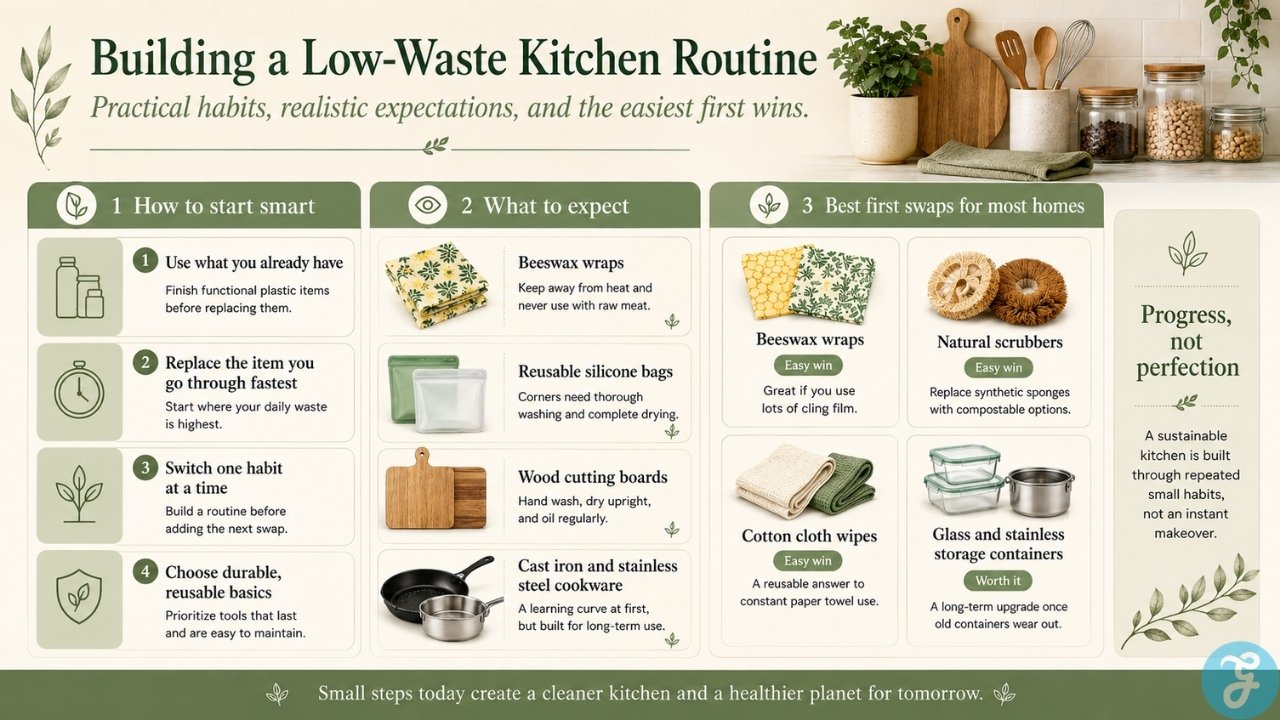
Your entry point into a low-waste kitchen should be guided by your highest frequency point of waste rather than random trends. If your household burns through multiple rolls of plastic cling film every month covering leftovers, your most impactful first move is acquiring a diverse pack of malleable beeswax wraps or stretchy silicone bowl covers. If your kitchen sink setup is dominated by foul-smelling synthetic sponges that need replacing every two weeks, immediately substitute them for backyard-compostable loofah scrubbers.
Audit your current waste bins, isolate the single highest-frequency plastic item running through your daily routine, and deploy one focused alternative before trying to scale your collection of plastic-free kitchen swaps. Focus on building habits around a single transition before trying to re-engineer your entire culinary space.





















