

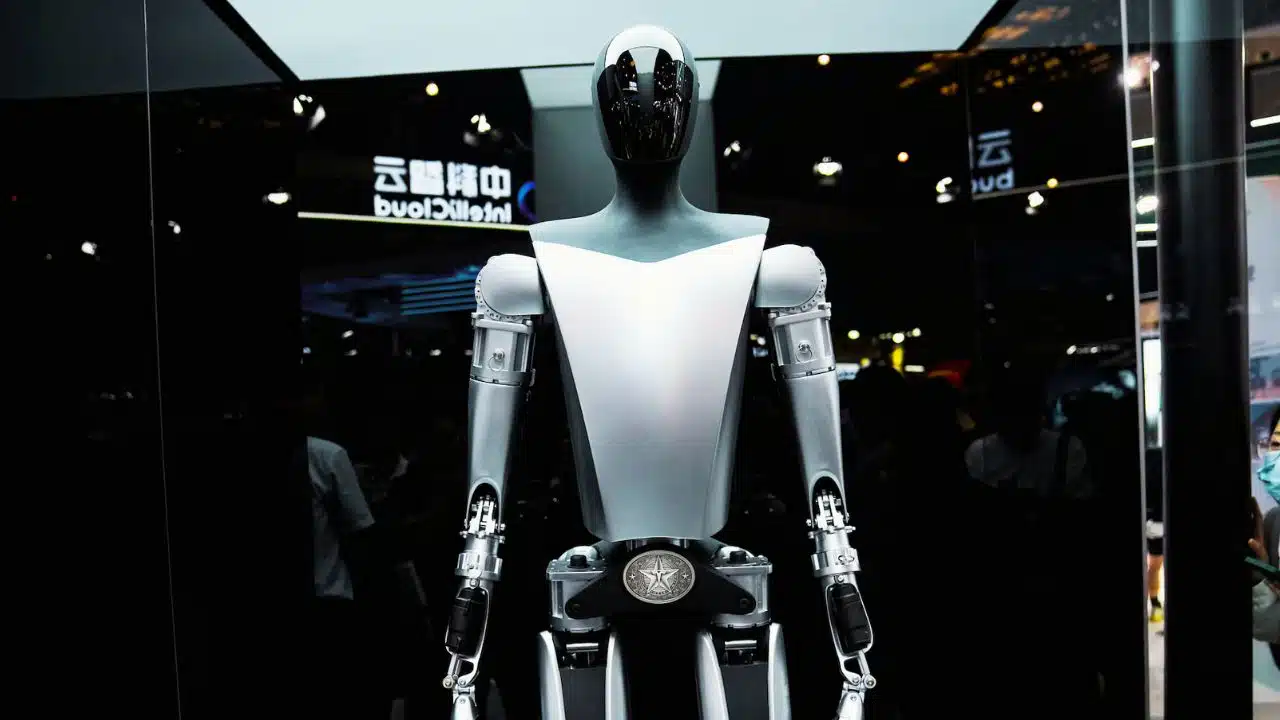
Elon Musk is doubling down on his bet that Tesla’s humanoid robots will not only transform the global economy but eventually build each other in largely autonomous, self‑replicating factories. The Tesla CEO is framing Optimus as a long‑term project that could scale from pilot lines in California to robot‑run production plants on Earth and even Mars.
Musk’s latest Optimus promise
In recent comments amplified by tech and investor circles, Musk suggested that Tesla will move beyond traditional assembly lines for its Optimus humanoid robots. Instead of relying indefinitely on human workers and conventional tooling, he floated a future in which Optimus units are used to manufacture more Optimus units, turning factories into semi‑autonomous, robot‑driven systems.
The claim comes just as Tesla is pushing to reposition itself less as a carmaker and more as an AI and robotics company, with Musk repeatedly arguing that Optimus could ultimately account for most of Tesla’s value. He has also tied the project to sweeping social predictions, saying widespread humanoid robots could make most physical labor optional and sharply reduce poverty over the next couple of decades.
From pilot lines to mega robot plants
Tesla has already shown early production lines for Optimus at its Fremont factory, describing the site as the starting point for a high‑volume robot program. Musk has spoken of a near‑term goal to hit a production rate of around one million Optimus units per year in Fremont, followed by a much larger, dedicated facility at Giga Texas targeting up to 10 million robots annually later in the decade.
These ambitions build on earlier guidance that thousands of Optimus robots should be deployed inside Tesla’s own plants before wider commercial sales begin around 2026. Videos and demos in 2025 have already showcased Optimus handling basic factory tasks, folding laundry, and performing more agile motions than earlier prototypes, reinforcing the narrative that the bot is moving from concept to practical tool.
A ‘Von Neumann probe’ for the real world
Musk has captured attention by likening Optimus to a “Von Neumann probe,” a concept from theoretical physics and space exploration describing self‑replicating machines that can spread and reproduce autonomously. In this framing, a mature Optimus platform would be capable not just of assembly work, but of running much of its own production line, from handling components to final integration, with minimal human oversight.
Commentators note that full self‑replication in the strict scientific sense would still require vast external supply chains for materials, energy, and advanced chips. But even partial self‑replication—robots operating a large fraction of their own factory processes—could radically lower labor costs and make Musk’s aggressive volume targets more plausible if the technology works as advertised.
Economic upside and serious risks
If Tesla comes close to its stated targets of millions or even tens of millions of humanoid robots per year, the impact on labor markets and productivity could be enormous. Musk argues that such systems could take over dangerous, repetitive, and low‑wage tasks, driving down the cost of goods and potentially enabling new forms of social support in wealthy countries.
Critics, however, warn that Musk has a long history of overpromising timelines on autonomy and robotics, and that energy constraints, computing costs, and safety concerns may slow any march toward self‑replicating factories. Policy experts and ethicists are also pressing for clear rules before humanoid robots are deployed at scale, particularly if they are networked, continuously learning, and given broad freedom to manage industrial operations.
What comes next for Optimus
In the near term, Tesla’s focus appears to be on proving Optimus as a reliable worker inside its own factories and ramping the first million‑unit production line rather than delivering true self‑replication. Analysts will be watching how many bots actually reach useful deployment by the end of 2025 and whether Tesla can demonstrate sustained productivity gains on real manufacturing tasks.
Longer term, Musk is clearly using the language of self‑replicating machines and “Von Neumann probes” to sell a vision in which robots, not cars, define Tesla’s identity and market value. Whether that vision becomes a landmark in industrial history or another example of Silicon Valley overreach will depend on breakthroughs in AI, hardware, regulation, and public trust that have not yet been fully secured.





















