

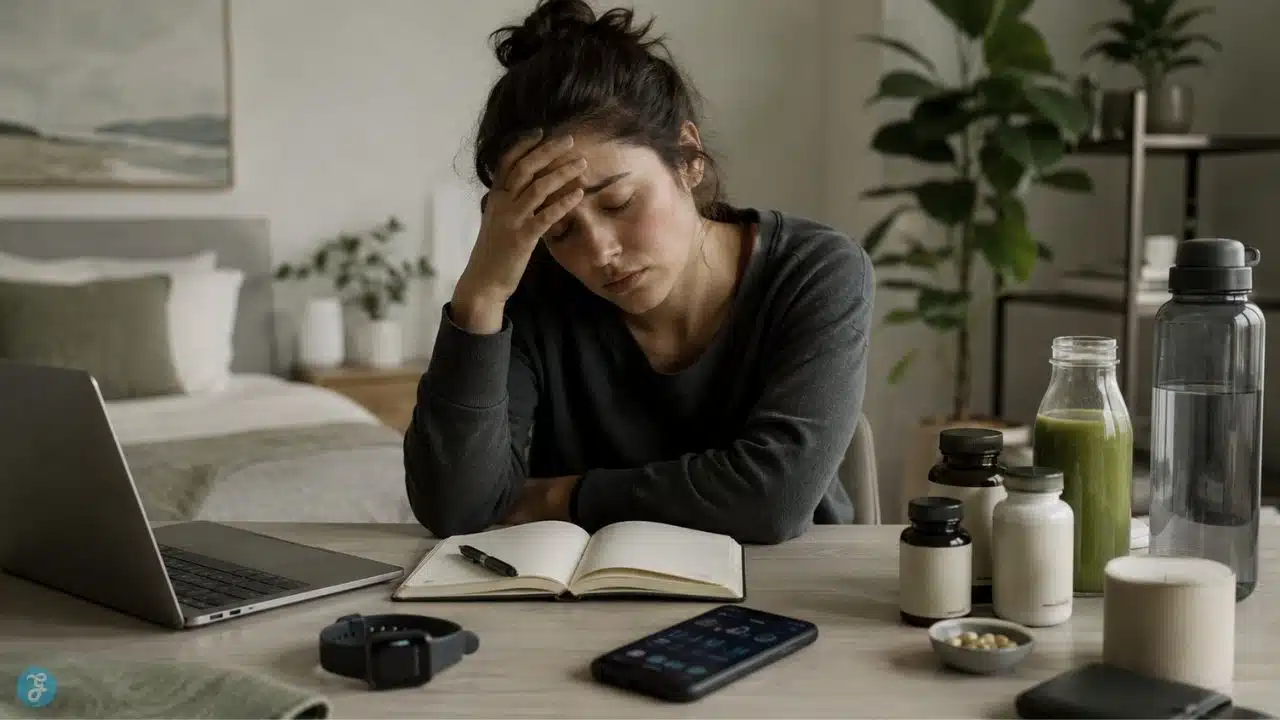
I used to think the future of wellness would make people feel freer. More knowledge. Better tools. Smarter habits. Clearer feedback. A little more control over sleep, food, stress, movement, and energy. On paper, that sounds healthy. But somewhere along the way, the promise changed. Wellness stopped asking, “How do you feel?” and started asking, “What does the data say?”
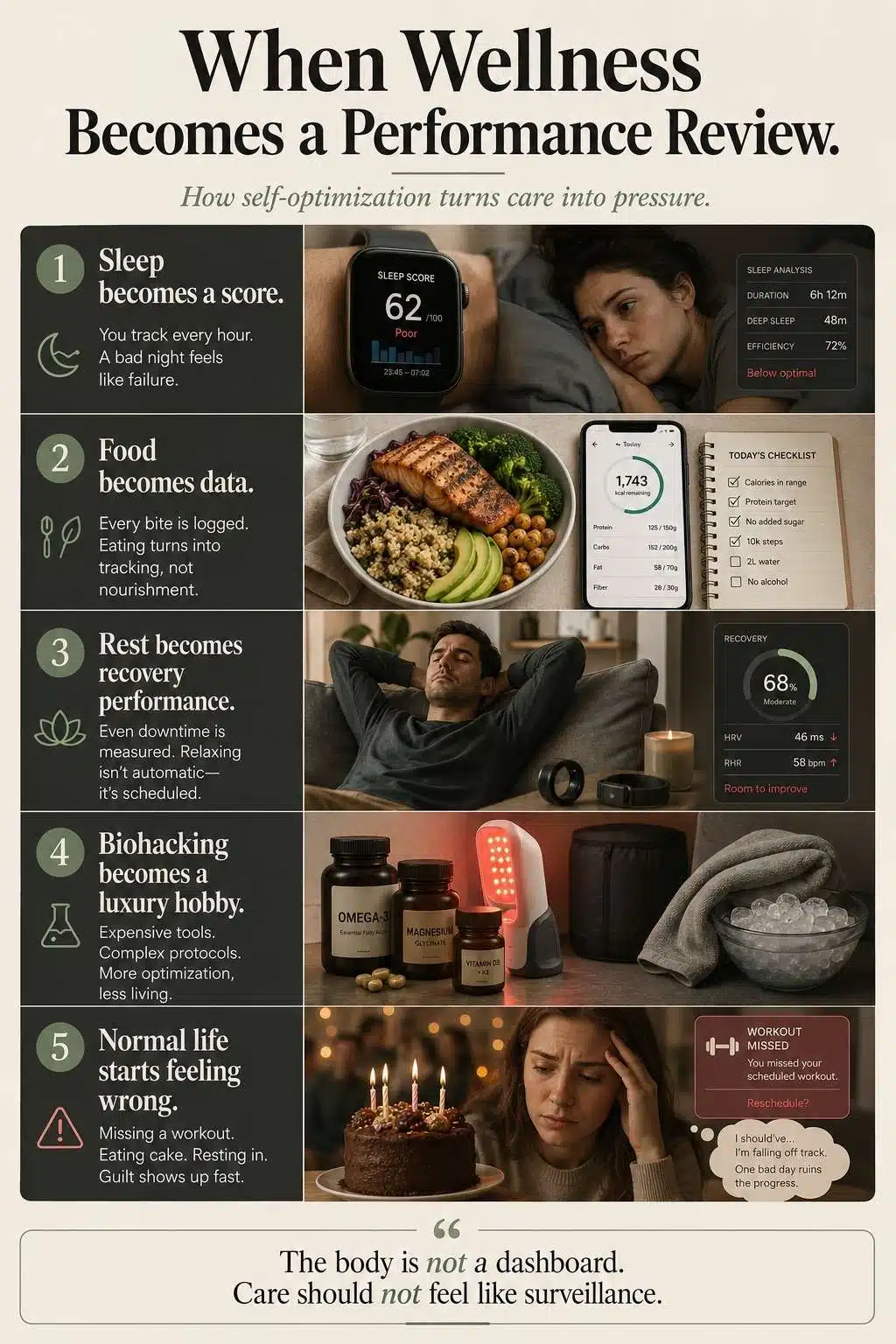
Sleep became a score. Food became a glucose response. Walking became a step target. Rest became recovery performance. A normal, tired day became a biological failure. A meal with friends became a question of macros, inflammation, timing, and regret.
That is why the idea that our optimization obsession is making us sick feels less like a hot take and more like a warning. It describes a real cultural problem. We are not simply trying to live healthier lives anymore. Many of us are trying to manage ourselves like unstable software.
I am not against health tracking. I am not against exercise, nutrition, therapy, medical testing, or better sleep. I am not even against biohacking when it means small, sensible changes that help someone understand their body.
But I am against the new pressure to treat every human need as a performance metric. The body is not a dashboard. The mind is not a productivity app. A human life is not supposed to feel like a permanent audit. And yet, this is where wellness optimization has taken many people.
We Wanted Health, We Got Surveillance
The first problem with modern self-optimization is that it often arrives disguised as care.
For example, A watch tells us to stand. An app tells us to breathe. A ring tells us we slept badly. A dashboard tells us our recovery is low. A creator tells us our morning routine is wrong! A biohacker tells us our mitochondria need help. A supplement brand tells us our bodies need support.
Each message sounds small. Together, they create a life where the body is constantly being watched, judged, corrected, and upgraded.
That is not always bad. Some people benefit from tracking. A step counter can help a sedentary person move more. A sleep diary can help someone notice habits. A glucose monitor can be useful for people with medical needs. Heart-rate data can help athletes train smarter.
But the mood around these tools has changed. Tracking was supposed to support intuition. Now it often replaces it.
I have seen people wake up feeling fine, then see a poor sleep score and suddenly decide they are exhausted. I have seen people eat a normal meal and then talk about it like a moral mistake. I have seen perfectly healthy people act as if one missed workout means their whole identity is slipping.
That is the dark side of self-optimization harm. The tool begins as feedback. Then it becomes instruction, authority, and finally anxiety. At that point, the person is no longer using the device. The device is using the person.
The Wellness Industry Learned How to Monetize Insecurity
The global wellness industry is huge now, and that scale matters. When an industry becomes this large, it not only responds to people’s needs. It also shapes those needs. Wellness brands do not just sell products anymore. They sell a feeling that the body is unfinished.
Not sick exactly. Not broken exactly. Just not optimized enough. That is a powerful sales position. If you are tired, there is a stack for that. If you are anxious, there is a protocol for that. If you are aging, there is a longevity plan for that. If you are bloated, there is a gut reset for that. If you are unfocused, there is a supplement for that. If you are not productive, there is a routine for that. If you feel normal human discomfort, there is probably a branded solution waiting.
This is why wellness optimization can be so seductive. It gives shape to vague discomfort, makes ordinary stress feel solvable, and gives people rituals when life feels chaotic. But it also creates a quiet trap. If every problem has a protocol, then every unresolved problem feels like your fault.
You did not sleep well because your evening routine was wrong, feel anxious because your nervous system regulation was incomplete, did not lose fat because your macros were off, still tired because your supplements were not personalized enough, and not thriving because you did not optimize hard enough.
This is where wellness stops being helpful and starts becoming cruel. Real health should reduce shame. Optimization culture often adds more of it.
Sleep Became a Competition With the Wrist
Sleep is one of the clearest examples of this problem. For years, public health experts had to convince people that sleep matters. That message was needed. Many people still do not sleep enough. Work culture, phones, stress, noise, caregiving, financial pressure, and long commutes have damaged rest for millions.
But the pendulum has swung in a strange direction. Now, sleep is not just important. It is scored, ranked, measured, compared, and analyzed before breakfast. The irony is painful.
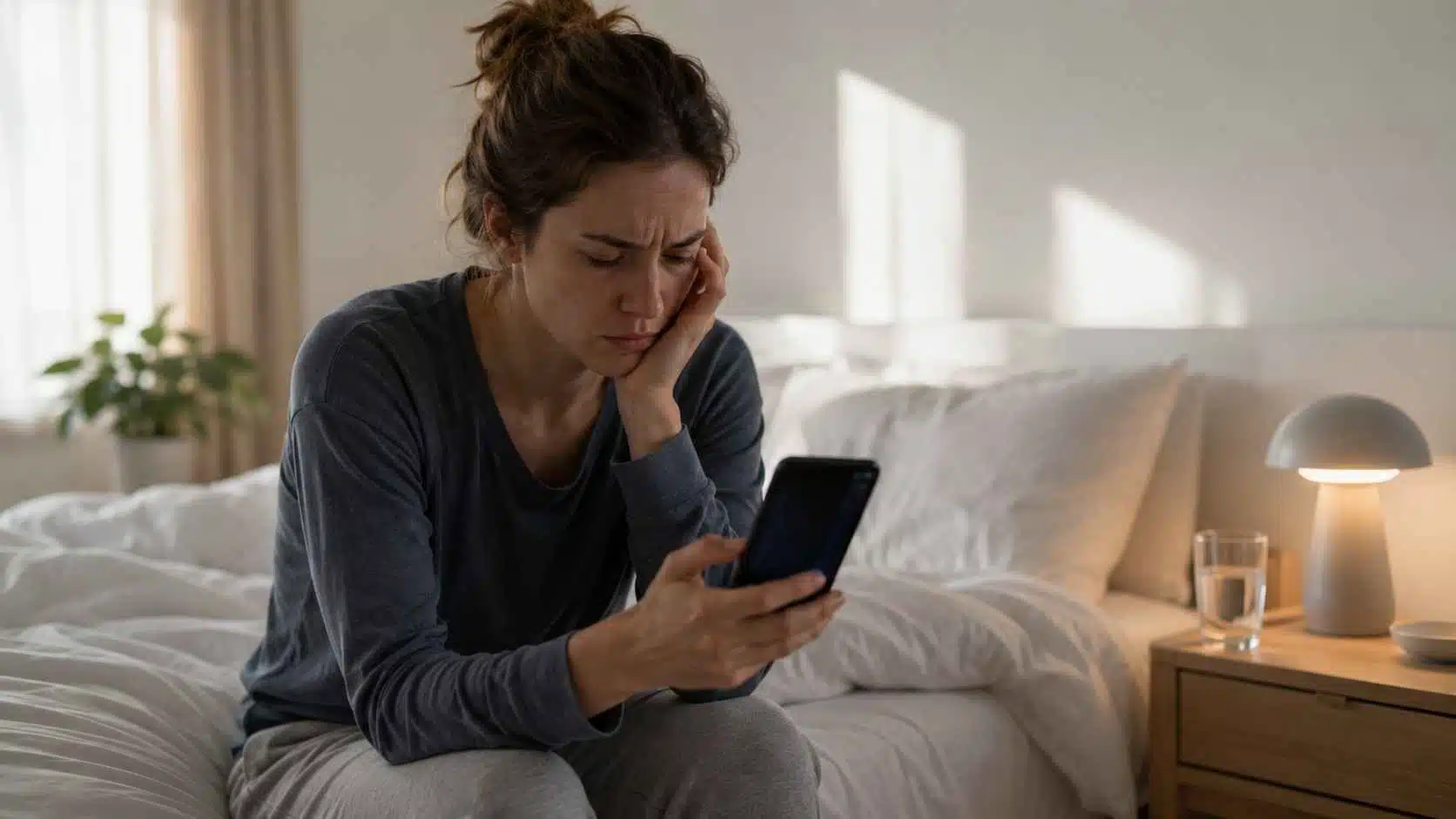
People buy sleep trackers to feel more in control of their sleep. Then the tracker gives them something new to worry about. They start chasing perfect deep sleep. They question whether they feel rested. They become anxious about the number. They go to bed trying to sleep correctly.
Anyone who has struggled with sleep knows how dangerous that is. Sleep hates pressure. The more you try to force perfect sleep, the more alert your brain becomes. The more you watch the score, the more bedtime starts to feel like an exam. The more you treat rest as performance, the less restful it becomes.
This is the absurdity of modern wellness. We have managed to turn lying down in a dark room into another productivity challenge.
Biohacking Has Turned Basic Health Into a Luxury Hobby
The biohacking obsession is another part of this story. Some biohacking is just common sense with a new name. Sleep well. Eat enough protein. Walk outside. Lift weights. Get sunlight. Drink less alcohol. Manage stress. Build relationships. Pay attention to your body.
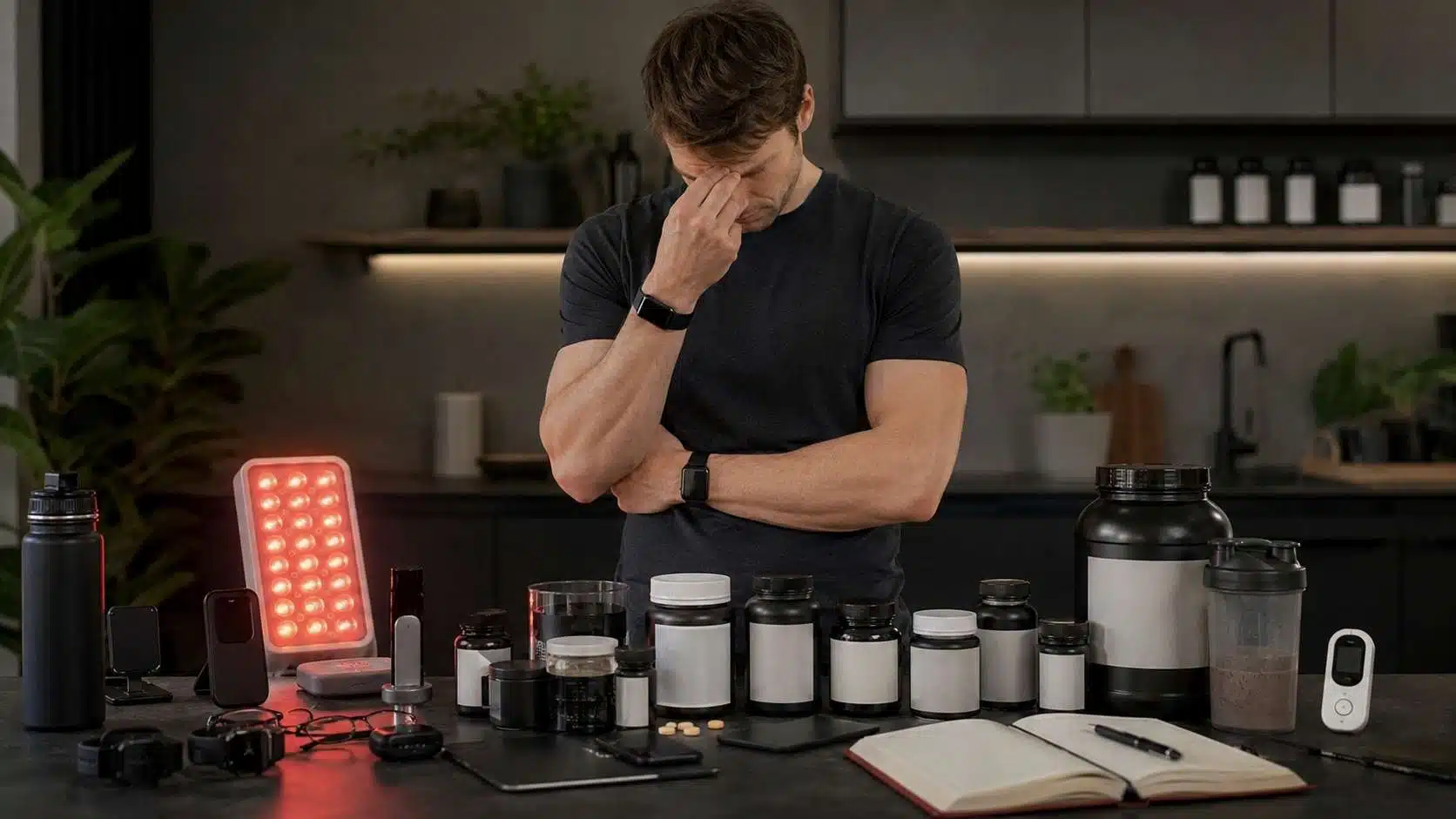
I have no issue with that. But much of modern biohacking culture does something else. It takes basic habits and wraps them in expensive language, devices, blood panels, injectables, cold exposure rituals, red light gadgets, supplements, trackers, protocols, and longevity promises.
Suddenly, health looks like a membership club. That bothers me.
Not because people should not use tools. Some tools help. Some medical tests are useful. Some interventions belong in proper clinical care. The problem is when every normal person is made to feel behind because they do not have the latest recovery device, peptide conversation, glucose chart, or longevity stack.
A healthy life should not require a private lab. Too much biohacking content sells the fantasy of total control. Control your sleep. Control your hormones. Control your inflammation. Control your aging. Control your focus. Control your mood. Control your body like a machine.
But the body is not fully controllable. Health is shaped by genetics, income, housing, food access, work pressure, trauma, healthcare, pollution, family responsibilities, luck, and time. Optimization culture often ignores those realities because they are harder to sell.
It is much easier to tell someone to upgrade their morning routine than to admit their job is burning them out.
The Problem Is Not Discipline, The Problem Is Fear
I believe in discipline. I think routines can help. I think movement matters. I think food quality matters. I think sleep matters. I think mental health care matters. I think people should take responsibility for their health where they can.
But responsibility is not the same as fear. A disciplined person can miss a workout and move on. An optimized person feels like they failed. A healthy eater can enjoy cake at a birthday. An optimized eater calculates the damage. A rested person can have one bad night of sleep. An optimized sleeper checks the score and starts worrying about tomorrow. A person who listens to their body can rest. An optimized person asks whether rest will hurt the plan.
That is the difference. The goal of health should be resilience. Optimization often creates fragility. It makes people less able to tolerate ordinary variation. A bad day becomes a crisis. A lower score becomes a warning sign. A craving becomes a character flaw. A skipped routine becomes evidence that life is falling apart.
This is not wellness. This is control dressed up as self-care.
The Body Is Becoming a Productivity Department
One reason optimization culture has grown so fast is that it fits perfectly into modern work culture.
Work already asks people to be faster, sharper, more available, more efficient, and more measurable. Wellness optimization takes that same logic and moves it into the body. Now we do not only optimize campaigns, workflows, meetings, and output.
We optimize sleep, meals, focus, recovery, mood, breathing, and aging.
The body becomes another department expected to hit quarterly targets. This is why so much wellness content feels strangely corporate. It uses the language of performance, systems, protocols, output, tracking, efficiency, and return on investment. Even rest becomes strategic.
People no longer rest because they are tired. They rest so they can perform better later. They do not walk because walking feels good. They walk to hit a number. They do not meditate because silence is human. They meditate to improve productivity.
That may sound practical. But it also reveals something sad. We are losing the ability to do healthy things without turning them into work.
The Algorithm Rewards Extremes, Not Balance
Another reason the optimization obsession keeps growing is simple: balanced advice does not perform as well as extreme advice.
“Eat mostly whole foods, move regularly, sleep enough, and talk to a doctor if something feels wrong” is useful.
But it is not viral.
- “This one food is destroying your hormones” travels faster.
- “This morning routine changed my life” travels faster.
- “You are doing sleep wrong” travels faster.
- “Your coffee timing is ruining your cortisol” travels faster.
- “Your body is full of toxins” travels faster.
- “Here is the protocol high performers use” travels faster.
The algorithm likes certainty. It likes fear. It likes transformation. It likes before-and-after stories. It likes confident people saying simple things about complex bodies. That is bad for health.
Because real health advice is usually boring, contextual, and slow. It depends on age, medical history, stress, sleep, culture, income, access, preferences, and real-life constraints.
Optimization content often removes that context. It turns the human body into a set of universal hacks. That makes the content easier to sell and more dangerous to follow.
Wellness Should Not Make Normal Life Feel Dirty
One of the ugliest effects of optimization culture is how it changes people’s relationship with normal life.
- A regular breakfast becomes “suboptimal.”
- A late dinner becomes “bad for metabolism.”
- A missed workout becomes “falling off.”
- A restful Sunday becomes “wasted potential.”
- A night out becomes “inflammatory.”
- A simple body becomes a project that never ends.
This is how wellness optimization slowly becomes anti-life. It makes ordinary joy feel suspicious.
Food is no longer just food. It is data. Sleep is no longer just sleep. It is performance. Movement is no longer just movement. It is proof. Rest is no longer just rest. It is recovery strategy. A body is no longer a home. It is a machine that needs constant tuning.
That is not a healthy way to live. A good wellness practice should help someone return to life with more energy, not pull them away from life into endless monitoring.
If your health routine makes you afraid of dinner with friends, it may not be healthy anymore. If your tracker makes you distrust your own body, it may not be helping anymore. If your optimization plan makes you feel guilty every day, it may be the problem it claims to solve.
The Class Problem Nobody Likes to Mention
There is also a class issue here. Optimization culture often pretends everyone can follow the same advice if they are disciplined enough. But real life is not equal.
Some people do not have flexible work hours, and some cannot afford high-quality food. Some people live in unsafe neighborhoods, some do night shifts, some people care for children or parents, and some people cannot pay for therapy, coaching, testing, or recovery tools. Some people are dealing with chronic illness, grief, disability, debt, or unstable housing.
Telling everyone to optimize without acknowledging those conditions is dishonest. It turns privilege into a wellness aesthetic.
Of course, it is easier to wake up slowly, hydrate, meditate, walk in sunlight, eat a high-protein breakfast, track recovery, and work from a calm desk if your life already has room for that.
Many people are not failing at wellness. Wellness is failing to understand them. This is why I distrust advice that sounds too clean. Real life is messy. Real health must be flexible enough to survive that mess.
What Real Health Should Feel Like
I think real health should make people feel more capable, not more watched.
It should give a person more trust in their body, not less. It should create room for joy, not just discipline. It should make rest feel allowed, movement feel possible. It should make food feel nourishing, not frightening, help people notice patterns without worshiping numbers, and support medical care, not replace it with influencer confidence.
Real health is not anti-data. Data can help. But data should be a tool, not a judge.
A sleep score may offer useful information, but it should not decide whether you are allowed to feel rested. A fitness tracker may encourage movement, but it should not make you ashamed of a hard week. A food log may reveal patterns, but it should not turn eating into surveillance.
You should ask yourself, “Does measuring this make my life better?” If the answer is no, the metric may be costing more than it gives.
I Want a Less Anxious Version of Wellness
The wellness world needs a calmer philosophy. Not lazy, careless, or anti-science. Just calmer.
A version of wellness that says:
You do not need to optimize every hour, earn every meal, track every night, turn aging into failure, treat normal tiredness like a personal defect, or buy your way into being a valid human being.
This does not mean ignoring health. It means respecting the body without turning it into a full-time job.
The basics still matter. Sleep. Movement. Food. Medical care. Sunlight. Friendship. Purpose. Less alcohol. Less smoking. More strength. More rest. More connection. These things are not glamorous, but they work better than most dramatic online protocols.
The funny thing is that real wellness is often boring. That may be its greatest strength.
The Hard Truth
The optimization obsession is making us sick because it keeps moving the finish line. There is always a better routine, a cleaner diet, a lower resting heart rate, a better sleep score, a new supplement, a new test, a new device, a new expert, and a new version of yourself you are supposed to become.
That endless chase does not create peace. It creates permanent self-doubt. I do not want to live in a culture where health means constantly proving that I am disciplined enough, clean enough, young enough, productive enough, and optimized enough.
I want health to mean I can live well. Not perfectly. Not obsessively. Not for the approval of an app, influencer, or algorithm. Just well.
The body is not a broken machine waiting to be upgraded. It is a living thing asking to be cared for. And care should not feel like surveillance.
























