

Buying or selling property can feel like a slow and tricky process. Lots of paperwork, waiting on approvals, and dealing with middlemen make it expensive and frustrating for many people.
Now, digital tools like non-fungible tokens (NFTs) are shaking things up. NFTs use blockchain technology to turn real estate into digital assets. This allows faster deals and even lets people own small parts of properties.
In this blog, you’ll see how NFTs are changing the way we buy, sell, and manage property ownership. Keep reading to discover more!
Key Takeaways
- NFTs turn real estate into digital tokens, allowing faster deals and easier ownership. Platforms like Propy and RealT use blockchain for secure transactions.
- Fractional ownership with NFTs lets many people own small parts of a property, making investing cheaper and simpler.
- Blockchain keeps records secure and clear, reducing fraud risks in buying or renting properties while cutting out middlemen.
- Virtual real estate using NFTs is growing on platforms like Decentraland, where users buy or rent digital land for income or ads.
- Challenges include outdated systems, government rules, valuation issues, and fraud risks slowing NFT adoption in real estate markets.
Tokenization of Real Estate
Breaking property into digital tokens changes the game, making ownership more flexible. These tokens can be traded like stocks, opening doors for small-scale investors.
Converting physical properties into digital tokens
A house or land can become a digital token on the blockchain. This process is called property tokenization. The token works as proof of ownership, just like a title deed. Platforms like Propy make this possible by using blockchain technology to create secure transactions.
Each token represents part or all of a property’s value. These tokens are stored in digital wallets and traded easily online. This makes real estate investing faster and more accessible for buyers worldwide.
Enabling fractional ownership
Fractional ownership splits a property into smaller portions. One person doesn’t have to buy the whole building or land. Instead, many investors can each own a piece as digital tokens.
Platforms like RealT use NFTs for this purpose. Investors get rental income from their shares and can sell them easily. This method lowers the cost of entering real estate investments, making it more open to people worldwide.
It also allows faster deals with blockchain technology keeping things secure and clear.
Benefits of Using NFTs in Real Estate
Using NFTs can make buying and selling properties faster. It also strengthens trust with clear records on the blockchain ledger.
Streamlined transactions
Real estate deals can be slow and full of paperwork. With NFTs, property transactions become faster. Buyers and sellers use blockchain technology to transfer ownership in minutes instead of weeks.
Smart contracts automate the process, cutting out middlemen like banks or agents.
Crypto payments make it even smoother. Funds transfer almost instantly, avoiding lengthy bank approvals. This reduces delays common in traditional real estate transactions. Smart contracts also help lower transaction costs, making property ownership easier for everyone involved.
Enhanced transparency and security
Blockchain technology stores ownership records securely. It protects property data from tampering or loss. Each transaction adds to a blockchain ledger, creating a full history of changes.
Owners can access detailed maintenance records anytime.
Smart contracts help reduce fraud risks in real estate transactions. They remove the need for middlemen and automate processes like payments or agreements. This system ensures secure transactions while cutting errors and delays.
Access to global markets
NFTs open doors to real estate markets worldwide. Buyers and sellers trade properties 24/7, breaking borders. A home in Paris or land in Tokyo becomes accessible through digital tokens.
Fractional ownership lets people invest small amounts in pricey international properties.
Cross-border sales grow easier with blockchain technology. Transactions happen fast and securely without mess ups from currency exchanges. Real estate agents use smart contracts for transparency, cutting out unnecessary steps and reducing costs globally.
Use Cases of NFTs in Real Estate
NFTs are shaking up property deals, offering fresh ways to manage and verify assets. They bring a digital twist to age-old real estate practices.
Property ownership verification
Property ownership becomes clear with blockchain technology. NFTs store data on a blockchain ledger, making property records permanent and secure. This reduces counterfeit risks, protects against fraud, and keeps detailed histories of ownership.
Buyers can trust the information since it cannot be changed or deleted.
Maintenance records are also stored digitally. These show past repairs or upgrades to the property, offering extra transparency during real estate transactions. Blockchain-based systems help streamline verification processes for buyers and realtors alike.
Lease and rental agreements
NFTs simplify lease and rental agreements. They allow landlords to create tokenized contracts using blockchain technology. These digital assets make transfers fast and secure. Smart contracts handle terms, payments, and conditions automatically.
Everything stays transparent on the blockchain ledger. Tenants can see detailed property histories before signing. This reduces fraud risks in real estate transactions. Fractional ownership through NFTs may also let multiple people invest in rental properties with ease.
Virtual real estate NFTs
Virtual real estate NFTs represent digital plots in virtual worlds like Decentraland. Each plot is stored on a blockchain ledger, ensuring secure transactions and proof-of-ownership.
Buyers can purchase these parcels using cryptocurrencies like Ethereum through platforms such as OpenSea.
In places like Somnium Space, users build structures or even rent their land for passive income. These digital assets allow investors to diversify portfolios without dealing with physical property tokenization challenges.
Virtual spaces are also used by brands for ads or events, boosting international property transactions in the metaverse.
Architectural designs and intellectual property
Architects can now protect their designs as digital assets. They use NFTs to turn blueprints and layouts into property tokenization. This helps secure ownership rights on a blockchain ledger.
Companies like Myco work with architects to tokenize these designs. These digital tokens make it easy to prove ownership or sell rights globally. This system adds security, reduces disputes, and opens markets.
Challenges of NFT Adoption in Real Estate
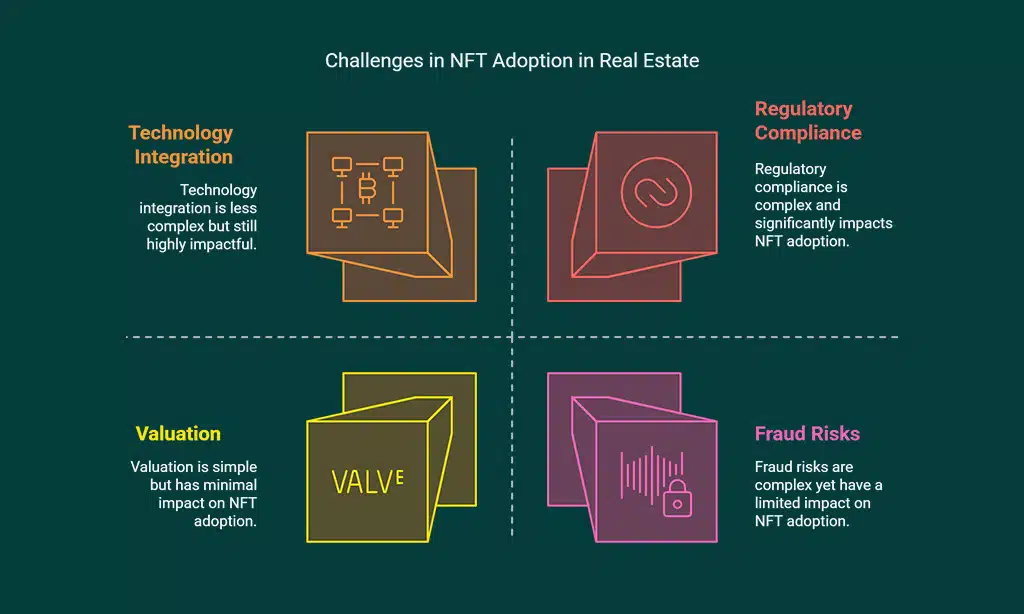
New systems often clash with old ones, and NFTs are no different. Balancing tech progress with rules and fraud risks makes it tricky.
Regulatory compliance and government acceptance
State laws in the U.S. control real estate title transfers. These create challenges for using NFTs. Legislative changes are needed in each state to allow NFT adoption.
Current land title systems still have flaws. Despite this, many governments hesitate to accept blockchain technology fully. Anti-money laundering rules and Know-Your-Customer checks add extra steps for approval.
Technology integration with traditional systems
Blending NFT platforms with old real estate IT systems is tough. Many traditional systems rely on outdated software, making upgrades a headache. Tools like Endpoint and ClarityFirst aim to solve this.
They digitize closing processes, cutting effort and errors.
Switching to blockchain networks also takes time and training. Older systems often can’t handle decentralized finance tech or smart contracts without big changes. This slows adoption but pushes the need for modern solutions in property tokenization.
Valuation and fraud risks
Figuring out a property’s value in NFTs can get tricky. Real estate tokenization lacks clear rules, making prices hard to compare. Markets shift quickly, and digital assets like NFTs are not stable.
Mispricing can hurt buyers or sellers during transactions.
Fraud is another big worry. Hackers might steal private keys or tamper with blockchain ledgers. Deed fraud becomes risky since NFT transactions cannot be reversed once done. Strong security tools and regulations are needed to protect property ownership rights.
Future Outlook for NFTs in Real Estate
The use of NFTs could change how we buy and sell property. Big ideas like fractional ownership and blockchain may soon make real estate faster, cheaper, and global.
Potential for mass adoption
NFTs could change property transactions worldwide. Blockchain technology allows faster and safer deals. Buyers can use digital wallets for crypto payments, cutting transaction costs.
Fractional ownership makes big investments easier for small investors.
Unified global standards may attract international buyers. Decentralized finance (DeFi) offers tokenized mortgages and liquidity pools. Virtual real estate in platforms like Somnium Space is growing fast.
Crowdfunding platforms using NFTs can fund property development or acquisitions efficiently.
Innovations in property transactions
Smart contracts are transforming property deals. These digital agreements on blockchain technology remove the need for middlemen. They allow secure transactions and faster closings.
Artificial intelligence predicts market trends and helps manage properties better. Real estate agents now act as digital asset consultants, guiding crypto-based investments. Blockchain ledgers ensure accurate land registry records without errors or fraud.
Crypto payments reduce transaction costs while opening doors to international buyers.
Takeaways
NFTs are shaking up real estate. They make buying, selling, and owning property faster and simpler. By turning properties into digital tokens, buyers can own a piece of land or even virtual spaces with ease.
Challenges exist, but innovation is paving the way for big changes. The future of property ownership could soon fit in your digital wallet!
FAQs
1. What are NFTs in real estate?
NFTs, or non-fungible tokens, are digital assets stored on a blockchain ledger. They represent property ownership or rights tied to real-world or virtual real estate.
2. How does NFT-based fractional ownership work?
Fractional ownership lets multiple people own shares of a property using digital tokens. This makes it easier for investors to access high-value properties through property tokenization.
3. Can NFTs simplify international property transactions?
Yes, NFTs can reduce transaction costs and streamline international real estate deals by using blockchain technology and crypto payments for secure transactions.
4. How do smart contracts help in real estate investments?
Smart contracts automate processes like transferring titles or managing mortgage notes without middlemen, making the process faster and safer while reducing errors.
5. Is virtual real estate valuable?
Virtual worlds like Somnium Space use NFTs to sell land as digital assets. These spaces hold value for businesses, gamers, and even digital nomads looking to invest in virtual environments.
6. Are there risks with NFT-based property ownership?
Yes, risks include cyber threats, regulatory compliance issues, taxation concerns, and due diligence challenges when dealing with decentralized exchanges or illiquid markets like secondary markets.





















