

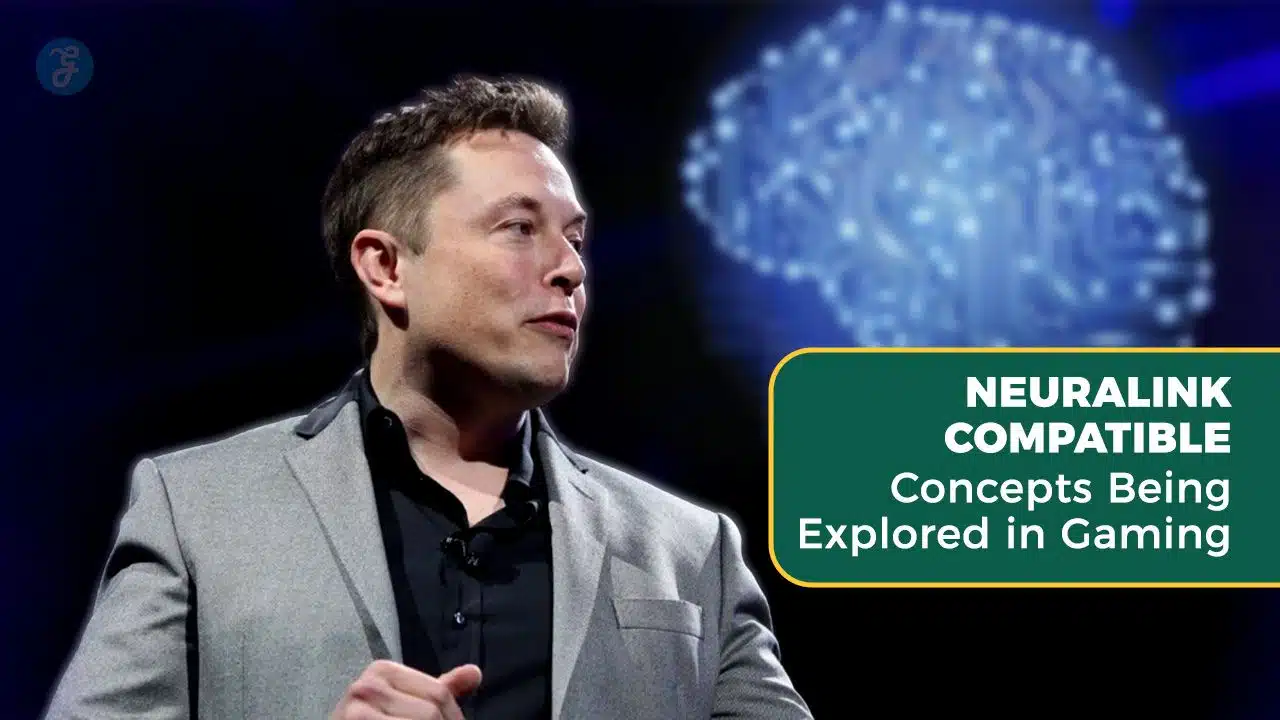
Many gamers feel like their hands are tied by controllers, accessibility limits, or clunky menus, and they want a cleaner way to play. Neuralink has shown it can turn electrical brain signals, read by electrocorticography style implants, into digital commands, and a quadriplegic named Alex used that link to control a virtual robot hand, to play rock, paper, scissors.
This news points to real change for paralyzed gaming and thought control, and it cuts out extra gear like eye trackers.
This post walks through seven Neuralink-compatible concepts, such as braincomputer interface controls, neurogaming, virtual reality headsets, augmented reality overlays, neurofeedback, brain implants, and autonomous interaction, and it shows what each could mean for play and accessibility.
I will use plain language, real examples, and clear pros and cons, so you can picture the future of gaming. Keep reading.
Key Takeaways
- Neuralink’s N1 let Alex, a quadriplegic, control a virtual hand and play rock-paper-scissors, while another user played chess, and this was the sixth human implant.
- The N1 implant reads electrocorticography signals, has more electrode contacts than rivals, transmits wirelessly, and can enable hands-free VR, AR, and prosthetic control.
- Neuralink claims cortical bandwidth could rise 1,000–10,000×, shown by a monkey playing video games via implanted wires and proposed “mind Pong” experiments.
- Neuralink livestreamed Noland Arbaugh on March 21, 2024; the 29-year-old, injured June 2016, had January 2024 surgery and played chess and Civilization VI.
- Researchers call for more clinical data, peer-reviewed studies, and strict ethical and regulatory oversight for Neuralink’s neurogaming and cognitive-enhancement claims.
Thought-Based Controls for Gaming Interfaces
A Neuralink demo showed the first documented case of a person moving a cursor using only their mind. In a live session, a patient guided a cursor across a screen by imagined movement.
Alex, who is quadriplegic from a spinal cord injury, used neural signals to control a virtual robot hand and play rock, paper, scissors. Another participant played chess through neural signals, then used a gaming joystick with no physical input.
These feats came with Neuralink’s sixth successful human implant, and in August prior the team streamed real-time neural signals from a pig named Gertrude.
The N1 implant reads electrical brain signals and translates them into digital commands, acting as a Braincomputer interface BCI for cursor control and game inputs. Wireless communication removes the need for external hardware, so gamers can steer virtual reality scenes, trigger actions, or chat hands-free.
Signal translation also opens doors for neuroprosthetics, assistive technology, and augmented interaction inside games. Gamers could swap a thumbstick for thought, and players with disabilities could gain fast, direct access to play.
Immersive Virtual Reality Experiences Through Neuralink

Neuralink wired a monkey to play video games using its mind. Engineers implanted a computer chip into the monkey’s skull, they connected it with “tiny wires”. Elon Musk said the animal is “not an unhappy monkey”, and that it has a small “dark mohawk.
He suggested monkeys could try “mind Pong” with each other, and that idea grabbed headlines. A direct neural interface could boost bandwidth between the cortex and a digital layer by at least 1,000, maybe 10,000, or more.
The cortex handles memory, attention, perceptual awareness, thought, language, and consciousness.
Neuralink aims to speed the flow of information from brain to machines for immersive digital experiences. That higher bandwidth, Musk claimed, could let people move data at 1,000 to 10,000 times current rates.
Immersive Virtual Reality Experiences Through Neuralink could let users feel textures, motion, and presence. Players might sense virtual worlds directly, through a braincomputer interface, feeling sights and sounds with less lag.
Developers could combine implants, artificial intelligence, and neurotechnology to map neural connectivity for richer virtual reality. Mindmachine interaction could let two players trade moves, or play complex social games, inside a shared simulation.
Some of Musk’s ideas push into sci-fi, he talked about telepathy and “saved state” existence after death, and even suggested possible consciousness transfer to a robot or another human.
Ethics and safety will shape how cognitive enhancement research moves forward, and regulators will ask tough questions.
Enhancing Accessibility for Gamers With Disabilities
On March 21, 2024, the company livestreamed an event that showed its first brain implant patient, Noland Arbaugh, a 29-year-old quadriplegic man. Sustained in June 2016, his spinal cord injury came from a diving accident at a children’s camp.
His surgery took place in January 2024, and he left the hospital within a day. Using the braincomputer interface, Arbaugh played chess and Civilization VI, games he had given up, with only his thoughts.
The implant has more electrode contacts than comparable devices, and that could let assistive technology and rehabilitation systems offer richer control for players with cervical spinal cord impairment.
Many gamers with severe physical limits will find new ways to play, improving accessibility from cursor moves to complex commands, as neurotechnology moves intent into input. Arbaugh praised the simple procedure and said the device improved his life, a strong remark after years of limited mobility.
He previously used GoFundMe in 2017 to raise $10,000 for a custom accessible van, and his story shows how gaming can bring empowerment to people with quadriplegia.
Takeaways
Neuralink could rewrite how we play, by linking thought control to games via a braincomputer interface. A brain implant can turn electrocorticography signals into menu taps, steering moves, or voice chats.
That opens doors for virtual reality, augmented reality, neurofeedback tools, and better assistive technology for paralyzed gaming. Scientists urge more clinical data, and they call for peer reviewed studies, even as developers sketch bold neurogaming ideas.
It feels like handing a controller to your mind, so we must play smart.
FAQs on Neuralink-Compatible Concepts Being Explored in Gaming
1. What does “Neuralink-compatible” mean for gaming?
It means games can link to a brain-computer interface. The implant reads brain signals, and the game turns them into player control. Think of a joystick in your head, minus the stick.
2. What game ideas do people test with Neuralink-compatible tech?
Developers try direct thought control, low latency inputs, and immersive systems that blend sight and sound. They add touch feedback for hits, neurofeedback to train players, and shared play that links minds. Game builders also use data to make smarter NPCs.
3. Are these systems safe, and who watches over them?
Teams run safety tests, and doctors join software developers. Human oversight stays in place, privacy rules protect brain data, and ethicists shape the limits. Regulators will set hard rules before wide release.
4. When can players try Neuralink-compatible games?
Labs run trials now, small demos come first, and broader tests follow. Game builders will post product demo videos, and market research will guide launches. Stay tuned for up to date information, progress comes step by step.






















