

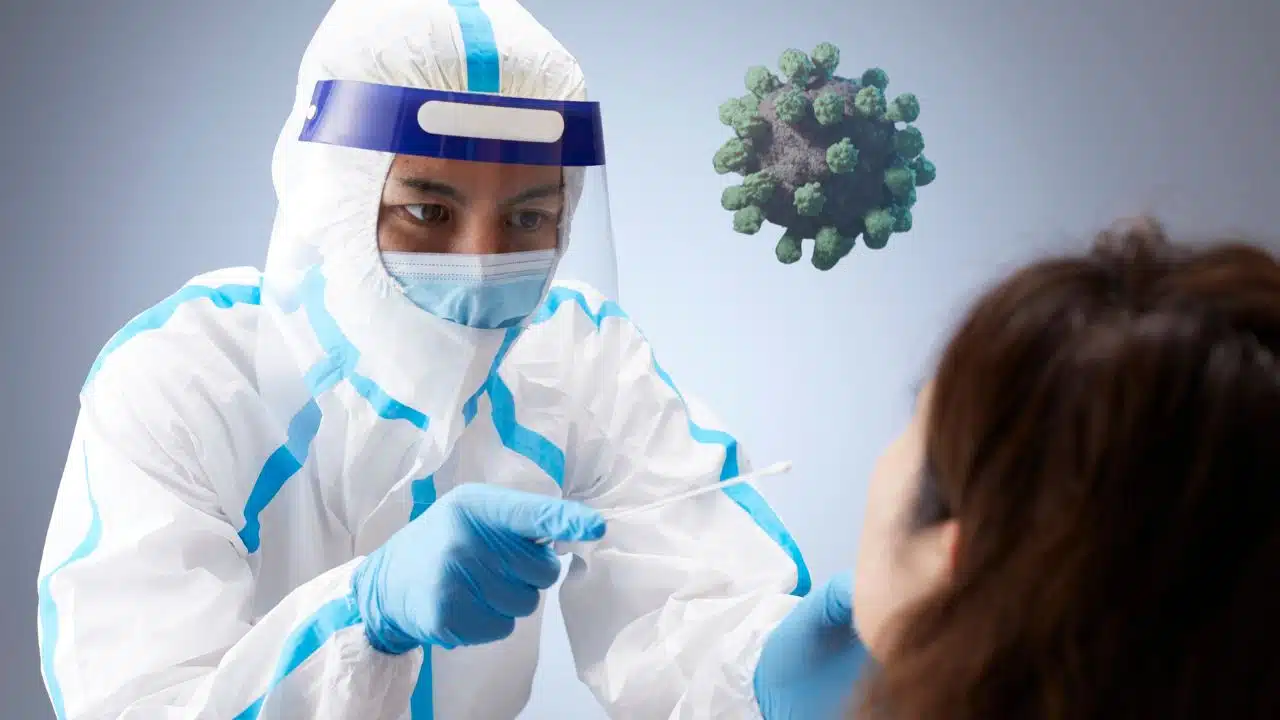
Health authorities are raising serious concerns over a newly detected COVID-19 variant, known as NB.1.8.1, which is rapidly spreading from China to parts of the United States. First identified in January 2025 in China, this subvariant of Omicron has now been detected in six U.S. states, including California, Washington, Virginia, Hawaii, Rhode Island, and New York City. International travelers have been identified as a likely source for its introduction into the country.
The California Department of Public Health (CDPH) confirmed this week that the variant has gained a foothold in the state, triggering increased surveillance and internal health system alerts. According to data released by the CDPH, NB.1.8.1 is now responsible for approximately 19% of COVID-19 cases in California, a sharp rise from just 2% in April.
How Dangerous Is NB.1.8.1?
Virologists say the new strain contains mutations in the spike protein, which may allow it to bind more effectively to human cells, increasing its infectiousness. Laboratory studies have indicated that NB.1.8.1 is more transmissible than several currently circulating COVID-19 strains. This means the variant could potentially lead to larger outbreaks and a spike in hospital admissions, especially in populations with waning immunity or limited booster uptake.
In fact, the World Health Organization (WHO) recently classified NB.1.8.1 as a “variant under monitoring”, a category reserved for strains that show early signs of increased transmission or immune escape. According to WHO data, this strain now accounts for more than half of the newly reported variants globally, highlighting its potential impact.
Rising Global Cases: What’s Happening in Asia?
The variant has been particularly disruptive in China and nearby regions. According to updated data from China’s health ministry:
- The percentage of emergency room patients testing positive for COVID jumped from 7.5% to 16.2% in just a month.
- The share of patients with severe respiratory illness caused by COVID also nearly doubled, from 3.3% to 6.3%.
In Taiwan, local health officials reported a 78% increase in COVID-related emergency room visits over just one week ending May 3. The same trend is observed in Hong Kong, where hospitalizations have hit a 12-month high, believed to be driven by NB.1.8.1’s spread. These developments are prompting authorities to reassess the need for stricter public health measures.
Mask Mandates Back in the Spotlight
Amid rising cases in California, some physicians are publicly calling for the reintroduction of indoor mask mandates, especially in high-risk areas like hospitals, airports, and public transport. The push is inspired by Hong Kong’s strategy, where mask-wearing in congested spaces remains standard practice even as restrictions ease globally.
The California Department of Public Health stated to The Sacramento Bee,
“COVID-19 continues to circulate in California and future seasonal increases in disease levels are likely.”
Although no statewide mandates have been reimposed, local health departments have been encouraged to issue public advisories and consider temporary masking in vulnerable communities.
What About U.S. Testing and Hospital Data?
While the variant is gaining ground, NB.1.8.1 is not yet tracked individually by the U.S. Centers for Disease Control and Prevention (CDC), largely because it hasn’t reached the threshold for active monitoring. As of now, LP.8.1 remains the dominant strain in the U.S., accounting for approximately 73% of national COVID cases.
That said, the test positivity rate in California as of April 19 stood at 2.1%, a relatively stable figure when compared to preceding weeks. Hospitalization rates have slightly dropped, from 1.6 per 100,000 people the previous week to 1.3 per 100,000 by April 19. However, experts caution that these numbers may be lagging indicators, and there is usually a delay of 2–4 weeks between infection spikes and corresponding hospital admissions.
On a national level, the picture looks similar:
- COVID test positivity fell from 2.9% on May 17 to 2.7% by May 24.
- COVID-related emergency room visits declined by 6.5% during the same time frame.
While these numbers suggest a mild downward trend overall, public health experts remain concerned that NB.1.8.1 could reverse the gains, especially as summer travel and indoor events increase transmission opportunities.
Vaccines and Immunity: Are We Protected?
The most recent COVID-19 vaccines, designed to target the JN.1 subvariant, are expected to offer significant protection against NB.1.8.1, especially in preventing severe illness, hospitalization, and death. This is because LP.8.1, the current dominant strain in the U.S., is a descendant of JN.1—similar to NB.1.8.1.
In a statement, the California Public Health Department reassured the public:
“Currently available vaccines are expected to remain effective.”
Despite this, public confidence in vaccinations may be tested by recent political moves. Health Secretary Robert F. Kennedy Jr. has taken controversial steps to restrict access to COVID-19 vaccines for healthy children and pregnant women—a decision that has sparked criticism from medical experts. The CDC, however, continues to recommend COVID-19 vaccination for all eligible children, and the vaccine remains part of the official childhood immunization schedule.
What Are the Symptoms of NB.1.8.1?
The symptoms of this new variant are generally similar to those of other COVID-19 strains. People infected with NB.1.8.1 may experience:
- Fever or chills
- Cough and sore throat
- Shortness of breath or difficulty breathing
- Muscle or body aches
- Headache
- Fatigue
- Loss of taste or smell
- Nasal congestion or runny nose
- Nausea or vomiting
- Diarrhea
It’s important to note that at-home COVID tests cannot determine the variant, and lab-based genomic sequencing is required to confirm NB.1.8.1.
Looking Ahead: What Should the Public Do?
With NB.1.8.1 on the rise, public health experts emphasize the importance of remaining vigilant, even if pandemic fatigue has set in. Here’s what you can do:
- Stay up to date on booster shots, especially if you’re over 65 or immunocompromised.
- Consider wearing masks in crowded indoor areas, particularly during travel or events.
- Get tested if you experience symptoms or have been exposed.
- Monitor public health advisories from your local or state health department.
For now, there is no indication of severe health impacts beyond what has been seen with other recent Omicron subvariants, but continued monitoring is critical. As international travel increases and new variants emerge, preparedness and responsiveness remain key.
The Information is Collected from MSN and Daily Mail.





















