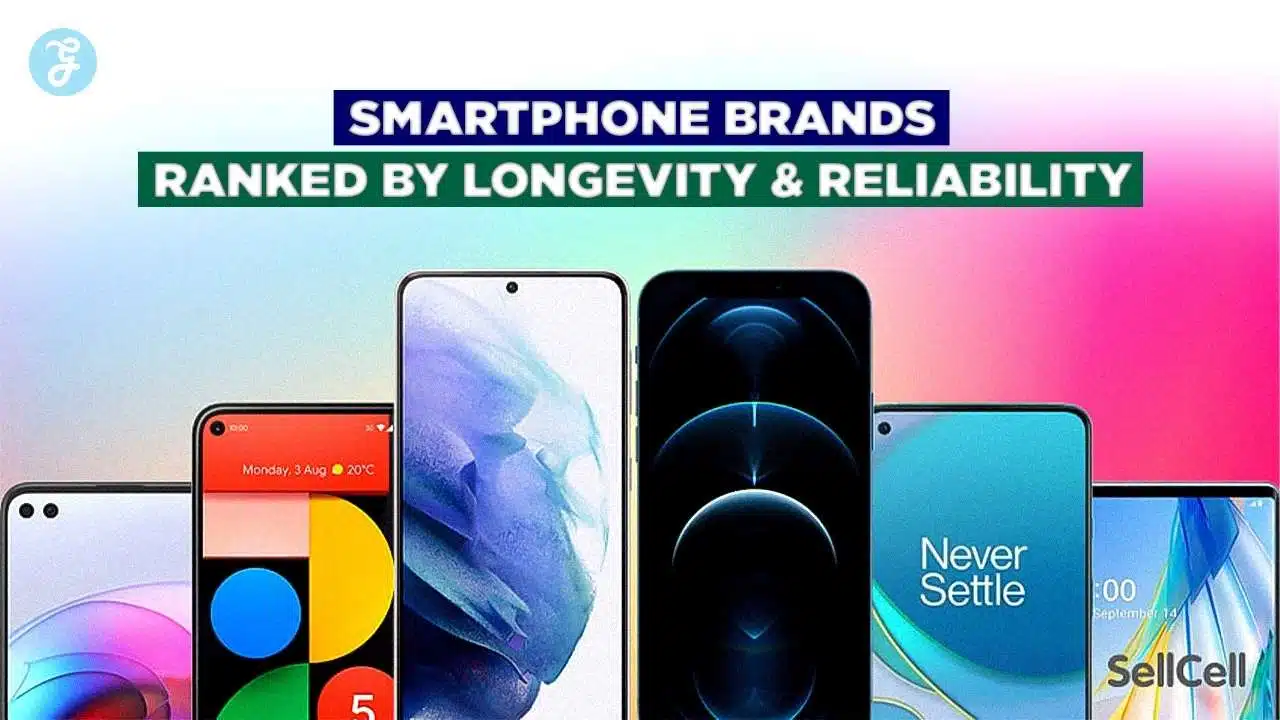
When shopping for a new device in 2026, the spec sheet is only half the story. You aren’t just looking for the fastest processor; you are looking for the Most Reliable Smartphone Brands that can survive drops, resist water, and keep your data secure for the next half-decade. The shift in the industry is palpable: the days of the two-year upgrade cycle are dead. With flagship prices stabilizing around $1,000–$1,400, longevity is the new luxury.
This year, reliability isn’t just about a sturdy case; it’s about software lifecycles, battery health preservation, and the Right to Repair. Whether you are eyeing the refined Galaxy S26 series, the robust iPhone 17 lineup, or the modular Fairphone 6, we have ranked the top brands that actually respect your long-term investment.
Key Takeaways: The 2026 Reliability Leaders
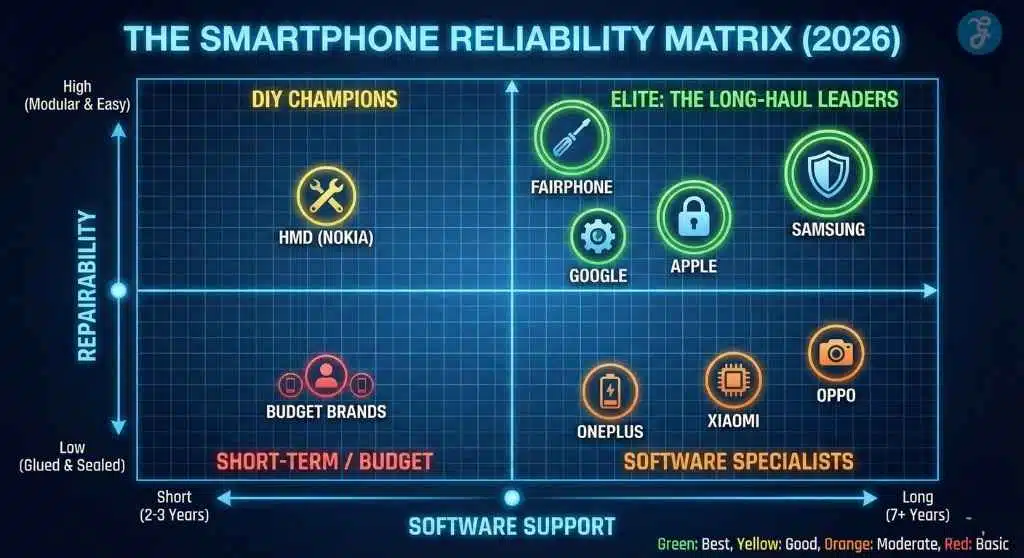
| Brand | Best For… | Support Guarantee | Repairability Score |
| Samsung | Overall Consistency | 7 Years (OS + Security) | High (Global Parts) |
| Apple | Resale Value & Build | 6–8 Years (Unofficial) | Medium (Apple Care+) |
| Fairphone | DIY Repair & Ethics | 8–10 Years | 10/10 (Modular) |
| Software Purity | 7 Years | High (iFixit Partner) | |
| OnePlus | Battery Longevity | 4–5 Years | Medium |
How We Defined “Reliability” for 2026
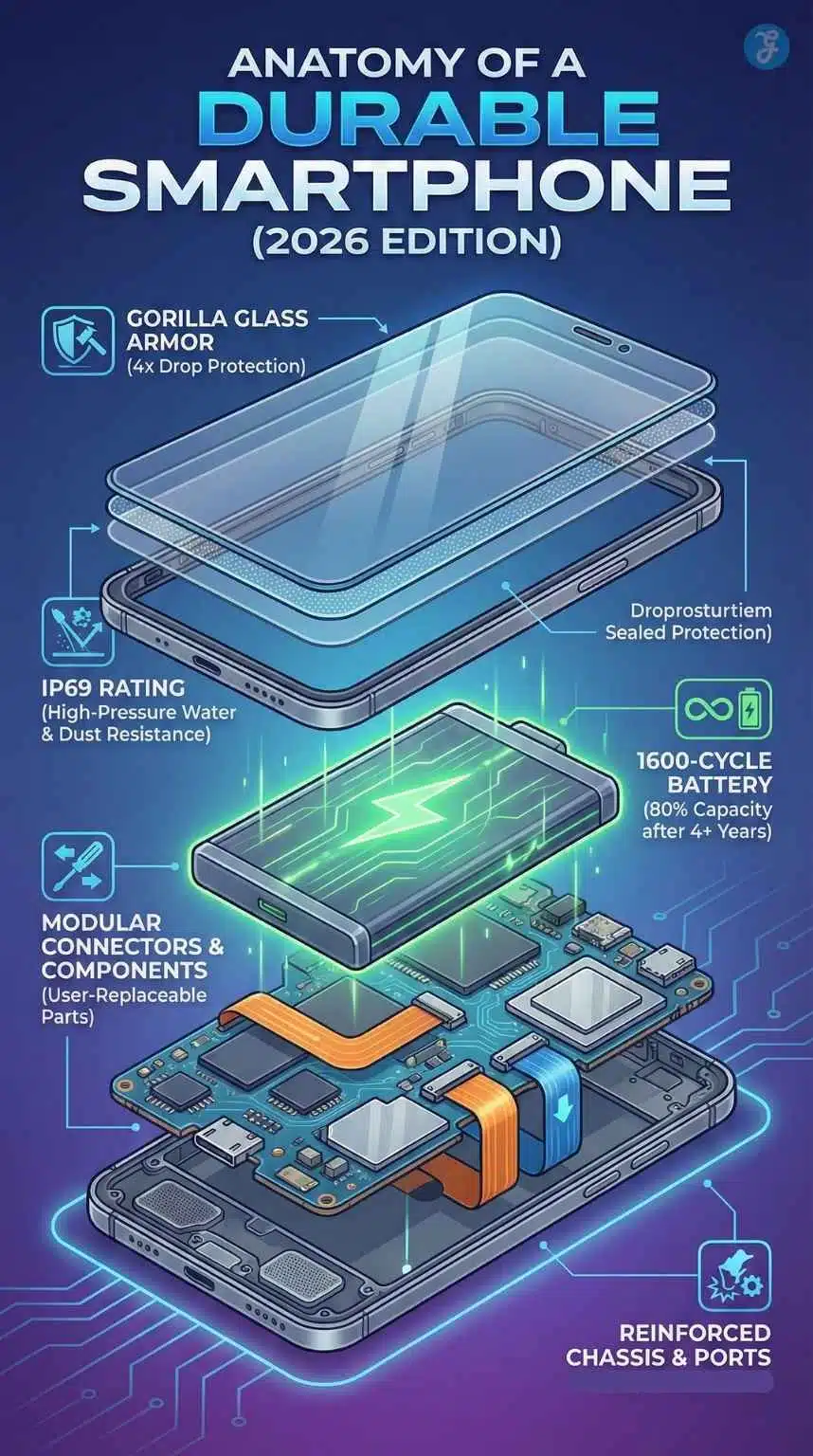
In the past, a “durable” phone just meant one that wouldn’t shatter if you dropped it. But in 2026, true reliability is a three-pillar system. To identify the Most Reliable Smartphone Brands, we moved beyond the spec sheet and analyzed three critical longevity factors that determine if a phone is a smart 5-year investment or just a 2-year fling.
1. The Software Lifecycle (The Brain)
Hardware means nothing if the software becomes a security risk. We prioritized brands that offer extensive security patch lifecycles and OS upgrades. In an era where banking and healthcare live on our devices, a phone that stops receiving security updates after three years is effectively obsolete, regardless of how fast its processor is.
2. Hardware Resilience (The Body)
We looked for verifiable durability standards, not just marketing buzzwords. High rankings were given to devices featuring IP68/IP69K water and dust resistance, reinforced frames (like Titanium or Armor Aluminum), and next-generation glass technology. We also analyzed “sustained performance” metrics—does the phone overheat and throttle during daily tasks, or does it maintain thermal stability over time?
3. Repairability & Right to Repair (The Lifeline)
Accidents happen. When they do, does the manufacturer force you to buy a new device, or do they empower you to fix it? We factored in iFixit repairability scores, the global availability of spare parts, and the ease of battery replacement. A truly reliable brand fights planned obsolescence by ensuring you can replace a $40 battery rather than a $1,200 phone.
Tier 1: The “7-Year Club” (The Gold Standard)
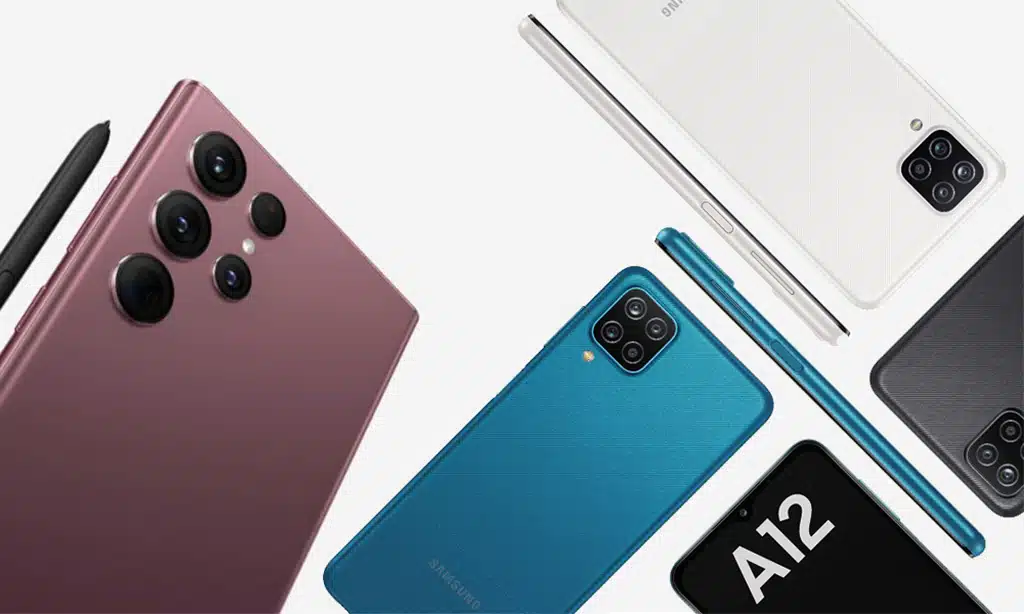
These brands offer the longest guaranteed software support and premium build quality, effectively future-proofing your purchase until the 2030s.
1. Samsung
The King of Android Longevity
Samsung continues to dominate the “Most Reliable Smartphone Brands” list because it has mastered the balance between hardware durability and software commitment. With the Galaxy S25 and S26 Ultra, Samsung has solidified its promise of 7 years of OS and security updates.
Why they rank #1: It’s about the ecosystem. If your screen breaks in 2026, you can walk into a repair shop in almost any city globally and find parts.
Hardware Resilience: The integration of Corning Gorilla Armor and “Armor Aluminum” frames has made their flagships incredibly resistant to micro-scratches and drops.
Enterprise Security: Samsung Knox remains the industry benchmark for protecting your data from hardware-level attacks.
2. Apple
The Resale Value Champion
While Apple doesn’t explicitly advertise a “7-year promise” like its Android rivals, history speaks for itself. The iPhone 17 and 17 Pro series are built on a legacy where 6-year-old devices (like the iPhone 13) still run the latest iOS smoothly.
Ceramic Shield: Apple’s proprietary glass remains unmatched for drop protection, reducing the likelihood of catastrophic screen shattering.
Value Retention: An iPhone retains roughly 40-50% more value after three years than the average Android flagship. This makes it the most financially reliable choice—you know you can sell it later.
Customer Support: The Apple Store support network is unrivaled. If you have AppleCare+, reliability issues are solved in hours, not weeks.
3. Google (Pixel)
Software Stability & The New Chip Era
For years, Pixel phones had a reputation for hardware bugs (heating, modem issues). However, the shift to TSMC-manufactured Tensor chips in the Pixel 10 series has been a game-changer for reliability.
Pure Software: With no “bloatware” to slow down the system, Pixels age gracefully. A Pixel 9 or 10 feels as snappy on day 1,000 as it did on day 1.
Feature Drops: Google actively adds new features to old phones. Your device actually gets better over time, which is a rare form of reliability.
7-Year Update Promise: Google matches Samsung with a full 7-year guarantee for OS upgrades, security patches, and feature drops.
4. Fairphone
The Undisputed Repairability King
If reliability to you means “I can fix it myself,” Fairphone is in a league of its own. The Fairphone 6 is designed to be disassembled with a standard screwdriver.
Modular Design: Battery dead? Swap it in 10 seconds. Screen cracked? Order a replacement for $90 and fix it at your kitchen table.
10-Year Horizon: Fairphone aims for up to 8–10 years of software support (often using custom chipsets optimized for long life).
Ethical Supply Chain: They are the only brand fully transparent about sourcing conflict-free minerals, adding an “ethical reliability” layer for conscious consumers.
Tier 2: The Battery & Performance Specialists
These brands might offer slightly shorter software windows (4–5 years), but they excel in battery health and rugged hardware engineering.
5. OnePlus
Best for Battery Health
OnePlus has tackled the #1 killer of smartphones: battery degradation. Their proprietary “Battery Health Engine” heals the battery at a chemical level during charging.
1,600 Cycles: While standard phones lose 20% capacity after 800 charges, OnePlus flagships (like the OnePlus 14/15) are rated for 1,600 cycles—that’s over 4 years of daily charging before significant degradation.
6. Honor
The Screen Protection Leader
Honor has invested heavily in durability with their NanoCrystal Shield glass.
Drop Resistance: Their flagship Magic series is often rated 5-star drop-resistant by SGS certification. If you are clumsy and hate bulky cases, Honor is a top contender for hardware survival.
Silicon-Carbon Batteries: They are pioneers in using silicon-carbon anodes, allowing them to pack massive 5,600mAh+ batteries into thin phones without overheating.
7. OPPO & Vivo
The Hinge Experts
If you are looking at foldable phones in 2026, these two brands are arguably more reliable than Samsung in terms of mechanical engineering.
Foldable Durability: Their flexion hinges are tested to 500,000+ folds (TÜV Rheinland certified), and the crease remains nearly invisible even after two years of use.
Tier 3: Niche Leaders (Rugged & Business)
8. Motorola (ThinkPhone)
Motorola has carved out a niche for business professionals. The ThinkPhone series integrates MIL-STD-810H military-grade certification into a sleek body. It connects seamlessly with Lenovo laptops and is built to survive construction sites and boardrooms alike.
9. Asus (ROG)
Reliability isn’t just about drops; it’s about thermals. Heat kills electronics. The Asus ROG Phone series has the most sophisticated cooling systems (vapor chambers, graphite sheets) in the world. By keeping components cool, the internal silicon lasts significantly longer than in standard devices.
10. HMD (Nokia)
Rebranding for the modern era, HMD has adopted a “Gen 2 Repairability” approach similar to Fairphone but at budget prices. Their HMD Fusion line allows users to replace screens and charging ports easily, democratizing longevity for the sub-$400 market.
The Economics of Longevity: Total Cost of Ownership
One of the biggest misconceptions in 2026 is that a $1,200 phone is “expensive.” When identifying the Most Reliable Smartphone Brands, we must look at the Cost Per Year (CPY). A reliable flagship that lasts 6 years is often cheaper than buying three “budget” phones that die every 2 years.
We crunched the numbers to show why paying more upfront for top-tier support (like Samsung or Apple) saves money long-term:
| Device Tier | Upfront Cost | Useful Lifespan | Resale Value (Year 4) | Real Cost Per Year |
| Reliable Flagship (e.g., iPhone 17) | $1,100 | 6+ Years | ~$450 | ~$160/year |
| Mid-Range Hero (e.g., Pixel 10a) | $550 | 4-5 Years | ~$150 | ~$100/year |
| Budget “Disposable” | $250 | 1.5 – 2 Years | ~$20 | ~$125/year |
The Verdict: The “Budget” phone is actually more expensive per year than a solid Mid-Ranger. Real reliability pays dividends. When you buy from a top-tier brand, you aren’t just paying for a logo; you are pre-paying for extended software development and higher-grade battery chemistry.
Reliability on a Budget: The Mid-Range Heroes
You don’t need to spend $1,000 to get a durable device. In 2026, the gap between “Flagship” and “Mid-Range” reliability has vanished. The Samsung Galaxy A56 and Pixel 10a have redefined this segment.
-
Plastic is Fantastic: While less “premium” than glass, the high-quality polycarbonate backs used on these phones are actually more durable than glass. They absorb shock rather than shattering.
-
Trickle-Down Support: Brands are now pushing their 6-to-7-year update policies down to the $500 price point.
-
The “Sweet Spot”: For most users, these devices offer 90% of the reliability of a flagship for 50% of the price. If you want a phone that “just works” for 5 years without breaking the bank, this is your safest sector.
3 Hidden Settings to Extend Your Phone’s Life
Even the Most Reliable Smartphone Brands need user care. To ensure your device actually reaches that 7-year mark, enable these three features found in standard 2026 Android and iOS settings:
- Battery Protection Mode (80% Limit):Lithium-ion batteries hate being at 100% or 0%. Go to Settings > Battery > Health and cap your charge at 80%. This simple toggle can double your battery’s lifespan from 3 years to 6 years.
- Auto-Restart Schedules:Memory leaks and software glitches accumulate over weeks. Set your phone to auto-restart once a week at 3 AM. This clears the RAM and keeps the OS snappy, preventing that “sluggish” feeling that makes people upgrade prematurely.
- RAM Plus / Virtual Memory:As apps get heavier over the years, your physical RAM might struggle. Ensure your Virtual RAM (using storage as memory) is enabled. This is crucial for keeping a phone smooth during years 4, 5, and 6 of ownership.
2026 Buying Guide: What Actually Matters?
When scanning the market for the Most Reliable Smartphone Brands, ignore the megapixel count and look for these three semantic signals:
-
IP68 vs. IP69 Ratings:
-
Most reliable phones are IP68 (submersible). However, newer rugged models are pushing for IP69K, which protects against high-pressure, high-temperature jets. Great if you work outdoors.
-
-
Nits & Thermal Throttling:
-
A screen with “4,000 nits” brightness is great, but does the phone overheat and dim after 5 minutes? Look for reviews that test “Sustained Performance”—this indicates reliable cooling.
-
-
The “Right to Repair” Score:
-
Check the device’s score on iFixit. A score of 7/10 or higher means independent repair shops can fix your phone cheaply. A score of 3/10 means you are tied to the manufacturer’s expensive service centers.
-
Frequently Asked Questions (FAQ)
1. Which smartphone brand lasts the longest in 2026?
Samsung and Fairphone are the current leaders. Samsung offers the best balance of high-end specs with a 7-year update guarantee, while Fairphone offers a theoretical 10-year lifespan due to its repairable hardware.
2. Is a 7-year update policy actually reliable?
Yes, but with a caveat. While the software will be updated, the hardware (specifically the battery) will likely need replacement after 4–5 years. This is why repairability is just as important as the software promise.
3. Do iPhones really last longer than Androids?
In terms of resale value, yes. An iPhone 17 will be worth much more in 2029 than a Galaxy S26. However, in terms of functional longevity, top-tier Androids have caught up, offering similar support windows and often better battery health technology.
4. What is the most durable phone glass in 2026?
Currently, Corning Gorilla Armor (used by Samsung) and Ceramic Shield (used by Apple) are neck-and-neck. Both offer 4x better drop protection than standard glass. Honor’s NanoCrystal Shield is a strong third contender, specifically for impact resistance.
5. Should I avoid foldable phones if I want reliability?
Not anymore. By 2026, foldables like the Galaxy Z Fold 7 and Pixel Fold 3 are rated for 500,000 folds (about 10 years of use). Dust resistance remains their weak point compared to “slab” phones, but the hinge failure rates have dropped drastically.
Final Thoughts: Longevity is the New Luxury
The era of disposable tech is ending. The Most Reliable Smartphone Brands of 2026 are those that empower you to keep your device longer.
If you want a “buy it and forget it” experience, Samsung or Apple remain the safest bets for their sheer consistency and support networks. However, if you want to vote for a future where you own your device completely, Fairphone is the only brand truly fighting for your right to repair. Choose the tool that fits your life, not just the one with the flashiest marketing.