
Have you ever felt stuck trying to find fun, unblocked games online? Maybe you’re tired of boring, outdated sites or dealing with network restrictions. Monkeygg2 might just be the game site you’ve been looking for.
Monkeygg2 offers access to over 150 cool games and tools that go beyond just playing. It’s linked with GitHub and Forgejo, making it a handy tool for developers too. This blog will explore how it works, its neat features, and how you can play or code easily through your browser.
Keep reading—you’ll want to check this out!
Key Takeaways
- MonkeyGG2 has over 150 games and tools that mix coding, gaming, and creativity.
- It connects with GitHub for teamwork, using HTML (50.1%), JavaScript (47.6%), and C (2.1%). Contributors include @MetaGG2 and @EvilMonke.
- Forgejo pairs with Forge to improve code organization, making workflows faster for developers.
- Users can run MonkeyGG2 locally or use proxies like Replit, Glitch, Vercel, or Netlify for sharing.
- It works in restricted environments like schools and offers both offline and online setups.
Exploring the Features of MonkeyGG2
MonkeyGG2 offers tools that go beyond writing code, blending work and play in a seamless way. Its features open doors to creativity, collaboration, and even gaming fun.
Integration with GitHub for Enhanced Collaboration
GitHub makes teamwork easy. With version control, teams can manage code changes without breaking a sweat. The MonkeyGG2 repository supports five contributors: @MetaGG2, @EvilMonke, @MonkeyGG2, @MasonRRR23451, and @TheRealFocus.
It uses HTML (50.1%), JavaScript (47.6%), and even C (2.1%) for its files. Open-source ideas thrive here—any user can contribute or improve.
Users join discussions through forums on GitHub Pages or email threads in seconds. Hosting at monkeygg2.github.io allows global interaction with tools like Codeberg to expand collaboration further than before!
Beyond Coding: Gaming and Development Tools
MonkeyGG2 includes more than just coding. It offers over 150 games, giving players a customizable gaming experience. These include Flash and HTML5 games, even playable in restricted school environments using proxy tools.
Users can explore unblocked games that work seamlessly with its development setup. The mix of gaming and coding tools creates a rich digital playground for learning and fun.
Development features also shine through MonkeyGG2’s integration with GitHub tools. Projects written in Python or rewritten in Rust benefit from smooth collaboration options for teams.
Even music bots or custom directories can be created within the environment provided, boosting creativity for developers at any level of expertise.
The Role of Forgejo and Forge in MonkeyGG2’s Ecosystem
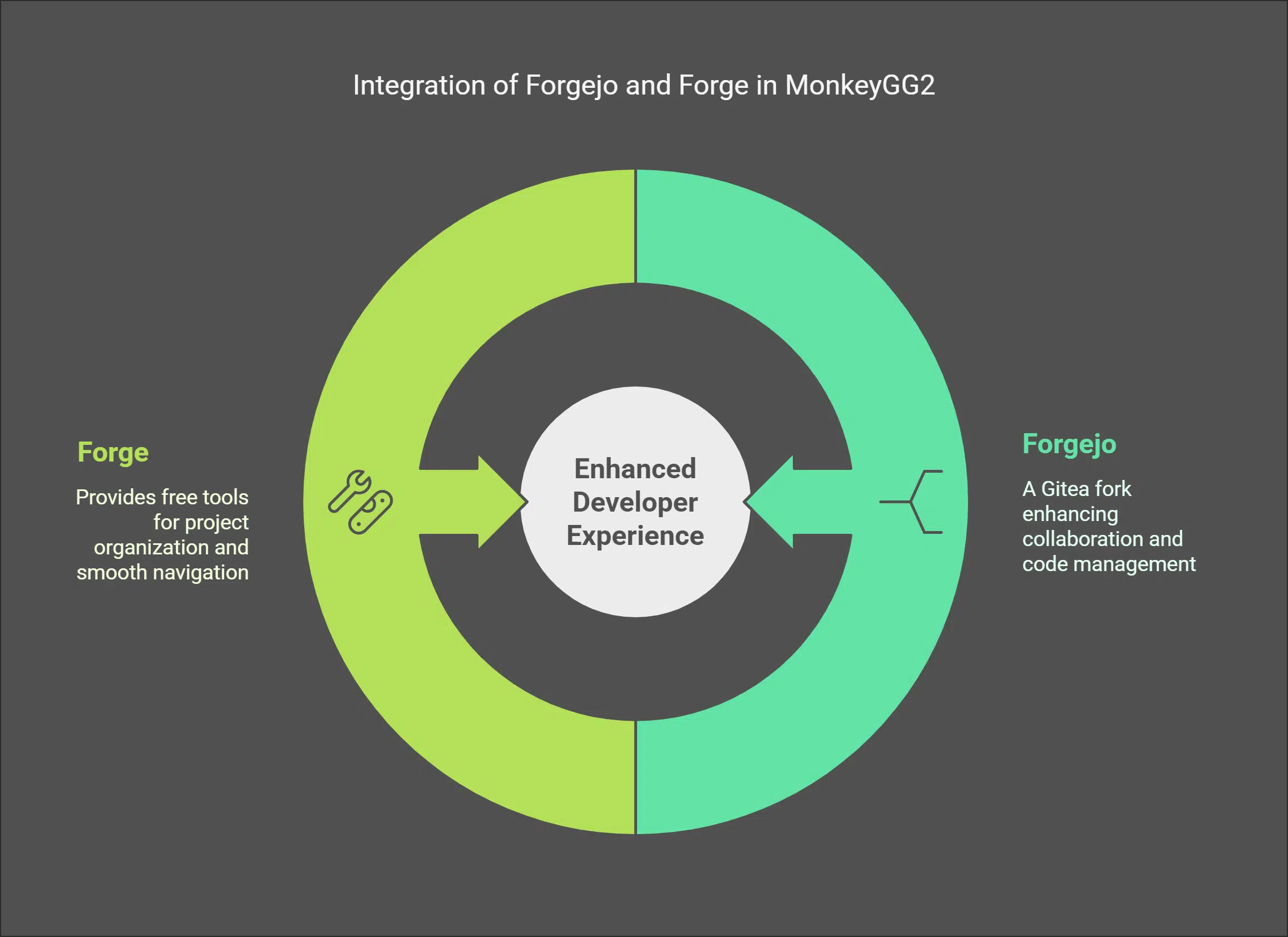
Forgejo acts as a powerful fork of Gitea, bringing huge improvements for collaboration. It helps developers manage code on GitHub with ease. Forge provides free tools that work hand-in-hand with Forgejo.
These tools handle tasks like organizing folders and directories or scrolling smoothly through projects. Both add a feature-rich setup to the MonkeyGG2 ecosystem.
Together, they support games without extra weight on systems and give users variety in deployment options. Whether you’re coding locally or using proxy-based solutions, these tools remain accessible.
Their integration ensures the keyboard shortcuts respond quickly, promising smoother workflows all around. This makes them popular choices for developers worldwide looking to make progress faster!
Deployment Options and Accessibility
You can choose where to run MonkeyGG2, making it flexible for different setups. Options are easy to work with and give users control over accessibility.
Running Locally vs. Proxy-Based Solutions
Running MonkeyGG2 locally or using proxy-based solutions has its perks. Each option fits different needs and setups, making it easy to choose one.
- Local setup means keeping everything on your device. It works offline and avoids internet issues.
- To run locally, install the software in a folder named “monkeygg2.” Warning: this folder will be emptied during setup.
- Proxy solutions let you host online for others to access. These are great for teams or gaming sessions.
- Platforms like Replit, Glitch, Vercel, and Netlify help deploy without extra effort.
- Proxy users enjoy custom options for games or tools. This makes the experience more flexible.
- Running locally puts full control in your hands. Proxy hosting gives more sharing power.
- Both choices come with a user-friendly interface that’s smooth to navigate.
- Accessibility varies by platform but is currently available on popular cloud services like Google Cloud and IBM Cloud.
- Test both methods to figure out which suits your needs better!
Takeaways
MonkeyGG2 is more than just a tool for developers. It bridges GitHub, Forgejo, and Forge to create something fresh and practical. Whether coding or gaming, it offers flexible options for everyone.
Try its features and see how your projects come alive!
FAQs on MonkeyGG2
1. What is Monkeygg2, and how does it relate to GitHub?
Monkeygg2 is a tool or concept tied to GitHub. It goes beyond coding by offering features like directories and scrollbars that help organize projects better.
2. Can Monkeygg2 support efforts toward net zero emissions?
Yes, it can play a role indirectly. By streamlining workflows on platforms like Forgejo or Forge, it reduces wasted time and energy in digital processes.
3. How does the website for Monkeygg2 stand out from others?
The website hosts a collection of resources designed for easy navigation with helpful tools like scrollbars and well-organized directories.
4. What’s next for users exploring Monkeygg2’s potential?
Next steps include diving deeper into its integration with other platforms such as Forgejo while discovering another layer of possibilities beyond traditional coding tasks.