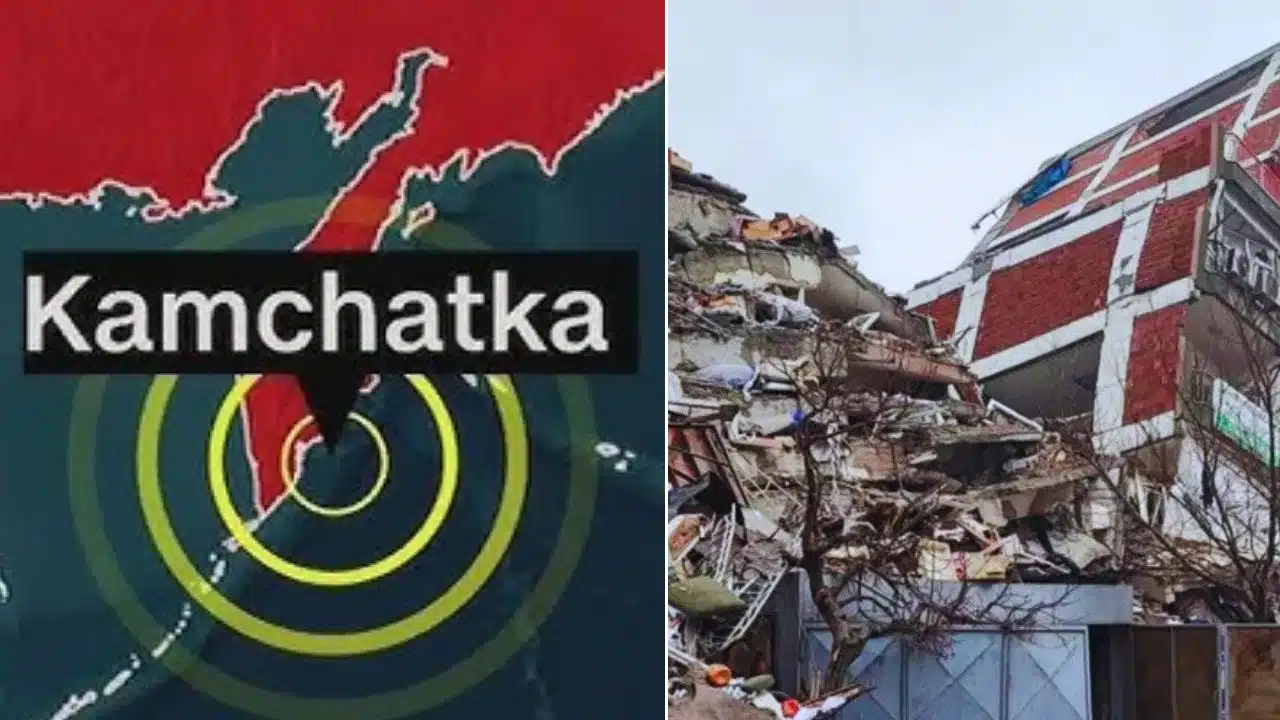
A powerful earthquake shook the Kamchatka region of Russia’s Far East early Friday morning, rattling coastal towns and triggering tsunami warnings across parts of the North Pacific. The U.S. Geological Survey (USGS) measured the quake at magnitude 7.8, striking at a depth of about 19 kilometers (12 miles) beneath the seabed. Russian emergency services initially placed the magnitude slightly lower, at around 7.2, but still classified it as a major seismic event.
Kamchatka is no stranger to earthquakes. It lies along the Pacific “Ring of Fire,” one of the most seismically active zones in the world. Friday’s event was identified by USGS specialists as a strong aftershock from the enormous magnitude 8.8 earthquake that struck the same region in late July. That earlier quake unleashed a Pacific-wide tsunami and flooded a seaport town, leaving communities on edge for weeks.
Immediate Impact and Emergency Response
The quake was strong enough to set off building alarms, sway lights, and rattle parked vehicles in the city of Petropavlovsk-Kamchatsky, the regional capital. Videos posted on social media showed furniture shaking inside homes and cars rocking in the streets as sirens blared.
Regional authorities confirmed that emergency services were immediately placed on high alert. Inspectors were dispatched to hospitals, schools, and residential complexes to ensure that buildings remained structurally sound. So far, there have been no confirmed reports of casualties or major structural damage, though checks are still underway in remote settlements that are harder to access quickly.
Governor Vladimir Solodov urged residents to remain calm while officials conducted safety inspections and reinforced emergency readiness across the peninsula.
Tsunami Warnings and Coastal Effects
The size and shallow depth of the quake prompted tsunami warnings in multiple locations. Russia’s Emergencies Ministry issued alerts for the eastern coast of Kamchatka, which extends far into the Pacific Ocean and the Bering Sea. Residents were told to avoid coastal areas as authorities monitored water levels.
In practice, tsunami waves turned out to be relatively modest. Officials recorded surges between 30 and 62 centimeters (1 to 2 feet) at coastal measuring stations. These waves were enough to stir concern but not large enough to cause flooding or structural damage.
The event also triggered a tsunami alert for the Kuril Islands, a chain of volcanic islands stretching south from Kamchatka toward Japan. On the other side of the Pacific, the U.S. National Weather Service and Pacific Tsunami Warning Center briefly issued an advisory for parts of Alaska, including the Aleutian Islands. That warning was lifted after monitoring confirmed that no dangerous waves had reached U.S. shores.
Series of Aftershocks
The main 7.8 quake was followed by a series of aftershocks, the strongest measuring around magnitude 5.8. While smaller, these tremors were still powerful enough to be felt by residents and added to local anxiety. Seismologists warned that additional aftershocks are possible in the coming days, which is typical after such a significant seismic event.
The Kamchatka Peninsula has experienced at least two quakes above magnitude 7.0 in the past week alone, underscoring how active the region has become since July’s massive quake. Scientists believe stress redistribution along the subduction zone is still unfolding, which explains the high frequency of aftershocks.
Geological Explanation
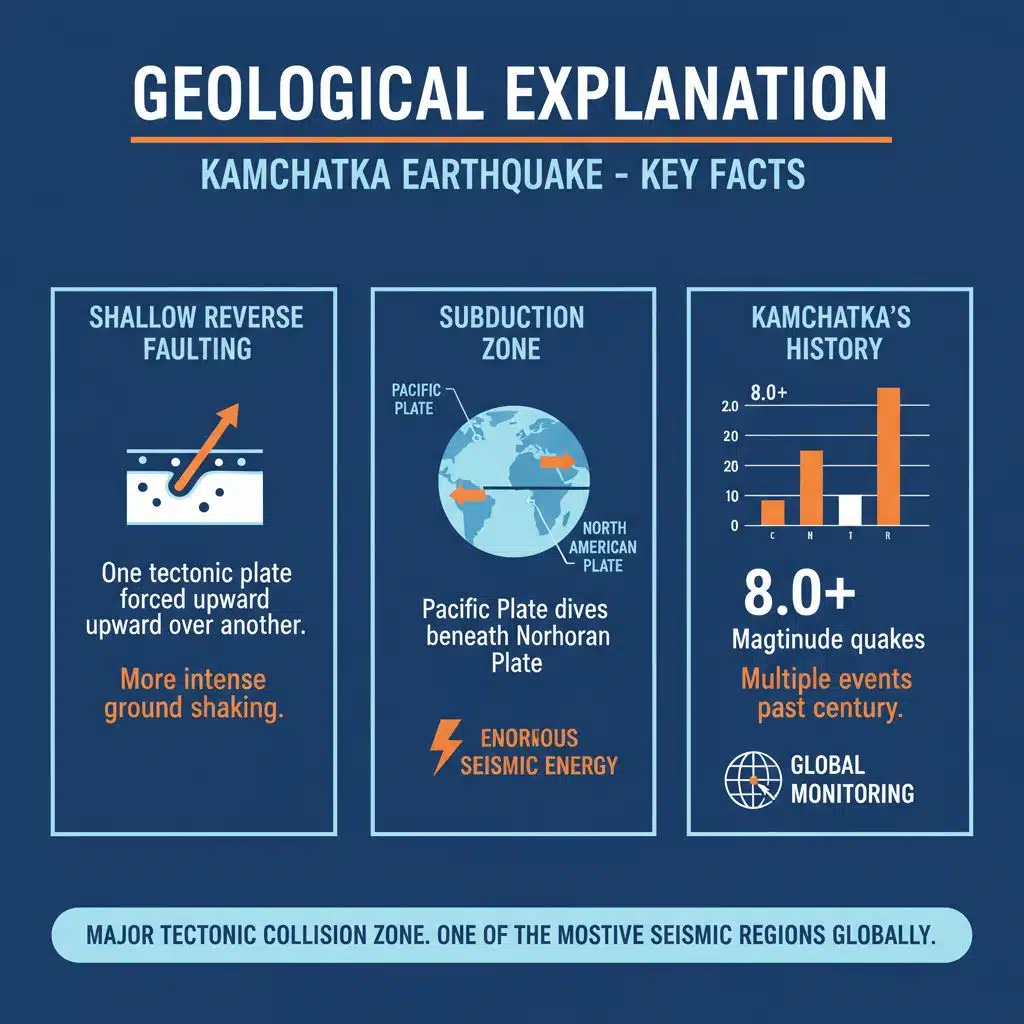
USGS experts explained that the quake was the result of shallow reverse faulting, a process in which one tectonic plate is forced upward over another. Shallow quakes are particularly concerning because the shaking at the surface is often more intense than in deeper quakes.
Kamchatka sits above a major subduction zone where the Pacific Plate dives beneath the North American Plate. This tectonic collision generates enormous seismic energy and has produced some of the largest earthquakes in recorded history. In fact, the Kamchatka region has seen multiple magnitude 8.0+ quakes over the past century, and it remains one of the areas most closely watched by global seismic monitoring networks.
Comparisons to the July Earthquake
The July 2025 earthquake, measuring magnitude 8.8, remains one of the most powerful quakes globally in recent years. That event generated a tsunami that swept across the Pacific, flooding parts of Kamchatka’s coast and prompting alerts as far away as Hawaii, Chile, and the U.S. West Coast. The July quake caused localized damage to ports and infrastructure, although the region avoided catastrophic losses thanks to early warnings and preparedness drills.
Friday’s quake, although smaller, highlights the ongoing seismic instability in the region. Experts say it is part of the natural sequence of aftershocks that follow a megaquake of July’s scale. However, the persistence of strong tremors has reinforced concerns among local residents and emergency planners about the resilience of infrastructure in this remote region.
Community Preparedness and Ongoing Monitoring
Kamchatka’s authorities have been running regular earthquake and tsunami preparedness drills, and Friday’s quick response suggests that those measures helped prevent panic. Shelters were placed on standby, and evacuation routes along the coast were inspected.
Russia’s Emergencies Ministry confirmed that surveillance of the coastline will continue, and scientific teams are analyzing whether stress on surrounding faults could trigger further quakes. International agencies including the USGS and Japan’s Meteorological Agency are also closely monitoring the situation, given the potential for Pacific-wide tsunami risks.
Residents in the affected areas are being urged to remain alert for aftershocks and follow official instructions, especially in coastal zones.
Why This Matters
While Friday’s quake caused no immediate destruction, it is another reminder of the immense seismic risks faced by communities living in the Pacific “Ring of Fire.” Kamchatka, like parts of Japan, Chile, and Alaska, sits in a zone where powerful earthquakes and tsunamis are not rare but expected.
The sequence of quakes since July highlights how one large event can set off months of instability. Each aftershock not only disrupts daily life but also poses cumulative risks to infrastructure, especially older buildings and facilities near the coast.
The fact that Friday’s quake did not produce destructive waves or collapse structures does not mean the danger has passed. Seismologists warn that aftershock sequences can last months or even years, and larger quakes remain possible.
The magnitude 7.8 earthquake that struck Kamchatka early Friday underscores the seismic volatility of Russia’s Far East. Although tsunami warnings were issued and tremors rattled cities and villages, no major damage has been reported so far. Authorities remain on high alert, continuing inspections and monitoring the coastline for changes.
The quake, likely linked to the July 8.8 event, reinforces the reality that Kamchatka is one of the most earthquake-prone regions in the world. For local residents, this means ongoing vigilance, preparedness for sudden evacuations, and adaptation to living in a landscape shaped by one of the planet’s most powerful tectonic boundaries.